










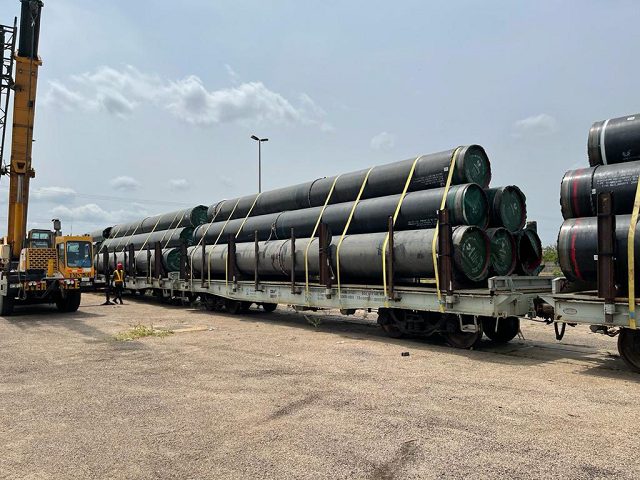
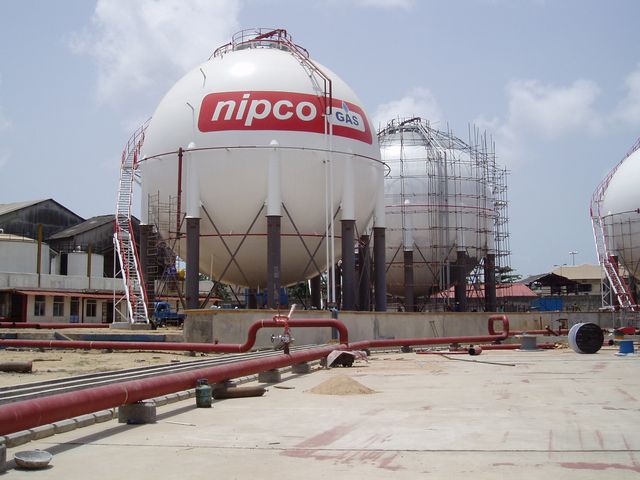
Nigeria’s state-owned energy company, NNPC Limited, has confirmed plans to commence export operations on the $2.8 billion Ajaokuta–Kaduna–Kano (AKK) gas pipeline in early 2026, marking a major milestone in the country’s long-running gas infrastructure push.
The disclosure was made by NNPC Group Chief Executive Officer, Bashir Ojulari, following a recent inspection of the project alongside the Minister of State for Petroleum Resources (Gas), Ekperikpe Ekpo, and the company’s Executive Vice President for Gas, Power and New Energy, Olalekan Ogunleye.

Originally conceptualised in 2008, the AKK pipeline is a strategic component of Nigeria’s gas expansion agenda and is designed to transport natural gas from southern supply hubs to key northern commercial and industrial centres. The project is widely regarded as a potential catalyst for industrial revival in northern Nigeria, where inadequate energy supply has constrained manufacturing and private investment for decades.
Ojulari disclosed that the most technically challenging phase of the project has now been completed, including the welding of the main pipeline route and the long-delayed River Niger crossing. The successful completion of this segment removes one of the biggest bottlenecks that previously slowed construction progress.
According to the NNPC chief, the pipeline is now positioned for final connection works, paving the way for gas transmission to begin early next year. Once operational, the infrastructure will significantly improve gas availability across the northern corridor.
“This project goes beyond transporting gas,” Ojulari said while briefing President Bola Tinubu. “It is about laying the foundation for industrial development — from fertiliser production to power generation and gas-based manufacturing in Abuja, Kaduna, Kano and Ajaokuta.”
He added that the company anticipates the emergence of new industrial parks and manufacturing clusters along the pipeline route, driven by improved access to affordable energy.
Ojulari also outlined NNPC’s broader production outlook, noting that crude oil output is projected to increase to 1.8 million barrels per day by 2026, compared with approximately 1.7 million barrels per day this year. Gas production, he said, is expected to continue its upward trajectory as infrastructure investments mature.
He attributed the company’s improving performance to reforms introduced under the Petroleum Industry Act, which have repositioned NNPC as a commercially oriented entity operating independently of federal budgetary support.
President Tinubu, Ojulari added, reiterated his administration’s target of attracting $30 billion in new energy investments by 2030 and raising Nigeria’s oil production capacity to 2 million barrels per day by 2027.
Upon completion, the AKK pipeline network is expected to strengthen energy security, boost electricity supply, and support Nigeria’s long-term industrialisation objectives.










 gas pipeline in early 2026, marking a major milestone in the country’s long-running gas infrastructure push.)