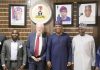







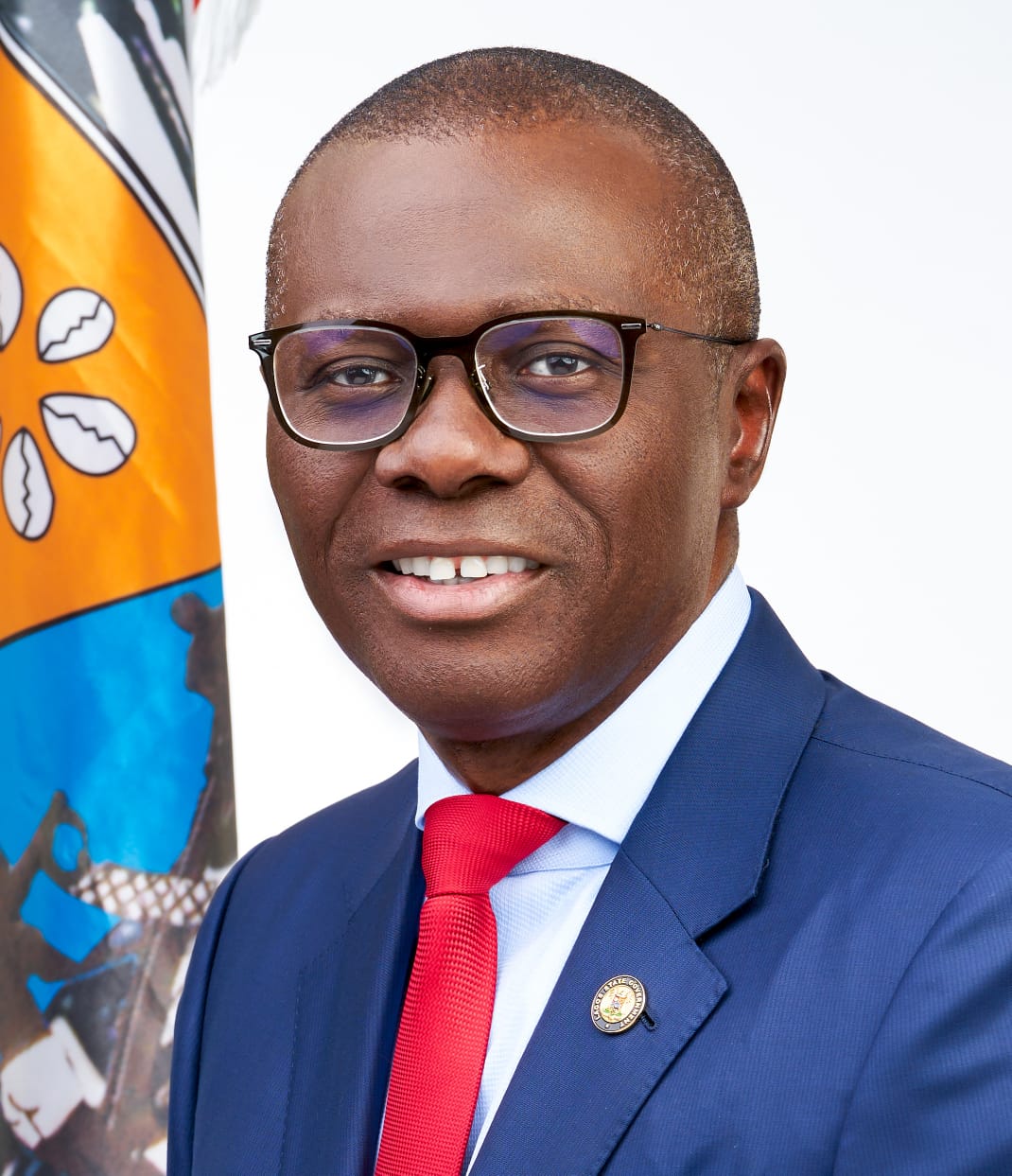
The Lagos State Government has restated its commitment to strengthening relations with the Russian Federation as both sides explore new cooperation in energy, technology and economic development. Governor Babajide Sanwo Olu conveyed the position during a courtesy visit by the Russian Ambassador to Nigeria, Andrey Podyolyshev, in Lagos. The governor was represented by the Deputy Governor, Dr Obafemi Hamzat.
Sanwo Olu highlighted the long history of diplomatic and development ties between both countries. He cited the construction of the Ajaokuta and Osogbo Steel Mills as part of the partnership that has shaped Nigeria’s industrial growth. He noted that Lagos contributes about 30 per cent of Nigeria’s gross domestic product and serves as a strategic gateway for international investment.

The governor expressed interest in the range of technological and energy solutions presented by the Russian delegation. These include digital innovations, solar power technologies and a floating nuclear power plant model with a capacity of up to 200 megawatts and a lifespan of as long as 60 years. He said such projects could benefit Lagos, where 30 per cent of the landmass is water and space constraints require creative approaches such as floating solar installations.
Sanwo Olu confirmed that the Lagos State Ministry of Commerce, Cooperative, Trade and Industry is in direct engagement with its Russian counterpart. He added that both sides are also holding discussions related to the Lekki Free Trade Zone.
Ambassador Podyolyshev said Russia is prepared to deepen its economic relationship with Lagos State. He explained that fostering closer collaboration is important for development, noting that Moscow and Lagos face similar challenges in transport, urban infrastructure, utilities and social services. He said it would be reasonable to explore bilateral ties between cities such as Moscow and Lagos or Saint Petersburg and Lagos, with the possibility of partner city or sister city arrangements.
The ambassador identified artificial intelligence, education, infrastructure, power and the economy as priority areas where cooperation could be expanded.