










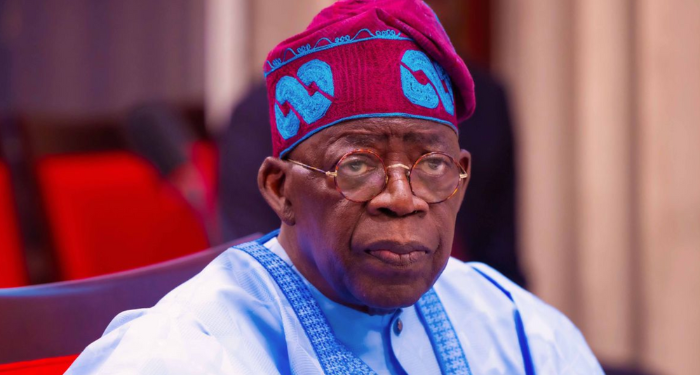
President Bola Tinubu has declared a national security emergency as the Federal Executive Council (FEC) approved a N160 billion plan to deploy 4,000 telecommunications towers across underserved and hard-to-reach communities in Nigeria.
The initiative, expected to significantly expand digital connectivity and bolster security operations, was announced by the Minister of Information and National Orientation, Mohammed Idris, after the FEC meeting at the State House, Abuja.

Idris said the large-scale rollout aligns with the administration’s commitment to inclusive development and national security reinforcement.
“The Federal Executive Council has taken a decision that 4,000 of such towers be established in these very underserved communities across this country,” he stated.
According to the minister, the project is designed not only to improve access to voice and data services but also to enhance security surveillance, commercial activity and digital inclusion for millions of Nigerians.
At an estimated N40 million per tower—covering infrastructure and equipment but excluding land and licensing fees—the investment targets more than 23 million Nigerians currently cut off from basic telecommunications services. Many of these citizens live in remote areas where connectivity gaps undermine emergency response, digital banking, education, and economic participation.
The initiative will be driven by the Ministry of Communications and Digital Economy and is projected to transform rural connectivity while providing crucial support to security agencies operating in volatile regions, particularly the North-East and Middle Belt.
Nigeria’s telecoms landscape has seen substantial growth since liberalisation in 2001. The Nigerian Communications Commission (NCC) reports that 53,460 3G and 4G base transceiver stations (BTS) have been deployed in the last five years. However, experts estimate that between 70,000 and 80,000 stations are needed for optimal nationwide coverage, especially in preparation for deeper 5G penetration.
The additional 4,000 towers could extend service to 20–30 percent of Nigeria’s underserved landmass, offering improved connectivity in areas most affected by insurgency and banditry.
Logistical Challenges Persist
Despite the ambitious plan, industry players warn that implementation hurdles could impede progress. Deploying a single base station incurs significant challenges—from the rising cost of diesel, which has surged by 300 percent since the 2023 subsidy removal, to frequent power outages in off-grid regions.
Vandalism remains a major threat, with more than 1,200 towers attacked in 2024 alone. These incidents—often driven by scrap metal theft or community-related reprisals—have cost operators an estimated N50 billion in repairs and revenue losses.
Right-of-way (RoW) charges imposed by state and local governments add an extra 20–30 percent to deployment costs, while bureaucratic inconsistencies can delay approvals for up to six months per site. Environmental and terrain-related obstacles, such as flooding in the South-South and erosion in northern states, compound installation difficulties.
Telecom operators, including MTN and Airtel Africa, have repeatedly called for reforms to ensure cost-effective rollout. Their recommendations include harmonised RoW charges capped at N140 per kilometre, incentives for tower co-location among operators, and mandatory hybrid solar-diesel power systems, which could cut fuel use by nearly 70 percent.
Stakeholders argue that without these policy interventions, the N160 billion initiative may fail to deliver its intended impact.
The rollout forms part of the administration’s wider strategy to improve national security, enhance economic activities in rural areas and reduce Nigeria’s longstanding digital divide.










 approved a N160 billion ...)