







The Federal Government has officially scrapped the 2022 National Language Policy, which mandated the use of indigenous languages as the medium of instruction from early childhood education to Primary Six.
Announcing the reversal on Wednesday in Abuja, the Minister of Education, Dr Maruf Tunji Alausa, declared that English will now serve as the language of instruction at all levels of education, from primary to tertiary institutions.

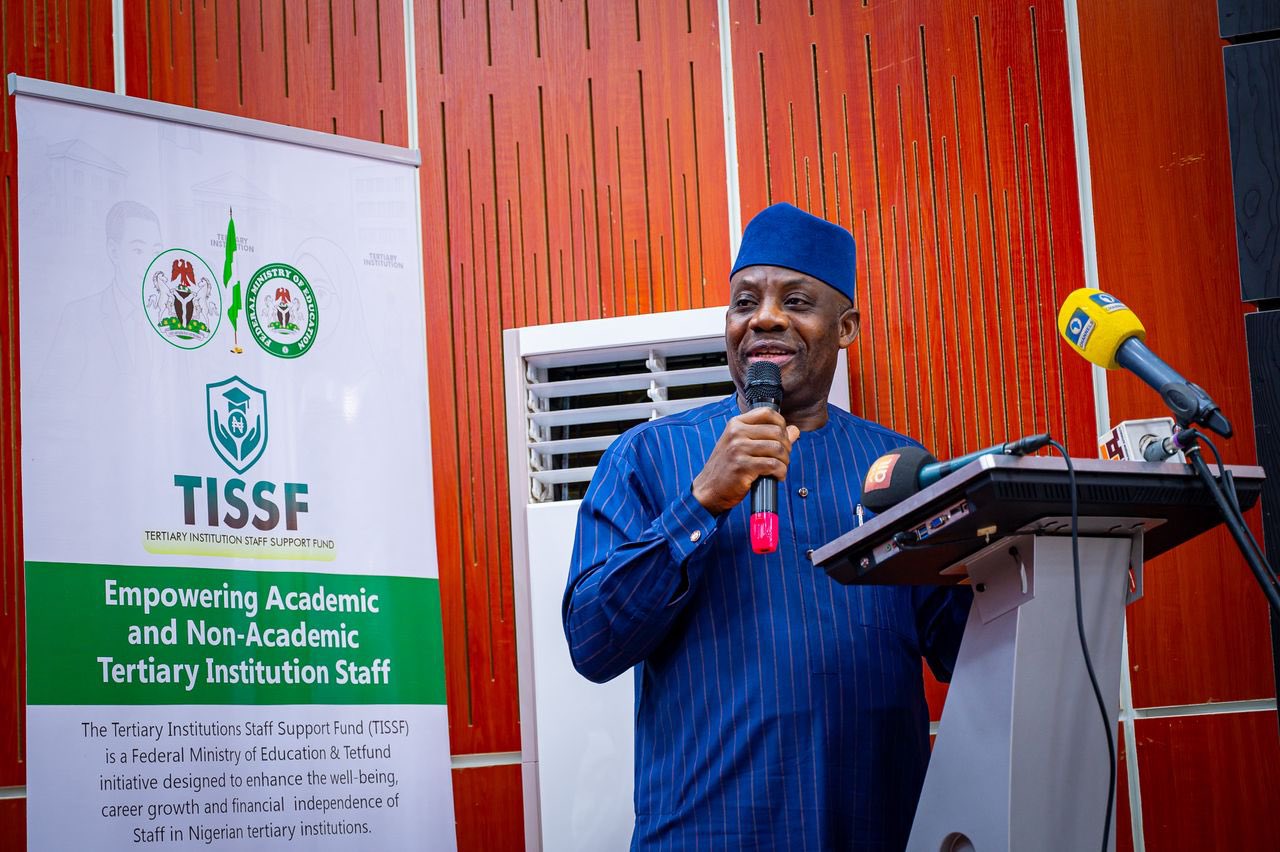
Speaking at the opening session of the Language in Education International Conference 2025, organised by the British Council, Alausa said the decision was driven by evidence-based research indicating that the mother-tongue policy had negatively impacted learning outcomes across the country.
“The National Policy on Language has been cancelled. English is now the language of instruction in our schools, from primary to tertiary levels,” the minister stated. “One of the most powerful tools in education is language, and the role of English as the language of instruction will be strengthened across all subjects.”
Dr Alausa explained that the linguistic diversity across Nigeria made the implementation of the 2022 policy impractical and inconsistent. He cited cases where students taught primarily in their mother tongues struggled with national examinations conducted in English.
“We reviewed data across the geopolitical zones and discovered that overuse of the mother tongue from Primary One to Junior Secondary Three has caused significant learning setbacks,” he said. “Children often advance to higher classes without acquiring basic literacy and numeracy skills, and many eventually fail WAEC, NECO, and JAMB exams conducted in English.”
He further highlighted the complexities arising from regional linguistic variations.
“In Borno State, while Hausa is widely spoken, Kanuri remains dominant; in Lagos, areas like Ajegunle have diverse populations with teachers from other regions. These realities show that a uniform language of instruction is necessary for educational coherence and equity,” he added.
In her remarks, the British Council’s Country Director in Nigeria, Donna McGowan, said the conference aims to help policymakers, educators, and researchers across Africa, South Asia, and the UK explore how language can promote inclusion and improve learning outcomes.
The now-defunct 2022 National Language Policy was designed to promote indigenous languages and preserve Nigeria’s cultural heritage. However, it faced major implementation challenges such as inadequate teaching materials, poor teacher training, and the country’s vast linguistic diversity — with over 600 recognised languages, 29 of which are already extinct.