





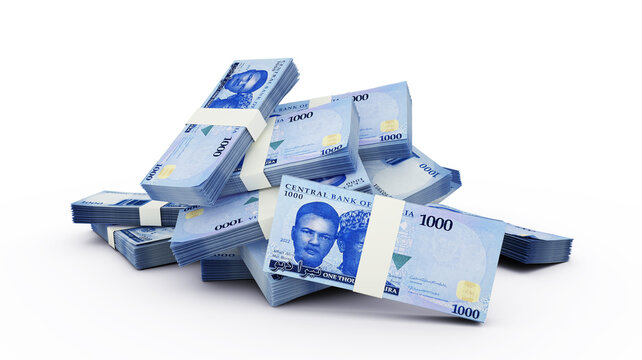
The exchange-rate gap between Nigeria’s official and unofficial currency markets expanded to approximately ₦23 per US dollar, sources from foreign-exchange channel checks report. Meanwhile, updated data from the Central Bank of Nigeria (CBN) shows the naira strengthened week-on-week in the official market, closing at ₦1,457 per USD from ₦1,475 previously.
On the official front, the currency’s marginal gain of ₦18 was supported by steady foreign-portfolio-investor (FPI) inflows and ample system liquidity. Forward-contract rates mirrored this strength: the one-month contract appreciated by +0.7 % to ₦1,491.57/USD, the three-month by +0.7 % to ₦1,541.95/USD, the six-month by +1.0 % to ₦1,613.89/USD and the one-year by +1.5 % to ₦1,753.43/USD, according to research firm Cordros Capital Limited.

In contrast, the parallel (black) market saw the naira slightly weaken to ₦1,480/USD, reflecting persistent FX-demand pressure and limited unofficial liquidity. Meanwhile, Nigeria’s external reserves ticked up by 0.40 % week-on-week to US $42.87 billion from US $42.70 billion — a support cushion driven by steady oil receipts, stronger non-oil-export inflows and a sustained trade surplus, all of which underpin the CBN’s broader FX-stability efforts.
Global energy markets tracker: Brent crude rose 8.0 % to US $66.13 per barrel, while US-listed WTI climbed 7.2 % to US $61.75, driven by tighter supply expectations as the OPEC+ maintained production cuts and Middle-East geopolitical tensions boosted disruption concerns. U.S. crude-stock declines and improved refinery margins added to the bullish backdrop.
“Rising non-oil exports and improving market confidence should underpin inflows, while externally, healthy FX reserves, a positive current-account position and a tilt toward global monetary easing are expected to support FX-market flows,” Cordros Capital stated.
Analysts at Cowry Asset Limited caution that near-term pressure on the naira remains probable given sustained FX demand and constrained liquidity. Yet they note that steady oil-receipts and gradual external-reserves rebuilding offer a modicum of support to the local currency. “We continue to monitor CBN interventions and global oil-price trends, which will shape sentiment and exchange-rate direction in the coming week,” the firm added.
In sum, the widening gap between Nigeria’s official and parallel FX markets signals deeper structural fissures in the country’s currency regime. While the official market benefits from formal-sector flows and the central bank’s buffer, the parallel market reflects underlying pressure from demand, informal channels and currency-access constraints.
For corporates, FX traders and investors in Nigeria, the message is clear: the naira may be supported in formal avenues, but divergence across market segments underlines persistent vulnerabilities and the ongoing need to monitor both macro-fundamentals and policy responses.