




The Lagos State Government has announced that construction of the $3 billion Green Line Rail Project will commence in December 2025, marking a major milestone in the state’s ongoing efforts to modernise public transportation and reduce traffic congestion.
The announcement was made by the Commissioner for Transportation, Oluwaseun Osiyemi, through a statement shared on the official X (Twitter) handle of the Lagos State Government on Monday.
Osiyemi described the Green Line as one of the most ambitious transport projects in Lagos’ history, designed to link Marina on Lagos Island to the Lekki-Epe corridor through a modern 70-kilometer rail system.
Phased construction to begin from Lekki to Epe
According to Osiyemi, construction will be executed in two major phases over two to three years.
The first phase will run from Lekki First Tollgate to Epe, while
The second phase will extend from Marina, running partly on water to accommodate Lagos’ coastal terrain.
“The government has conducted extensive stakeholder engagements and feasibility studies along the Lekki-Epe corridor. The Green Line project will commence in December and will be completed in phases over two to three years,” Osiyemi stated.
Preparatory works underway along the Lekki-Epe corridor
Ahead of construction, the government has intensified enforcement operations along the Lekki-Epe Expressway to clear encroachments and restore wetlands within the project’s right-of-way.
This includes relocation of roadside traders, removal of illegal structures, and improvement of drainage systems to create a safer and more sustainable environment for the rail line.
Modern features and faster commuting
The Green Line will feature 17 stations across Victoria Island, Lekki, Ajah, Sangotedo, and Epe, connecting major residential and commercial districts.
Each station will be equipped with:
Pedestrian bridges, elevators, and escalators
Digital ticketing systems
Park-and-ride facilities
A major train depot will be located in Sangotedo, while a 15-hectare parking area is planned near the Lekki Free Trade Zone.
Trains will operate in eight-car B-type sets, reaching speeds of up to 100 km/h with a minimum waiting time of three minutes. The system is projected to carry up to 35,000 passengers per hour per direction, cutting Marina–Epe travel time to under one hour.
Funding and partnership with China Harbour Engineering Company
The project, valued at approximately ₦4.5 trillion, will be developed under a public-private partnership (PPP) model.
The Federal Government has allocated ₦146.14 billion in the 2025 national budget as counterpart funding.
A tripartite agreement has been signed with the China Harbour Engineering Company (CHEC) to design, finance, construct, and operate the rail line, while the Lagos Metropolitan Area Transport Authority (LAMATA) will supervise and manage operations after completion.
LAMATA had earlier released a detailed video presentation in April 2025, outlining the project’s route, design, and financing structure.
Urban planners have applauded the initiative, describing it as a transformational step for Lagos. However, some raised concerns about station spacing, particularly between Victoria Island and Lekki Phase 1, warning that longer distances between stops could limit access for daily commuters.
Experts also recommended adding more stations in high-density areas and integrating the Green Line with other existing rail lines for seamless movement across the city.
For many residents along the Lekki-Epe axis, the Green Line represents a long-awaited solution to chronic traffic gridlock, where daily commutes between Lekki and Lagos Island often take up to four hours.
While some fear disruptions during construction, the government has pledged to compensate affected residents, minimise diversions, and maintain open communication throughout the process.
“Beyond transportation — it’s about improving lives”
Commissioner Osiyemi emphasised that the Green Line project extends beyond mobility.
“The Green Line is not just about transportation,” he said. “It’s about improving quality of life, creating jobs, and opening up new economic opportunities across the Lekki-Epe corridor.”
Part of the broader Lagos Rail Master Plan are:
The Green Line is part of the Lagos Rail Mass Transit (LRMT) network, which also includes:
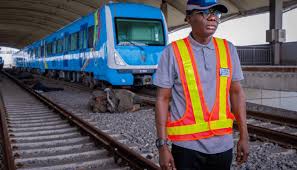
The Blue Line (already operational), and
The Red Line (under construction).
In the long term, Lagos plans to establish six integrated rail lines, forming the backbone of a multimodal transport system combining trains, BRT buses, and ferries — a vision that could redefine urban mobility in Nigeria’s commercial hub.