






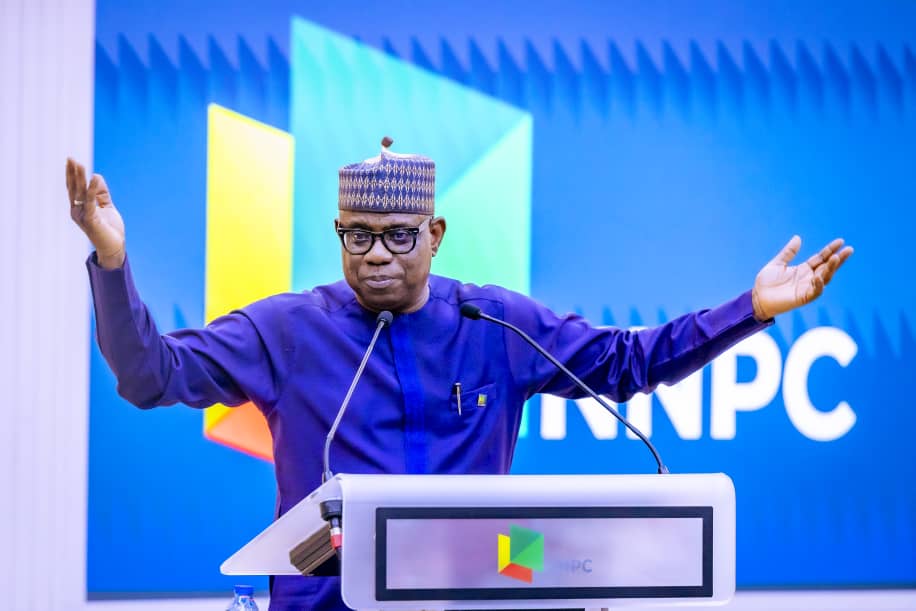
The Petroleum Products Retail Outlets Owners Association of Nigeria (PETROAN) has accused the Group Chief Executive Officer of the Nigerian National Petroleum Company Limited (NNPCL), Bayo Ojulari, of neglecting the revival of the Port Harcourt refinery, amid mounting criticism over the nation’s failed refinery rehabilitation projects.
This comes as two prominent northern groups dragged the Chief Financial Officer of NNPCL, Mr Dapo Segun, before the Federal High Court in Kaduna over what they described as his “direct and supervisory role” in the failed rehabilitation of Nigeria’s refineries and the controversial acquisition of OVH Energy.
In a statement on Monday, PETROAN’s Zonal Chairman for System 2E (Eastern Zone), Sunny Nkpe, expressed alarm at the slow pace of work at the Old Port Harcourt Refinery (Area 5), which was shut down on 24 May 2025 for a scheduled 30-day repair. Nkpe, who visited the site at the weekend for fact-finding, alleged that Ojulari had yet to visit the facility since assuming office four months ago.
“The current GCEO of NNPC, Bayo Ojulari, has not physically visited the Port Harcourt refinery within four months in office, indicating a lack of passion for the functionality of the facility,” Nkpe said.
He alleged that contractors at the site were owed for over 12 months and that repairs on the cracking and blending plants of Units 12 and 14 were near completion before Ojulari took office but have since stalled. According to him, the situation gives undue advantage to private refineries, allowing them to dominate the market and charge “outrageous prices.”
Nkpe said consultations with other midstream stakeholders — including petroleum tanker drivers, independent marketers, and suppliers — would soon take place to press for the refinery’s revival. He warned that thousands of tanker drivers and marketers had lost their jobs due to the shutdown, insisting that restarting the plant would stabilise fuel prices and reduce private sector dominance.
The PETROAN official called on President Bola Tinubu to “direct immediate action” to restart the refinery, warning against “vested interests” working to frustrate the president’s vision. He noted that during the seven months the refinery last operated, economic activity boomed, jobs were created, and fuel prices stabilised.
Efforts to get NNPCL’s reaction were unsuccessful as the company currently has no spokesperson, and the telephone numbers listed on its website were unreachable.
Meanwhile, two northern groups — the Arewa Community for Empowerment and Development and the Arewa Consultative Youth Movement — have sued NNPCL’s CFO, Dapo Segun, at the Federal High Court in Kaduna. The plaintiffs accuse him of presiding over the failed rehabilitation of the Port Harcourt and Warri refineries, as well as the OVH Energy acquisition, while serving as NNPCL’s Executive Vice President, Downstream.
The groups, representing youths from 19 northern states, are seeking an Order of Mandamus compelling the Economic and Financial Crimes Commission (EFCC) to investigate, arrest, and prosecute Segun. They also want him to step aside pending the probe, alleging that his continued stay in office “insults accountability and justice.”
They further accused the EFCC, the Department of State Services, and the Tinubu administration of shielding Segun from scrutiny while “harassing” former northern NNPC executives over similar issues.
“We cannot have two sets of rules — one for northerners and another for others,” said Kabiru Yusuf, President of the Arewa Consultative Youth Movement.
Nigeria’s refineries in Port Harcourt, Warri, and Kaduna have remained largely moribund despite multi-billion-dollar rehabilitation contracts. The $1.5bn Port Harcourt project, announced in 2021, and subsequent contracts for the Warri and Kaduna refineries have yet to yield results, keeping the nation reliant on imported petroleum products.
In 2022, NNPCL acquired OVH Energy, a major downstream player with a large retail network, in a deal touted as a strategic expansion move. However, critics now say the acquisition has failed to deliver on its promise of boosting the company’s downstream performance.







 has accused the Group Chief Executive Officer ...)