










Nigeria’s crude oil production climbed to a new high of 1.78 million barrels per day (mbpd) in July — the strongest performance so far in 2025 — offering the Federal Government a fiscal reprieve following a $5.3 billion revenue shortfall in the first half of the year due to persistent underproduction.
The encouraging output, which represents a nearly 5 per cent increase from June’s 1.7 mbpd, was disclosed by the Nigerian Upstream Petroleum Regulatory Commission (NUPRC) during the opening of the 2025 Society of Petroleum Engineers (SPE) Nigeria Annual International Conference and Exhibition (NAICE) in Lagos.
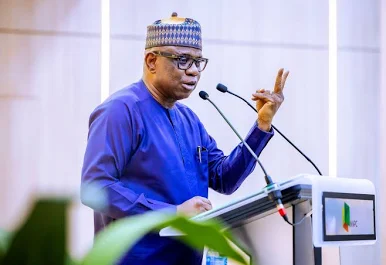
Speaking at the event, NUPRC’s Commission Chief Executive, Gbenga Komolafe — represented by the Executive Commissioner for Development and Production, Enorense Amadasu — described the rebound as a “significant milestone” in President Bola Ahmed Tinubu’s Renewed Oil Production Mandate.
“We crossed the 1.8 million barrels per day mark at peak production last month, with average output steady at 1.78 mbpd. This reflects collaborative efforts across industry stakeholders and the strategic implementation of our production enhancement framework,” Komolafe said.
Production Recovery Eases Fiscal Pressure
While Nigeria targets a 2025 oil production benchmark of 2.06 mbpd at a crude oil price of $75 per barrel, actual performance has consistently fallen short. This underperformance has widened a cumulative production gap of over 70 million barrels in the first half of the year, resulting in an estimated $5.3 billion (₦7.95 trillion) revenue loss.
Month-by-month analysis shows that:
January: 1.74 mbpd (shortfall of 9.92 million barrels)
February: 1.67 mbpd (deficit of 11.3 million barrels)
March: 1.6 mbpd (loss of 14.3 million barrels)
April: 1.68 mbpd (gap of 11.4 million barrels)
May: 1.66 mbpd (12.4 million barrels lost)
June: 1.7 mbpd (shortfall of 10.8 million barrels)
Industry experts attribute the setbacks to crude theft, pipeline vandalism, aging infrastructure, and delays in upstream investments.
However, Komolafe credited the July turnaround to initiatives such as the Project 1 MMBOPD Incremental Production Drive, which seeks to add one million barrels to national output through field optimisation, turnaround synchronisation, and improved maintenance regimes.
Driving Regulatory Reform and Technological Efficiency
Since the passage of the Petroleum Industry Act (PIA) in 2021, NUPRC has rolled out 21 regulatory frameworks aimed at improving transparency, environmental compliance, and community participation.
Komolafe emphasised that digitalisation has become central to the Commission’s regulatory workflow, enabling faster approvals, improved data integrity, and streamlined field operations.
He reiterated the Commission’s commitment to the seven-pillar upstream decarbonisation strategy, aimed at aligning Nigeria’s hydrocarbon production with global energy transition imperatives.
NNPCL CEO: Nigeria Must Present a “Bankable” Energy Vision
In a keynote address, Group Chief Executive Officer of NNPC Limited, Bayo Ojulari, urged stakeholders to reposition Nigeria’s oil and gas industry as globally competitive and investment-friendly.
“Nigeria must make its energy story bankable, sustainable, and globally relevant. The future of energy is shaped by innovation, transparency, and collaboration,” Ojulari said.
Pushing back on the narrative that fossil fuels are obsolete, he argued that oil and gas remain foundational to Africa’s inclusive energy future, especially when integrated with technologies like carbon capture, hydrogen, and smart grid systems.
Ojulari identified Compressed Natural Gas (CNG) as a near-term bridge for displacing biomass, improving domestic energy use, and powering local industries. However, he warned that institutional reforms, contract sanctity, and investment predictability are non-negotiable if Nigeria hopes to unlock its estimated $1 trillion energy opportunity.
Government’s Gas Ambition: From Resource to Prosperity
Also speaking at the conference, Minister of State for Petroleum Resources (Gas), Ekperikpe Ekpo, said the Tinubu administration has put natural gas at the heart of Nigeria’s energy policy, branding it the cornerstone of economic development, energy security, and clean transition.
Ekpo highlighted strategic interventions, including:
Expansion of LPG access for clean cooking
Construction of OB3 and AKK gas pipelines
Support for modular LNG/CNG infrastructure
Disbursement of funds through the Midstream and Downstream Gas Infrastructure Fund (MDGIF)
He reaffirmed the government’s commitment to transition five million households to clean cooking by 2030.
Vision 2030: $1 Trillion Energy Economy Within Reach
For Farouk Ahmed, CEO of the Nigerian Midstream and Downstream Petroleum Regulatory Authority (NMDPRA), the road to Nigeria’s energy transformation lies in the intersection of technology, policy clarity, and coordinated supply chain systems.
Ahmed said achieving energy access that is both economically empowering and environmentally sustainable would require innovations in AI, biofuels, smart grids, and energy storage, while also enhancing sector-wide governance and workforce capacity.
“Technology is not just a challenge; it’s an opportunity. To meet Nigeria’s energy ambitions, we must embrace it, invest in it, and ensure our policies and talent keep pace,” he said.









 in July — the strongest performance so far ...)