










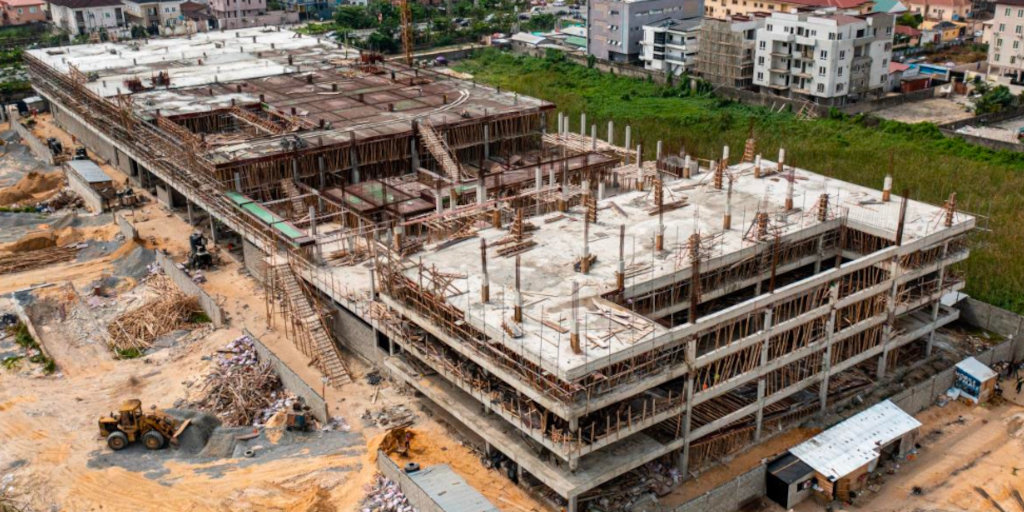
Stakeholders in Nigeria’s real estate sector have hailed the recent rebasing of the country’s Gross Domestic Product (GDP), which shows the sector’s valuation soaring to N41.3 trillion in 2024. The new figure highlights the industry’s rising contribution to national economic growth and positions it as the third-largest sector in Nigeria, behind only trade and crop production.
According to the National Bureau of Statistics (NBS), the revised GDP figures reflect significant methodological improvements and updated data capturing, resulting in a more accurate assessment of the sector’s impact. Prior to the rebasing, the real estate sector was valued at N10.5 trillion in 2023. With the adjustments, the figure was revised to N30.7 trillion for the same year—a leap of N20.2 trillion—before climbing to N41.3 trillion in 2024.

This places real estate ahead of major sectors such as telecommunications (N23tn), construction (N13.8tn), and crude petroleum & natural gas (N13.1tn), reinforcing its growing influence in Nigeria’s non-oil economy.
According to the NBS, the sector’s surge is attributed to improved valuation of assets, increased formalisation of services such as rentals, broking, and land valuation, as well as the impact of rapid urbanisation across Nigerian cities.
Reacting to the development, Executive Secretary of the Association of Housing Corporations of Nigeria, Toye Eniola, welcomed the revised figures, describing them as a validation of the sector’s economic relevance.
“This is a cheering development that authenticates and justifies our longstanding call for more government attention to the housing sector. With the right support, the sector has the capacity to lift Nigeria’s economy out of its downward trajectory,” Eniola said.
Also speaking on the significance of the rebasing, real estate consultant Jimi Peter noted that the recognition was long overdue, given the sector’s broad value chain and employment potential.
“This rebasing should have been done earlier, but accurate data takes time and requires a comprehensive understanding of the many layers within the real estate industry,” he said.
“From land acquisition to architectural design, engineering, construction, and eventual sale or lease, the sector supports a complex ecosystem that provides employment at virtually every stage—builders, electricians, plumbers, realtors, and facility managers all benefit.”
Peter also highlighted Nigeria’s cultural emphasis on land and homeownership as a key driver of real estate demand.
“Unlike in some advanced countries where renting is common even among the wealthy, in Nigeria, owning a home is viewed as a symbol of stability and success. This cultural aspiration, coupled with the country’s rising population, sustains high demand for housing—and by extension, energizes the entire real estate value chain.”
He emphasized that the sector’s ripple effect extends beyond GDP contribution, influencing job creation, wealth generation, and broader economic growth.
“The real estate industry has often been underestimated, but it’s now clear that it plays a pivotal role in Nigeria’s economy. As the population grows, so does the demand for shelter—one of humanity’s basic needs. This demand continuously fuels expansion, employment, and investment in the sector.”
With the sector now formally recognised as a key economic contributor, stakeholders are calling on the government to introduce policies that will unlock even more growth—particularly in housing finance, land reforms, and infrastructure development.
The rebasing exercise has not only recalibrated the nation’s economic indicators but also reaffirmed real estate’s strategic importance in Nigeria’s development agenda.












, which...)