








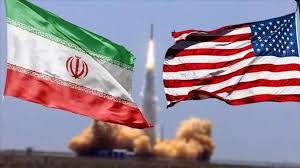
A preliminary assessment by the US Department of Defense has revealed that recent American airstrikes on Iran’s nuclear sites fell short of eliminating the country’s nuclear capabilities, merely delaying its progress by a few months.
According to intelligence sources cited by CBS News, Iran’s enriched uranium stockpile remains intact, and only minimal damage was inflicted on its centrifuges. The US military had targeted three critical nuclear facilities — Fordo, Natanz, and Isfahan — deploying “bunker buster” bombs intended to penetrate deep underground structures. However, officials confirmed that the bulk of the destruction was confined to surface-level infrastructure.
While the entrances to two facilities were sealed and some equipment damaged, most of the sensitive underground machinery reportedly escaped significant harm. The Pentagon’s findings suggest that Iran’s nuclear programme is still operational and could resume at full pace with time and resources.
Despite the report, the White House strongly rejected the assessment. President Donald Trump dismissed the leaked analysis as misinformation spread by a “low-level loser in the intelligence community,” asserting that the sites were “completely destroyed.”
“This is one of the most successful military strikes in history,” Trump claimed, while Defence Secretary Pete Hegseth reinforced that the campaign “obliterated Iran’s ability to create nuclear weapons.”
Not all US officials agreed. Democratic Congressman Brad Sherman questioned the effectiveness of the strikes, noting the lack of clarity on whether the attacks neutralised Iran’s uranium stockpile or its long-term production capacity. “All indications, including Vice-President Vance’s statement, suggest we didn’t get the stockpile,” he said in an interview with the BBC.
Iran, for its part, downplayed the impact. A senior official at Iran’s state broadcaster claimed the targeted sites had been evacuated in advance, and critical materials were relocated, thus avoiding a “major blow.”
Meanwhile, conflicting accounts have emerged. An Israeli source quoted by Saudi media outlet Al Hadath alleged that most of Iran’s enriched uranium was buried under rubble — a claim not yet corroborated by satellite imagery, which shows surface-level craters but no conclusive evidence of deep underground damage.
David Albright, head of the Institute for Science and International Security, noted that while the attack disrupted Iran’s programme, rebuilding was possible with sufficient investment and time. He warned that Iran remains under tight international surveillance and could face further strikes if nuclear activities resume.
In retaliation, Iran launched missiles at the Al-Udeid Air Base in Qatar, which hosts US troops. The attack was intercepted, and no casualties were reported.
Despite the Pentagon’s more cautious assessment, both the US and Israel continue to frame the strikes as a strategic success. Israeli Prime Minister Benjamin Netanyahu declared that two “existential threats” — Iran’s nuclear and missile capabilities — had been significantly reduced.
The developments have further escalated regional tensions and cast doubt on the possibility of renewed nuclear negotiations, with Iran’s Supreme Leader recently expressing skepticism over any future dialogue with Washington.