








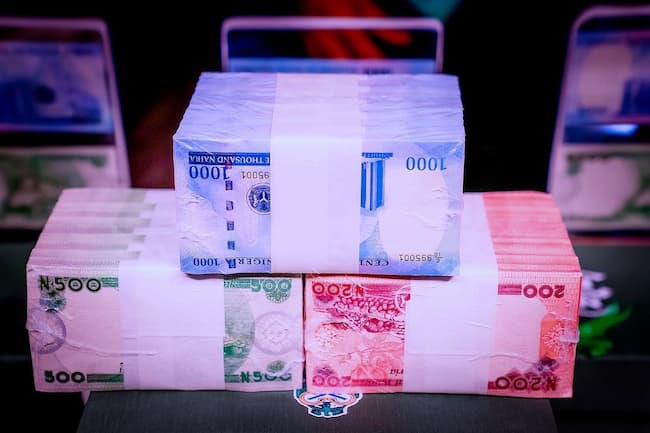
The Nigerian naira continued its downward slide against the US dollar, falling to ₦1549.03 as demand for the greenback exceeded available foreign exchange (FX) supply. According to the Central Bank of Nigeria (CBN), transactions were completed within a tight band of ₦1547.50 to ₦1550.50 before the official rate settled at ₦1549.03.
This dip came despite CBN’s intervention, which saw $86.6 million injected into the FX market last week. Additional inflows came from foreign portfolio investors, exporters, and non-bank corporates. However, the last two days have seen significantly reduced market liquidity, triggering two consecutive days of exchange rate increases.

Data reveals that total weekly FX inflows stood at $1.03 billion, with foreign investors accounting for 67.29% of the total — their highest contribution in five weeks. This affirms consistent foreign interest in Nigeria’s fixed-income securities, as highlighted in a market report by Coronation Research.
Non-bank corporates followed with 13.36%, exporters contributed 10.87%, and other sources made up the remaining 0.17%. While inflows helped cushion demand pressure temporarily, market watchers believe the naira’s movement will depend on sustained capital injection by FPIs and corporate exporters.
Coronation Research noted that while mild appreciation is possible if inflows hold steady, persistent demand pressures could stall gains. The firm also highlighted the gap between official and parallel market rates as an ongoing concern, indicating a possible FX market imbalance.
Globally, crude oil prices experienced a significant drop amid easing geopolitical tensions. Brent crude tumbled by $3.29 (4.6%) to $68.19 per barrel, while West Texas Intermediate (WTI) crude slipped by $3.20 (4.7%) to $65.31.
The decline followed announcements of a ceasefire between Iran and Israel, though US President Donald Trump accused both sides of breaching the truce. Gold also dipped, shedding 1.6% to trade at $3,313.63 per ounce, reflecting reduced appetite for safe-haven assets.
Oil analysts predict that OPEC+ may soon approve a production hike of 400,000 barrels per day, which could drive oil prices down to the $60–$65 range due to rising global output and slowing demand.