








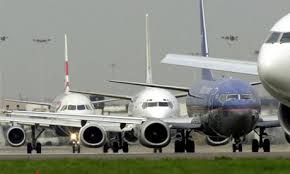
The ongoing foreign exchange crisis in Nigeria has again come under scrutiny as the country’s aviation sector reels from the effects of limited access to forex, rising operational costs, and policy inconsistencies.
In recent weeks, both domestic and international airlines operating in Nigeria have been forced to scale down operations, delay refunds, and cancel scheduled flights due to their inability to access foreign currency needed to meet critical obligations such as aircraft leases, maintenance, and insurance.

Industry players say the persistent volatility in Nigeria’s foreign exchange market, coupled with a multi-tiered FX regime, continues to disrupt planning and operations. Operators have raised concerns over the widening gap between the official and parallel market rates, and the administrative bottlenecks that plague forex allocation.
“Airlines are dollar-dependent businesses, and if you cannot access forex in a predictable manner, it becomes difficult to maintain schedules and pay for international services,” one airline executive told reporters.
Despite earlier claims by the Federal Government that a backlog of forex owed to foreign carriers had been cleared, the International Air Transport Association (IATA) and other aviation stakeholders say fresh backlogs are already building up.
Experts believe the crisis in the aviation sector is a reflection of broader issues within Nigeria’s forex management system. Calls for a single, transparent exchange rate regime have intensified, with stakeholders warning that continued disruptions in critical sectors like aviation could undermine investor confidence and economic growth.
The aviation sector has become one of the most visible casualties of the country’s forex challenges, as consumers face higher fares, fewer flight options, and declining service quality.
Analysts have urged the Central Bank of Nigeria to fast-track efforts to stabilise the naira and adopt market-driven reforms that can ease pressure on the FX market and restore confidence across all dollar-dependent sectors.
Until such structural reforms are implemented, experts say, the turbulence experienced by Nigeria’s aviation industry may persist—serving as a reminder of the country’s deeper macroeconomic instability.