







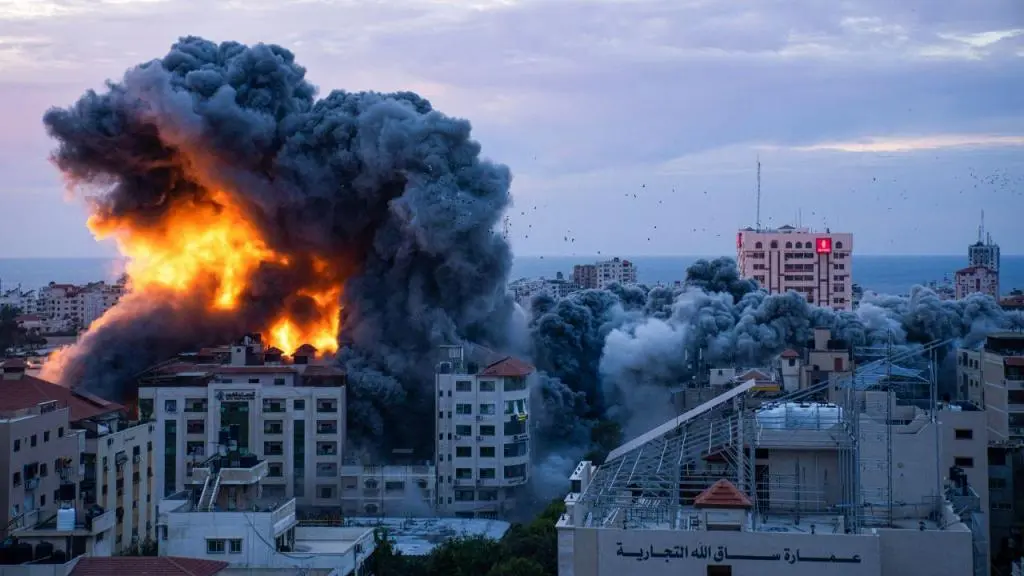
The Israel-Iran conflict entered its sixth day on Tuesday with both countries sustaining significant casualties following waves of missile strikes, drone attacks, and aerial bombardments in one of the region’s most dangerous escalations in decades.
The war, triggered by Israel’s preemptive strike on Iranian nuclear and military facilities on Friday, June 13, has since spiraled into a direct confrontation, with Iran retaliating with ballistic missiles and drones targeting major Israeli cities.
Israel Launches Preemptive Strikes
The conflict began with the launch of “Operation Rising Lion,” a coordinated Israeli assault on Iranian military and nuclear infrastructure. Israeli jets, accompanied by drones, struck Iran’s Natanz and Fordow nuclear enrichment facilities, missile factories, military airbases, and strategic command centers in Tehran and Isfahan.
According to Israel Defense Forces (IDF), more than 1,100 Iranian targets have been destroyed, including 120 missile launchers and several Iranian Revolutionary Guard Corps (IRGC) facilities. Israeli intelligence claims 40% of Iran’s missile-launch capabilities have been degraded.
Iranian Death Toll and Infrastructure Damage
Iranian authorities report at least 585 fatalities as of Tuesday, with over 1,000 others wounded. The casualties include at least 239 civilians, with numerous women and children among the dead, according to human rights monitors. Iranian state media confirmed heavy damage to military complexes, oil refineries, and energy plants.
The International Atomic Energy Agency (IAEA) later confirmed damage to underground centrifuge halls at Natanz, raising fresh concerns about nuclear material security and radiation containment.
Iran Retaliates with Missile and Drone Strikes
Within hours of the Israeli bombardment, Iran launched hundreds of ballistic missiles and drones targeting Tel Aviv, Haifa, Ramat Gan, Rehovot, and other urban centers. As of June 18, Israel reports intercepting over 90% of these projectiles, thanks to the Iron Dome, Arrow, and David’s Sling missile defense systems.
Despite high interception rates, Iranian strikes have caused significant civilian casualties and property damage.
Israeli Casualties and Civilian Impact
The Israeli Ministry of Health confirmed between 24 and 63 fatalities since the conflict began, with at least 592 people injured—10 of them critically. Hospitals in Tel Aviv and central districts continue to treat victims of collapsing buildings, flying debris, and fires caused by missile impacts.
- June 14: 5 killed, 172 injured.
- June 15: 9 killed, 200 injured; 42 wounded in Rehovot after a residential building was struck.
- June 16–18: Additional 10 fatalities reported, with over 100 cumulative injuries.
A missile strike in Ramat Gan leveled nine buildings, while another projectile destroyed a passenger bus in Herzliya, killing several onboard.
Air Supremacy and Ongoing Attacks
Israel claims it now has air supremacy over Tehran, allowing its air force to continue deep-strike operations with minimal resistance. On Monday and Tuesday, Israeli jets resumed bombing oil refineries, IRGC training sites, and storage depots in western Iran.
Iran responded with a reduced number of missile launches on Tuesday, indicating a possible depletion of its missile stockpiles. Intelligence sources suggest Iran is running low on precision-guided munitions and resorting to older, less accurate models.
U.S. Response and Military Movements
President Donald Trump has declared full support for Israel, stating over the weekend that the United States will defend Israeli skies if the conflict escalates further. The U.S. military has repositioned assets in the Gulf, including missile defense systems and aerial refueling tankers, though it has not yet directly engaged.
Trump also claimed that Iran expressed interest in ceasefire negotiations but warned Supreme Leader Ayatollah Ali Khamenei of “irreparable consequences” if the Islamic Republic continues its attacks.
Iran has warned that any direct U.S. military intervention would trigger an “all-out war.”
Regional and International Reactions
Several Middle Eastern nations have closed their airspace, and commercial airlines have suspended flights over Iran and Israel. Qatar, Oman, and the European Union have called for immediate de-escalation and offered to mediate talks.
Meanwhile, Iranian opposition figures, including exiled crown prince Reza Pahlavi, have called for regime change, stating that the conflict may present an opportunity for a political transition in Tehran.
Summary of Casualties and Damage
CountryFatalitiesInjuredKey Infrastructure Damage
Iran ~585+ ~1,000+ Nuclear sites, oil refineries, IRGC bases
Israel 24–63 592–1,000+ Residential buildings, bus routes, public facilities
The continued exchange of fire has triggered international alarm over the possibility of broader conflict in the Middle East, especially if Hezbollah or other Iranian proxies join the fray.
Outlook
Military analysts say the intensity of the conflict may reduce in coming days as both sides face missile and drone stockpile depletion. However, neither side has announced a willingness to halt operations. Israel says its campaign will continue until Iran’s offensive capacity is neutralized.
Iran, on the other hand, insists it will not surrender and has summoned the Swiss envoy (representing U.S. interests) to lodge a formal protest against American threats. The conflict has already caused significant humanitarian, economic, and geopolitical strain, with fuel prices rising sharply and stock markets fluctuating across Europe and Asia. nAs of Tuesday night, no formal ceasefire has been brokered.