






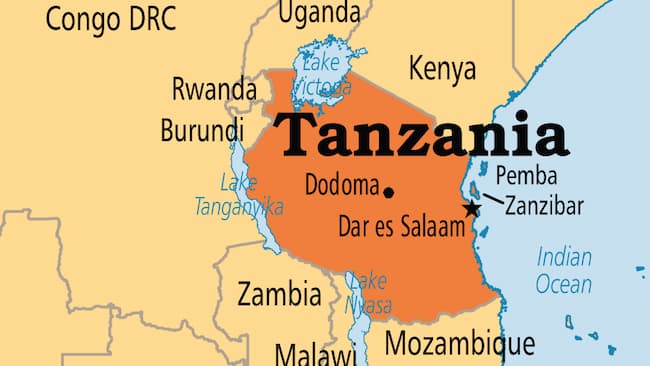
The government of Tanzania has implemented a nationwide ban on the use of foreign currencies in local transactions, in a strategic move aimed at strengthening the Tanzanian shilling and enhancing regulatory oversight of the country’s monetary system.
In an official statement released on May 2, the Bank of Tanzania (BoT) confirmed that all payments for goods and services within the national territory must henceforth be conducted exclusively in Tanzanian shillings. The new directive, which became effective on March 28, explicitly forbids businesses from quoting, advertising, or conducting transactions using foreign currencies such as the US dollar or the euro.
“No one is permitted to reject payments made in Tanzanian shillings,” the BoT declared, emphasizing that all agreements denominated in foreign currencies will now be subjected to stringent regulatory scrutiny.
The BoT clarified that any contracts signed or renewed after the effective date of the regulation are prohibited from including clauses that allow for foreign currency payments. However, contracts that were already in effect prior to the implementation date may continue to be honored during a transitional phase, although the central bank has not yet provided specific details on the duration or scope of this period.
The restrictions do not apply to tourists and non-resident visitors, who remain authorized to use foreign currencies through designated official channels such as licensed commercial banks and foreign exchange bureaus. These individuals may also continue to make payments using internationally accepted credit or debit cards, as well as mobile money platforms.
This policy shift comes amid a period of instability for the Tanzanian shilling. Despite registering a 9.51 percent gain against the US dollar during the latter half of 2024, the local currency experienced a 3.6 percent depreciation from April 2024 to April 2025. The BoT attributed this recent decline to seasonal fluctuations in foreign exchange availability, while reiterating its adherence to a flexible exchange rate policy.
“The central bank intervenes solely when necessary to ensure orderly conditions in the foreign exchange market,” the institution noted.
Nevertheless, Tanzania’s external reserves remain robust, with the central bank reporting holdings exceeding $5.6 billion as of the end of the first quarter of 2025—sufficient to cover approximately 4.5 months of import demand. The BoT expressed confidence that these reserves will remain stable in the foreseeable future.
To further support the local currency, authorities plan to bolster foreign reserves through continued purchases of gold and foreign currency, alongside measures aimed at promoting exports and reducing dependency on imports.
Economic indicators remain favorable, with the International Monetary Fund reporting a 5.5 percent growth rate for Tanzania’s economy in 2024. The IMF also highlighted low inflation and fiscal improvements, projecting continued expansion in 2025—projections that align with the BoT’s forward-looking outlook.