







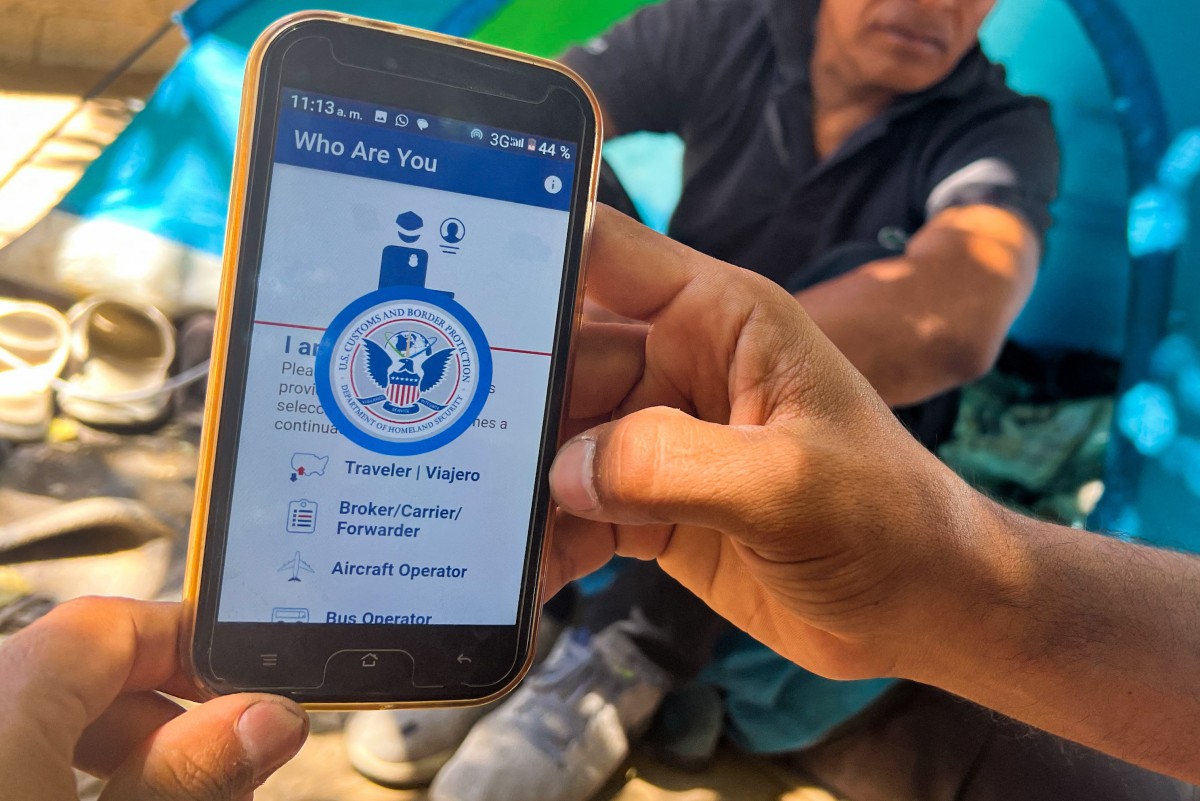
The United States has begun issuing self-deportation orders to migrants who entered the country under the Biden-era CBP One app program, with the Department of Homeland Security (DHS) confirming on Tuesday that formal termination notices have been served to affected individuals.
According to U.S. media reports, the directive could impact over 930,000 migrants who had previously obtained temporary residence through the CBP One app, a key tool in former President Joe Biden’s humanitarian parole strategy.

The DHS spokesperson, speaking to AFP, stated that the department is exercising its legal authority to revoke parole for individuals deemed to have entered illegally.
“Formal termination notices have been issued, and affected aliens are urged to voluntarily self-deport using the CBP Home App,” the senior DHS official said. “Those who refuse will be found, removed, and permanently barred from reentry.”
Launched in January 2023, the CBP One app allowed migrants—particularly from Mexico and Central America—to schedule appointments at U.S. ports of entry. The program was intended to create a more orderly and humane system for processing asylum seekers and other humanitarian cases.
However, the app-based system was effectively shut down on the first day of President Donald Trump’s second term in office. Trump, who campaigned on an aggressive anti-immigration platform, made repealing the CBP One program one of his first executive actions upon returning to the White House.
During his inauguration, President Trump reaffirmed his campaign pledge to deport “millions” of undocumented migrants, portraying the move as vital to restoring law and order. In past speeches, Trump controversially referred to some migrants as “animals” and “monsters,” linking illegal immigration to violent crime.
“Canceling these paroles is a promise kept to the American people to secure our borders and protect national security,” the DHS official added.
Affected individuals reportedly received notifications via email informing them that their parole had been terminated. DHS said the decision was made in line with its discretionary powers under U.S. immigration law.
This development follows a broader crackdown last month, when the Trump administration revoked temporary legal status for over 532,000 migrants from Cuba, Haiti, Nicaragua, and Venezuela. Those individuals were given a limited window to exit the country voluntarily.
As the U.S. government intensifies immigration enforcement, legal experts and humanitarian advocates have raised concerns about the sudden shift in policy and the humanitarian impact on migrants who had been previously granted entry through lawful channels.