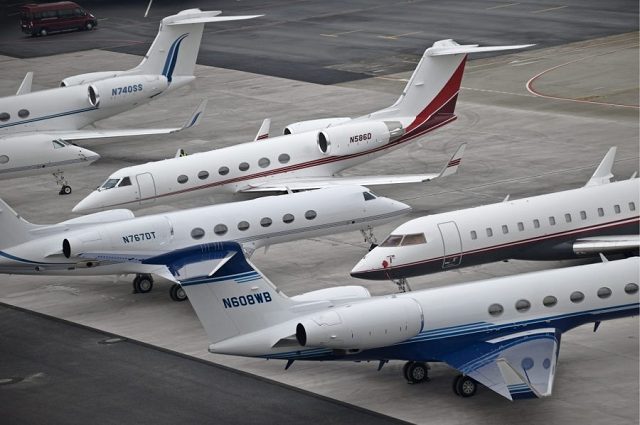
A new report has revealed that the Federal Government of Nigeria has lost over N120 billion in the past decade due to illegal private jet charter operations. These losses stem from weak enforcement, loopholes in regulations, and lack of coordination among aviation authorities.
The report, commissioned by the Minister of Aviation and Aerospace Development, Festus Keyamo, highlights security risks, outdated policies, and a lack of cooperation between agencies as major challenges facing the aviation sector. According to the findings, the government missed out on substantial revenue due to unregulated activities in the private charter sector.
Major Players Implicated
Several high-profile entities were named in the report as being involved in illegal charter operations. These include:
- Arik Air Ltd
- BUA International Limited
- Dominion Air Limited
- Executive Jets Services
- Max Air Ltd
- Rivers State Government
- Julius Berger Nigeria Ltd
- Nestoil Plc
Proposed Solutions
To tackle these issues, the task force has recommended several measures, including:
- Restructuring the General Aviation Terminal in Abuja to fix security lapses.
- Repealing the controversial 22-year aircraft age limit, which has been criticized as restrictive to industry growth.
- Strengthening the Nigerian Civil Aviation Authority (NCAA) to ensure compliance with regulations.
- Introducing a licensing framework for air charter brokers to bring more transparency to the sector.
The report states that implementing these measures will help Nigeria regain control over its aviation sector, boost security, and attract global investors.
Industry Experts Express Doubts
Despite these recommendations, aviation experts remain skeptical. They argue that without strict enforcement, illegal charter operations will persist.
John Ojikutu, an aviation security expert and CEO of Centurion Security Limited, criticized the NCAA for failing to enforce existing laws. He pointed out that many illegal charter flights are linked to political figures, making enforcement difficult.
“Many of these aircraft belong to political office holders or their associates. It’s a direct indictment on the NCAA. If they were serious about enforcement, these flights wouldn’t be happening,” he said.
Ojikutu also raised concerns about foreign-registered aircraft operating illegally in Nigeria. He questioned whether authorities had properly tracked these aircraft and enforced existing regulations.
“In my time, foreign-registered aircraft couldn’t operate beyond three months and had specific airports they were allowed to use. Today, these rules are not being enforced,” he added.
Challenges in Proving Illegal Operations
Aviation analyst Olumide Ohunayo agreed that gaps in regulation have enabled illegal activities. He called for better cooperation among aviation agencies to monitor unauthorized flights.
“The key issue here is that we acknowledge system failures. We need agencies like the NCAA, NAMA, and airport authorities to work together,” Ohunayo said.
He suggested digitizing aviation processes to improve transparency, proposing that flight operations be moved online for easier tracking.
A source who spoke anonymously explained how private jet owners disguise illegal charter services to avoid detection. Many falsely claim their aircraft are strictly for private use while secretly engaging in commercial operations.
“Some of these aircraft should only be flying 10 hours a month but end up logging 100 hours. They claim it’s for private use, but in reality, they’re running commercial operations,” the source said.
The source also revealed that payments for illegal charters are often made in cash or through proxies, making it difficult for authorities to track transactions.
Government’s Response
In June 2024, Minister Festus Keyamo set up a task force to address illegal private charter operations. The team was given three months to conduct a full audit of private jet operators and air charter companies.
This move was prompted by growing concerns from legal operators about money laundering, drug smuggling, and security threats linked to illegal charters. Intelligence agencies had also flagged these activities as national security risks.
While the task force has proposed reforms, experts stress that enforcement remains the biggest challenge. Without strict penalties and better oversight, illegal private jet operations may continue to thrive, costing the government even more revenue in the coming years.