







The Federal Government of Nigeria owes the Nigerian National Petroleum Company Limited (NNPCL) N7.74 trillion as a result of exchange rate differences on fuel imports, specifically for Premium Motor Spirit (PMS), commonly known as petrol.
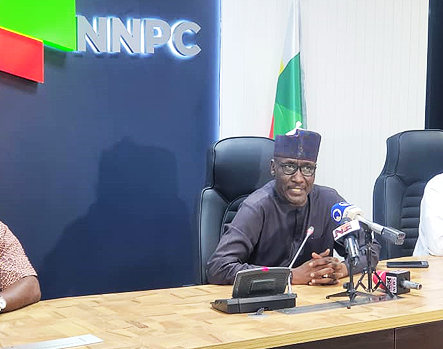
This debt accumulated between June 2023 and September 2024 when the country fully implemented the deregulation of the downstream oil sector. This debt arose because the government maintained fuel prices at a certain level despite purchasing it at higher rates due to fluctuations in the foreign exchange market. The information was disclosed by NNPCL in a presentation to the Federation Account Allocation Committee (FAAC) during its February 2025 meeting in Abuja.
According to FAAC records, the government plans to clear the N7.74 trillion debt within 210 days. In August 2024, NNPCL requested a refund of N4.71 trillion to cover outstanding costs incurred during fuel importation.
Exchange rate differentials occur when the value of a currency fluctuates between the time of a transaction and the time of settlement. For instance, if $1 was exchanged for N1,600 today but dropped to N1,500 tomorrow, the difference is the exchange rate differential. In the case of fuel imports, the government had been covering this difference to stabilize fuel prices, but now NNPCL is seeking reimbursement for those costs.
FAAC’s document shows that the estimated exchange rate differential for July to September 2024 was calculated using the Nigerian Autonomous Foreign Exchange Market rate, meaning the actual debt amount may change depending on future forex rates.
A breakdown of the figures indicates that while the total exchange rate differential debt stood at N10.499 trillion, the government had already repaid N2.756 trillion between November 2023 and September 2024, reducing the outstanding balance to N7.74 trillion.
The report further highlights that payments are ongoing, with a weighted average exchange rate applied as of February 7, 2025. The debt, which stood at N1.29 trillion in June 2023, steadily increased month by month, reaching N7.74 trillion by September 2024. This amount accounts for 14.07% of Nigeria’s N54.99 trillion national budget for 2025.
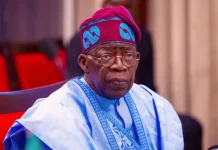
When President Bola Tinubu announced the removal of fuel subsidies on May 29, 2023, it was seen as a significant step towards economic reform. However, international organizations such as the International Monetary Fund (IMF) and the World Bank have since suggested that the government may have reintroduced subsidies indirectly.
A proposed economic stabilization plan in June 2024 revealed that the government planned to allocate about N5.4 trillion for fuel subsidies, contradicting previous statements that subsidies had been completely eliminated.
Energy expert Wumi Iledare has questioned why NNPCL is requesting reimbursement from the government when it sells oil in foreign currency on the government’s behalf. He noted that other international oil companies pay royalties and taxes, which are remitted to the government. According to him, it is unclear why NNPCL expects the government to return money to it unless NNPCL has been funding government operations in foreign currency and is now seeking compensation due to exchange rate fluctuations.
Meanwhile, members of the FAAC committee have raised concerns about NNPCL’s revenue reporting inconsistencies. Tunde Aregbesola, Ogun State’s Accountant-General, pointed out a significant drop in revenue compared to previous months and questioned the accuracy of the figures. According to the committee minutes, NNPCL still had about N10.8 trillion in receivables that required reconciliation.
FAAC Chairperson Oluwatoyin Madein acknowledged these concerns and assured stakeholders that an Alignment Committee was working on reconciling the figures. However, some members have demanded a specific timeline for completing the reconciliation process to ensure transparency in government accounts.






 N7.74 trillion as a result of exchange rate...)