









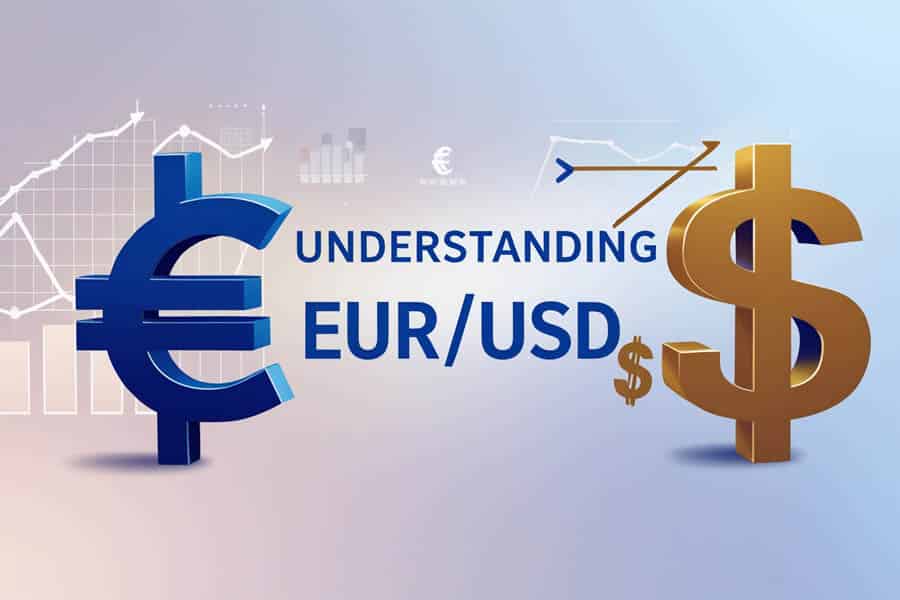
The EURUSD (euro to United States dollar) pair is the most liquid foreign exchange market. Traders watch the pair closely to see how political and economic events influence the price. Here’s what new traders should know.
Quick basics
The pair shows how many dollars are needed to buy one euro. Price shifts reflect how investors view the strength of each economy. When the price rises it suggests the euro is gaining strength compared with the dollar. When the price falls it indicates the dollar is gaining strength compared with the euro.
Observing this relationship on an EURUSD chart, provided by platforms like Exness, can help new traders understand the balance between the two economies. With regular observation traders learn that the pair reacts strongly to central bank statements and to economic releases that influence interest rate expectations.
Liquidity
High liquidity usually results in tighter spreads and faster trade execution. For new traders this can be helpful because the cost of entering and leaving a position is often more predictable. Liquidity also tends to reduce sharp price jumps that can occur when markets absorb new information.
Liquidity cannot eliminate volatility, but it can make short term movements easier to interpret. A liquid market attracts many types of traders, which means different styles often coexist and there is a steady flow of orders that encourages a more stable trading environment.
Economic data
Economic data guides most short-term adjustments in the euro dollar relationship. Common reports include employment figures, inflation readings, consumer surveys and industrial output.
When inflation appears persistent, investors may expect the central bank to raise interest rates that can strengthen that currency. When employment data weakens, traders may anticipate slower economic activity which can affect rate expectations.
For beginners the key is not to memorize every number but to understand how data influences sentiment (the collective view of traders and investors). A calendar that marks major economic events can help new traders prepare for increases in volatility. Preparation is helpful because data releases often move price quickly and this movement may happen too fast for manual reaction unless a plan is already in place.
Central banks
The European Central Bank and the Federal Reserve guide long term direction for the euro and the dollar. Their policy statements offer clues about future interest rates and economic expectations.
When one bank signals a willingness to adjust policy earlier than the other, the pair often begins to trend gradually. New traders should try to read central bank summaries with patience since the language may appear technical at first. Over time the basic themes become clearer, and the clarity helps traders place news events in context.
It’s worth noting that markets often respond not only to the policy itself but to the anticipated path of future decisions. This is why the pair may move even when interest rates remain the same.
Common trading sessions
The pair is active throughout the day due to global market overlap. The European session often sets the early directional tone while the United States session can reinforce or reverse it. During these periods trading volume tends to be higher which can create more structured movement.
New traders might be tempted to enter positions during very quiet hours, which may lead to unexpected price drift. The overlap between European and United States sessions is often the most active period, which means it can offer more reliable movement for traders who rely on short term signals.
Sentiment
Changes in sentiment can create short lived surges or declines even when there is no major news. For example, a shift toward safer assets can strengthen the dollar since it’s often viewed as a useful reserve currency. A shift toward risk taking can strengthen the euro if investors seek assets in that region.
New traders will learn from observing these shifts, because understanding sentiment helps explain price behaviour during periods without clear data releases.
Some traders track commodities because certain shifts in commodity markets can influence expectations about economic strength. Advanced traders observe the US dollar’s relationship with various assets, including gold; the XAU USD price today is available on the same platforms, such as Exness. Monitoring related markets can build a more complete picture of global activity.
Improving risk management
Beginners might focus on entry signals and overlook risk management. A structured plan can prevent large and unexpected losses. One simple step is to decide how much account capital to risk on any single trade.
Another is to place protective orders that close a position if price moves beyond a chosen level. New traders should choose these levels before entering a trade because decisions made during stress can lead to inconsistent outcomes.
Calm planning improves the chance of maintaining discipline. Consistent risk management also gives traders a reliable way to measure performance over time which is essential for making meaningful improvements. All traders should be wary of overconfidence: Investopedia’s Adam Hayes notes that overconfidence can result in losing money much more quickly.
Setting realistic expectations
Newcomers might expect quick progress, but trading skill develops gradually. The euro dollar pair offers learning opportunities because it reacts to major global events with more clarity than some other markets.
Patience helps traders learn from experience rather than rushing into new strategies. Keeping a simple record of trades and noting the reason for each decision can help identify useful patterns. With steady practice traders can begin to recognize how the pair behaves according to common events.
A solid routine for learning
A routine helps new traders filter information and respond more consistently. A basic routine might include reviewing recent price movement, reviewing scheduled economic events, and selecting levels that guide trade decisions.
Having a routine in place will also support emotional control, which is important when price moves unexpectedly. As traders gain confidence they might experiment with new analytical methods. Even when exploring new techniques, it may be helpful to keep the core routine unchanged since consistency will support a clearer evaluation of results.
A solid routine helps traders avoid confusion and maintain steady progress, which is often more valuable than rapid strategy changes.







 pair is the most liquid foreign exchange market. Traders watch the pair closely to see how political and economic events influence the price. Here’s what new traders should know.)