


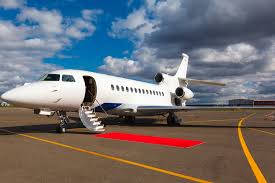
In a move to recover billions of naira in unpaid import duties, the Federal Government has grounded approximately 60 private jets across major airports in Nigeria. The action, enforced by the Nigeria Customs Service (NCS), has led to the sealing of several private jet hangars in Lagos and Abuja.
The affected aircraft reportedly include high-end models such as the Bombardier BD-700 Global 6000, 6500, and 7500. Many of the jets are owned by senior executives in the banking sector, multinational oil firms, and other prominent private individuals. In response to the clampdown, some aircraft owners have begun lobbying high-level government officials, including the Presidency, to secure the release of their jets.
Officials within Customs and the aviation sector confirmed the enforcement began quietly earlier this week, without public notice. The NCS is seeking to recover duties that were allegedly evaded during the importation of these aircraft. A verification exercise was previously announced to allow jet owners to regularize their documentation and tax payments.
That exercise, initially scheduled to end in October 2024, was extended by one month. However, with no significant compliance from defaulters, enforcement actions began earlier this week.
Confirming the development, NCS spokesperson Abdullahi Maiwada stated that the grounding of the jets was necessary to compel compliance. “Yes, enforcement has started. The aircraft are grounded for the non-payment of customs duty. As soon as owners come forward to regularize their payments, they will be released,” he said.
Maiwada added that Customs had given ample time and multiple extensions to jet owners but would now enforce existing laws. “We’ve over-extended the grace period. Now we are simply doing what the law requires—collecting what is due to the Nigerian people.”
Sources within Customs revealed that some affected owners have begun reaching out to the Presidency and other senior government figures. One major commercial bank has reportedly pledged to settle its dues by the following week, while another is negotiating through intermediaries. A major energy firm with three grounded jets is also said to be arranging payment.
A circular dated June 4, 2025, and signed by a Deputy Comptroller-General on behalf of the Comptroller-General of Customs, authorized a “temporary unsealing” of some aircraft. This move is intended to facilitate compliance, allowing owners to present documents and negotiate payment terms. However, the circular clarified that this does not amount to a waiver of statutory obligations.
Aviation engineer and former deputy director of engineering at the now-defunct Nigerian Airways, Frank Oruye, urged both the NCS and private jet operators to adopt global best practices. He noted that operators should pay what is due to the government, while Customs should be fair and professional in its enforcement.
“For a healthy aviation ecosystem, stakeholders must act with understanding and professionalism. Investors should be ready to meet their fiscal obligations, and Customs should align with international standards in applying duties,” he said.
Oruye recounted past challenges in assessing duties on aircraft components, warning against outdated practices that hinder the industry. “In the 70s to 90s, Customs demanded duties on repaired parts as if they were newly imported—even if the part had been previously cleared. This approach discourages efficient airline operations,” he added.
Retired Group Captain John Ojikutu also expressed concern, particularly over the number of foreign-registered aircraft operating in Nigeria without proper oversight. He described it as a potential national security risk and urged both the NCS and the Nigerian Civil Aviation Authority (NCAA) to improve regulatory enforcement.
“Why are foreign-registered jets flying freely within Nigeria? Where is the security clearance? This is a breach of aviation norms and poses a risk, especially given the country’s security climate,” Ojikutu said.
He called for the NCAA to revisit its regulatory framework to prevent such lapses and ensure stricter control over aircraft operations within Nigeria.