Keypoints
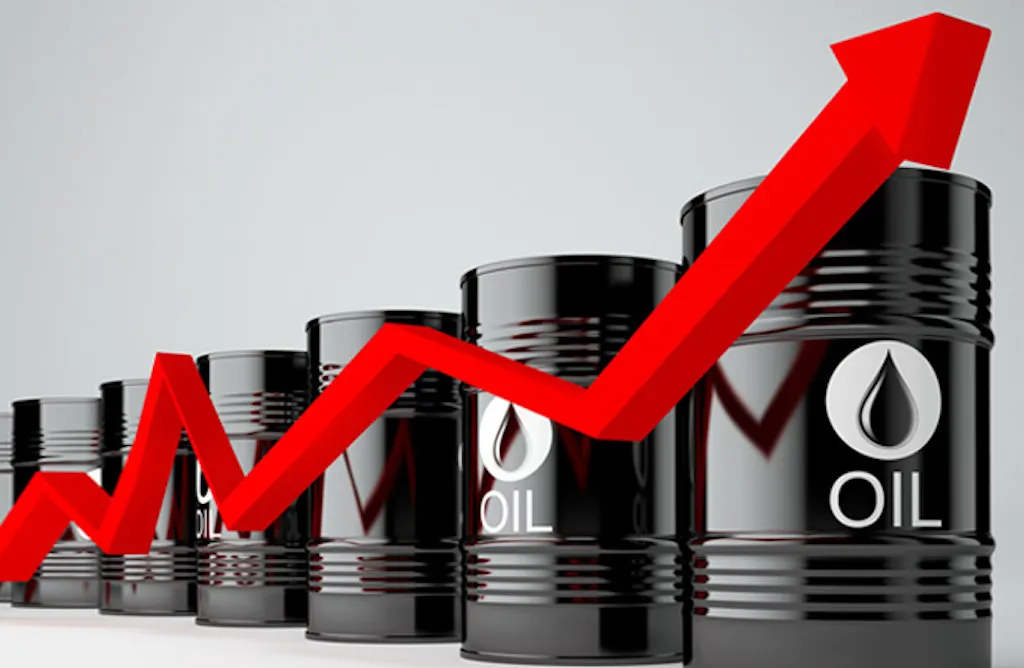
- Global oil prices surged past $111 per barrel on Tuesday as the 8:00 P.M. ET deadline set by President Donald Trump for Iran to reopen the Strait of Hormuz fast approaches.
- Both Washington and Tehran have rejected a 10-point peace plan mediated by Pakistan; Trump called the proposal “significant” but ultimately “not good enough.”
- President Trump has explicitly threatened the “complete demolition” of Iran’s bridges and power plants, stating he is “not at all” concerned about committing potential war crimes.
- The blockade of the Strait—which handles 20% of global oil and LNG—has created a divide in the Middle East: nations like Saudi Arabia and the UAE utilize bypass pipelines, while Iraq, Kuwait, and Qatar face severe economic strangulation.
Main Story
The global energy market is on a knife-edge as the countdown to President Donald Trump’s Tuesday night deadline enters its final hours. Brent crude futures rose to $111.53 a barrel today, a record increase since the conflict began on February 28.
The surge follows the failure of a Pakistani-led mediation effort; while Iran presented a 10-point counter-proposal calling for a permanent end to hostilities and the lifting of sanctions, the White House maintained that only a total reopening of the Strait of Hormuz would avert military escalation.
The President’s rhetoric has turned increasingly toward the destruction of Iran’s civilian backbone. In a press conference on the White House South Lawn, Trump warned that if a deal is not reached by 8:00 P.M. ET (0000 GMT Wednesday), the U.S. will initiate a plan to put every power plant in Iran “out of business.”
Tehran has countered these threats by labeling them “delusional” and encouraging citizens to form human chains around energy facilities. Meanwhile, the International Energy Agency (IEA) warned that the current supply shock exceeds the 1973 and 1979 crises combined, as the blockade strands nearly 300 million cubic meters of LNG daily.
The Issues
The primary conflict is a clash between military strategy and international humanitarian law. Trump’s stated intent to target “every bridge” and “every power plant” directly challenges the Geneva Conventions, which protect civilian infrastructure. Legal experts and UN officials have voiced alarm, noting that such strikes would cause “excessive incidental civilian harm.” Economically, the crisis has exposed the vulnerability of Gulf states that lack alternative export routes. Unlike Saudi Arabia’s East-West Pipeline or the UAE’s Habshan-Fujairah link, nations like Kuwait and Qatar are physically trapped by the blockade, leading to billions in lost revenue and a desperate search for “Hormuz-free” infrastructure for the future.
What’s Being Said
- “Tuesday, 8:00 P.M. Eastern Time!… a whole civilization will die tonight,” President Donald Trump posted on Truth Social, framing the deadline as a “Final Final” ultimatum.
- Iranian President Masoud Pezeshkian remained defiant, stating, “Iran does not forget its friends,” as Tehran selectively allows passage for non-Western vessels while maintaining the blockade.
- The UAE’s special envoy for business argued in the Financial Times that the crisis will force a permanent shift: “The pipelines will be expanded… trade corridors connecting the region’s economies will be formalised.”
- Fatih Birol, Executive Director of the IEA, stated that the current crisis is “more serious than the ones in 1973, 1979 and 2022 together.”
What’s Next
- Market participants are in “wait and see” mode, with many traders staying on the sidelines until the 8:00 P.M. ET window passes.
- If the deadline expires without a deal, the U.S. is expected to launch “Operation Epic Fury,” targeting the Iranian energy grid and transportation networks.
- Long-term, regional powers are expected to rapidly invest in multi-billion dollar pipeline expansions to bypass the Strait of Hormuz permanently, seeking to insulate their economies from future “chokepoint” geopolitics.
Bottom Line
With oil prices at a breaking point and diplomatic channels stalled, the next few hours will determine whether the Middle East descends into a campaign of infrastructure demolition or finds a “revolutionarily wonderful” exit from the brink.