






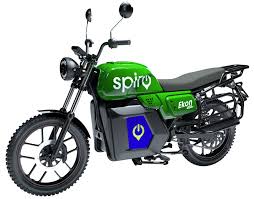
In a bid to promote cleaner and more sustainable transport in Nigeria, electric vehicle company Spiro is intensifying efforts to advance electric mobility across the country.
The company says its long-term vision is to support Nigeria’s transition to a low-emission transport system, noting that electric mobility is gaining global traction due to rising fuel costs, urban congestion, environmental concerns, and the push for cleaner alternatives. Spiro aims to make electric two-wheelers a viable and scalable solution within Nigeria’s transport sector, despite ongoing challenges around infrastructure and policy.
Rahul Gaur, Spiro’s director for the West Africa region, stated that the company is working with state governments to encourage adoption and position electric mobility as a cleaner alternative to fossil fuel-based transport.
“We want to lead the green revolution in Nigeria,” Gaur told BusinessDay. “With more bikes on the road, more users sharing the benefits, a cleaner environment, and government support, we believe electric mobility is the future.”
To adapt to local realities and address energy access challenges, Spiro is exploring solar-powered battery swap stations and home-charging solutions to give customers flexibility while reducing reliance on unstable grid electricity.
“We are working on solar energy for our swap stations and providing home chargers for added convenience,” Gaur said. “By offering electric bikes with lower running costs and simplified maintenance, riders can save up to 35% on fuel and 40% on maintenance compared to petrol-powered motorcycles.”
The company has expanded its operations across 10 states and introduced a battery-swapping model to reduce fuel dependency. It has onboarded over 100 dealerships across Nigeria and is set to commission a large-scale assembly plant in Sagamu by September, with a planned capacity of 50,000 bikes annually.
“We will also establish swap stations across 10 to 12 major states within the next eight to nine months,” Gaur added.
Spiro’s electric mobility model, Gaur noted, can help the government cushion the impact of fuel price fluctuations by providing a more stable, low-cost alternative for transport.
The company also offers to set up command centres for governments to monitor and manage electric vehicle activities in real time, providing enhanced security and asset control for both public and private stakeholders. Spiro’s electric bikes and batteries come with built-in tracking systems that allow for remote immobilisation in cases of theft.
“For governments, we can build command centres to monitor and control all bikes in a city or state at the click of a button,” Gaur said.
By promoting electric mobility, Spiro aims to play a key role in shaping Nigeria’s move towards a cleaner, more sustainable urban transport system while reducing carbon emissions and supporting environmental goals.