








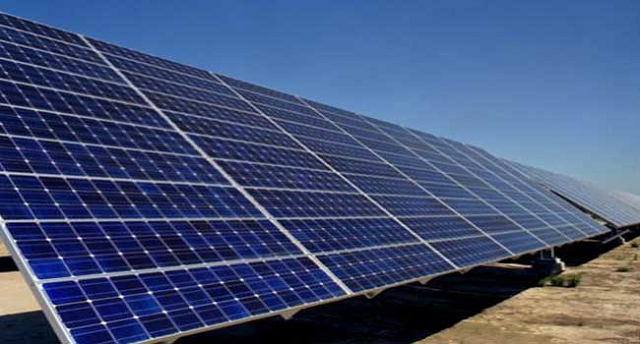
Nigerians spent about ₦242.68 billion on solar panel imports in the first half of 2025, reflecting the country’s sustained appetite for renewable energy solutions even as the Federal Government intensifies efforts to encourage local manufacturing.
According to the latest Foreign Trade Statistics report from the National Bureau of Statistics (NBS), photovoltaic cells assembled in modules or made up into panels valued at ₦125.29 billion were imported between January and March 2025, while an additional ₦117.39 billion worth of panels entered the country in the second quarter.
This brings total imports for the first six months of 2025 to ₦242.68 billion — a notable slowdown compared to ₦237.3 billion recorded in just the last quarter of 2024. The decline suggests that import demand may be easing as local capacity begins to expand.
The Federal Government has been ramping up its efforts to reduce reliance on imported solar equipment. The Managing Director of the Rural Electrification Agency (REA), Abba Aliyu, disclosed that Nigeria’s installed solar module manufacturing capacity has grown from 110 megawatts to 600 megawatts, with major facilities in Lagos (100MW), Abuja (250MW), Idu, and Port Harcourt.
Aliyu added that more than 50 renewable energy service companies now operate in Nigeria, compared to around 10 a few years ago. “We are changing the narrative,” he said. “Nigeria now has the capacity to produce solar panels locally and support the transition to clean energy.”
In March, the Minister of Science and Technology, Uche Nnaji, announced plans to restrict solar panel imports under an Executive Order promoting local content in science, engineering, and technology. He revealed that the National Agency for Science and Engineering Infrastructure (NASENI), in partnership with private investors, had already commenced local production.
“With lithium in abundance here in Nigeria, we are processing materials for batteries and ensuring that homes, hospitals, and institutions benefit from clean mini-grid solutions. Personally, I have been off-grid for three years, and it works,” Nnaji said.
However, PricewaterhouseCoopers (PwC) has urged caution in implementing the proposed import restrictions. In its report titled “Rethinking Nigeria’s Proposed Solar Panel Import Policy,” the firm warned that an abrupt ban could hinder energy access, discourage investors, and trigger short-term supply shortages.
“While the push for local industrialisation is commendable, a phased reduction in imports over a three- to five-year period would be more effective,” PwC advised. The firm also recommended that government efforts focus on creating an enabling environment for manufacturers and enforcing strict quality standards to curb the influx of substandard panels.
Meanwhile, the State House has taken a step toward energy independence with the installation of solar panels at its conference centre, signalling the government’s gradual shift to renewable power. The 2025 approved budget allocated ₦10 billion for a mini-grid solar project at the Presidential Villa — part of the “Solarisation of the Villa with Solar Mini Grid” initiative.
The move is expected to reduce the Villa’s dependence on the national grid and mitigate the impact of rising electricity tariffs, though it also highlights broader concerns about the reliability of Nigeria’s power supply.