







Vice President Kashim Shettima has announced that Nigeria no longer views food security through a narrow agricultural lens but as a fundamental macroeconomic and national security priority.
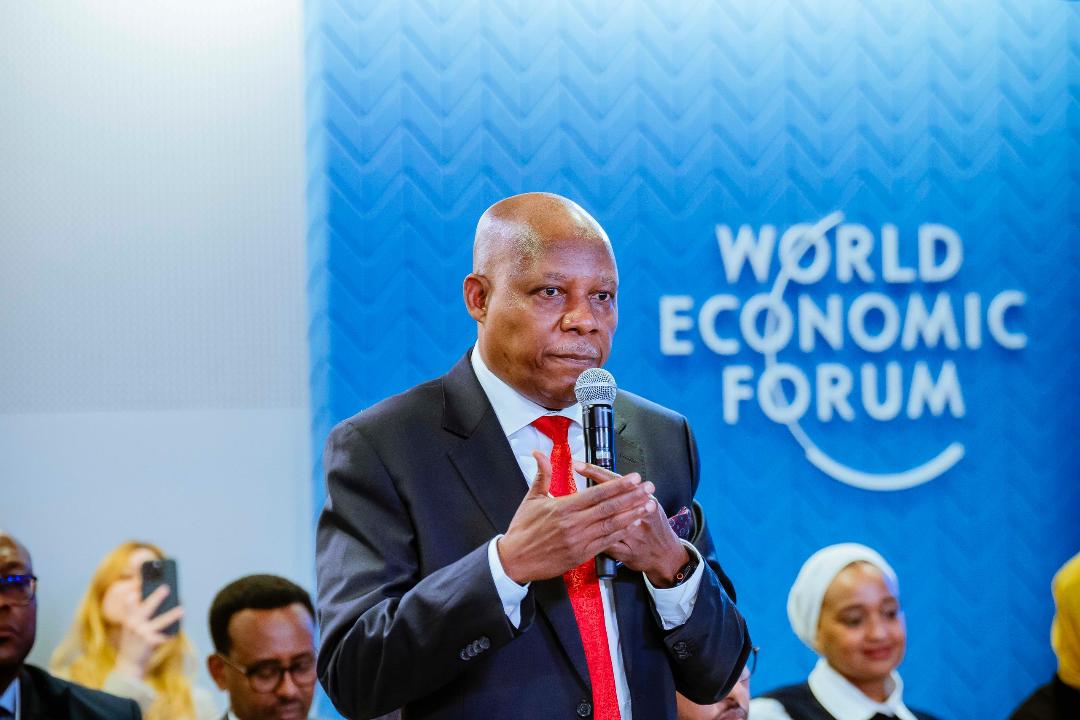
Speaking on Thursday, January 22, 2026, at a high level panel titled When Food Becomes Security during the World Economic Forum in Davos, Shettima explained that the Federal Government is shifting toward a multidimensional strategy to insulate the nation from global supply chain shocks.
He noted that the Renewed Hope Agenda now treats food production as a frontline defense against inflation and foreign exchange volatility given that staple imports like wheat and dairy directly impact the cost of living for millions of Nigerians.
A cornerstone of this new strategy is the launch of the Back to the Farm initiative which is designed to resettle displaced farmers in conflict affected regions by providing them with agricultural inputs, insurance, and access to restart capital.
To protect these vulnerable areas the government is creating specialized food security corridors and strengthening community based security engagements to ensure farmers can return safely to their land. Shettima highlighted that many of Nigeria’s primary food baskets are currently security challenged making the restoration of peace in these regions a prerequisite for national food stability.
Addressing climate challenges the Vice President stated that the government is prioritizing the distribution of drought resistant and flood tolerant crop varieties such as rice, sorghum, and millet.
This ecological adaptation is necessary because of the varied climatic pressures facing the country from desertification in the Sahelian North to seasonal flooding in the riverine South. By promoting local substitutes like cassava flour and millet the government aims to correct structural imbalances in the economy and reduce the billions of dollars spent annually on food imports.
Shettima concluded his Davos presentation by urging African leaders to deepen regional integration under the African Continental Free Trade Area to boost intra-African trade beyond the current 10.7 percent level.
He expressed optimism that making smallholder farmers and fishers investable at scale within the next 12 months will move Nigeria from a state of slumber to becoming a dominant agricultural force. The Vice President emphasized that a successful food strategy will not only lower food prices but also serve as a pillar for national stability and regional cohesion across West Africa.