For the second year running, leading financial institution, Fidelity Bank Plc, has emerged the company with the highest earnings per share on the Nigerian Exchange Limited (NGX) based on half year financial figures.
Fidelity Bank, Seplat Energy, Total Energies, Okomu oil, Presco, Dangote Cement, MTN Nigeria, BUA Foods, First City Monument Bank (FCMB) and Geregu Power emerged as the companies with the highest earnings per share within the review period.Earnings per share (EPS) is a company’s net profit divided by the number of common shares it has outstanding.
It also indicates how much money a company makes for each share of its stock and is a widely used metric for estimating corporate value.A higher EPS indicates greater value because investors will pay more for a company’s shares if they think the company has higher profits relative to its share price.
Fidelity Bank recorded an earnings per share of N184 in the first half of 2023 from N79 in the first half of 2022. The shares outstanding stand at 32.01 million, with a price which stood at N7 and a traded volume of 32.15 million as of 12:59 p.m. on Friday.
The bank’s profit for the period stood at N53.3 billion in the first half of 2023 from N22.84 billion in the similar period of 2022. Fidelity Bank’s cash and cash equivalents rose to N501.54 billion in the first half of 2023 from N276.07 in the first half of 2022.
It would be recalled that the bank’s shareholders recently approved a capital raising exercise via a Public Offer for up to 10 billion Ordinary Shares and Rights Issue of up to 3.2 billion Ordinary Shares representing one new share for every 10 shares held to new and existing shareholders respectively.
Exciting news, everyone! UMIDIGI has just unveiled the fantastic G5 phone, brimming with incredible features and offered at delightful prices. You won’t want to miss out on grabbing your very own G5 from the Official AliExpress Store
The UMIDIGI G5 showcases a sleek, glossy design that’s simply stylish. With a stunning 50MP ultra-clear dual camera (50MP main + 2MP depth camera) and a cheerful 8MP front camera, it’s a photography champ.
The big 6.6-inch HD+ display with a super smooth 90Hz high refresh rate is a real visual treat, powered by the lively T606 octa-core processor.
And the 5000mAh battery keeps the fun going and going, plus it supports zippy 10W fast charging. With a generous 8+8GB RAM and 128GB storage, the G5 offers tons of space for your memories.
Instagram and TikTok have emerged as two of the most popular and important platforms in the ever-changing social media environment. These platforms have not only changed the way we consume information, but they have also provided new opportunities for artists to display their skills and reach a worldwide audience.
As content creators consider their alternatives, the choice between Instagram and TikTok becomes increasingly important. We go into the distinct aspects of both platforms in this feature piece to help creators make an informed decision about where to focus their creative efforts.
Instagram: Where Visual Storytelling Takes Center Stage
Instagram, founded in 2010, has grown into a versatile platform that boasts over a billion monthly active users. Initially conceived as a photo-sharing app, Instagram has since evolved to accommodate various content formats, such as photos, videos, Stories, IGTV, and Reels. This adaptability offers creators a wide canvas to express their ideas and connect with their audience.
Key Features and Benefits of Instagram:
Visual Aesthetic: Instagram is synonymous with visual storytelling. It’s the perfect place for creators who thrive on curated images, showcasing their products, services, and personal brand in a polished and engaging manner.
Diverse Content Formats: From the short-lived Stories to the longer-form IGTV and the snappy Reels, Instagram provides creators with the flexibility to experiment with different content types and styles.
Audience Engagement: Instagram’s engagement features, such as likes, comments, and direct messaging, facilitate direct interaction with followers. This fosters a sense of community and helps creators build genuine relationships.
Targeted Reach: Instagram’s extensive suite of advertising tools allows creators to precisely target their content based on demographics, interests, and behavior, ensuring that the content reaches the right audience.
TikTok: Embracing Short-Form Creativity
TikTok, launched in 2016, took the social media world by storm with its emphasis on short-form video content. Known for its addictive and immersive experience, TikTok quickly gained popularity among a younger demographic and has maintained its status as a platform for viral challenges, dance trends, and creative expression.
Key Features and Benefits of TikTok:
Bite-Sized Content: TikTok’s hallmark is its 60-second videos, which compel creators to distill their content into short, attention-grabbing clips that cater to users’ fleeting attention spans.
Discoverability: TikTok’s “For You Page” (FYP) algorithm promotes content to users based on their preferences, regardless of the creator’s follower count. This levels the playing field and provides new creators with opportunities to go viral.
Engagement and Interactivity: TikTok encourages user participation through features like duets, where users can collaborate on videos, and challenges that unite a global community under a shared theme.
Trendsetting Platform: TikTok has a unique ability to set trends that spread across the platform and beyond, making it an ideal platform for creators who want to be at the forefront of cultural movements.
Choosing the Right Platform: A Considered Approach
The decision to invest in Instagram or TikTok should be guided by a creator’s unique content style, goals, and target audience. Instagram’s emphasis on visual aesthetics and diverse content formats suits creators who prefer a more polished and curated approach. On the other hand, TikTok’s bite-sized content and trendsetting potential cater to those who thrive on spontaneity and community engagement.
It’s also important to note that many creators don’t limit themselves to a single platform. Cross-promotion across Instagram and TikTok can help creators leverage the strengths of both platforms to maximize their reach and impact.
In conclusion, both Instagram and TikTok offer unparalleled opportunities for creators to share their content and connect with audiences in distinctive ways. The choice between the two hinges on the creator’s content style, engagement preferences, and objectives. By understanding the unique strengths of each platform, creators can make an informed decision that aligns with their creative vision and audience aspirations in the ever-evolving realm of social media.
Vertiv, a global provider of critical digital infrastructure and continuity solutions, has been named as ‘The Most Innovative Data Centre Cooling Company of the Year’ at the 19th annual Titans of Tech Africa Awards.
Also known as the Nigerian tech industry’s ‘Grammys’, the Titans of Tech Awards celebrate the movers and shakers within the local sector, acknowledging both organisations and individuals at the forefront of encouraging technology adoption and usage in Nigeria and across the African continent.
Key criteria for award winners included solving recognised technology problems, meeting network requirements, optimising service and performance, and enhancing customer service, as well as overall quality of innovation, contribution to ICT advancement, originality and vision, potential involvement in positive industry growth and service, market success, and contribution to end-user quality-of-experience and service efficiency.
Innovation and achievement, integrity and consistency, impact, community Involvement, strategy for growth, professional accomplishment, and local content were also important decisive factors for the award judges.
Says Gbenga Adebowale, enterprise sales director for Central Africa at Vertiv: “Feedback from the Titans of Tech Africa judging panel was that Vertiv has been recognised for its tech-driven critical solutions, in particular for our all-in-one solution combining power, cooling, monitoring, and racks. Our history of innovation, consistency and passion for excellence were also noted.
“Furthermore, Vertiv’s commitment to continually add value to our customers’ operations, as well as our strong drive to meet and exceed client expectations and reliable delivery, all played a role in our winning this award.
“Vertiv is thrilled to have received the title of Most Innovative Data Centre Cooling Company of the Year,” he continues. “As a business, we have placed serious focus on the African region, and Nigeria is a critical country for us.
“This recognition from the Titans of Tech Awards emphasises our efforts in helping local businesses tackle their data centre cooling challenges, through Vertiv’s Thermal Management solutions offering, and is something that we will continue to do into the future. We would like to extend our gratitude not only to the Titans of Tech Awards judges for placing Vertiv as the leader in this space, but also to our local customers and partners for their continued support,” Adebowale concludes.
Nigeria’s external reserves fell by $915 million following the Central Bank of Nigeria’s formal floating of the naira and liberalization of the foreign currency market.
According to CBN statistics released on Sunday, reserves declined from $34.66 billion on June 14, 2023, when the naira was floated, to $33.74 billion on August 24, 2023.
On June 13, a day before the CBN announced the naira float, the naira closed at 471.67/$ in the Investor & Exporter FX market. Following the news, the local currency plummeted to more than 700/$ in the I&E window.
Since then, the naira has traded at or above 700 per dollar. On Saturday, the naira was purchased and traded for 900/$ and 915/$ on the parallel market. Pounds Sterling were purchased and traded for N1160 and N1180, according to Bureau de Change operators.
At the I&E window, the naira commenced trading on Friday at 773.29/$ and hit a high of 799.9/$ before closing at 778.42/$.
Mr Folashodun Shonubi, acting Governor of the Central Bank of Nigeria, stated at the most recent Monetary Policy Committee meeting, “Accretion to external reserves remains weak while foreign exchange demand pressure persists.”
While emphasizing that the apex bank will rescue the naira from further depreciation, he promised to crack down on unlicensed Bureau de Change operators.
The news comes after the Nigerian National Petroleum Corporation announced a $3 billion loan from Africa Import and Export Bank as a temporary solution to boost the country’s currency supply.
Aminu Gwadabe, President of the Association of Bureau De Change Operators of Nigeria, stated that the CBN will be severe on unlicensed operators in their attempts to stabilize the naira.
“At a sensitisation engagement between the CBN and a few of our compliance officers across the zones, the apex bank reiterated that by August 31, 2023, any breaches on the allowable margin of -2.5 per cent and +2.5 per cent on the average weighted rate of I&E closing rate, rendition of returns and payment of penalties, if any, will lead to revocation of the operating licence of the operator,” he said.
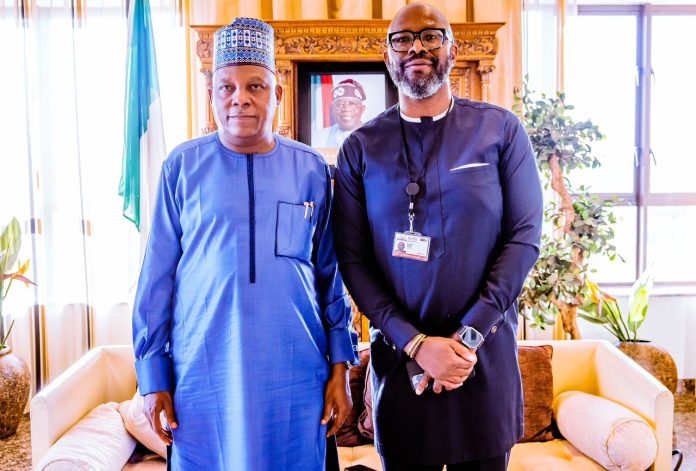
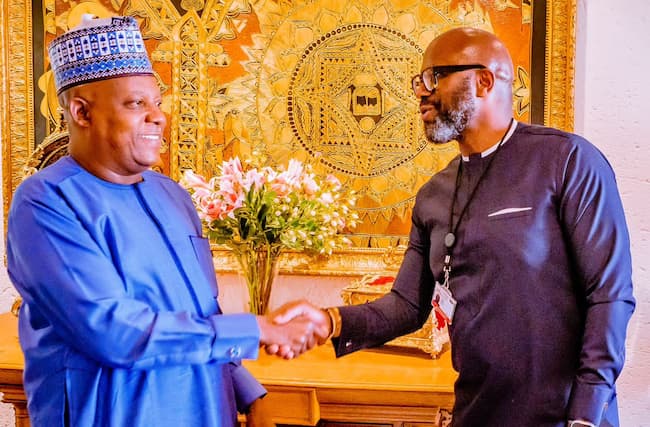
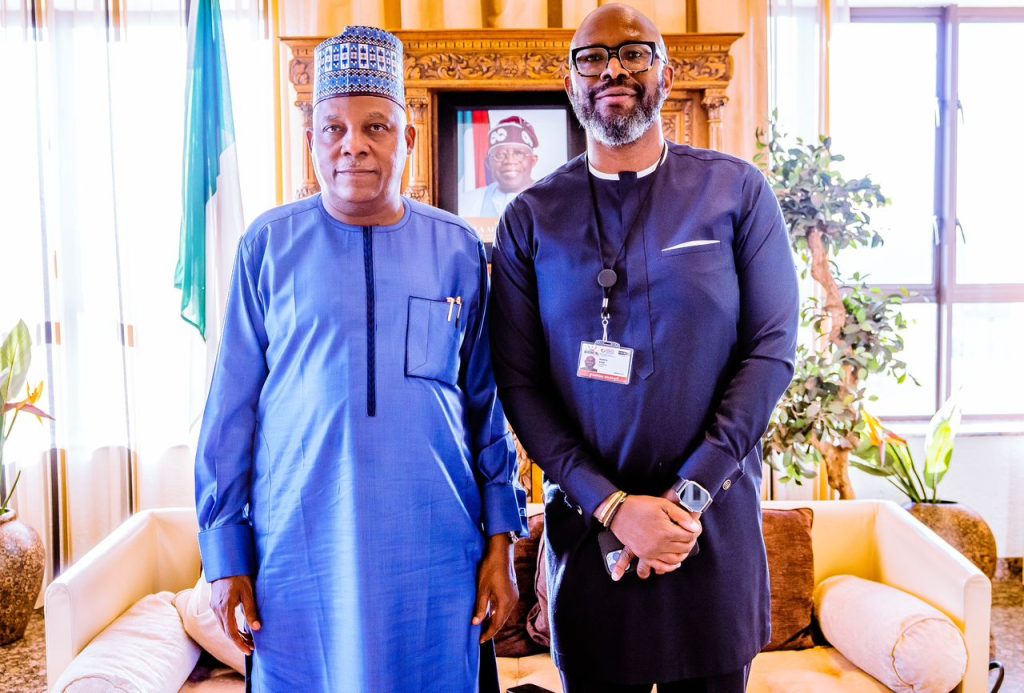
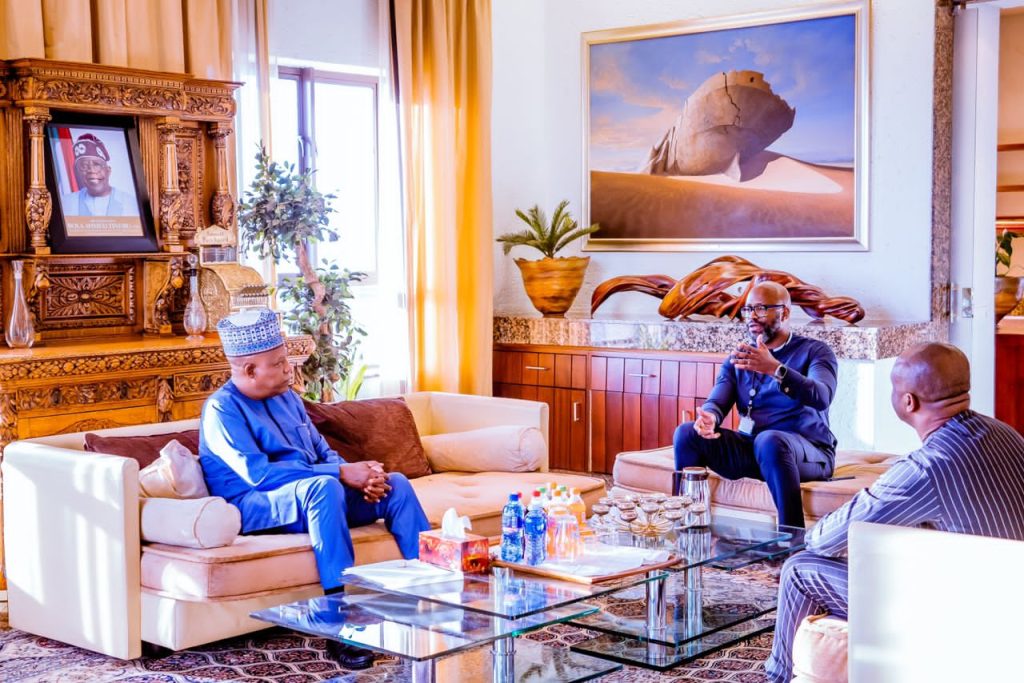
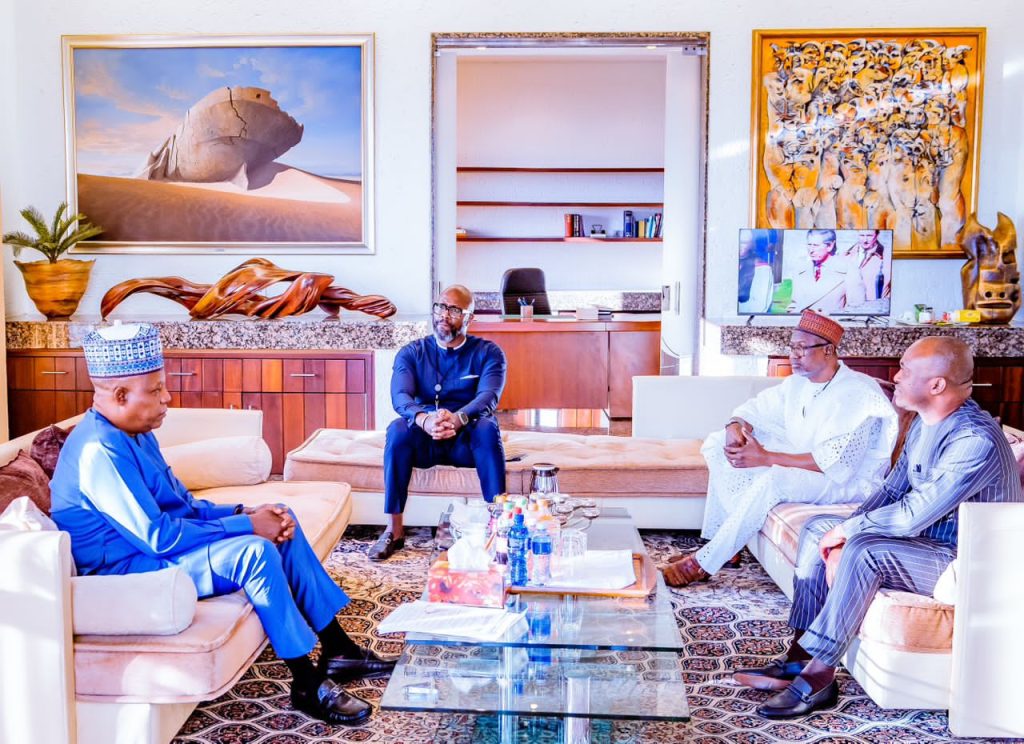
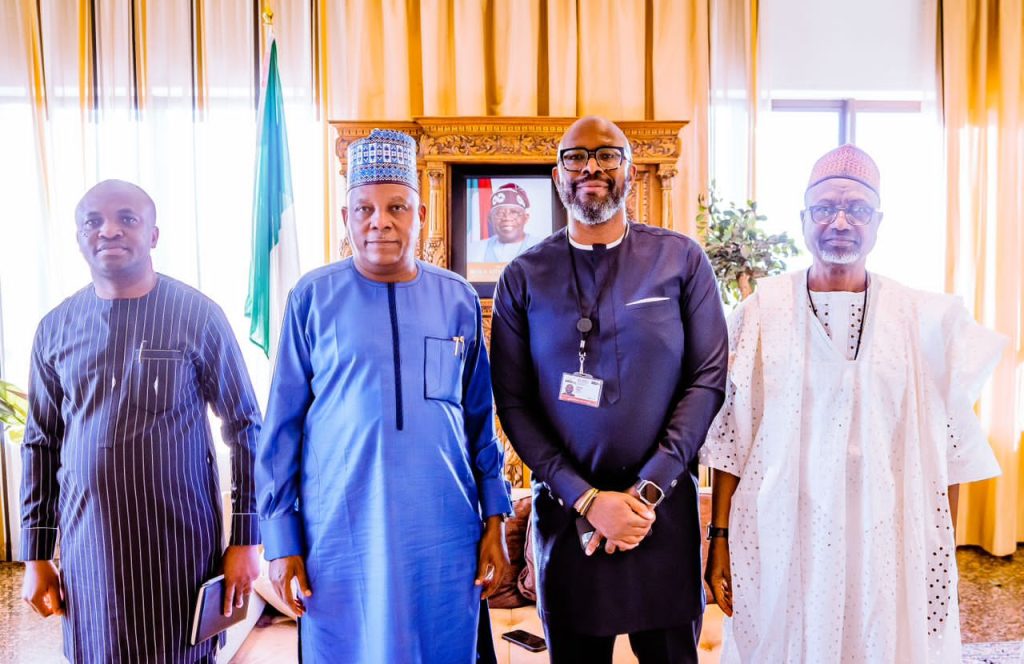
MTN Group CEO and President, Ralph Mupita met with His Excellency, the Vice President of Nigeria, Senator Kashim Shettima on the sidelines of the BRICS Summit in Sandton, South Africa.
The Vice President was in South Africa to represent President Bola Ahmed Tinubu at the 15th BRICS Summit of Heads of State and Government where he delivered an address to notable leaders including President Xi Jinping of China. Also in attendance at the meeting was the Nigerian Ambassador to South Africa, Ambassador Muhammad Haruna Manta.
Over the course of the meeting, both parties discussed topics relating to ongoing reforms by the government and other areas of mutual interest, including digital education, e-agriculture and the MTN Nigeria investor roadshow to be held on November 23 in Abuja.
Ralph reiterated MTN Nigeria’s continued support for Nigeria’s socio-economic development directly and through the CSI initiatives spearheaded by the MTN Foundation.
In its over 18 years of existence, MTN Foundation as the Corporate Social Investment (CSI) vehicle of MTN Nigeria has spent over N25.7 billion in empowering Nigerian youths, communities, healthcare development and educational support.
The Foundation has so far executed 1,017 projects across the 36 states of the federation, directly impacting 3,319 communities and over 31.2 million beneficiaries. At the tertiary education level, the MTN Foundation has offered 12,736 scholarships across institutions in Nigeria.
MTN Group CEO/President, Ralph Mupita met with His Excellency, the Vice President of Nigeria, Senator Kashim Shettima on the sidelines of the BRICS Summit in Sandton.
They discussed topics relating to ongoing reforms by the government and other areas of mutual interest, including digital education, e-agriculture and the MTN Nigeria investor roadshow to be held on November 23, 2023 in Abuja and the role that MTN continues to play in supporting the accelerated development of the digital economy in Nigeria.
Ralph reiterated MTN Nigeria’s continued support for Nigeria’s socio-economic development directly and through the CSI initiatives spearheaded by the MTN Foundation.
Ajuri Ngelale, the Presidential Spokesman, stated on Monday that President Bola Tinubu since his inauguration has set clear targets for each sector and will not allow failure from either of his newly appointed ministers.
“The President has set the benchmarks,” Ngelale said during a Channels TV program which was monitored by BizWatch Nigeria.
“The question now is about enforcements and the President has shown, as he did during his time in Lagos State as governor, that he is not someone that is afraid to fire anybody.
“He is not somebody that is afraid to levy quick sanctions to ensure that they get the results that he wants ’cause, ultimately, if this administration fails, they will not say a minister failed or a set of ministers failed.
“They will say President Bola Tinubu failed, and he will not accept failure.”
According to Ngelale, in the interim period between his election as president-elect and his inauguration on May 29, the President established “a series of reform committees across all sectors.”
“[Tinubu] basically looked at exactly what His Excellency, President Muhammadu Buhari has achieved and said, ‘This is what we want to do to build on all these achievements…,” Ngelale explained.
“We’re going to effectively implement a plan within a certain amount of time based on time-based benchmarks that when a minister has come in, we would be able to measure their performance against.’
“Every minister coming in absolutely knows what they have to achieve within the time frame that’s been given to them by the President and that’s something in the history of Nigerian governance we’ve never seen before.”
Fish farmers in Nigeria have lauded Olam Agri for the recent improvement in productivity levels in the aquaculture segment, attributing this to the company’s investments in the value chain. Speaking during a recent value chain review exercise, the farmers attested to the business’ efforts at raising operating capacity in the aquaculture sector.
Olam Agri in Nigeria, an agribusiness in food, feed and fibre started investing in the aquaculture value chain in 2017 through its feed milling unit. Before then, the sector was bedevilled with different challenges among which were poor knowledge of modern fish farming practices, inaccessibility of high-quality feed, high mortalities in hatcheries, slow growth in nursery phase and irregular sizes during harvest. This led the agribusiness to immediately set machinery in motion to address the challenges.
The agribusiness flew in one of its global aqua experts, Mr Matthew Tan, who trained and introduced local farmers to trendy fish farming practices. He also trained over 40 Olam Agri technical experts who continued to work with the farmers. Approximately 7,500 Nigerian fish farmers, among whom were women fish farmers, were equipped with the best aquaculture practices by the business’s team of experts. In addition, the agribusiness located a state-of-the-art feed mill in Ilorin to ensure a steady supply of quality and affordable fish feed to fish farmers.
Attesting to the business’ value chain impact, Mr Olatoye Fajimi, the Vice President of the Lagos State Catfish and Allied Farmers Association said, “Olam agri employs technical experts who go around to visit farms to work with the farmers to improve farm clusters’ productivity.”
Mr Lazarus Odafi, the owner of Odafi Fish Farm located within the Asejere Fish Farms cluster in Odogbolu, Ijebu-Ode, Ogun State, affirmed, “Olam Agri came to our farm cluster and trained us on pond water management techniques, how to test PH level in the pond, and ways to curb feed waste. They helped us understand the science of catfish farming, especially how to create the right environment for the fish to thrive. These efforts have really impacted our businesses.”
He explained, “Since feed is one of the most important inputs in fish farming, Olam Agri increased the availability of feed to farmers. They help farmers gain access to feed in an instant by localizing their production in key hubs here in Nigeria. They also employ technical experts as salespeople who go around to visit farms to interact with the farmers to improve farm clusters’ productivity.”
Mrs Ogundeyi Dorcas of Tripple T Farms located in Ipaja said, ” The conversion rates of Olam Agri feed brands have been superb. An Olam Agri’s technical expert taught me how to manage disease in my pond and how to measure water quality. These inputs have made some impacts on my farm productivity level.”
Mrs Okpapi Lucy whose farm is in Alagbado, Lagos, said she struggled until she met an Olam Agri technical expert who introduced her to new methods of farming. She emphasised the business’ attention to customer improvement, ”Anytime I have issues on the farm and call them, they would show up almost instantly. They are hands-on. In fact, they would go into my pond to address any challenge I complained about. Olam Agri is one of the reasons I am still in business.’
Speaking about the business’ approach to raising productivity in the aquaculture value chain, Mr Ankit Puri, Vice President of the Animal Feed and Protein Unit, Olam Agri in Nigeria, said, “A crucial aspect of our success story is that we keep the fish farmers at the heart of our strategy. Apart from deploying experts to work with the fish farmers, we introduced …
Commercial banks and merchant banks appear to be increasingly reliant on the Central Bank of Nigeria (CBN) for liquidity, with borrowing from the central bank growing in the final eight months of 2023.
Commercial banks and merchant banks borrowed a total of N12.46tn from the CBN during the first eight months of this year, according to CBN figures seen by our reporter. In the first eight months of 2022, financial institutions borrowed N6.96tn from the central bank, indicating a 79% rise.
Commercial banks and merchant banks use the Standing financing Facility (SLF) window to get financing from the central bank and deposit funds with the apex bank. According to findings, banks during the first eight months of 2023 accessed the SLF window against the backdrop of CBN’s tightening monetary policy stance.
The apex banking regulating body has the SLF, a short-term lending window for commercial banks and merchant banks, to access liquidity to run their day-to-day business operations.
The CBN data obtained by The PUNCH revealed that between January and June this year, commercial banks and merchant banks borrowed N10.25tn from the CBN via the SLF window, an increase of 138 per cent Year-on-Year (YoY) from N4.3tn borrowed during the corresponding period of H1 2022.
The CBN data showed that the first quarter figure, which stood at N4.95tn, was higher than the half-year data for 2022. The monthly breakdown revealed that commercial banks and merchant banks in January borrowed N528.16bn from the CBN but the figure dropped to N453.7bn in February 2023.
In March, it rose significantly by 776.22per cent to N3.98tn, the second highest after the N4.47tn recorded in April 2023. However, the CBN data showed a N590.29bn and N235.06bn borrowing for May and June 2023. In addition, SLF’s figure stood at N908.43bn in July and N1.3tn in August.
Commenting on the development, a former Director-General of the Lagos Chamber of Commerce and Industry, Dr, Muda Yusuf, said, “This is a reflection of liquidity pressure some of the banks are going through. The facility is typically short term. This may not necessarily indicate that the banks are stressed or unstable. Meanwhile, the recapitalisation of banks is long overdue. The minimum capital requirements of N25 billion is no longer adequate, if discounted for inflation.”
A financial expert at Chapel Hill Denham, Tajudeen Ibrahim, said, “The development points to lack of liquidity on the part of banks. Monetary policy has been tightening and this has led to low liquidity. It is cheaper for banks to borrow from the CBN. This development is not positive but negative. We cannot continue to tighten because it will reflect of economic growth.
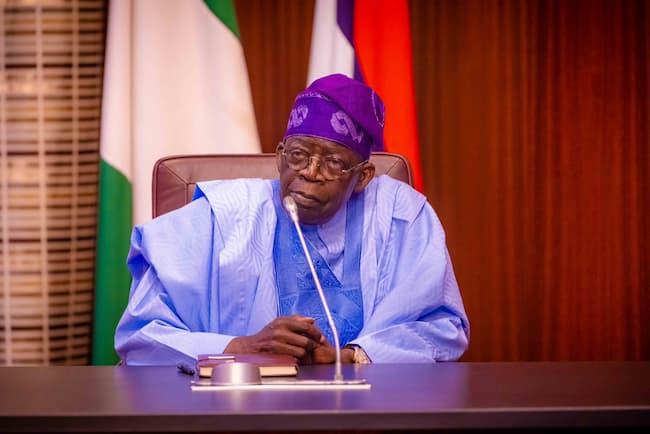
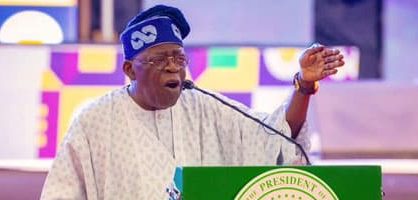
President Bola Tinubu stated that servicing Nigeria’s external debt with 90% of the country’s earnings is unsustainable.
Tinubu made the remark while opening the annual conference of the Nigerian Bar Association (NBA) on Sunday in Abuja.
The president criticized the high debt service-to-revenue ratio as “a path to destruction” during his speech at the conference.
He remarked that the prosperity that Nigerians seek can only come after the community is free of poverty — with the help of the country’s business leaders.
“Can we continue to service external debts with 90% of our revenue? It is a path to destruction. It is not sustainable,” Ajuri Ngelale, the president’s media adviser, quoted Tinubu as saying in a statement.
“We must make the very difficult changes that are necessary for our country to get up from slumber and be respected among the great nations of the world.
“We cannot have the country we desire without the reforms we have initiated. It is painful at the beginning, in the short and medium term, but we must do what we have to do to take this nation to its great destiny.
“It is not about you and it is not about me. It is about our generations yet unborn, for whom we must bequeath a great and prosperous country.”
Tinubu has expressed his commitment to addressing the issue of salary for judicial officers and legal practitioners, adding that “true justice reform must begin with world-class salaries and benefits for legal professionals in Nigeria.”
He claims that Nigerians whine a lot about the past instead of altering their mentality and working hard.
“You are learned. I want to learn. Why are we so blessed and we are still lacking? We must have a change of attitude and a change of our mindset. We accuse our nation and its previous leaders.
“We complain a lot of the past. Is that the solution? No! Let us look forward and be determined!” Tinubu said.
The Nigerian naira had a difficult week in the foreign exchange (FX) markets, losing substantial value versus the dominating US dollar and other foreign currencies. Rising demand pressure returned this week with weaker FX supply as a result of a halt in central bank intervention and foreign oil corporations’ FX sales, causing currency rates to rise.
Inflows into external reserves have remained modest after the devaluation. This is in contrast to market expectations that foreign currency market reforms would increase gross external reserves. The official exchange rate had surpassed N803 after more than 40% depreciation before it began to recoup its lost worth.
According to Central Bank data, Nigeria’s foreign exchange reserves continued to fall last week, falling by USD66.24 million to close at USD33.74 billion. This equated to six months of import insurance for an economy that is heavily reliant on imported commodities to thrive.
According to data from the FMDQ OTC FX market, the naira fell 4.8% to N778.42 per US dollar at the Investors and Exporters window (IEW). Cordros Capital reported a 44.5% decline in total turnover from the start of the week to USD344.09 million on Thursday.
Analysts noticed that most transactions were completed during the week within the N700.00 – N799.91 range. In the forward market, naira rates fell by 0.1% during the one-month period to N790.80.
Also, forward contract rate for 3 months declined by 0.8% to N809.63; the 6-month contract forward rate slumped by 0.8% to N838.09 and then the forward contract rate for 1 year dropped to N897.57 contracts.
In the FX market, analysts noted that speculative activities have taken centre stage as the apex bank continues to show weak firepower to defend the local currency while market players anticipate the inflow of forex from the $3 billion emergency crude oil fund from the NNPC Limited.
“We think the recent NNPCL emergency crude repayment loan from the African Export-Import (AFREXIM) bank is favourable in providing near-term FX supply to support the FX market and stabilise the local currency”, Cordros Capital said.
At the close of the week, the naira depreciated by 5.26% and 7.65% against the US dollar respectively, with official and parallel market rates closing at N778.42 and N915/$1 respectively.
Weak demand pushed crude oil prices downward, and the market reported a weekly loss on the back of rapid Iranian crude exports The Brent Crude was up $84.40 per barrel on Friday and was followed by the WTI which traded at the $80 band per barrel.
Elsewhere, the price of the Nigerian Bonny Light crude oil closed positive on Friday at $88 per barrel on the back of tight global supply concerns and the Fed rate hikes expectation.
Cowry Research anticipate the naira would trade in a relatively calm band at the various forex markets barring any distortions while the apex bank maintains its interventions to shore up the naira value.
However, analysts said the market awaits the staggered inflow of fx from the $3bn emergency crude-oil repayment loan from AfreximBank into the market, we anticipate that demand pressure will persist across fx segments and cause further depreciation of the naira against the greenback.
“We acknowledge that the amount is not sufficient to significantly support the local currency, more so that the funds will come in tranches. Thus, if not adequately managed with other measures (such as higher interest rates and additional funding support from third parties or multilateral institutions), FX pressures may likely build up again, leading to another round of local currency depreciation”, Cordros Capital stated.
Interswitch, Africa’s leading integrated payments and digital commerce company, has received the ISO 22301 recertification for Business Continuity Management (BCM) for the fifth consecutive year, following a rigorous surveillance audit process.
Since the company’s ISO 22301 certification in August 2018, Interswitch has remained committed to upholding the global best practice in Business Continuity Management, maintaining the highest standards of operational resilience and safeguarding the interests of its customers and stakeholders.
ISO 22301 is an internationally recognized standard that sets forth requirements for establishing, implementing, maintaining, and continually improving a robust Business Continuity Management System. This recertification validates Interswitch’s dedication to effectively managing potential disruptions, minimizing downtime, and ensuring seamless service delivery even in the face of unexpected challenges.
Maintaining the ISO 22301 certification is a testament to Interswitch’s comprehensive approach to risk assessment, mitigation, and recovery planning. The certification process involved rigorous audits and evaluations of Interswitch’s business processes, contingency plans, and disaster recovery capabilities.
Speaking about the recertification, the Executive Vice President, Risk & Information Security at Interswitch, Griffith Ehebha said –
“At Interswitch, ISO 22301 certification represents our unwavering commitment to resilience, dedication to business continuity, and profound understanding of the significance of preparing for the unexpected.
“ISO 22301 recertification is a proactive approach to risk management that demonstrates to stakeholders and customers that we at the Switch prioritize the continuity of our operations, even in the face of adversity.
“It is not just a mark of achievement; it is testament to Interswitch’s tested capacity to weather storms and emerge stronger on the other side.”
MSECB, a leading provider of Audit and Certification Services in the field of Information Security and Privacy, served in the capacity of auditors for the certification process.
Underscoring its commitment to global best practices, Interswitch is also certified to four other ISO standards including ISO 27001: Information Security management system, ISO 9001; Quality Management System, ISO 20000: Information Technology Service Management System, ISO 45001 and Occupational Health and Safety Management System. All five of these 5 standards are managed centrally as an Integrated Management System (IMS).
The achievement of the ISO 22301 recertification positions Interswitch at the forefront of companies that prioritize operational resilience and adaptability and reinforces the company’s ability to manage potential disruptions effectively, safeguard critical operations, and maintain an uninterrupted flow of services that customers can continue to depend on.
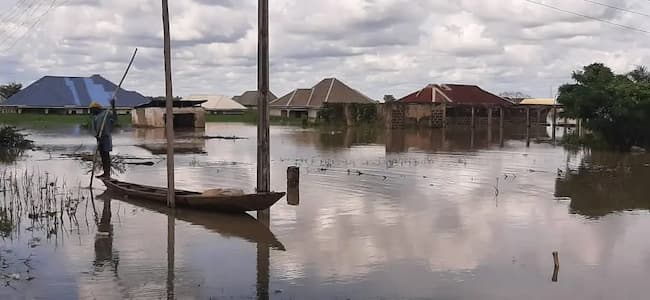
The Ministry of Foreign Affairs has notified the National Emergency Management Agency (NEMA) of predicted flooding in the Benue River basin.
This was announced in a letter dated August 21, 2023 and signed by Umar Salisu, the Ministry’s Director of African Affairs.
According to the letter, the Cameroonian government intends to “open the flood gates of the Lagdo Dam on the Benue River in the coming days.”
This is due to excessive rainfall “around the dam catchment area in Northern Cameroon,” according to the report.
The statement added that “According to the note, it is pertinent to note that when the release of water becomes necessary, the authorities of the Lagdo Dam will be releasing only modulated variable small amount of water at a time in order to mitigate’ and avoid damages that the released water may cause along the River Benue basin in both Cameroon and in Nigeria.
“In view of the above, it would be appreciated if the esteemed Agency takes all the necessary proactive steps and actions that will mitigate the damage as well as sensitize the populace living in such areas for vigilance and all necessary precautions.”
President Bola Tinubu states that Nigeria must make “difficult changes” in order to be acknowledged in the international community.
On Sunday, he opened the 2023 Annual General Conference of the Nigerian Bar Association (NBA) at the Velodrome, MKO Abiola Stadium in Abuja.
According to Tinubu, even though the initial reforms are unpleasant, Nigeria must be willing to take the difficult steps necessary to put the country on a path of growth.
“We cannot have the country we desire without the reforms we have initiated. It is painful at the beginning, in the short and medium term, but we must do what we have to do to take this nation to its great destiny.
“It is not about you and it is not about me. It is about our generations yet unborn, for whom we must bequeath a great and prosperous country,” Tinubu’s media aide Ajuri Ngelale’s Sunday statement quoted him as saying.
Tinubu called Nigeria’s external debt servicing figure as “unsustainable” while criticizing the country’s external debt.
“Can we continue to service external debts with 90% of our revenue? It is a path to destruction. It is not sustainable. We must make the very difficult changes that are necessary for our country to get up from slumber and be respected among the great nations of the world,” the President added.
Tinubu also warned the audience that in order to make Nigeria great, Nigerians must change their attitudes.
“You are learned. I want to learn. Why are we so blessed and we are still lacking? We must have a change of attitude and a change of our mindset. We accuse our nation and its previous leaders,” he said.
“We complain a lot of the past. Is that the solution? No! Let us look forward and be determined! God has given us what we need. We must work hard with determination to make our country great and it begins with you who are seated here with me.”
As oil and gas industries continue to grow in Africa, the construction of regional, intra-African pipelines has a huge part to play in distributing these hydrocarbons across the continent, allowing Africa to reap the benefits of its energy resources.
These benefits included improved access, availability and affordability of energy as well as energy security. It also contributes to added revenue to the participating countries and the skills development of local companies and individuals.
A Few Pipeline Projects Underway
There are currently many pipeline projects underway in Africa. Among these are the Trans-Sahara Gas Pipeline (TSGP); the East African Crude Oil Pipeline (EACOP); and the Central African Pipeline System (CAPS).
The TSGP, a natural gas pipeline currently under development, represents an estimated $13 billion investment. It is a tri-partnership with a combined shared value of 90% between the Nigerian National Petroleum Corporation – Nigeria’s national oil company (NOC) – and Algerian NOC Sonatrach. The Government of the Republic of Niger holds the remaining 10%. The pipeline will stretch approximately 4,128km, running from southern Nigeria through Niger to northern Algeria, with an annual capacity of 30 billion cubic meters of natural gas.
Meanwhile, the EACOP is a crude oil pipeline that spans borders and is presently in its planning and early implementation phase. It is owned by TotalEnergies (62%), China National Oil Corporation (CNOOC) (8%), Uganda National Pipeline Company (15%), and Tanzania Petroleum Development Corporation (15%). The pipeline’s route will extend from Uganda to Tanzania, covering approximately 1,443 km and will have the capacity to transport around 216,000 barrels per day. The estimated cost of the project is $3.5 billion.
CAPS is a comprehensive system that includes refineries, gas-to-power plants, liquefied natural gas (LNG) terminals and transnational oil and pipelines. A Memorandum of Understanding (MoU) was signed by seven countries, namely Burundi, Cameroon, Central African Republic, Chad, the Democratic Republic of the Congo, Equatorial Guinea, Gabon, the Republic of the Congo, and Rwanda, to initiate this project. The project is presently in its planning phase and will include three multinational pipeline systems that will simplify intra-African trade.
Meeting Regional Energy Demands and Making Energy Poverty History
As the population of Africa continues to grow, the continent is facing challenges in meeting the energy demands of its regions – with over 600 million people currently without access to electricity. Currently, Africa’s oil and gas resources measure roughly 125.3 billion barrels of oil and over 600 trillion cubic feet of natural gas, the monetization of which will enable the continent to make energy poverty history by 2030.
Although Africa possesses abundant oil and gas resources, inadequate regional pipeline infrastructure and insufficient investment are impeding the transportation of oil and gas to needy areas, thereby restricting access, availability and affordability of energy sources across the continent. Investing in regional pipeline infrastructure could potentially reduce these challenges by providing direct access to countries in need.
Investing in regional pipeline infrastructure will not only enhance energy security but also stimulate economic growth, generate employment opportunities, enhance the knowledge base of local enterprises and empower communities in the energy industry. The TSGP, the EACOP and CAPS are all expected to produce thousands of high-paying employment opportunities for local companies which directly contributes to economic growth within the region.
“The African Energy Chamber (AEC) is alarmed that some parties are advocating for Africans to leave oil and gas resources untouched. We recognize the reality of energy poverty and are committed to urging African suppliers to engage in joint ventures that will enable investments in regional oil and gas pipeline infrastructure, leading to mutual growth in achieving our shared goal of eradicating energy poverty by 2030. This endeavor will propel Africa to unprecedented heights of success and development,” affirmed NJ Ayuk, the Executive Chairman of the AEC.
Entering into this scene, Africa’s elite event for the oil and gas sector, the 2023 edition of African Energy Week – taking place from October 16-20 in Cape Town – will explore more revenue streams to fund the continued developments of on-going pipeline projects and potential new regional pipeline projects. The conference will provide countries an opportunity to expand on last year’s regional pipeline systems, exploring any progress that has been made since then and signing new deals.
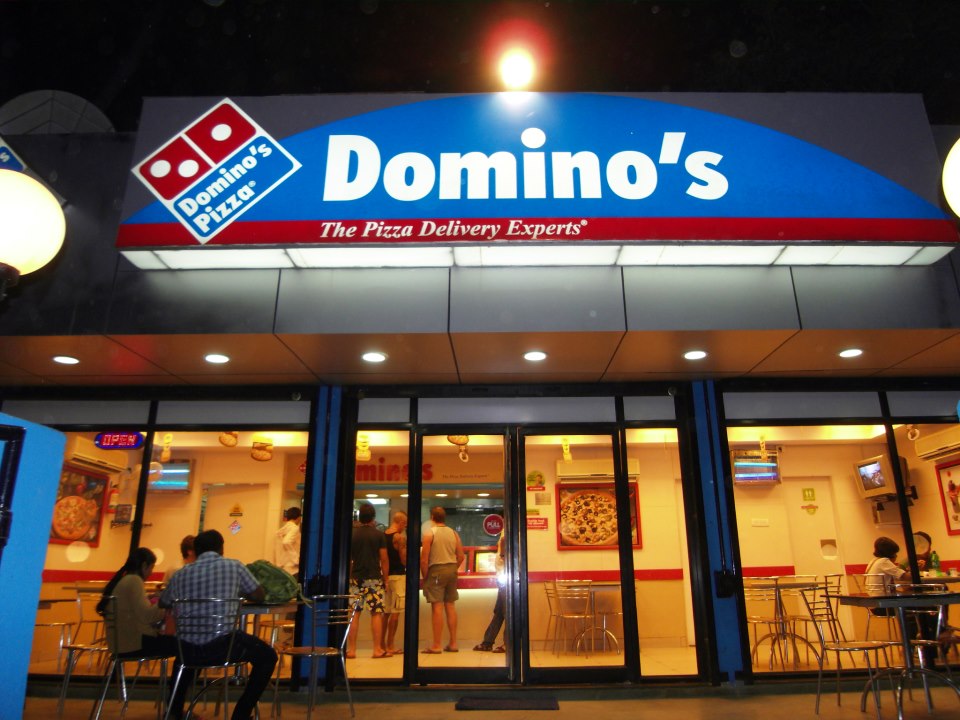
In its response to ensuring lovers of its delicious pizza continue to enjoy more with less, Domino’s Pizza, one of the three sub-franchises of the Eat’N’Go Africa, has announced a price slash on some of its menus to further reflect its customer-centric culture.
The new offer tagged Ultimate Savers Menu gives customers an opportunity to purchase Smallie Sweet Marghie, Smallie Chicken Pie, Smallie Smoked BBQ Sausage, Fiery Chick, Beef Suya, and Jollof Rice at reduced prices.
Effective from 9th August 2023, Domino’s Pizza customers across its numerous stores in Nigeria can now purchase Smallie Sweet Marghie from N600 as against N1,200; the Smallie Chickenpie, which was N1,200 is now from N800 while Smallie Smoked BBQ Sausage, Fiery Chick, Beef Suya available that was also N1,200 is now from N1000 and the Jollof Rice from N800 to N600.
For nearly 11 years of its existence in Nigeria, Domino’s Pizza regularly seeks ways to deliver quality services to its customers through promos and the introduction of new menus that align with Nigerian flavor whilst ensuring pocket-friendly prices.
Speaking on the development, the Marketing Manager of Domino’s Pizza, Mariam Busari attributed the price slash, despite an increase in the cost of production across different sectors to the company’s passion “to ensure non-stop satisfaction for our customers. It is also one of our strategies to reflect on the rate of inflation in the country.
“At Domino’s Pizza, we are true to our customer-centric culture and believe that everyone deserves a slice of goodness that Domino’s Pizza brings. Customer satisfaction is at the forefront of our operation, they are the foundation of our business, and we owe it to them to continue giving them the best Pizza experience, best value, affordability, and accessibility, in line with our international standards.
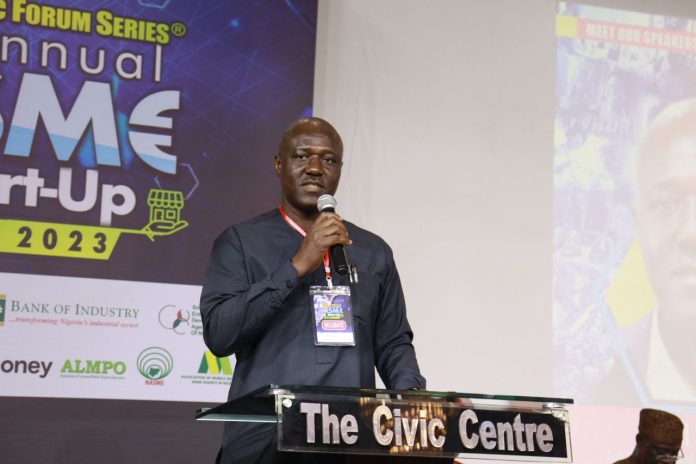
Eli Hini, CEO, MoMo PSB Nigeria has said that Nigeria has a better opportunity than other African countries to excel in financial and digital inclusion if traditional banks, PSBs and fintechs can work together.
Eli made this assertion during a fireside chat, at the 4th edition of the MSME and Startup Summit hosted by Vanguard and the Economic Forum Series, held on Thursday, August 24, 2023, at the Civic Centre Lagos.
When asked what was preventing Nigeria from achieving financial inclusion success like Ghana and Kenya, despite being Africa’s largest economy, Eli highlighted three areas for improvement to achieve financial and digital inclusion in Nigeria. He stated “A lot of work has gone into agent banking and there is a good amount of POS and financial service points. What is next is for us to utilize those assets to drive innovation and adoption of digital payments. You will find that most people mainly use their cards to access cash and then use the cash for their next transactions. We need to look for ways to ensure that people use their cards for digital payment rather than just cash withdrawals”
“The other thing is the level of collaboration between traditional banks or deposit money banks, Fintechs, Payment Service Banks and other payment service platforms. That collaboration needs to be deepened. Traditional banks have their limitations, the cost it entails to set up a bank branch cannot be risked in certain communities because their economy does not allow for it, but setting up an agent doesn’t cost that much. Also, the technologies that the fintechs and payment service operators bring are upscale, and they are able to reach more people at a cheaper cost.”
“The last is the area of education and information, how much information is out there, and how many people are educated about the solutions and the services available to them, so they can be informed to take up these services and solutions? Once we can deal with these three factors, I think Nigeria has a better opportunity than the other countries that have excelled in this area, because of the huge numbers and the transformations happening here.”
Speaking on how MoMo PSB is driving financial inclusion in rural areas, Hini stated that MoMo has been able to leverage the retail networks of its parent company, MTN. By onboarding the retail network as agents, MoMo PSB has been able to reach every corner of Nigeria. He added that at the community level, MoMo also works with small businesses that have an interest in providing agent services, that way they can reach communities that have any form of commercial or informal activity and offer financial solutions to them. “Our focus is not on Lagos alone, it is everywhere you find Nigerians who need financial solutions and we are offering those solutions through MoMo PSB,” Hini stated.
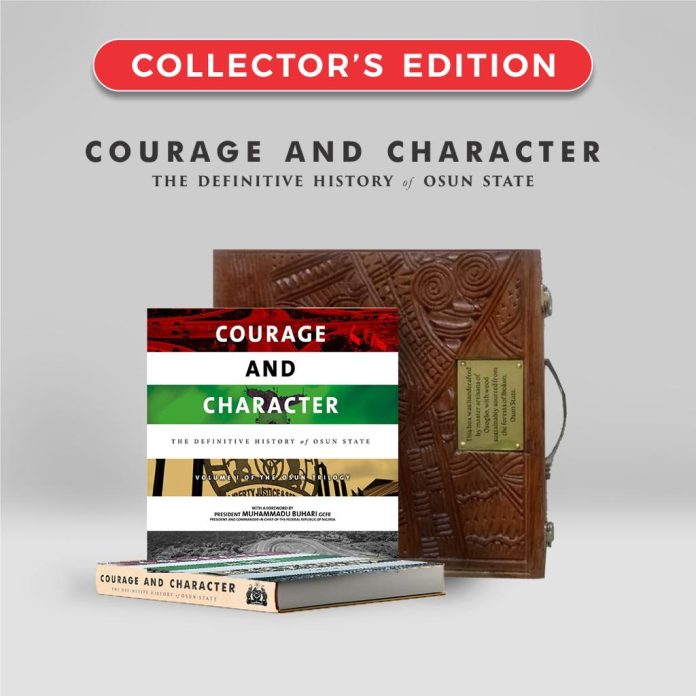
History in exciting colours is one of the main attractions of Courage & Character: The Definitive History of Osun State. The 460-page tome comes in an arresting coffee table format, enabling it to incorporate valuable and rich primary and secondary sources in books, articles, and letters that provide a comprehensive overview.
The deluxe edition in my hands will befit the coffee table in elevated sitting rooms. It has a limited print run and is customised. Erudio says it will roll out an edition for mass circulation.
The Erudio Alphabet Company published Courage & Character (2023) and has brought it out as Osun State marks 32 years of its creation alongside others created by the military on 27 August 1991. Osun is one of the nine states created to raise the state count from 20 to 30.
Other states created on 27 August 1991 are Kebbi, Jigawa, Yobe, Taraba, Abia, Anambra, Delta, and Kogi.
The publishers say of the Osun book, “It is an epic story that begins in pre-colonial times and documents the great work of the founders and those who have had the privilege to lead the state. The Osun story is about a people’s rejection of subjugation and oppression, their quest for independence and sovereignty, and the struggle for survival and relevance.”
Courage & Character pays tribute to “the Omoluabi of Osun: brave hearts, unrelentingly optimistic, and flinty in their determination” and “To the abiding memory of the first Executive Governor of Osun State: Senator Isiaka Adetunji Adeleke”.
It is one of life’s coincidences and exciting turns that the incumbent governor of Osun State, Senator Ademola Nurudeen Jackson Adeleke, is a younger brother of the first civilian governor.
Colours hit you as you pick up the book. Courage & Character is encased in bright colours. They manifest in the colour scheme on the cover and the evocative photographs on the pages.
“The colours on the cover of this book pay homage to the Pan-African flag, one of the Osun identity elements. They are the official colours of the African race: Red represents the blood that unites all people of African ancestry, Black depicts the existence of the Black race, Gren denotes Africa as a continent of great fecundity, and Gold depicts the abundant mineral resources of Africa”, publisher and editor Temitope Lakisokun affirms.
History is about stories. Courage & Character packs many gripping narratives. It starts in Part 1 with the level of “the unlikely catalyst” called Abdulsalami Agbaje. A ranking chief, Agbaje, stood tall in the Ibadan nobility to the point of becoming the Otun Balogun (fourth rank) with a chance at becoming the Olubadan.
He was a successful entrepreneur; one of his sons, Anthony Saka Agbaje, was the first Ibadan medical doctor (trained at the University of Glasgow in 1921 and co-published his newspaper, The Western Echo, in the 1940s.
“One major symbolism of his stupendous wealth is that he was the first Ibadan man to ride a car in 1915. He also built the first cement brick house in Ibadan before building what many consider a masterpiece, even till today: a magnificent mansion at Ayeye in the town’s northwest.”
Envious colleagues then petitioned against Agbaje, the colonial authorities. They levelled 14 counts of “misconduct” against him. The Olubadan also treated a delegation of Obas from the Osun Division contemptuously. Both actions sparked the resolve of the Osun people to manage their affairs away from the jurisdiction of the Ibadan Native Authority.
It led to the Butcher Commission of Inquiry, whose report exonerated Agbaje but confirmed allegations of “inefficiency and maladministration against the Ibadan District Native Authority.”
Photos of the principal actors and bromides of the Butcher Commission report enliven the account and several other sections of the book. It features outstanding and rare images, clips from newspapers of the era and sundry memorabilia.
Courage & Character offers three parts. Within its pages are a foreword by President Muhammadu Buhari, a preface by Ogbeni Aregbesola and a publisher’s note. There are ten chapters and appendices.
There are sections on the governments of Col Leo Ajiborisha, Senator Isiaka Adeleke, and the military interregnum featuring Colonel Abel Akale, Navy Captain Anthony Udofia, Lt Col Anthony Obi, Col Theophilus Olufemi Bamigboye. The administration of Chief Bisi Akande brought back the civilians. The book Courage and Character extensively documents the government of Olagunsoye Oyinlola and Rauf Aregbesola.
Courage & Character observed best practices in historical narrative. It is engaging and exciting. It deploys vivid language and storytelling techniques. There are rich primary and secondary sources in documents and artefacts created during the period it captures. Inside are all the significant events and figures and the lesser-known ones in simple language without jargon.
Publisher and editor Temitope Lakisokun and her team delivered on the mission of capturing the roots and the first twenty-five years of Osun State. That the book made it to the finish line is a triumph of tenacity because Governor Rauf Aregbesola exited along the line.
Lakisokun furthers her father’s footprints. The late principal, Chief Adeleke Lakisokun, studied History at the University of Wales and taught history for over 40 years in secondary schools in Western Nigeria, Oyo State and Osun State. He must be smiling in approbation.
Temitope Lakisokun earned an Upper Honours in Mass Communication from the University of Lagos and the Owner Manager Certification of the Lagos Business School but has made the pips of a historian-publisher.
Courage & Character: The Definitive History of Osun State is a befitting legacy to Osun State at 32.
After 18 years of pioneering service in Nigeria’s online grocery delivery sector, Easyshop Easycook Services has announced its decision to shut down its business activities in the country due to unforeseen economic challenges.
Since its inception in 2005, the company has been a trailblazer, leaving an indelible mark on the industry.
Easyshop Easycook’s journey began as an idea in 2001 and was fully incorporated in 2005.
Throughout its existence, the company has been at the forefront of innovation and has had a profound impact on the lives of many Nigerians.
One of the standout achievements of Easyshop Easycook has been its commitment to fostering work-life balance, especially for women.
The company has supported countless individuals in their professional careers, enabling them to rise from entry-level positions to esteemed roles in the C-suite, government ministerial seats, and influential board positions, all while managing their homes and families.
The company has also played a pivotal role in the agriculture value chain, championing the integration of technology into food systems and highlighting the critical importance of value and supply chains in the success of the grocery sector.
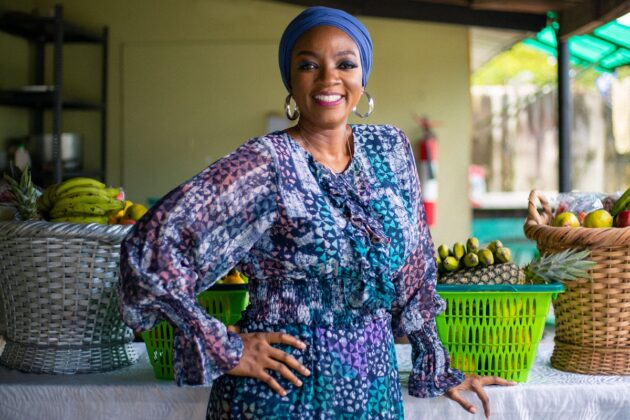
Saudat Salami, the visionary founder of Easyshop Easycook, has been a guiding light in the grocery sector.
Her leadership set the standard in an industry that was still finding its way, emphasizing the delivery of fresh, high-quality groceries with efficiency, integrity, and professionalism.
Beyond her role as a business leader, Saudat has mentored numerous emerging business owners in the personal food shopping and grocery delivery sector, leaving a legacy that extends far beyond Easyshop Easycook.
In an official statement, the company expressed its gratitude to all stakeholders, including the government and private sector partners, for their unwavering support throughout its journey.
The company also thanked their loyal customers and partners for their enduring support, cherishing the memories created over the years.
As Easyshop Easycook prepares to conclude its operations, the company remains hopeful for a future filled with prosperity and innovation for all within the grocery sector.
The decision to conclude operations marks the end of an era for Easyshop Easycook, but its legacy of service, innovation, and impact will undoubtedly continue to influence Nigeria’s online grocery delivery industry for years to come.