PBAT Mandate Elders Forum says fuel subsidy reversal would reduce funds for infrastructure.
The group says subsidy removal has increased government revenue and improved fuel availability.
It urged Nigerians to remain patient with the economic reforms.
Main Story
The PBAT Mandate Elders Forum, an All Progressives Congress (APC) group, has warned that any attempt to reintroduce fuel subsidy could reduce government revenue and stall infrastructure development across Nigeria.
Chief Demola Ijabiyi, State Chairman of the forum, gave the warning on Wednesday in Akure during its quarterly meeting.
Ijabiyi said the removal of fuel subsidy had freed additional resources for governments at all levels to finance critical infrastructure projects.
He cited major road projects linking Ondo State with neighbouring states as examples of infrastructure development he attributed to increased government revenue following the subsidy removal.
“Bring back the subsidy and there will be paucity of funds. Many of these projects will suffer, and we do not want that,” he said.
Ijabiyi also said fuel availability had improved since the removal of the subsidy, arguing that Nigeria was no longer experiencing prolonged queues at filling stations.
He said black-market activities and labour-related disruptions associated with fuel scarcity and difficulties in paying workers’ salaries had also reduced.
According to him, fluctuations in petrol prices were largely influenced by developments in the international oil market rather than domestic policies.
“The price of crude oil has an international dimension that is beyond Nigeria’s control. Global events determine the direction of prices,” he said.
Ijabiyi said geopolitical tensions affecting global crude oil supply routes had continued to influence oil prices internationally.
He also recalled that subsidised petrol had previously been smuggled across Nigeria’s borders, resulting in the country indirectly subsidising fuel consumption in neighbouring countries.
The forum chairman warned that restoring subsidy, whether directly or indirectly, could create an unsustainable fiscal burden and return the country to a situation where a substantial share of government revenue was used to fund petrol subsidies.
The Issues
The forum’s argument centres on the fiscal implications of reversing the fuel subsidy policy.
Ijabiyi said reduced government revenue following a return to subsidy could affect funding for infrastructure projects and other government responsibilities.
He also linked the subsidy debate to fuel availability, cross-border smuggling and the volatility of international crude oil prices.
What’s Being Said
“There is no free subsidy anywhere. Someone must bear the cost, and we should not return to a system that consumed huge national resources.” – Chief Demola Ijabiyi, State Chairman, PBAT Mandate Elders Forum
“We are in a period of transition from economic challenges to prosperity. The reforms require patience, but the long-term gains will outweigh the temporary difficulties.” – Chief Demola Ijabiyi, State Chairman, PBAT Mandate Elders Forum
What’s Next
Ijabiyi urged Nigerians to remain patient with the ongoing economic reforms, which he described as a transition towards long-term prosperity.
He also called on APC leaders in Ondo State to set aside political differences and unite behind President Bola Tinubu’s re-election bid in 2027.
The forum chairman urged party members to prioritise reconciliation and mobilisation and called for restraint in public communication, warning against personal attacks.
Bottom Line
The PBAT Mandate Elders Forum says restoring fuel subsidy would place additional pressure on government finances and could undermine infrastructure projects and other gains it attributes to the subsidy removal policy.
Niger State Bans Intra-State, Inter-State Movement of People, Vehicles Over Coronavirus
Key Points
NSITDEA signed an MoU with Wecrin Inc./Africa Talent Collective to establish a digital talent pathway.
The initiative will identify, assess and match qualified Niger State technology professionals with international employers.
The partnership is expected to create opportunities in software, cloud computing, AI and other emerging technologies.
Main Story
The Niger State Information Technology and Digital Economy Agency (NSITDEA) has signed a Memorandum of Understanding (MoU) with Wecrin Inc./Africa Talent Collective (ATC) to connect digital professionals in the state with global employment opportunities.
The agreement, signed on Wednesday in Minna, is expected to support the proposed Niger State Digital Talent Bridge, a talent pipeline designed to identify, assess and match qualified technology professionals with potential international employers.
Suleiman Isah, Director-General of NSITDEA, said the partnership was part of the state government’s efforts to connect its growing pool of technology professionals with opportunities in international markets.
“This creates a three-part opportunity: connect Niger State talent to global jobs, expose the State to international technology companies, and bring new knowledge into the public sector,” he said.
Isah said the partnership would also enable the agency to better understand the skills required by international employers, allowing future training programmes to be shaped around actual labour-market demand.
He said the initiative was expected to create pathways for remote work, internships and direct employment with international companies, particularly in software, cloud computing, Artificial Intelligence and other emerging technologies.
According to him, women participating in the agency’s TechSis programme are also expected to benefit through access to international job opportunities, giving the programme a stronger economic dimension.
Isah said the partnership could also strengthen engagement between Niger State and Japanese technology companies in deep technology, innovation and knowledge exchange.
“One of the expected outcomes with long time-term and valuable opportunity is strengthening engagement between Niger and Japanese technology companies in the area of deep technology, innovation and knowledge exchange and others,” he said.
He said Niger State was seeking not only to connect its technology professionals with overseas employers but also to use international relationships to attract companies, investment, technical expertise and partnerships into the state.
“If the partnership works as intended, the agency could gradually build a recognised pool of professionals who have been assessed and can be recommended to international employers,” he said.
Under the agreement, Wecrin Inc./ATC will provide the international connection through its involvement in recruitment and the global talent ecosystem, as well as its experience working across African markets.
Isah said the arrangement was intended to provide access to employers, credible assessment and a trusted recruitment pipeline that had previously been lacking.
He said the initiative represented a shift from simply training young people in digital skills towards creating direct pathways to employment, income generation and professional development.
“The initiative marks a shift from simply training young people in digital skills to creating direct pathways to employment, income generation and professional development,” he said.
The Issues
The partnership links digital skills development in Niger State with actual employment opportunities in international markets.
It also gives the state agency access to information on the skills international employers require, which could influence the design of future training programmes.
Beyond employment, the arrangement is intended to create links with international technology companies and support the movement of knowledge, investment and technical expertise into the state.
What’s Being Said
“This creates a three-part opportunity: connect Niger State talent to global jobs, expose the State to international technology companies, and bring new knowledge into the public sector.” – Suleiman Isah, Director-General, NSITDEA
“The initiative marks a shift from simply training young people in digital skills to creating direct pathways to employment, income generation and professional development.” – Suleiman Isah, Director-General, NSITDEA
What’s Next
NSITDEA and Wecrin Inc./ATC are expected to develop the proposed Niger State Digital Talent Bridge, including mechanisms for assessing and matching qualified professionals with international employers.
The partnership is also expected to support opportunities for remote work, internships and direct employment, while strengthening links with Japanese technology companies.
Bottom Line
The NSITDEA-ATC partnership is designed to move Niger State’s digital-skills programme beyond training by creating a structured pathway for qualified professionals to secure international employment and attract technology opportunities into the state.
Uber will discontinue its ride-hailing operations in Nigeria and Uganda from September 2.
The company said the decision followed a review of its business priorities and investment focus.
Uber said the exit was unrelated to the recent FAAN directive on airport e-hailing operations.
Main Story
Uber will discontinue its ride-hailing operations in Nigeria and Uganda from September 2, the company announced on Wednesday.
Lorraine Onduru, Head of Communications, Uber East and West Africa, said the decision followed a review of the company’s evolving business priorities and investment focus across Africa.
Onduru, in a statement issued in Lagos, said the decision was limited to Nigeria and Uganda and would not affect Uber’s operations in other African markets.
“Uber remains deeply committed to Sub-Saharan Africa, where we continue to see robust growth and long-term opportunity,” Onduru said.
She said the company’s immediate priority was to support drivers, riders and employees affected by the discontinuation, adding that Uber had begun communicating directly with them about transition arrangements.
Active drivers will receive a token of appreciation as they leave the platform, while rider support will remain available for 21 days after operations cease to resolve outstanding and transition-related issues.
Uber for Business services in Nigeria will also be discontinued as part of the exit, with the company contacting affected partners about the transition.
On data privacy, Onduru said rider information would continue to be handled in accordance with applicable data protection laws, privacy requirements and Uber’s data protection policies.
She said data would be retained only for legally required periods, while appropriate security controls would remain in place.
Onduru also clarified that Uber’s decision to leave Nigeria was not linked to the recent directive by the Federal Airports Authority of Nigeria (FAAN) concerning e-hailing operations at Nigerian airports.
According to her, the decision was driven by the company’s broader review of its business priorities and investment focus across Africa.
The Issues
Uber’s exit will affect riders, drivers, employees and business partners that currently rely on its platform in Nigeria.
The company has indicated that its transition measures will include support for affected stakeholders, a token of appreciation for active drivers and continued rider support for 21 days after operations end.
The discontinuation will also extend to Uber for Business services in Nigeria.
What’s Being Said
“Uber remains deeply committed to Sub-Saharan Africa, where we continue to see robust growth and long-term opportunity.” – Lorraine Onduru, Head of Communications, Uber East and West Africa
What’s Next
Uber will communicate directly with affected employees, drivers, riders and business partners on arrangements for the transition.
Rider support will remain available for 21 days after operations cease, while the company will continue to apply its data protection and security requirements to rider information.
Bottom Line
Uber is ending its ride-hailing operations in Nigeria and Uganda from September 2 as part of a broader review of its African business priorities, while maintaining that the Nigerian exit is unrelated to the recent FAAN directive.
MTN will provide selected routers at no cost to young people in the South-East.
The devices, valued at up to ₦60,000 each, will require beneficiaries to subscribe to applicable data plans.
The initiative targets techies, students, entrepreneurs, remote workers and digital creators.
Main Story
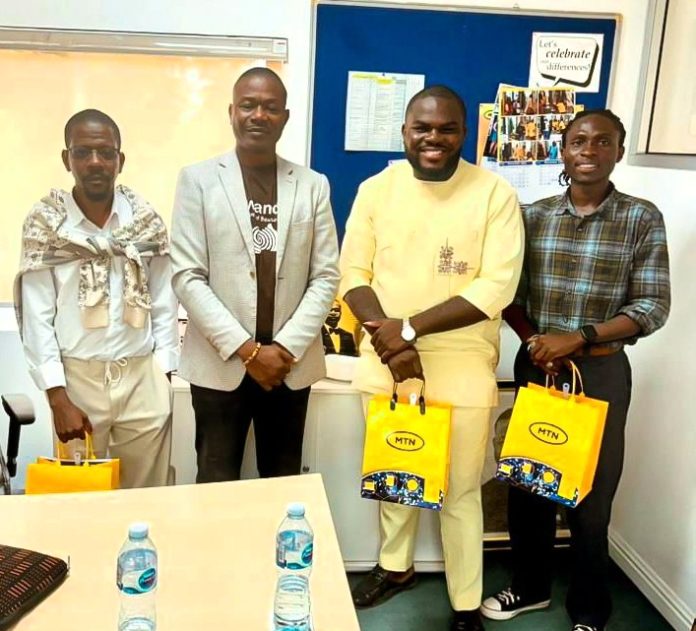
MTN has partnered with The Block Hive, a technology hub in Nsukka, Enugu State, to provide at least 5,000 free internet routers to young people across the South-East.
The initiative is aimed at supporting techies, students, remote workers, entrepreneurs and digital creators who require internet access to participate in the digital economy.
Callima Inino, MTN’s South-East Regional Representative, announced the company’s commitment during a meeting with The Block Hive team in Enugu on Wednesday.
Inino said selected 4G and 5G routers, which cost up to ₦60,000 each, would be provided to eligible beneficiaries at no cost.
He, however, said beneficiaries would be required to subscribe to the applicable MTN data plan attached to their selected router packages.
“MTN representatives and agents will be present at the South-East Blockchain & Games Week 2026 event across all the build stations the event is setting up in all states of the South-East.
“We will be providing information about the available router options and facilitating access to eligible offers as well,” he said.
The router distribution will be facilitated through The Block Hive and selected technology community activities, including the South-East Blockchain & Games Week 2026 scheduled for September 16 to 19.
Speaking at the meeting, Kevin Okoye, Founder and CEO of Ginakev Labs, which established The Block Hive, said the initiative was designed to remove the upfront cost of acquiring internet equipment for young people.
He said the technology ecosystem in the South-East was growing rapidly but young people continued to face practical barriers, including unreliable electricity, inadequate workspace and limited internet infrastructure.
“The Block Hive was created in part to address these challenges by providing reliable power, internet connectivity, co-working facilities, training, event and co-living apartment infrastructure to the technology community,” he said.
Okoye said the initiative would use The Block Hive’s existing technology community and Ginakev Labs’ network to reach beneficiaries across the region.
He said GIDA, the education and skills-development arm of Ginakev Labs, had trained more than 10,000 young people in digital skills and blockchain technology since 2020, with many receiving fully funded scholarships supported by the Ginakev Foundation.
According to him, The Block Hive complements the training programme by providing developers, entrepreneurs, students, creators and remote workers with a physical environment to learn, work and collaborate.
Okoye said MTN’s support would help ensure that the cost of internet equipment did not prevent young people with the skills and ambition to work from participating in the digital economy.
The Issues
Access to reliable internet remains an important infrastructure requirement for young people working, studying and building businesses through digital platforms.
The initiative targets one of the practical barriers identified by The Block Hive, although the source does not provide details on the criteria that will determine eligibility for all 5,000 beneficiaries.
The routers will also require ongoing subscriptions to applicable MTN data plans, meaning the devices will be provided free while connectivity will continue to involve a recurring cost for beneficiaries.
What’s Being Said
“If someone has a laptop, has the skills and has the ambition to work, the last thing we want is for the cost of getting a router to become the reason they cannot participate.” – Kevin Okoye, Founder and CEO, Ginakev Labs
“MTN representatives and agents will be present at the South-East Blockchain & Games Week 2026 event across all the build stations the event is setting up in all states of the South-East.” – Callima Inino, MTN South-East Regional Representative
What’s Next
MTN representatives and agents are expected to attend the South-East Blockchain & Games Week 2026 across the build stations being established in the states of the South-East.
They will provide information on available router options and facilitate access to eligible offers.
The event, which is scheduled for September 16 to 19, is being co-convened by Okoye and builds on the Ethereum Enugu Hub conference organised in 2025.
Bottom Line
MTN’s planned distribution of at least 5,000 free routers is intended to lower the upfront cost of internet access for young people participating in the South-East’s growing technology ecosystem.
TDF says state governors’ CNG investments show growing support for cheaper transportation.
The group says the PCNGI has delivered 90 certified filling stations and over 120,000 vehicle conversions.
It urged governments to prioritise CNG and electric vehicles over petroleum subsidies.
Main Story
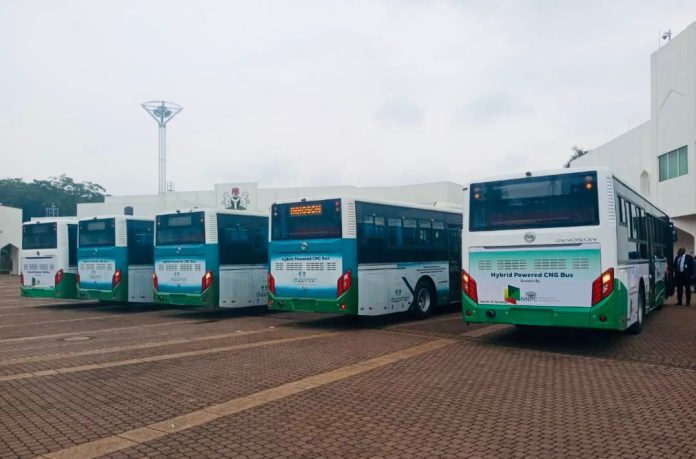
The Democratic Front (TDF) says state governors’ decision to invest in Compressed Natural Gas (CNG) reflects growing support for President Bola Tinubu’s push to reduce transportation costs.
The pro-democracy think-tank said the governors’ move demonstrated their readiness to work with the Federal Government to expand access to CNG as an alternative to conventional petroleum products.
TDF made the position known in a statement issued on Wednesday in Abuja by its Chairman, Danjuma Muhammad, and Secretary, Wale Adedayo.
The group said the development was the clearest indication yet of state-level support for efforts to provide Nigerians with cheaper transportation options.
It recalled that Tinubu launched the Presidential Compressed Natural Gas Initiative (PCNGI) in August 2023 following the removal of petroleum subsidy, describing the initiative as a measure aimed at reducing energy and transportation costs.
According to TDF, the initiative has so far produced 90 certified CNG filling stations, more than 450 conversion centres across 23 states and over 120,000 vehicle conversions. It added that another 100,000 CNG conversion kits were being deployed across the country.
The group said commercial transport operators in Abuja, Lagos, Ibadan, Port Harcourt and Enugu had increasingly shifted from Premium Motor Spirit (PMS) to CNG, while a significant number of heavy-duty interstate transporters had also adopted CNG as an alternative to Automotive Gas Oil (AGO).
TDF acknowledged that CNG penetration remained slow but said the governors’ decision could accelerate adoption across the country.
The Issues
The development places state governments alongside the Federal Government in efforts to expand CNG use in the transport sector.
TDF argued that wider adoption of alternative fuels could help reduce transportation costs by providing motorists with an alternative to conventional petroleum products.
The group also linked the development to the wider debate over petroleum subsidies, arguing that investment in alternative energy sources would provide a more sustainable response to transportation costs.
What’s Being Said
“This is a remarkable indication that the President’s commitment to providing Nigerians with a cheaper alternative source of energy to cushion the biting effect of petroleum subsidy removal on the masses, has unwittingly triggered a positive transformation in the transportation sector.” – TDF
“This collective decision by the State Governors to explore CNG in addressing the rising cost of transportation, have once again, validated President Tinubu’s position that the solution to high cost of transportation is not in the reintroduction of another opaque and disastrous petroleum subsidy regime.” – TDF
What’s Next
TDF welcomed the establishment of an implementation committee to oversee joint Federal and State Government measures to reduce transportation costs from October 1.
The group urged Nigerians to support the CNG initiative and called for faster development of cheaper energy sources, including CNG and electric vehicles.
Bottom Line
TDF says the governors’ move to invest in CNG could accelerate the transition to cheaper transport fuel and strengthen collaboration between state and Federal governments on reducing transportation costs.
N Seven Nigeria Limited has acquired 550,092 ordinary shares in Guinness Nigeria Plc.
The shares were purchased through multiple transactions on the Nigerian Exchange Limited.
The purchases were executed at prices ranging from ₦356.40 to ₦384.80 per share.
The combined transactions had a volume-weighted average price of ₦367.40 per share.
The acquisition increases N Seven’s equity position in the Nigerian brewer and signals continued activity by major shareholders.
N Seven operates within the wider Tolaram corporate ecosystem, which acquired Diageo Plc’s controlling stake in Guinness Nigeria.
The transaction was disclosed in accordance with NGX rules governing dealings by insiders and major shareholders.
MAIN STORY
N Seven Nigeria Limited has increased its stake in Guinness Nigeria Plc after acquiring 550,092 ordinary shares through open-market transactions on the Nigerian Exchange Limited, The acquisition was disclosed in a regulatory filing released on the exchange, with the transactions executed across several price levels between ₦356.40 and ₦384.80 per share.
The combined purchase had a volume-weighted average price of ₦367.40 per share, The transactions involved different lot sizes, ranging from small purchases to a major tranche of 498,973 shares acquired at ₦384.80 per share, Another notable transaction involved 30,000 shares purchased at ₦375 per share, while several smaller transactions were executed at different prices, The latest acquisition highlights continued activity by a major shareholder seeking to strengthen its equity position in the brewing company.
THE ISSUES
The acquisition comes as Guinness Nigeria continues to operate in a challenging economic environment, Manufacturers in Nigeria have been dealing with foreign exchange volatility, higher raw material costs, inflationary pressures and rising operating expenses, Against this backdrop, additional purchases by a major shareholder could be interpreted as a sign of continued confidence in the company’s long-term prospects.
The transaction also comes after the major ownership restructuring involving Diageo Plc and Tolaram Group, In 2024, Diageo agreed to sell its 58.02 per cent controlling stake in Guinness Nigeria to Tolaram. The transaction allowed Tolaram to take control of the Nigerian business while Guinness continued operating under long-term arrangements involving the Guinness brand and Diageo’s global spirits portfolio in Nigeria.
WHAT’S BEING SAID
The latest share purchase reflects continued equity consolidation by N Seven Nigeria Limited within the broader Tolaram corporate structure, The acquisition has also been viewed as an indication of sustained investor interest in Guinness Nigeria despite the difficult operating environment facing the consumer goods sector, The transaction was formally disclosed to the Nigerian Exchange in line with regulatory requirements governing share dealings by major shareholders and corporate insiders, Company Secretary Abimbola Ajibola-Jimoh signed the notification, noting that such disclosures form part of standard market transparency and corporate governance procedures.
WHAT’S NEXT
The market will be watching for further share purchases or changes in the ownership structure of Guinness Nigeria, Investors are also likely to monitor the brewer’s financial performance as it navigates currency movements, production costs and consumer spending pressures, The long-term performance of the business will depend on its ability to protect market share, manage costs, maintain production and strengthen its position under the new ownership structure.
BOTTOM LINE
N Seven Nigeria Limited has acquired an additional 550,092 Guinness Nigeria shares at a volume-weighted average price of ₦367.40 per share, The purchase strengthens the position of a major shareholder at a time when Guinness Nigeria is navigating significant economic pressures, The transaction also reinforces the involvement of the Tolaram group in the future direction of the Nigerian brewing business following its acquisition of Diageo’s controlling stake.
Minister of Power Joseph Tegbe says electricity grids should receive the same strategic attention traditionally given to fuel supplies.
He argues that energy security now depends on the resilience of the entire energy system, not just access to oil and gas.
Tegbe highlighted grid infrastructure, critical minerals, capital and strong institutions as essential components of energy security.
He said Nigeria’s power sector reforms are designed to create greater certainty for investors.
The minister described affordability as a security issue and called for an orderly and fair global energy transition.
He identified Africa’s mineral resources, solar potential, youthful population and rising energy demand as important factors in global energy security.
Tegbe invited international investors and partners to support the development of Africa’s energy infrastructure.
MAIN STORY
Nigeria’s Minister of Power, Joseph Tegbe, has called for greater strategic attention to electricity grids, arguing that reliable power infrastructure is now as important to global energy security as traditional fuel supplies, Tegbe made the remarks on Tuesday while delivering a keynote address at the opening plenary of the Middle East Energy 2026 Leadership Summit in Dubai.
Speaking on the theme, “Energy Security and the Effect of Geopolitics,” the minister said the global energy landscape was changing rapidly and that countries could no longer measure energy security simply by the amount of oil and gas available to them, He said energy security should instead encompass the resilience of the entire energy system, including electricity grids, critical mineral supply chains, access to capital and the strength of institutions.
According to Tegbe, the ability to maintain electricity supplies to homes, hospitals and industries during geopolitical or economic disruptions should be treated as a strategic national priority, He also outlined Nigeria’s ongoing power sector reforms, saying regulatory certainty, respect for contracts and reliable offtake arrangements were necessary to attract the investment required to transform the sector.
THE ISSUES
A central issue raised by the minister is the vulnerability of electricity infrastructure during periods of geopolitical and economic instability, Tegbe argued that countries need to diversify their energy systems rather than rely too heavily on individual sources or supply routes, He also identified affordability as a security concern, noting that energy systems must not only be reliable but also capable of providing electricity at prices that households and businesses can sustain.
Nigeria’s power sector reforms were presented as an effort to create greater certainty for investors. Tegbe pointed to the Electricity Act 2023 as a major change that ended the Federal Government’s longstanding monopoly over the electricity market and created opportunities for electricity markets across the federation.
Another issue is Africa’s position in the global energy transition. Tegbe noted that hundreds of millions of Africans still lack access to electricity, while the continent possesses significant mineral resources and renewable energy potential, He argued that Africa should move beyond simply exporting raw materials and instead develop local processing, manufacturing, skills and infrastructure.
WHAT’S BEING SAID
Tegbe said diversification should be viewed as a form of strategic protection and that electricity grids now deserve the same level of attention historically given to fuel supplies, He also stressed the importance of investment certainty, arguing that investors are capable of pricing risk but struggle to invest when regulations and contractual conditions are unpredictable.
The minister highlighted Nigeria’s more than 200 trillion cubic feet of proven natural gas reserves and its long record of supplying liquefied natural gas to markets in Europe and Asia, He positioned Nigeria as an important participant in discussions about global energy security and said the country’s power sector reforms could offer lessons for other developing economies.
On Africa, Tegbe said the continent was central to future energy geopolitics because of its mineral wealth, solar resources, young population and rapidly growing demand for electricity, He called for international partnerships that include local processing, manufacturing, skills transfer and long-term investment rather than partnerships focused solely on extracting raw resources.
WHAT’S NEXT
Tegbe is expected to continue engagements with energy leaders and investors in Dubai throughout the week, He is scheduled to participate in a ministerial fireside session focused on financing Africa’s power future under the summit’s Africa Spotlight programme, For Nigeria, the key test will be whether ongoing electricity reforms can translate into more reliable power, greater private investment and improved affordability for consumers, The government will also need to demonstrate that regulatory reforms and new electricity markets can attract the capital required to strengthen the country’s power infrastructure.
BOTTOM LINE
Nigeria is seeking to reposition electricity reliability as a central part of national and global energy security, Tegbe’s message is that energy security is no longer simply about having enough fuel. It is also about having resilient grids, affordable electricity, dependable institutions and investment capable of keeping power flowing during times of crisis, For Nigeria and the wider African continent, the challenge is now turning abundant energy resources and reform efforts into reliable infrastructure and wider access to electricity.
Big Brother introduced Twinning Tuesday, pairing housemates based on their previous switch partnerships.
Wager preparations dominated much of the day, with disagreements emerging over ideas, responsibilities and communication.
Several paired diary sessions revealed fresh tensions surrounding the recent double eviction.
Flora and Oyin expressed frustration over how some housemates handled the evictions of Sultex and Goddessa.
The housemates competed in a Smirnoff Ice sponsored task, with Team Original emerging as the winner.
Abi, Araga, Barry, Flora, Chimsom Chuka, Nomy, Sheba and Yusuf made up the winning Team Original.
Wager rehearsals continued into the night despite disagreements and a brief pause after Araga became unwell.
MAIN STORY
Day 37 in the BBNaija house brought a mixture of bonding, competition, emotional revelations and growing tensions as the housemates adjusted to Big Brother’s theme of “The Switch., The day began with the housemates preparing breakfast after their morning workout, while conversations about recent evictions, strategy and the Most Influential Player Prize Pot continued.
Big Brother then introduced Twinning Tuesday, requiring housemates to coordinate their outfits with the partners they were paired with during the previous day’s switch. The housemates did not have to dress identically but were expected to find similarities and coordinate their colours, patterns, accessories or hairstyles.
While some housemates embraced the bonding exercise, others remained focused on preparing for the upcoming Wager presentation, Wager preparations became one of the biggest sources of tension throughout the day, with Oyin expressing frustration over what she felt was a lack of support from some of the housemates.
THE ISSUES
The recent double eviction continued to affect relationships inside the House, During the paired diary sessions, housemates revisited the departures of Sultex and Goddessa, with some admitting that the evictions changed their relationships and alliances, Flora was particularly upset by the reaction to Sultex’s eviction, accusing some housemates of showing little emotion after his departure.
Oyin also described Sultex as her favourite person in the House and said his eviction affected her deeply, Another major issue was the growing suspicion surrounding Sheba’s MIPOW victory. Flora, Oyin and others questioned whether Sheba’s increased visibility with household chores before the voting was part of a strategy to secure votes.
The Wager also became a source of disagreement. Oyin said she felt some of the more vocal housemates had gone quiet after she received responsibility for the brief, leaving her feeling exposed if the presentation failed, Communication problems continued during the evening rehearsal, with Oyin and Chimsom Chuka having a tense exchange over whether instructions and ideas were being properly understood.
WHAT’S BEING SAID
The paired diary sessions gave housemates an opportunity to speak openly about their relationships and the changing dynamics in the House, Araga described Goddessa’s eviction as painful but said shaving his head after the eviction gave him a sense of a fresh start. He also reflected on his complicated history with Sultex while praising him as a talented performer.
Bells said she was surprised by both evictions and praised Sheba for her work as Head of House, Flora described Sunday’s double eviction as the saddest moment of the season so far and criticised the reactions of some housemates, Ricky said he entered the House expecting more fun but found many housemates to be calculating and concerned about their image. He also admitted that he now feels more comfortable being himself.
The relationship between Temi Nkem and Tram also came under discussion. Tram admitted that his kiss with Temi Nkem was a mistake and said he has a partner outside the House, Later, conversations about loyalty and betrayal continued, with Sheba, Temi Nkem, Tram, Flora and others discussing whether certain housemates were using relationships strategically.
WHAT’S NEXT
The housemates now have to focus on completing their Wager presentation while managing the disagreements that have emerged within the group, The Twinning Tuesday task may also influence relationships as housemates continue exploring their switch pairings and forming new alliances, Meanwhile, the successful Team Original members will have the confidence of a sponsored-task victory as the competition continues.
With Wager preparations still underway and tensions surrounding loyalty, strategy and recent evictions unresolved, the coming days could bring further confrontations, The housemates will also have to remain careful about rule violations and their overall performance, especially after previous deductions from the season’s prize money.
BOTTOM LINE
Day 37 showed that the BBNaija housemates are entering an increasingly strategic phase of the competition, Twinning Tuesday encouraged bonding, but the day’s diary sessions exposed unresolved feelings over the recent evictions, while Wager preparations revealed disagreements over leadership and teamwork, Team Original secured the Smirnoff Ice sponsored task, but the biggest challenge remains ahead, whether the housemates can put their differences aside long enough to deliver a successful Wager.
Naira strengthens to N1,329.4300 per dollar at the official market from N1,332.9396 previously
Nigeria’s gross external reserves reach $53.806 billion at the end of August
NFEM turnover rises 31% to $130.454 million as financial institutions increase trading activity
Main Story
The naira appreciated to N1,329.4300 per US dollar at the official foreign exchange market on Tuesday as Nigeria’s gross external reserves reached $53.806 billion at the end of August.
Data released by the Central Bank of Nigeria (CBN) showed the official exchange rate strengthened from N1,332.9396 per dollar on the previous trading day. Transactions were completed between N1,327 and N1,335.5000 per dollar during the session.
The increase in trading activity was reflected in turnover at the Nigerian Foreign Exchange Market (NFEM), which rose by about 31% to $130.454 million from $105.643 million on Monday.
The number of transactions executed by financial institutions also increased to 139 from 118 a day earlier, according to CBN data.
The stronger naira comes against a backdrop of improved foreign exchange liquidity and higher external reserves. Gross external reserves stood at $53.806 billion at the end of August, providing additional support for the foreign exchange market.
Broadstreet analysts maintained a positive outlook for the naira, noting that the currency has already moved beyond the N1,350 per dollar year-end target set for 2026.
The trading range, however, remained relatively wide, with Tuesday’s low of N1,327 coming above Monday’s intraday low of N1,320, indicating continued movement in the market as buyers and sellers adjusted to prevailing liquidity conditions.
What’s Being Said
Broadstreet analysts have maintained a positive outlook for the naira, citing stronger foreign exchange liquidity and limited demand for international payments as factors supporting the currency.
The CBN’s daily foreign exchange data also showed increased participation among financial institutions, with both transaction numbers and interbank turnover rising during Tuesday’s session.
No direct quotation from the CBN or an independent market participant was provided in the source material.
What’s Next
Market participants will monitor whether the naira can sustain its appreciation as September trading progresses
NFEM turnover and transaction volumes will remain key indicators of foreign exchange liquidity and market participation
Investors will watch movements in external reserves and foreign exchange demand for signals on the currency’s near-term direction
Bottom Line
The Bottom Line: The naira’s latest appreciation reflects a combination of stronger external reserves, increased FX-market activity and improved liquidity conditions. Sustaining the gains will depend on whether those conditions persist while foreign exchange demand remains contained.
CBN offers N700 billion in Treasury bills across 91-day, 182-day and 364-day maturities
N500 billion of the offer is allocated to one-year Treasury bills amid strong demand for longer-tenor paper
Analysts expect subscriptions to exceed the offer severalfold as fixed-income demand remains strong
Main Story
The Central Bank of Nigeria (CBN) is offering N700 billion in Treasury bills at its first auction for September, with the largest allocation going to 364-day bills. According to the reviewed auction circular issued for the midweek exercise, the Debt Management Office (DMO) will offer N100 billion in 91-day bills, N100 billion in 182-day bills and N500 billion in 364-day Treasury bills on behalf of the CBN.
Investment firms expect the auction to attract substantial demand, particularly for the one-year paper, as investors continue to seek fixed-income assets amid strong liquidity in the financial system.
At the previous auction in August, the CBN maintained the spot rate for 91-day Treasury bills at 16.30% and the 182-day instrument at 16.50%. The spot rate for the 364-day bill was reduced to 17.15% following strong demand for the one-year instrument.
Trading in the secondary Treasury bills market remained slightly bullish, with the average yield unchanged at 18.85%. Demand was particularly notable for the 12-August paper, whose yield declined by 26 basis points, and the 26-August paper, which fell by four basis points.
Market analysts expect the heavy demand for fixed-income securities to continue into the September auction. They also project that spot rates could decline, particularly as the lower offer size at recent Open Market Operations auctions increases competition for available securities.
The auction will therefore provide a fresh indication of investor appetite for government short-term debt and the direction of Treasury bill yields in September.
What’s Being Said
Investment firms expect the September auction to attract excess subscriptions, particularly for the 364-day Treasury bill, although the final level of demand will depend partly on available liquidity across the financial system.
Market analysts also expect spot rates to decline as investors compete for the relatively limited supply of securities.
No direct quotation from the CBN, DMO or an identified market analyst was provided in the source material.
What’s Next
Investors will submit bids for the N700 billion Treasury bill offer at the September auction
Market participants will assess subscription levels and clearing rates, particularly for the N500 billion 364-day offer
Secondary-market yields will provide an early signal of whether strong demand is translating into lower Treasury bill rates
Bottom Line
The Bottom Line: The September auction is positioned to test how far investor demand for fixed-income assets can push Treasury bill rates lower. With N500 billion concentrated in the one-year tenor, the clearing rate for 364-day paper will be the key market signal to watch.
The exchange rate between the Naira and the US dollar, according to the data released on the FMDQ Security Exchange,the official forex trading portal, showed that the naira closed at 1343 per $1 on Wednesday, Septermber 2nd 2026. The naira traded as high as 1320 to the dollar at the investors and exporters (I&E) window on Tuesday. This is brought to you by Bizwatch Nigeria.
Dollar to naira exchange rate today black market (Aboki dollar rate):
The exchange rate for a dollar to naira at Lagos Parallel Market (Black Market) players sell a dollar for ₦1403 and buy at ₦1395 on Tuesday 1st August, 2026, according to sources at Bureau De Change (BDC).
Please note that the Central Bank of Nigeria (CBN) does not recognize the parallel market (black market), as it has directed individuals who want to engage in Forex to approach their respective banks.
Dollar to Naira Black Market Rate Today
Dollar to Naira (USD to NGN)
Black Market Exchange Rate Today
Selling Rate
₦1403
Buying Rate
₦1395
Dollar to Naira CBN Rate Today
Dollar to Naira (USD to NGN)
CBN Rate Today
Highest Rate
₦1335
Lowest Rate
₦1327
Please note that the rates you buy or sell forex may be different from what is captured in this article because prices vary.
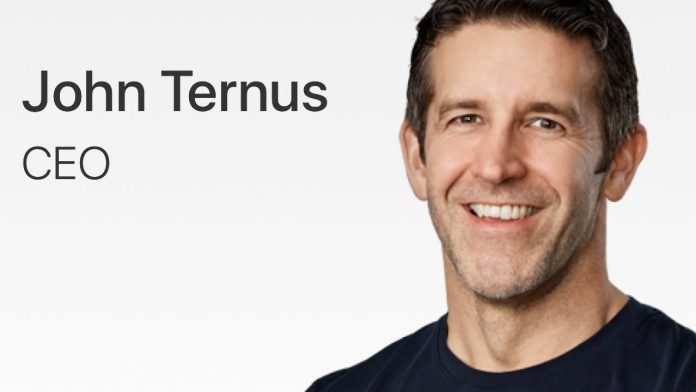
John Ternus, 51, became Apple’s CEO on September 1, 2026, succeeding Tim Cook after spending 25 years climbing from junior engineer to the world’s most watched technology job
He is the first Apple CEO in over three decades with a pure hardware engineering background — a deliberate choice by Apple’s board at a moment when product innovation, not operations, is the company’s most urgent need
His tenure will be defined by five tests: artificial intelligence, the next iPhone form factor, Vision Pro’s commercial viability, talent retention, and navigating a geopolitically fractured supply chain
MAIN STORY
On the morning of September 1, 2026, John Patrick Ternus sat down at the desk that Tim Cook had occupied for fifteen years and became the most powerful person in the world’s most valuable company. Apple — worth roughly $4.5 trillion — had a new chief executive. He was not a finance man. He was not a supply-chain man. He was, first and last, an engineer.
That fact alone is the central plot of one of technology’s more unusual succession stories. Ternus, 51, had spent a quarter-century at Apple turning invisible screws and impossible tolerances into products that hundreds of millions of people use every day. He did it without a public persona, without a social media following, and without a single major personal scandal attached to his name. Then, on April 20, 2026, Apple announced that he would succeed Cook. And on the morning of September 1, he sent his first memo to Apple’s global workforce.
“We have a huge launch next week that’s going to be phenomenal,” Ternus wrote, per a memo obtained by Bloomberg and 9to5Mac. “I’m just as excited about what lies beyond that, including the incredible products already in the works and the ones we haven’t even imagined yet that we’ll dream up and create together.”
Cook, in his own final message to staff, said he took “enormous comfort” in passing leadership to “someone as brilliant and wonderful and capable as John.” Cook has not disappeared — he moves to executive chairman, with Apple noting he will continue “engaging with policymakers around the world.” That arrangement is deliberately strategic. Ternus is the engineer. Cook remains the diplomat.
What follows is the definitive guide to understanding the man now running the world’s most valuable company: where he came from, what he built, what he got wrong, and what he is being asked to solve.
THE ISSUES
Apple’s board did not choose Ternus by accident, and they did not choose him for sentiment. They chose him because the company they have built — an organisation whose genius lies in the physical quality and tight integration of its products — faces a specific set of challenges that require a specific kind of leader.
The iPhone, which remains Apple’s economic engine, is approaching the limits of its current form. Artificial intelligence has exposed a gap between Apple and its rivals that the market is watching closely. The geopolitical fault lines between China and the United States run directly through Apple’s supply chain. And regulators in Washington, Brussels, and New Delhi are circling Apple’s App Store business with increasing appetite.
Against this backdrop, the board chose not a dealmaker, not a lobbyist, and not a financial engineer. They chose the man who has spent 25 years building the products at the centre of everything Apple is. The logic is clear, even if the execution remains entirely unproven.
15 THINGS YOU NEED TO KNOW ABOUT JOHN TERNUS
1. He Was Born in California in 1975 — And Almost Nobody Knows Anything Else About His Childhood
John Patrick Ternus was born in California in May 1975. Fortune has placed his origins in the Los Angeles area. Beyond that, reliable public information is almost nonexistent. His parents, his childhood home, his secondary school, his religion, his upbringing — none of it has been confirmed by credible reporting. Multiple outlets have noted this gap and confirmed it is a gap, not a spin operation. Several tabloid-adjacent sites have attempted to fill in the blanks; editorial caution demands those claims be treated as unverified.
What the absence itself tells you is significant. Ternus spent 25 years becoming one of the most powerful people in technology without constructing a public origin story. He is, in that sense, the anti-celebrity CEO — a figure whose biography begins, for practical purposes, when his engineering career does.
2. He Studied Mechanical Engineering at Penn — and Nearly Destroyed a Machine Worth More Than His Degree
Ternus entered the University of Pennsylvania in 1993 and graduated in 1997 with a Bachelor of Science in Engineering in Mechanical Engineering and Applied Mechanics, with a minor in Psychology. He was also a varsity swimmer — an all-time letterwinner on Penn’s men’s team who won the 50-metre freestyle and 200-metre individual medley against Swarthmore as a freshman in 1994. Former teammates described him as personable, competitive, and calm.
But the story that has followed Ternus through his career is the one he told himself, at Penn’s 2024 Engineering commencement, about the CNC milling machine. During his senior year, he very nearly destroyed the university’s first computer numerical control milling machine. The incident earned him a nickname that stuck with him through Apple: “Crash.”
“The care that you put into your work, it really matters,” he told Penn graduates in 2024, according to reporting by Deadline. He was not speaking abstractly. He was speaking from experience — including the experience of spectacularly failing.
3. His Senior Project Was a Feeding Arm for People With Quadriplegia — and It Tells You Who He Is
Before the iPhone, before the Mac, before any of it, Ternus’s most important engineering project was a mechanical feeding arm that people with quadriplegia could control using head movements. He built it as his senior project at Penn.
The detail matters because it reveals the philosophy of the engineer before any corporation had shaped him. He was not building something theoretically clever. He was building something that would give a person with severe mobility limitations the ability to feed themselves. He was, from the beginning, designing for human beings — not for specifications, not for awards, not for investors.
That instinct — design for the person holding the product, not the product itself — runs like a thread through everything Ternus later did at Apple.
4. His First Job Was in Virtual Reality — Before VR Was Anything
When Ternus graduated from Penn in 1997, he did not go to a large corporation. He went to Virtual Research Systems, a small California company building early virtual reality headsets and head-mounted displays. He stayed there from 1997 until 2001, working as a mechanical engineer. Reporting has linked him to work on the V8, a high-end VR headset used heavily for military flight simulation and other specialised applications.
Palmer Luckey, the founder of Oculus, reportedly examined one of the old V8 units and indicated that Ternus appeared to have been the lead mechanical engineer associated with it. The appropriate journalistic standard here is careful: Ternus is believed to have worked on the V8, not that he invented it.
The biographical irony is not subtle. The man who later oversaw the Apple Vision Pro — Apple’s $3,499 bet on spatial computing — spent his formative engineering years building early VR hardware before the consumer market for it even existed.
5. He Joined Apple in 2001 as an Engineer — Not as an Executive
Ternus joined Apple’s product design team in 2001. He was not hired as a manager. He was not hired as a strategist. He came in as an engineer, and he started at the bottom of one of the most demanding product organisations in the world.
His first major project was the Apple Cinema Display — a large desktop monitor with a clear plastic enclosure secured by screws at the back. It was a relatively unglamorous assignment by Apple’s standards. What happened during that assignment became, decades later, one of the most revealing stories of his career.
6. He Once Argued With a Supplier — at Night — Over the Number of Grooves on a Screw Nobody Would Ever See
The Cinema Display screws were made of stainless steel and required a specific pattern of concentric grooves in the head. Apple had specified 25 grooves. The supplier had produced screws with a different number. Ternus became involved in the argument over the difference — late at night, at the supplier’s facility — over a detail that almost no customer would ever see.
He later reflected on the moment: after questioning why he was doing it, he concluded that if something is worth making, the invisible details matter too.
“If you are going to spend that much time on something, you should put in your very best effort,” he told Penn graduates in 2024, recounting the episode, per Deadline.
It is probably the most useful single story for understanding Ternus. His worldview is not that the customer sees every detail. His worldview is that the details matter whether the customer sees them or not. That philosophy is very close to the one Steve Jobs brought to Apple — and it is almost certainly why Apple’s board considered Ternus the right person to lead the company.
7. He Rose Through iPad, iPhone, Mac, AirPods, and Apple Watch — Essentially the Entire Hardware Portfolio
By the time Ternus became Apple’s Senior Vice President of Hardware Engineering in 2021, he had accumulated a hardware résumé that was nearly unique within the company. He had been involved in the development of every generation of iPad. He had taken on iPhone hardware responsibility from Dan Riccio around 2020. He had overseen Mac hardware through the most significant architectural transition in decades. He had contributed to AirPods, which grew from a product widely mocked at launch to one of Apple’s most successful new lines of the Cook era. He later added Apple Watch hardware responsibility.
This breadth matters. It means Ternus understands Apple not as a collection of individual product lines but as an integrated ecosystem — a company where the chip in the iPhone relates to the chip in the Mac, where the sensors in Apple Watch inform the health capabilities in AirPods, where the manufacturing expertise from one product feeds directly into the next.
8. He Led Apple’s Most Important Technical Transition in a Decade — The Move to Apple Silicon
If there is one professional achievement that made the case for Ternus as CEO more than any other, it is Apple’s transition from Intel processors to its own Apple Silicon chips.
The transition, which Ternus oversaw as hardware chief working alongside chip architect Johny Srouji, was not simply a product upgrade. It was a strategic reorganisation of Apple’s entire technological identity. By designing its own processors — the M-series chips that now power the Mac — Apple gained control over performance, power efficiency, thermal management, and the integration between hardware and software in ways it could never achieve as a customer of Intel’s roadmap.
The transition is widely regarded as one of the most technically complex and commercially successful platform shifts in Apple’s modern history. It revitalised Mac sales and fundamentally repositioned the computer as an Apple product rather than an Intel product with Apple packaging.
For Ternus, it is the strongest argument that he understands Apple’s greatest competitive advantage: the company controls the whole stack.
9. He Was Behind the Touch Bar — and That Is a Mark Against Him
A serious profile of John Ternus cannot ignore what went wrong.
Bloomberg reporting, cited by 9to5Mac, identified Ternus as instrumental in pushing Apple’s Touch Bar into the 2016 MacBook Pro. The Touch Bar — a dynamic touchscreen strip that replaced the traditional function keys on the keyboard — was marketed as a new paradigm for interacting with applications. It was never embraced by users, attracted consistent criticism from professionals who relied on physical function keys, and was eventually abandoned. Apple returned to physical keys.
The Touch Bar was not a minor product stumble. It was the defining hardware feature of Apple’s flagship notebook for several years, and it failed.
10. He Was Also Part of the Butterfly Keyboard Era — Another Controversy He Owns
The butterfly keyboard mechanism, which Apple adopted across its MacBook line to achieve thinner designs, became one of the most sustained product controversies in the company’s recent history. Users reported failures caused by dust, debris, and keystroke reliability issues. Repair costs were high. Class action litigation was filed against Apple. Customer frustration was significant and prolonged.
Ternus held significant Mac hardware responsibility during this era. The butterfly keyboard was not his decision alone — Apple is a company that makes collective product choices — but a serious profile must acknowledge that the hardware decisions of his era include some that Apple ultimately reversed under public and user pressure.
His record, in short, is not spotless. The person taking over the CEO role has made major product decisions that did not hold up.
The Apple Vision Pro, which launched in early 2024 at $3,499, is perhaps the most complex hardware Apple has ever built. It is also, by commercial measures, among the most challenging product launches the company has attempted.
Ternus oversaw hardware engineering during the Vision Pro’s development and launch. The product’s size, weight, price point, and limited mass-market application made it a difficult proposition for broad consumer adoption. Reporting has suggested Ternus himself had reservations about Vision Pro’s ability to become a mass-market product — which, if accurate, creates a genuinely interesting contradiction: the engineer most associated with VR hardware from his earliest career may be among the people most clear-eyed about the limitations of Apple’s current VR strategy.
What happens to Vision Pro under Ternus’s CEO tenure — whether it becomes the foundation of a spatial computing platform or a cautionary chapter in Apple’s innovation story — will be one of the early measures of his leadership.
12. His Management Style: Calm, Technical, Low-Ego — and Deliberately Accessible
One of the most consistent threads in reporting about Ternus is how unlike the traditional Silicon Valley power executive he is. He is repeatedly described by colleagues as calm, detail-oriented, approachable, and genuinely collaborative. Deadline reported that a non-Apple industry executive described him as paying attention, being willing to take in new ideas, innovative and technically very strong.
A former Apple boss described him as something of a “man of the people.” He reportedly declined to move into a private executive office, preferring to work in proximity to his team. His 2024 Penn commencement address articulated a leadership philosophy that has clearly shaped how he operates: assume you are as smart as everyone else in the room, but never assume you know as much as they do about their specific subject.
That philosophy — confidence without arrogance, deep curiosity, respect for specialists — is arguably why Ternus was able to operate effectively inside Apple’s intensely specialised engineering culture for 25 years without generating significant internal opposition.
13. His Relationship With Tim Cook — And Why Cook’s Continued Presence Is Both an Asset and a Question
When Apple announced the succession in April, Ternus said he had been fortunate to work under Steve Jobs and to have Tim Cook as his mentor. Cook praised Ternus’s engineering ability and leadership qualities. The board structured the transition with Cook remaining nearby as executive chairman — specifically to handle government and policy relationships.
That arrangement tells you something important. Apple’s board trusts Ternus to run the company. They also believe Cook’s political and diplomatic capital — particularly the relationships he built with the Trump administration and with Beijing — is too valuable to simply set aside. Cook will remain Apple’s primary interface with policymakers around the world.
The arrangement creates an advantage: Ternus gets access to one of the most experienced corporate diplomats in technology. It also creates a potential dynamic that Ternus will need to manage carefully. He must demonstrate, over time, that he is running Apple — not merely the operational half of a leadership duo.
14. His Biggest Challenge Is Artificial Intelligence
Apple has been criticised, with increasing directness, for falling behind OpenAI, Google, Microsoft, and Meta in the AI race. The company’s own Siri overhaul has reportedly been built on Google’s Gemini technology — a dependency that sits uncomfortably with Apple’s historical pride in controlling the technologies underlying its products.
Ternus has articulated Apple’s philosophy on AI as putting technology into useful experiences rather than launching AI products for their own sake. That is an authentically Apple-like position. The question is whether it is sufficient in a market where competitors are moving at a pace Apple has not matched.
The fundamental strategic question facing Ternus in his first years as CEO is whether Apple builds its own world-class AI capability, acquires it, partners for it, or continues integrating third-party models. That decision will define the Ternus era more than any individual product launch.
15. His Compensation Is $3 Million in Salary — and Up to $55 Million in Equity
Per Apple’s SEC filing, Ternus’s compensation as CEO includes an annual base salary of $3 million. His 2026 prorated equity award carries a target value of $2.5 million. His 2027 annual equity award carries a target value of $55 million — of which 75 per cent is performance-based restricted stock units tied to Apple’s total shareholder return relative to the S&P 500, and 25 per cent is time-based.
The structure tells you something about how Apple’s board has aligned Ternus’s interests with shareholders. He will become significantly wealthier if Apple performs. He will not if it does not. His estimated net worth, built from Apple equity accumulated over 25 years, is commonly placed in the range of $40 million to $150 million, depending on assumptions about how much equity he has retained — with estimates frequently citing a figure around $75 million. No official disclosure exists.
WHAT’S BEING SAID
“If you want to make an iPhone every year, Ternus is your guy,” a former Apple product and software engineering manager told the New York Times, as reported by PhillyVoice.
Leander Kahney of Cult of Mac told Fox Business that he sees a throughline from Jobs to Cook to Ternus in terms of product focus, describing Ternus as “a product guy in the Jobs mold.”
A non-Apple technology industry executive who spoke to Deadline said Ternus “gets good reviews from colleagues personally” and that his appointment “signified a desire to break things open with new products” — adding that the appointment reflected Apple’s identity as a device company at its core.
Some Apple analysts told Fortune that Ternus’s product background is exactly the expertise Apple needs at this moment, noting that the board chose him for a reason: his ability to navigate a secretive and demanding corporate environment while delivering products that sell extraordinarily well.
Apple did not respond to BizWatch Nigeria’s request for comment by press time.
WHAT’S NEXT
September 9, 2026: Apple’s annual iPhone event — internally called “Surprise and Shine” — will be Ternus’s first as CEO. The event is widely expected to include Apple’s first foldable iPhone and a broader rollout of Apple’s revamped Siri AI platform. It will be the first major public test of the Ternus era.
Fiscal Year 2027: Ternus’s first full fiscal year as CEO will trigger his $55 million target-value annual equity award, with three-quarters of it tied directly to Apple’s stock performance relative to the S&P 500.
U.S. Department of Justice antitrust case: Apple faces an ongoing antitrust action from the U.S. government over its smartphone ecosystem. Ternus inherits the case and will need to navigate both the litigation and the political relationships it involves.
China supply chain: The ongoing reconfiguration of Apple’s manufacturing base toward India, Vietnam, and the United States — a multi-year project — will continue to require strategic decisions from Apple’s new leadership.
BOTTOM LINE
The Bottom Line: John Ternus is not Apple’s next Steve Jobs, and he is not Tim Cook 2.0 — he is something the company has not had in more than three decades: an engineer at the top, tasked with answering whether the discipline that built Apple’s last generation of products is the same discipline that can imagine the next one. His record is substantial, his failures are real, his challenges are generational in scale, and the company he has inherited is, by every financial measure, the most valuable in human history. Whether a man who spent 25 years perfecting the inside of objects other people hold can now define what those objects should become is the question the entire technology industry will spend the next decade watching him answer.
NGX market capitalisation rises by ₦1.22 trillion as the All-Share Index gains 0.77%
Financial, oil and gas, insurance and consumer stocks lead broad-based market gains
Trading volume and value increase 7.44% and 5.35%, respectively, across 43,760 deals
Main Story
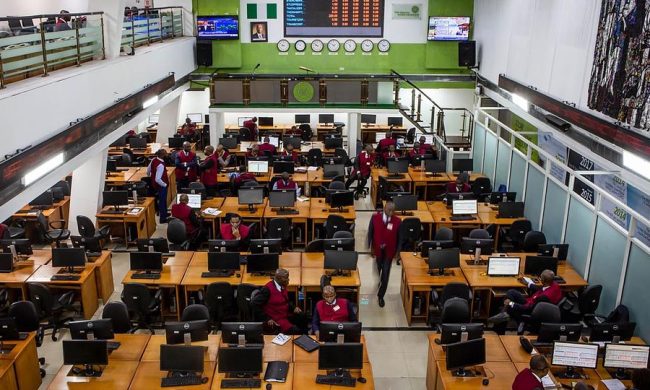
Nigerian stocks opened September on a bullish note as financial and oil companies helped lift the Nigerian Exchange (NGX) market capitalisation by ₦1.22 trillion.
The All-Share Index gained 1,883.24 points, representing a 0.77% increase, to close at 246,082.63, while market capitalisation rose ₦1.22 trillion to ₦158.96 trillion, according to NGX market data.
The gain extended the market’s positive run to a fourth consecutive session, with bargain hunting in selected mid-cap and blue-chip stocks supporting the advance.
Trading activity also strengthened. Total volume and value traded increased by 7.44% and 5.35%, respectively, with 651.32 million shares worth ₦40.77 billion exchanged in 43,760 deals.
Access Holdings accounted for 19.97% of total market volume, followed by CMFC at 8.92%, Link Assurance at 5.58%, GTCO at 4.94% and Nigerian Breweries at 4.55%.
MTN Nigeria led the value chart, accounting for 11.52% of total traded value.
FTN Cocoa and McNichols gained 10% each to lead the gainers, followed by Sunu Assurances at 9.94%, Sovereign Trust Insurance at 9.57%, Caverton at 9.52%, May & Baker at 9.46% and Aradel Holdings at 8.83%.
Eighteen stocks declined, with Tripple Gee & Company falling 9.72% to lead the losers. ABC Transport, Nahco and RT Briscoe also recorded declines.
Market breadth closed positive at 40 gainers to 18 losers, while all five major sectors advanced.
What’s Being Said
The trading pattern points to continued investor interest in selected blue-chip and mid-cap equities, with bargain hunting identified in the market report as a key driver of the session’s gains.
NGX data showed that the Oil & Gas sector recorded the strongest sectoral performance, rising 3.87%, followed by Insurance at 3.34%, Banking at 0.87%, Consumer Goods at 0.87% and Industrial Goods at 0.71%.
What’s Next
Investors will watch whether the NGX can sustain the four-session positive run and build on the broad-based gains recorded at the start of September.
Market participants will also monitor whether continued demand for financial, oil and gas and insurance stocks translates into further gains in the All-Share Index and market capitalisation.
The Bottom Line:
The September opening signals stronger investor participation, with gains extending beyond a narrow group of stocks and all five major sectors advancing. Sustaining the momentum will depend on whether bargain hunting develops into broader, persistent buying pressure.
OPay demands the deletion, retraction and apology over social media claims that it would take a “long indefinite break”
The fintech company threatens legal action against Adam B. Garba II, ViralGrabTV and X user Cute Hafserh
OPay says the publications caused reputational and commercial damage to its business operations
Main Story
OPay Digital Services Limited has threatened legal action against three social media users over publications alleging that the fintech company planned to embark on a “long indefinite break.”
In separate demand letters dated August 31 and September 1, 2026, OPay accused X users Adam B. Garba II and Cute Hafserh, as well as TikTok account ViralGrabTV, of publishing false, malicious, libellous and defamatory information capable of damaging its reputation and business interests.
OPay’s Chief Legal Counsel, Akinfolabi Rokosu, said the company was notified on August 30 of posts allegedly claiming that OPay would take an indefinite break and advising customers to withdraw funds from their accounts.
The company said Garba, who operates the X account @adamugarba, also promoted Crowwe Wallet alongside the alleged claims. OPay said the combination of the publication and promotion of an alternative wallet was calculated to damage its goodwill and commercial interests.
“It is our position that your conduct is malicious, deliberate and calculated to damage our company’s goodwill, reputation and commercial interest,” Akinfolabi Rokosu, Chief Legal Counsel, OPay Digital Services Limited.
OPay demanded that the affected publications be permanently deleted, that the claims be retracted and that the users issue unreserved apologies. The company also demanded that ViralGrabTV desist from further disseminating the claims across TikTok or other platforms.
The letters gave Garba, ViralGrabTV and Hafserh until 11:59pm West Africa Time on September 1 to comply, with OPay warning that failure to do so could result in legal proceedings.
What’s Being Said
“Your publication and/or amplification of the false statement, coupled with the simultaneous recommendation of an alternative wallet alongside the false publication, constitutes an infringement to our company’s right and have caused reputational and commercial damage to our brand and business operations.” Akinfolabi Rokosu, Chief Legal Counsel, OPay Digital Services Limited.
The three social media users’ responses to the allegations were not included in the demand letters provided to BizWatch Nigeria.
What’s Next
OPay’s stated September 1 deadline has now passed. The company’s next step will determine whether the dispute remains at the demand-letter stage or progresses into formal legal proceedings.
The fintech company may also continue monitoring social media platforms for further dissemination of the alleged claims.
The Bottom Line:
The dispute highlights the commercial risks fintech companies face when unverified claims about their operations and financial position circulate online. For OPay, the immediate issue is not only removing the disputed claims but limiting any potential effect on customer confidence and its business reputation.
Private-sector activity strengthened in August as new orders recorded their fastest growth since early 2024.
Output, purchasing activity and employment increased, while input and selling prices also rose.
Stanbic IBTC expects strong 2026 growth despite persistent cost pressures and weaker business confidence.
Main Story
Nigeria’s private-sector business activity strengthened in August, with the Stanbic IBTC Purchasing Managers’ Index (PMI) rising to 54.3 from 52.5 in July, marking the seventh consecutive month of improving operating conditions.
The latest reading represented the joint-largest monthly improvement in more than two and a half years, according to the survey, which covered about 400 private-sector companies across agriculture, mining, manufacturing, construction, wholesale, retail and services.
The expansion was driven largely by stronger demand, with new orders recording their fastest increase since the beginning of 2024. Business output also continued to expand, extending its growth streak to 21 consecutive months, with agriculture and manufacturing recording particularly strong increases.
Companies also increased purchasing activity for the 21st consecutive month, with the pace reaching its fastest level since November 2025. Stocks of purchases recorded their strongest increase in nine months, while supplier delivery times shortened for the second consecutive month.
Employment increased for the 15th consecutive month, although the pace remained modest. Staffing levels rose across most sectors, while wholesale and retail companies recorded declines in employment. Backlogs of work also fell for the first time in seven months.
Despite the improvement in business activity, rising costs remained a major challenge for companies. Input prices increased sharply during the month, driven by higher fuel, transportation and raw-material costs, with manufacturers recording the strongest increase. Staff-cost inflation, however, eased to its lowest level in nine months.
Selling prices also increased as businesses passed some of the higher costs on to customers, with agriculture recording the fastest increase.
Muyiwa Oni, Head of Equity Research, West Africa, Stanbic IBTC, said the stronger PMI reflected improved demand, the introduction of new products and better availability of materials.
“Stronger demand, new products and improved availability of materials supported the expansion in business activity,” Oni said.
He said output had remained above the 50.0 growth threshold for 21 consecutive months, while businesses continued to plan additional hiring, expansion and export activity despite persistent input-cost pressures.
The report also showed that business confidence about future output remained positive, although it fell to a three-month low. Companies cited plans to open new locations, increase hiring, expand exports and grow their customer base as factors supporting their outlook.
The August PMI came as food inflation rose to 20.31 per cent year-on-year in July from 17.52 per cent in June, while headline inflation eased to 15.43 per cent from 15.91 per cent.
Stanbic IBTC expects Nigeria’s economy to grow by 4.1 per cent in 2026, supported mainly by the non-oil sector. The bank projects non-oil growth at 4.11 per cent, compared with 3.71 per cent in 2025, while oil-sector growth is projected to slow to 3.45 per cent from 8.50 per cent.
Manufacturing is expected to provide the biggest boost to growth, alongside services including information and communication technology, trade, real estate, and finance and insurance.
The Issues
The August PMI presents a stronger picture of private-sector activity, but the expansion remains uneven.
Demand and production are accelerating, yet employment is not increasing at the same pace. This suggests that businesses are responding to stronger orders without significantly expanding their workforces.
Rising fuel, transport and raw-material costs are another constraint. Companies are raising selling prices to absorb some of the additional costs, potentially adding to price pressures across the economy.
The improvement in supplier delivery times and the build-up in inventories, however, provide some support for businesses as they respond to stronger demand.
What’s Being Said
“The August PMI showed that private-sector activity remained in expansion territory for the seventh consecutive month.” — Muyiwa Oni, Head of Equity Research, West Africa, Stanbic IBTC Bank.
What’s Next
Businesses are expected to continue responding to stronger demand through increased production, purchasing and planned expansion.
Companies also cited plans to hire additional workers, expand into new locations and increase exports as factors supporting their future outlook.
Stanbic IBTC expects the strong PMI readings recorded in the third quarter to support full-year economic growth of 4.1 per cent in 2026.
The bank expects the non-oil economy to become a stronger contributor to growth, projecting non-oil expansion of 4.11 per cent compared with 3.71 per cent in 2025. Oil-sector growth is projected at 3.45 per cent, down from 8.50 per cent in 2025.
Manufacturing is expected to receive the biggest boost among the three broad sectors, while information and communications technology, trade, real estate, and finance and insurance are expected to support services growth.
Bottom Line
Nigeria’s private sector entered August on a stronger footing, with the PMI rising to 54.3 as new orders, output and purchasing activity accelerated.
But the expansion is taking place alongside higher business costs and modest employment growth. The key test will be whether stronger private-sector activity can translate into sustained investment, job creation and broader economic growth.
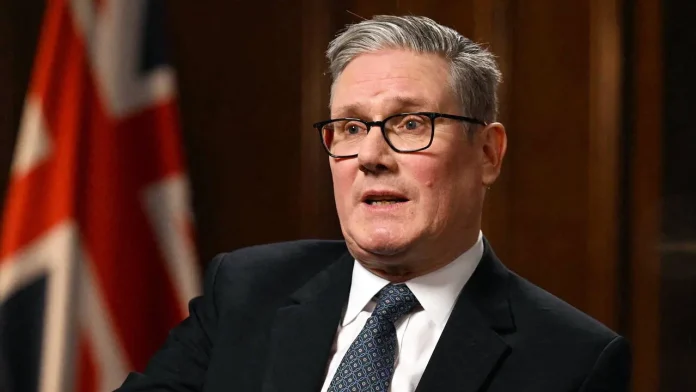
Former British Prime Minister Keir Starmer is stepping down as MP for Holborn and St Pancras.
His resignation will trigger a by-election in the London constituency.
Starmer says he will focus on international affairs including defence, security, trade and technology.
Main Story
Former British Prime Minister Keir Starmer has announced his resignation as Member of Parliament for Holborn and St Pancras, ending his tenure as the representative of the London constituency.
Starmer announced the decision on Tuesday, saying he believed it was the appropriate time to leave the House of Commons and allow another Labour candidate to take over the seat.
The resignation will trigger a by-election in Holborn and St Pancras, with Starmer pledging to support whoever is selected as the Labour Party’s candidate.
He said his next focus would be international affairs, particularly areas including defence, security, trade and technology.
The decision follows Starmer’s departure from the leadership of the governing Labour Party in June.
Andy Burnham was subsequently confirmed as Labour leader in July and became British prime minister.
Starmer said his decision to leave Parliament would allow him to concentrate on international issues in what he described as a rapidly changing global environment.
The Issues
Starmer’s resignation creates a parliamentary vacancy in Holborn and St Pancras and will require voters in the constituency to elect a new MP.
His decision also marks a further step away from frontline domestic politics after he relinquished the Labour leadership and the premiership.
What’s Being Said
“Now is the right time to step down as MP for Holborn and St Pancras and hand the baton over to a successor.” — Keir Starmer, former British Prime Minister.
“I will now focus on international affairs including defence, security, trade and technology in a fast-changing world.” — Keir Starmer, former British Prime Minister.
What’s Next
A by-election will be held in Holborn and St Pancras to determine Starmer’s successor as MP.
The Labour Party will select its candidate for the constituency, with Starmer saying the successful candidate will receive his full support.
Bottom Line
Keir Starmer is leaving Parliament after stepping down as Labour leader and British prime minister. His departure from the Holborn and St Pancras seat will trigger a by-election as he turns his attention to international affairs.
Qatar says diplomatic efforts with regional partners are intensifying to resolve the Strait of Hormuz crisis.
Doha says the strait must remain open to protect regional trade and security.
Qatar warns that failure to reach a resolution could trigger further escalation.
Main Story
Qatar has intensified diplomatic consultations with regional partners in an effort to secure a resolution to the crisis in the Strait of Hormuz, warning that failure to resolve the situation could lead to further escalation.
Foreign Ministry spokesperson Majed Al Ansari said on Tuesday that Qatar was continuing discussions with its mediation partners, including Oman and Pakistan, following a series of diplomatic engagements in recent days.
He said the discussions had yet to produce a tangible outcome, but added that details emerging from the ongoing consultations and diplomatic visits would be announced in the coming days.
According to Al Ansari, Qatar’s efforts are focused on securing a diplomatic settlement that would ensure continued access through the Strait of Hormuz.
He said keeping the waterway open was necessary to allow products from the region to reach international markets while also supporting regional security and the economic aspirations of people across the region.
The diplomatic push comes amid a wider conflict involving Iran, Israel and the United States.
According to the account provided, Israel and the United States launched joint attacks on Tehran and other Iranian cities on February 28. Iran subsequently responded with missile and drone attacks against Israel, US bases and other assets in the region, while tightening control over the Strait of Hormuz.
The situation was later followed by a peace memorandum of understanding signed by the United States and Iran on June 18. The agreement provided for negotiations between both countries over 60 days with the aim of reaching a final settlement.
That deadline expired on August 17, with the status of the negotiations remaining uncertain.
Qatar is now working with Oman, Pakistan and other regional partners to push the diplomatic process forward and prevent further deterioration of the situation.
The Issues
The Strait of Hormuz is a critical route for the movement of products from the Gulf region to international markets. Any prolonged disruption would therefore have implications beyond the countries directly involved in the crisis.
For Qatar and its mediation partners, the immediate challenge is to secure an arrangement that keeps the waterway open while addressing wider regional security concerns.
The uncertain status of the US-Iran negotiations adds another layer of difficulty, as the earlier 60-day deadline has passed without a clear final agreement.
What’s Being Said
“There are no tangible result to announce yet.” — Majed Al Ansari, Foreign Ministry spokesperson, Qatar.
What’s Next
Qatar will continue consultations with Oman, Pakistan and other partners as diplomatic efforts to resolve the Strait of Hormuz crisis continue.
The outcomes of recent diplomatic visits and discussions are expected to become clearer in the coming days.
Bottom Line
Qatar is stepping up regional diplomacy to keep the Strait of Hormuz open and prevent further escalation of the crisis. The effort comes as uncertainty persists over the status of negotiations between the United States and Iran.
NICA says trade credit provides more than 60 per cent of working capital financing in Nigeria’s real sector.
Manufacturers are urged to strengthen distributor screening, credit limits and receivables monitoring.
Institute recommends credit reporting and factoring to improve liquidity and reduce risks.
Main Story
The National Institute of Credit Administration (NICA) has called on manufacturers to strengthen their management of trade credit, warning that poorly controlled distributor lending could expose businesses to bad debts and cash-flow pressures.
In a statement signed by its Registrar/Chief Executive Officer, Mr Chris Onalo, on Tuesday, the institute said trade credit accounts for more than 60 per cent of working capital financing in Nigeria’s real sector.
NICA said credit extended to distributors could help manufacturers increase sales, expand their market presence and keep production running. However, it said the benefits could be undermined when manufacturers fail to properly assess and monitor the credit extended to customers.
The institute urged manufacturers to treat trade credit as a commercial tool for driving sales, rather than simply as a concession to distributors.
It said properly designed credit policies could allow distributors to carry larger stocks and sell products more quickly while giving manufacturers greater control over repayment.
NICA recommended that manufacturers carry out proper due diligence before extending credit, establish appropriate credit limits, document the terms of each transaction and regularly monitor outstanding receivables.
It also encouraged companies to employ trained credit management professionals, including NICA-certified practitioners where possible, to improve the quality and integrity of credit decisions.
According to the institute, credit policies should be designed to support sales while controlling the risks associated with delayed or failed payments.
NICA also urged manufacturers to share information on distributor credit histories with licensed credit bureaus and relevant business information agencies.
It said better access to credit information would allow manufacturers to identify risky payment patterns, while distributors with strong repayment records could benefit from improved access to financing.
The institute further recommended credit factoring as an option for manufacturers seeking to improve cash flow.
Under factoring, verified receivables can be sold to a factor in exchange for immediate funds rather than waiting for distributors to settle invoices after 30, 60 or 90 days.
NICA said manufacturers could use the resulting liquidity to purchase raw materials, pay workers and maintain production without waiting for outstanding distributor payments.
The institute called on the organised private sector, particularly the Manufacturers Association of Nigeria (MAN), to promote responsible use of trade credit across the manufacturing sector.
It also said manufacturers could use its NICA CreditAcademy to train their teams and establish more effective credit management systems.
The Issues
Trade credit is an important source of financing for Nigeria’s real sector, but it also creates exposure when distributors fail to pay on time or default.
For manufacturers, the challenge is to expand sales without allowing outstanding receivables to weaken working capital. Effective screening, credit limits, documentation and continuous monitoring can help businesses manage that balance.
Credit information sharing could also reduce information gaps between manufacturers and distributors, while factoring provides an option for converting verified receivables into cash before their normal payment dates.
What’s Being Said
“Trade credit accounted for more than 60 per cent of working capital financing in Nigeria’s real sector, making its effective management critical to industrial growth.” — National Institute of Credit Administration.
“Credit as a strategic sales accelerator rather than a concession.” — National Institute of Credit Administration.
What’s Next
NICA is calling on manufacturers and organised private-sector groups to strengthen internal credit systems and adopt more structured approaches to distributor financing.
Manufacturers are also being encouraged to train credit teams, share distributor payment information with authorised agencies and consider factoring where it can improve liquidity.
Bottom Line
NICA says manufacturers can use trade credit to drive sales and sustain production, but only if the associated risks are properly managed. The institute wants companies to combine stronger credit controls with information sharing and financing tools such as factoring to protect cash flow.
Ogun Government warns of intense rainfall and possible flooding from September.
Residents in vulnerable communities are advised to relocate to safer areas.
Fish farmers and emergency agencies are urged to take early preventive action.
Main Story
The Ogun Government has issued a fresh flood warning as the second phase of the 2026 rainy season approaches, advising residents in flood-prone communities to move to safer locations where necessary.
The Commissioner for Environment, Mr Ola Oresanya, issued the advisory in a statement made available to the News Agency of Nigeria (NAN) in Abeokuta on Tuesday.
He said the warning was based on the seasonal climate prediction of the Nigeria Meteorological Agency (NiMet), which placed Ogun among states expected to record heavy rainfall this year.
According to Oresanya, the second phase of the rainy season is expected to begin in September, with the state projected to receive about 360mm of rainfall during the month.
He said rainfall in inland areas was expected to reduce from October through early November, but warned that prolonged rainfall during the period could still trigger river and coastal flooding.
The commissioner said the risk could be worsened by controlled releases from Oyan Dam and tidal fluctuations, which could affect the flow of the Ogun River.
These conditions, he explained, could temporarily saturate wetlands and floodplains and increase the likelihood of flooding in vulnerable areas.
Oresanya said the first phase of the rainy season, from mid-March to July, brought heavy rainfall and isolated flash floods to parts of the state, although the impact was relatively limited.
He attributed the outcome partly to preventive measures by the government, including public awareness campaigns, regular clearing and maintenance of rivers, streams and drainage channels, as well as improvements in waste management.
He said the government had also focused on waterways and river channels including Sokori River and its tributaries, Opa-Aro, Adiyan, Eruwuru, Yemule, Gbogidi Canal and Ijamido.
Residents in Isheri, Arepo, Mawere, Magboro, Akute and Warewa were advised to remain alert, alongside residents in vulnerable parts of Abeokuta.
The warning also covers coastal communities in Ogun Waterside, including Makun-Omi, Iwopin, Oni, Ifaara and Igele, as well as Ebute-Imobi in Ijebu East.
Communities around Tungeji Island and Agosasa in Ipokia and those situated along the floodplains of the Ilo and Iju Rivers were also placed on alert.
Oresanya advised fish farmers operating around floodplains and river corridors to harvest their stocks early to reduce the risk of losses.
He specifically mentioned farmers in Eriwe, Yemule, Ilase and Ayegbami, while extending the advice to operators in other flood-prone locations.
The commissioner also called on ministries, departments and agencies, local government authorities, emergency response organisations, community leaders and other stakeholders to intensify preparations.
He urged community leaders to increase public awareness and ensure residents receive timely information on possible flooding.
Oresanya said the state government would continue implementing measures aimed at reducing the effects of flooding across Ogun.
The Issues
The immediate concern is the combination of heavy rainfall, river overflow, tidal fluctuations and saturated floodplains. Communities located close to rivers, waterways and low-lying areas face a greater exposure to flooding during periods of prolonged rainfall.
The warning also highlights the need for early action. Residents may need to relocate before flooding occurs, while fish farmers have been advised to secure their stocks ahead of possible losses.
What’s Being Said
“The state is projected to experience intense rainfall averaging about 360mm during the month.” — Mr Ola Oresanya, Commissioner for Environment, Ogun State.
“The rainfall in inland parts of the state is expected to decline from October into early November,” — Mr Ola Oresanya, Commissioner for Environment, Ogun State.
“The advisory also covers coastal communities including Makun-Omi, Iwopin, Oni, Ifaara and Igele in Ogun Waterside Local Government Area; Ebute-Imobi in Ijebu East Local Government Area, Tungeji Island and Agosasa in Ipokia Local Government Area; and communities located along the floodplains of the Ilo and Iju Rivers,” — Mr Ola Oresanya, Commissioner for Environment, Ogun State.
What’s Next
Government agencies, local authorities, emergency responders and community leaders are expected to strengthen flood preparedness as the second phase of the rainy season begins.
Residents in vulnerable areas are expected to monitor official advisories and relocate when necessary, while fish farmers in floodplains have been advised to harvest their stocks early.
Bottom Line
Ogun is preparing for a potentially intense second phase of the 2026 rainy season, with about 360mm of rainfall forecast for September. The state is urging vulnerable communities to act early as river, coastal and floodplain flooding risks increase.
Environmental consultant Dr Lawrence Umoh wants Nigeria to treat waste as an economic resource.
He recommends recycling, waste-to-energy systems and formalisation of informal waste collectors.
Regulatory gaps and weak standards remain barriers to investment in the circular economy.
Main Story
Nigeria could create jobs, generate energy and develop new industries by treating urban waste as a resource rather than simply something to be discarded, environmental consultant Dr Lawrence Umoh has said.
Umoh made the call in Abuja on Tuesday during an interview with the News Agency of Nigeria (NAN), advocating greater investment in recycling, renewable energy and inclusive waste management.
He said one of the immediate challenges was the weak collection of waste at its source, which allows refuse to accumulate in communities before it can enter recycling or recovery systems.
To address this, Umoh proposed community drop-off centres and incentives that would encourage households and businesses to connect with recycling markets.
He also called for the formal integration of informal waste pickers into the waste management system through cooperative-led Extended Producer Responsibility schemes.
According to him, formalisation could improve the earnings of waste pickers while giving them better access to protective equipment and creating greater traceability within recycling chains.
Umoh cited a clean-up exercise in Lagos in which 34 volunteers gathered 2.1 tonnes of plastic and earned N47,000 after sorting the materials and connecting them to recycling markets.
He said similar systems could be expanded to demonstrate the economic value of materials currently treated as refuse.
Beyond recycling, Umoh advocated integrated waste-to-energy facilities capable of processing food waste through anaerobic digestion to produce biogas for cooking and electricity, as well as fertiliser.
He said agricultural residues and other dry waste could also be processed into materials for use in construction, potentially reducing reliance on conventional cement.
Technology, he added, could improve the efficiency of such facilities. Artificial Intelligence and Internet of Things sensors could be used to monitor methane production, anticipate maintenance requirements and maintain the quality of recovered materials.
Umoh further urged governments to use green public procurement to create reliable demand for products derived from waste.
Such policies, he said, could include the procurement of waste-based construction materials and renewable natural gas, providing investors with more predictable markets.
He cautioned against relying on conventional mass-burn incineration because of the risk of toxic emissions, arguing that integrated recovery systems could produce energy and useful materials while generating fewer harmful by-products.
However, Umoh identified weak standards for waste-derived products and the absence of a clear policy framework for biogas as obstacles to scaling investment in the sector.
He therefore called for regulatory reforms that would give investors greater certainty and support Nigeria’s transition from a disposal-based waste system towards a circular economy.
The Issues
Nigeria’s waste challenge is also an economic opportunity, but capturing that value depends on how waste is collected, sorted and processed.
A major gap occurs at the first-mile stage, where waste must be collected from homes, offices and businesses before reaching recycling or treatment facilities. Integrating informal collectors and establishing community collection points could improve the flow of recyclable materials into the formal economy.
The proposed waste-to-energy model could also give organic waste an additional economic use, while better standards and clearer policies would be needed to attract investment into waste-derived products and biogas.
What’s Being Said
“Agricultural residues and other dry waste can be processed into supplementary cementitious materials, reducing dependence on high-emission cement in construction,” — Dr Lawrence Umoh, environmental consultant.
What’s Next
Umoh is calling for governments to develop clearer regulations, strengthen standards for waste-derived products and establish a policy framework for biogas.
He also wants public procurement policies to create demand for recycled and waste-derived products, while communities and informal waste workers are brought into more organised collection and recycling systems.
Bottom Line
Nigeria’s urban waste could become a source of jobs, energy and industrial inputs if collection and recycling systems are redesigned around resource recovery. But turning that potential into a viable industry will require stronger regulation, market incentives and greater inclusion of informal waste workers.