






Home Blog Page 3051

Stock Market Trading Holds on To Bullish Momentum As Index Scoops 0.51%

capitalised stocks

Transactions on the floor of the Nigerian Stock Exchange, NSE, on Wednesday, April 20, sustained its positive run from  Wednesday as benchmark indices climbed by 0.51%compared to an appreciation of 0.13 percent recorded previously.

The All-Share Index which opened at N24, 659.17 points soared by 125.78 points to close at 24,784.95 points as Market Capitalization similarly added N43.3 billion to close at N8.53 trillion.

Top three traders for the day in terms of volume were First bank Holdings Plc which sold 19.2 million shares worth N64.23 million followed by Guaranty trust Plc with a sale of 19.13 million shares valued at N305.4 million while Zenith Bank exchanged 15.98 million shares worth N187.2 million.

Tiger Branded Consumer Goods Plc. led the day’s 23 gainers with a gain of 9.96% or 24 kobo to close at N2.65 per share, followed by Eterna Oil Plc which added 9.41% or 16 kobo to close at N1.86 per share.

UAC-PROP Plc also increased by 5% or 20 kobo to close at N4.20 per share, while Oando Plc. added 4.88% or 20 kobo to close at N4.30 per share. Dangote Sugar similarly gained 4.84% or 25 kobo to close at N5.42 per share following shareholders’ approval of N6 billion dividend at the companies AGM held in Lagos Wednesday.

Skye Bank Plc. topped the day’s 11 losers with a decline of 5.88% or 6 kobo to close at 96 kobo per share, followed by AIRSERVICE which closed 5% or 10 kobo lower than its previous trading value to close at N1.90 per share, while CUSTODYINS Plc. decreased by 4.87% or 19 kobo to close at N3.71 per share.

John Holt Plc. likewise lost 4.76% or 4 kobo to close at 80 kobo per share, while Jos International Breweries Plc., fell by4.64% or 7 kobo to close at N1.44 per share.

Summarily, investors on the floor of the stock exchange, traded a total of 159.3 million shares valued at N1.1billion in 2,698 deals compared to 228.9 million shares worth N1.4 billion exchanged in 3,239 deals previously.
Nestle Opens N5.6billion Water Factory in FCT


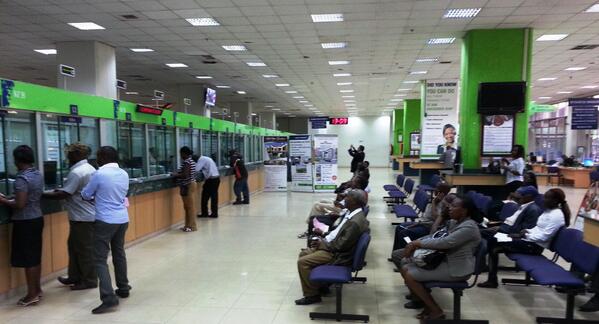
Nestle Nigeria Plc has launched its new ultra modern waters factory worth N5.6 billion in theFederal Capital Capital Territory, FCT.

At the opening ceremony in Abaji, on the outskirt of Abuja,  the company’s Managing Director and Chief Executive Officer , Dharnesh Gordon, said the inauguration of the water plant in the North will create over 111 new jobs for Nigerians living within the FCT.

He said the factory, which is the third in the country and the first in major in the north underpins its strong belief in the potential of the Nigerian economy in spite of the current volatile business environment.

According to him, the commissioning also showed that Nigeria remains Africa’s investment destination of choice, adding: “We can look back on a long and successful history of Nestle in the country and we are proud to remain a major contributor to the food industry in the country.

“Our company has been present in Nigeria for 55 years, and we are pleased that our operations are not only measurable in length of time, but more importantly, also by the positive impact it brings to the communities where we operate.”

He said the company was committed to continue to bring significant value to society at large by sourcing locally, creating employment, and offering high quality, nutritious foods beverages with the aim of helping Nigeria develop further.

In a remark, the Chairman of the board of directors, Mr. David Ifezulike, expressed gratitude to the Bank of Industry (BoI), through First City Monument Bank FCMB, for providing the company long term financial support to establish the Abaji factory, the first in the Northern part of the country.

According to Ifezulike, Nestle Nigeria is proud to be the pioneering multinational company in Abaji, adding that experience from its Agbara and Flowergate factories in Ogun state as in other parts of the world shows that Nestle factories drive rural development.

He said: “The developmental effects of our factories over time translates into new businesses, investment and infrastructure and make their once locations increasingly urban or industrialized in nature.

“Such an effect takes time to evolve. A factory is a long term investment, but as rural factories expand, they have many touch points with society: from employment creation and infrastructure to environment management, training, education and community.”


Unilever Nigeria Posts 12.5% to N16.78billion Sales Growth in Q1 2016

Unilever Nigeria Plc  grew its sales by 12.5 per cent in the first quarter of 2016 to N16.78 billion.

Unaudited report and accounts for the first quarter ended March 31, this year showed that the company grew by 12.5 per cent from N14.9 billion in first quarter of 2014 to N16.78 billion in first quarter of this year.

Cost of sales increased by 9.1 per cent to N10.7 billion for the period ended March 2016 from N9.8 billion recorded in the corresponding period in 2015. Net finance cost reduced by 35 per cent to N488 million for the three months ended March 31, 2016 compared to N757 million reported for the corresponding period in 2015.

The report showed that net finance cost as a function of operating profit improved significantly to 26 per cent as against 47 per cent in first quarter 2015, reflecting sustained improvements in cash management. Profit after tax for the period increased significantly by 76 per cent from N590 million in first quarter 2015 to N1.04 billion in first quarter 2016.

Unilever Nigeria assured stakeholders of continued focus on key business drivers to ensure sustained growth in the company’s operations to improve returns on investments.

“Although the challenges in the operating environment are yet to ease, we have continued to see momentum behind recent initiatives taken by Management. We will continue to focus on driving cost efficiencies, growing market share across key categories and reinvesting behind our brands,” the company stated.

“Total Bank Depositors’ Funds Hit N17.3trillion in 2015” – NDIC

The total deposit liabilities of all the deposit money banks, DMBs, in the country amounted to N17.3 trillion as at December 2015, the Managing Director of Nigeria Deposit Insurance Corporation, NDIC, Umaru Ibrahim has disclosed.

He also stated that of the total amount, which had 67 million depositors tied to it, the corporation had provided over 90 percent of insurance coverage.

Speaking in Jos, during a lecture titled: “NDIC and Engendering Confidence in the Financial Services Sector for Poverty Reduction and Economic empowerment” which was organised for participants of Executive Course No 38, 2016 at National Institute for Policy & Strategic Studies Kuru, he also said a total of N165.5 billion which belonged to 8.4 million depositors of microfinance banks (MFBs) as well as N73.71 billion linked to 0.73 million depositors of primary mortgage banks (PMBs) were further covered by over 95 percent.

Umaru noted that by these interventions, among others, the corporation had contributed to poverty reduction as it focused on deposit guarantee and protection of depositors’ interest.

Furthermore, the NDIC boss has hinted that the corporation is currently considering the introduction of electronic deposit payment system to facilitate depositor payout within the shortest possible time.

The NDIC boss also suggested the re-establishment of Nigeria Savings Bank to expand the frontiers banking system in the country.

He said the desire to effectively use post offices and leveraging information and communication technology (ICT) to facilitate financial intermediation would not only mobilise savings but also give access to credits.


Yields on Treasury Bills To Spike At Auction on Higher Inflation Rate

Yields are expected to soar after the currency denominated treasury bills auction on Wednesday, April 20 in line with a higher inflation figure for March and possible rise in interest rates by the Central Bank at its meeting next month.

Nigeria plans to raise N167.51 billion ($845 million) in treasury bills with maturities ranging between 3 months and one year today.

“The expectation is that yields will be higher following the March inflation figure and policy direction from the Central Bank governor about proposed higher benchmark rates,” local unit of Citibank said in a note to clients on Wednesday.

Nigeria’s annual inflation rose to a near four-year high of 12.8 per cent in March from 11.4 per cent in February, driven by a rise in food prices.

Last month, the Central Bank rate-setting Monetary Policy Committee (MPC) raise its benchmark interest rate to 12 per cent from 11 per cent with indications that interest rate may be hiked again at the next MPC meeting on May 24.

The Central Bank sold the 3-month bill at 6.10 per cent at its last auction on April 6, the 6-month fetched 8.69 per cent while the one year paper fetched 9.48 percent.

At the secondary market, the 3-month paper closed at 7.25 per cent, 6-month traded at 8.99 per cent while the 1-year bill closed at 10.46 per cent.

Union Bank Records 85% Profit Growth In Q1 2016

Union Bank of Nigeria, UBN, has declared a profit before tax of N4.8 billion in its first quarter, ended March 31, 2016.

The figure is 85 per cent higher than the N2.5 billion made in the same period of 2015.

The group’s financial statements for the period showed that its profit after tax rose by 96 per cent to N4.72 billion from N2.4 billion in 2015.

The bank ended the period with gross earnings of N26.6 billion, up from N29 billion, while interest from income stood at N21 billion as against N20 billion in 2015. It recorded interest expense of N6.6 billion down by 16 per cent from N7.9 billion in 2015.

Also, operating expenses went up by three per cent to N14.2 billion from N13.7 billion in 2015, customer deposits went up by nine per cent to N587.2 billion in 2016 on the back of growing customer confidence in service and product offers as well as a re-energised brand identity, while gross loans up marginally by two to N383.6 billion, which reflects cautious loan growth in targeted sectors of the economy.

Commenting on the bank’s first quarter results, the chief executive officer, Emeka Emuwa said, “Our first quarter results reflect steady progress on the execution of our strategic priorities. The bank’s core PBT in Q1 2016 is up significantly by 85 per cent to N4.7 billion. With the sale of non-banking subsidiaries near completion, the Bank is now focused on growing and delivering results through its core banking business.”

“Government Workers To Get Salaries By 25th Of Every Month” – Accountant General

The Accountant-General of the Federation, AGF, Ahmed Idris, has said the federal government plans to begin payment of staff salaries by the 25th of every month as directed by President Muhammadu Buhari.

The AGF, who disclosed this in an interview with the News Agency of Nigeria, NAN, in Abuja on Wednesday, April 20, said “this is going to be given a test, I believe, by this month”.

The AGF also said the government was working on a new arrangement, which, if approved, would ensure payment of the salaries before the monthly meeting of the Federal Accounts Allocation Committee, FAAC.

According to him, salaries are usually paid after the FAAC meeting, where revenue accruing to the federation’s account is shared among the federal, state and local governments.

“There is a standing instruction of Mr President to pay salary on or before 24 or 25 of every month and we will try as much as possible to comply and to abide by that.

“We are taking a step further to make a provision whereby we can accommodate salary payments even before FAAC.

“This is going to be given a test I believe by this month.

“We will go to seek necessary approval of our political masters to make sure that at least salary and other statutory payments are made even before FAAC.

Dangote Sugar Refinery Shareholders Ratify N6billion Dividend For 2015

sugar

Shareholders of Dangote Sugar refinery, DSR, Plc, have approved the recommended N6 billion dividend for the year ended December 31, 2015.

The Chairman of the company,Aliko Dangote said the company remains committed to delivering superior returns to its shareholders and this informed the recommendation of the dividend.

Speaking at the 10th annual general meeting (AGM) in Lagos, on Wednesday, April 20 Dangote said 2015 was a very challenging year as the political transition and economic slowdown impacted consumer spending and the global oversupply of crude oil weakened the naira, leaving an average Nigerian consumer with less purchasing power than in the past three to four years.

“In spite of this, we achieved a group turnover of N101 billion in 2015, seven per cent higher than the turnover of N95 billion in 2014. Profit before tax (PBT) stood at N16 billion and Profit after tax at N15 billion. Our earnings before interest tax depreciation and armortisation (EBITDA) rose to N21 billion compared to N18 billion in the previous year,” he said.

According to him, the board therefore, recommended a total of dividend of N6 billion, representing 48 per cent of the profit after tax.

“This translates to a dividend of 50 kobo per share for every ordinary share each held in the company. The board will continue on this prudent course of action in view of our investment requirement for the backward integration project (BIP) and building of a sustainable financial future for the company,” Dangote said.

The shareholders lauded the company and approved the dividend. The chairman, Progressive Shareholders Association of Nigeria (PSAN) Boniface Okezie described the management of the company as having foresight and making giant strides in back integration.

According to him, DSR has remained the foremost sugar refinery in Nigeria and continued to add value to shareholders.


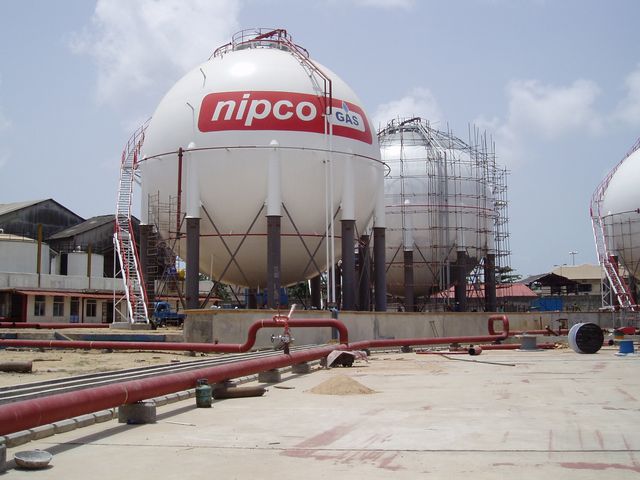
NIPCO Ramps Up Storage Facility To 84million Litres

Integrated oil and gas company, NIPCO Plc, has expanded its storage capacity to boost the company’s efforts at meeting the needs of stakeholders.

This development marks a significant investment in the hydrocarbon industry by the company

The managing director, NIPCO Plc, Venkataraman Venkatapathy, who disclosed this while reviewing the company’s operation in 2015, said that the new investment led to the construction of additional tanks for storage of white products .

According to him, the new storage facility can store 34 million litres of petroleum products, a feat that would drive the company to further consolidate the company’s leadership role in the downstream sector.

The MD affirmed that going into the construction of new projects at this time is a vindication of the company’s belief in the resilience of the Nigerian economy, stressing that “even though this is a very challenging period in the nation’s history, we are still upbeat for better days ahead.”

He noted that with the additional storage, Nipco’s efforts to store petroleum products has now increased to 84 million litres from the erstwhile 50 million litres, thereby enhancing her capacity to take deliveries of bigger vessels laden with huge products with no stress on where to discharge. Venkatapathy informed that the project which was built to international standard can store all grades of white products and has been effectively linked with the Apapa jetty reception point as well as the 10 point loading gantry in the terminal.

He said that though the operating environment has been very tough, concerted efforts will be made to contain the effects on the company with the broad policy outlines of the board of directors, active support of the workforce as well as a plethora of stakeholders. According to him, NIPCO’s sales and marketing strategies, together with its competitive pricing policy, have facilitated the considerable market share of the company in all its lines of business, adding that to maintain the trend “we would continue relentlessly to maintain new initiatives to maximise this enviable position in the industry.”


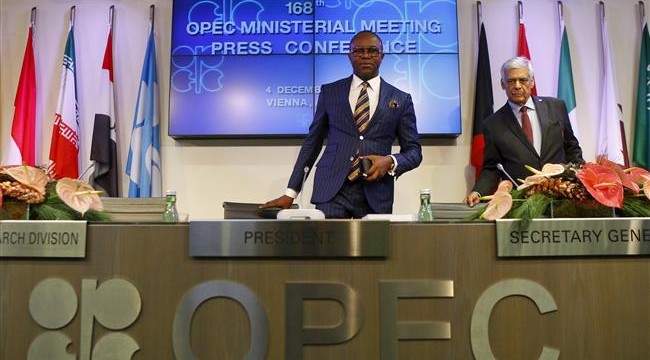
OPEC To Resume Output Freeze Talks In June, Excludes Non-member Producers

The Organization for Petroleum Exporting Countries, OPEC, plans to resume oil output-freeze talk after the meeting with its members and non-OPEC countries which was supposed to birth a deal fell through last Sunday in Doha, Qatar.

Iraq’s governor to OPEC, Falah Al-Amri said on his Facebook page, that discussions would resume in June at OPEC’s general meeting, to reach an agreement on freezing oil output.

His statement came just days after politics thwarted a deal to cap production and curb the global glut. No deal will be possible without a change in “political positions,” he said.

Negotiations among 16 oil producers on Sunday, ended without any accord after Saudi Arabia demanded all producers take part in a freeze.

Saudi Arabia’s regional rival, Iran decided not to take part in the talks because it wants to restore exports which had been curbed by international sanctions.

“If there is no change in the political positions, an agreement cannot be reached.

“Prices will continue on a downward trend, especially if some producing countries continue to increase their output to cause an imbalance in crude supply and demand,” Al-Amri said.

Crude prices dropped on Monday after the failed talks and have since rebounded as oil workers in Kuwait continued a strike for a third day, cutting production. Iraq, OPEC’s largest producer after Saudi Arabia, supported an agreement reached in February between Saudi Arabia, Russia, Venezuela and Qatar to cap output at January levels.

It pumped a record 4.55 million barrels a day in March. After the talks in Doha, Iran’s oil minister, Bijan Namdar Zanganeh, said some producers were under the “illusion” that they could get the nation to limit its oil production and effectively re-impose sanctions on itself.

Iran pumped 3.2 million barrels of crude a day in March, according to data compiled by Bloomberg, and plans to reach four million barrels a day by the end of the Iranian year in March.


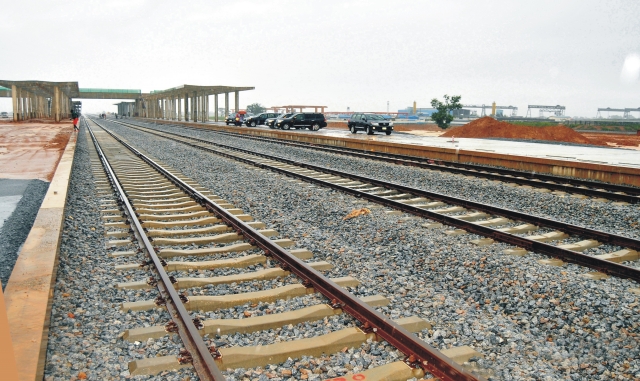
Six Contractors Involved In N1trillion Rail Contracts To Refund N2.5billion

The House of Representatives adhoc committee investigating the award and execution of rail contracts and headed by Ehiozuwa Agbonayinma, was on Wednesday, April 20 told that six contractors involved in the over N1 trillion Rail Contracts are to refund N2.5 billion to the coffers of the Federal Government.

The contractors who participated in the railway construction and rehabilitation contracts are to make the refunds for excess payments made to the contractors by the Nigeria Railway Corporation, NRC.

Officials from the Office of the Auditor- General of the Federation who were at the continued hearing of the panel investigating the rail contracts awards at the National Assembly said Audit Queries on the contracts were unanswered.

Since the beginning of the investigations in October last year, the panel met with former Chairmen of the Board of the NRC and other stakeholders in the course of the investigative hearing.

According to the OAGF official, CCECC, handling Lagos to Jebba rail line, is to refund N640 million while Costain West Africa Ltd, executing Jebba to Kano rail line is to refund N608 million.

Geo Group Asano, executing signalling and communications upgrade is to refund N368 million to government coffers.

Eser West Africa handling the Port Harcourt-Markurdi rail line is expected to return N339 million.

CCEGG in charge of the Markurdi-Kano rail line would cough out N353 million, while Routing Nigeria Ltd would refund N221 million.

Also at the hearing yesterday, Minister of Transport, Rotimi Amaechi who made a brief appearance told the lawmakers that the Ministry would conduct a forensic audit of the railway sector and all agencies under it, to ascertain if due process was carried out in all its previous operations.


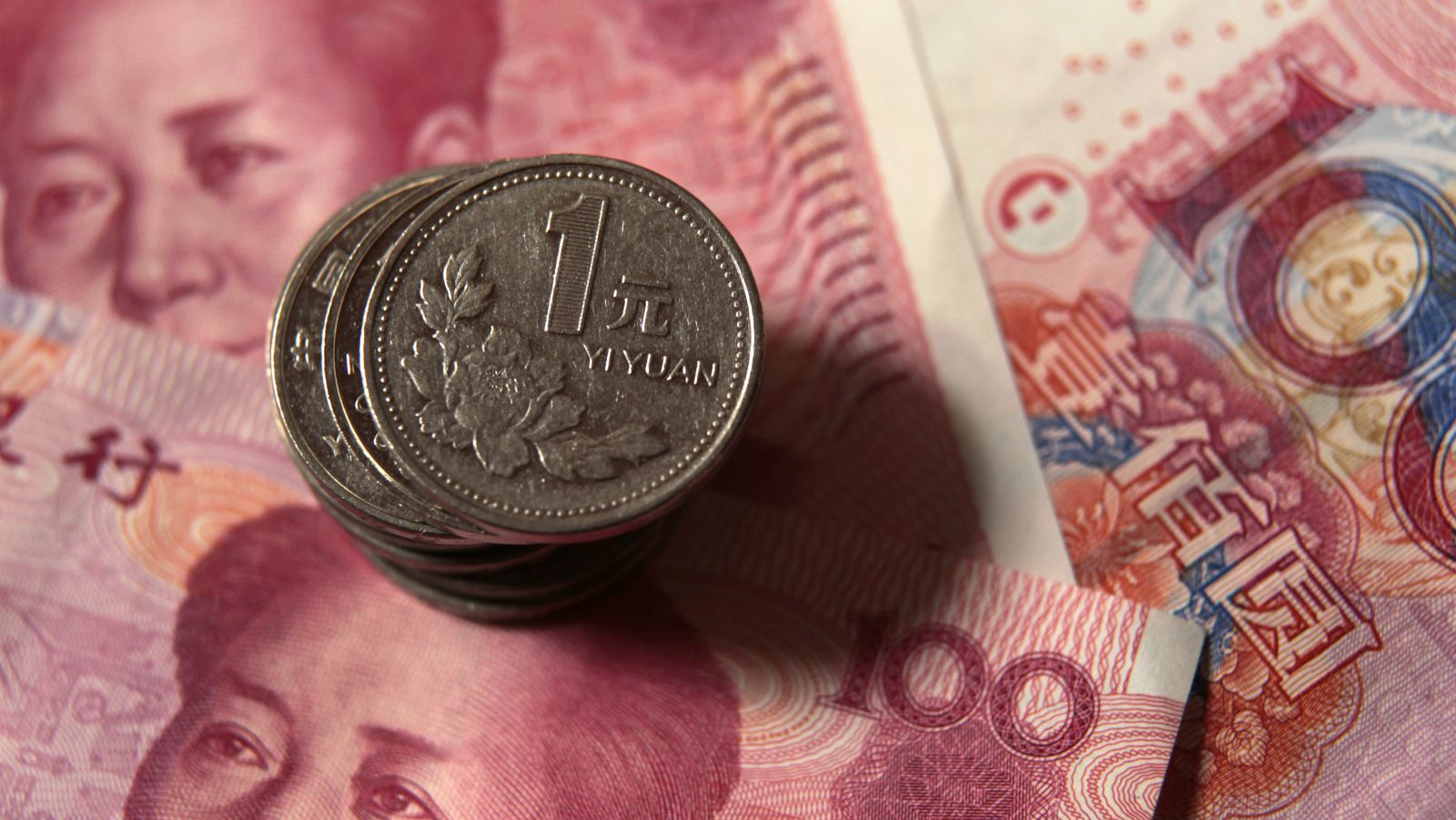
“China’s Yuan Deal With Nigeria Not Currency Swap” – Minister

Minister of Foreign Affairs, Geoffrey Onyeama, has stated that the currency deal Nigeria signed with China during President Muhammadu Buhari’s visit was not a swap as widely reported.

Onyeama, who briefed State House correspondents on Wednesday, April 20, at the end of the Federal Executive Council (FEC) meeting on the gains of the one week visit, said the deal was a way for Nigeria to benefit from the internationalization of the Chinese currency.

The Minister said: “It’s not really a swap. What it takes is that as the Chinese economy goes strong, there is some pressure on them from the trading partners, international financial institutions. They agreed that the money should be internationalized.”

“So, they started that for a while. They were protecting it also. They did not allow it to be fully exchangeable. But now, their economy is fully strong, they are looking for a way to internationalize the currency. Now, they were saying essentially that they wanted to segment it.

“For Southern Africa, South Africa is going to be the sort of a hub for the currency. So, they are going to be the focal point for the Chinese to make that available for trade in that area.

“In West Africa, they are looking for a hub. Ghana is interested in being the hub for the currency, to circulate it for those who want to use it. It is not compulsory. But Nigeria is a bigger country with bigger economy. So that does make sense.

“And they became a kind of attracted to Nigeria to be the hub.

“So, for us, the benefit is that it gives us small flexibility. So, if Nigeria is buying Chinese goods, for instance, it will in our interest to use the Yuan because we know there is a lot of squeeze for the dollar.”

“But we still use the dollar. But if it not enough and there are some people who want to invest in the country, instead of crying that they cannot take dollar out, there might be Yaun that they would be happy to take out because it is now internationalized as a currency and they can use it. So, it gives us a much larger option.”

“NNPC Owes over $300million in Taxes” – FIRS

The Chairman of the Federal Inland Revenue Service, FIRS, Babatunde Fowler, has stated that the Nigerian National Petroleum Corporation, NNPC, is owing over $300 million in tax arrears.

Fowler, while speaking on Wednesday, April 20 before the Michael Enyong Okon headed Adhoc Committee Investigating the FIRS’ accounting procedure, said the computation of the outstanding was done by the NNPC itself.

On NNPC’s non-compliance with the issue of tax return, he said all unresolved matters will be sorted out at the conclusion of the ongoing audit exercise, adding that the FIRS should have a proper assessment at the end of the audit of the NNPC in June.

He said: “On the taxable profits of companies, (under NNPC), I cannot give any specific information regarding the amount until the audit report for last year is ready for assessment.”

He however said the Corporation has promised to get back to the Agency with a plan on how to defray the outstanding, stating that the self-assessment by companies as done by the NNPC was not final.

“We are also deploying a system where all outstanding taxes owed by companies are recalled using automated platform. Right now, many companies, on the basis of that are doing self-assessment and have promised to remit all outstanding Value Added Tax (VAT) owed.


Otakikpo Marginal Field to Commence Operation in June

The Otakikpo marginal field in oil mining lease, OML, 11 is expected to kick off commercial production by end of second quarter of 2016.

The oil field is owned by a Joint Venture (JV) with Green Energy International Limited (GEIL) as the operator and Lekoil Oil and Gas Investment Limited as the technical and financial partners.

According to the company, the Otakikpo-002 well flowed oil from two production tests on zones C5 and C6 concluded on April 10. Zone C5 flowed at a peak rate of 6,404 barrels of oil per day (bopd) while C6 zone flowed oil at a peak rate of 5,684 bopd for over 24 hours.

Production testing at the well was curtailed due to storage capacity limits on well-testing equipment, the JV said, adding it expects to start commercial production by the end of second quarter of 2016.

The Joint Venture said: “As previously announced on September 7, 2015, the lower E1 zone produced from the first of four planned production tests, flowing oil at various sizes for over 24 hours at a peak rate of 5,703 bopd. However, during completion operations, the well encountered cementing issues resulting in the temporary suspension of the E1 zone to allow remedial work to take place.

“To keep Phase 1 of the field development plan (FDP) on track and under budget, the JV prioritised production from the second and third planned production zones, in the C5 and C6 reservoirs, and will pursue development options for the E1 zone in the future. The encouraging flow tests of upper zones, C5 and C6, reconfirm the sizeable potential of the oil field.

“Following the completion of Otakikpo-002, well re-entry operations on Otakikpo-003 are expected to begin later in second quarter (Q2) and will target the E1 and C5 zones. The company expects to commence commercial production from Otakikpo-003 in Q3 2016 and expects to be producing 10,000 bopd by year-end 2016. The facilities construction and permits are at an advanced stage to meet the company’s timeline for commercial production.”

The company said following the conclusion of Phase 1 of the FDP, which is expected by the end of 2016, the company will proceed to Phase 2 with new wells planned to bring aggregate production to an estimated 20,000 bopd by the end of 2017.

The Otakikpo Joint Venture with LEKOIL as Financial and Technical Partner and Green Energy International Limited (GEIL) as operator began work in December 2014.

The Chief Executive Officer, Lekoil, Lekan Akinyanmi, said: “In about a year and half, Lekoil and its partner GEIL have managed to bring to life a marginal oil field, which is expected to produce 10,000 bopd by year end, demonstrating its technical and financial strengths as well as illustrating the fast-track approach by the Department of Petroleum Resources (DPR) to develop previously marginal fields and unlocking value for the benefit of Nigeria.


Nigeria Needs 2.4million Barrel Per Day To Boost Economic Growth

The President of the Nigeria Association for Energy Economics, NAEE, Wumi Iledare, on Wednesday, April 20, said that Nigeria needs to boost its crude oil production to more than 2.4 million barrels per day, bpd, to stabilize the economy.

Iledare, who spoke during a pre-conference media briefing in Abuja, said the upcoming 9th NAEE/IAEE international conference holding next week in Abuja, would address how the country could ramp-up its crude oil production and how proceeds from it could be used to energise the economy.

He said although the 2.4m bpd is not enough to sustain the economy, or even grow it, resource management is vital because studies have shown that emerging economies often experience economic degression when oil prices are good because they tend to be lacking in capacity to manage the boom.

Iledare said the purpose of the conference is to explore the energy supply options for energising emerging economies like Nigeria, adding that the low oil prices should not be viewed in bad light but as an opportunity to diversify the economy and do away with petroleum subsidy.

“In our opinion, low oil prices offers Nigeria an opportunity to cut wastage in spending, set aside fiscal irresponsibility, reduce overdependence on oil and get rid of bloated governance spending expenses,“ he said.

SEC Initiative on Commodity Trading Provides Enabling Environment to Boost Agriculture

DG SEC, Mr. Mounir Gwarzo

In a bid to boost agriculture and promote commodity exchange in Nigeria, the Securities and Exchange Commission (SEC) is set to roll out various initiatives to provide an enabling environment for commodities trading in the country.

Already, the Commission is reviewing the Warehouse Receipt Bill currently before the National Assembly and has assured that it will actively advocate its passage.

This is in support of the policy thrust of the Federal Government to encourage investments in the agricultural and solid minerals sectors in a bid to ensure economic diversification and deepen capacity across the agricultural value chain.

Director General of SEC, Mounir Gwarzo said this while delivering a Keynote address at a Training Seminar organized by Africa Exchange Holdings (AFEX) on Commodity Trading and Risk Management in Abuja.

He said the 10-year capital market master plan which the Market is currently implementing is the blueprint for the growth and development of the market over the next decade and acknowledges commodities exchanges as critical for enabling investment diversification, risk management, price discovery and transactional efficiency and expressed strong belief that to boost Nigeria’s competitiveness, a thriving commodities trading ecosystem must be developed.

The DG said “We believe this can be achieved by implementing the following strategic initiatives: Build a supporting and functional ecosystem for commodities trading;

“Others are: Build Centre of Excellence in areas of comparative advantage such as for oil & gas, cocoa, etc Develop efficient commodities exchanges and trading platforms, Sponsor legislation to ensure Nigeria’s crude oil sales are traded on local exchanges and build capacity in commodities trading at the SEC and among market operators.”

He said that as Nigeria pursues policies aimed at diversifying the economy, creating jobs and hastening socioeconomic development, it is becoming increasingly clear that Commodities Exchanges can play a crucial role in actualizing these lofty objectives as a detailed empirical study by the United Nation’s Conference on Trade and Development (UNCTAD) analyzed the impact of commodities exchanges on development in emerging markets.

Gwarzo said Countries that were part of the study are also emerging countries with the most vibrant commodities markets such as India, Brazil, China, Malaysia and South Africa. Among the many insights in study’s report is the fact that commodities exchanges play a central role in facilitating economic development especially by helping farmers to enhance their marketing and risk management capacity (such as reducing their exposure to price and other production risks).

Nigeria he said, ranks number one (1) in global export rankings for commodities such as kolanut, shea nuts and shea butter, cassava, and yams and also feature in top exporters for other commodities such as cocoa, rubber, oil palm, cashew and sesame seed.

“Our ginger is reputed to possess the best aroma in the international markets. Export opportunities also exist for a wide variety of other agricultural commodities. This simply magnifies the potential of our agricultural sector to contribute significantly to economic growth and development” he said.

The DG said that considering the important role commodities exchanges will play in advancing Nigeria’s economic diversification goals, the capital market community has taken steps to prepare the stage for vibrant commodities exchanges to emerge in the country.

Gwarzo commended Afex for organizing the Seminar and assured that the SEC will support any laudable initiative aimed at enhancing the capacity of the Capital Market to develop a robust ecosystem for commodities to thrive.

Lagos Islanders Defeats Izobe of Gabon at the Ongoing African Basketball League

The Lagos Islanders have increased their total number of wins in the ongoing Africa Basketball League to four after recording a slim victory of 71-69 points over Libreville Izobe in their last outing on Friday 15th April at the Landmark Centre.

The Coach of the Islanders, Lateef Erinfolami-tutored side put up a resolute performance before finally seeing off Izobe as they lost the first three quarters but rallied to win the final quarter in grand style.

Izobe, who are being handled by Coach Ba Alphonso, started as the better team, winning the First Quarter 22-19 and following up with another win in the Second Quarter 14.

It was already looking like a good day in office for the Gabonese side as they won the Third Quarter 19-17.

However, Lagos Islanders turned the corner in the final quarter where they recorded a 21-10 win to thus end the game on top with 71-69 points.

Afam Muojeke was the star-man for Lagos Islanders on the night as he had a massive 26 points to his name.

Muojeke yet again proved to be the lethal weapon in the Lagos Islanders’ arsenal as he quietly routs yet another opponent in the ABL.

For now, Lagos Islanders are in the number one spot in the ABL league with 14 points after amassing four wins from six games.

The half time performance was mind blowing as dance queen, Kaffy and her crew brought down the arena with electrifying dance steps which left the crowd astonished.

The ABL is proudly supported by MTV Base, Union Bank, Wakanow, Cornerstone Insurance, Cruz Vodka, Pulse.ng ,THE BEAT 99.9FM and the Lagos State Government.

Media Firm, HNI Partner With Airtel

(L-R) Rich Tanksley of Pulse and Harriet Blest of HNI sign an agreement to provide Pulse content on the 3-2-1 Service in Nigeria.

Human Network International (HNI) and Pulse Nigeria have partnered to distribute Pulse news and entertainment content through HNI’s 3-2-1 Service on mobile phones with service from Airtel Nigeria. The 3-2-1 Service will provide the media firm’s content along with public service information via voice or text, in English, Yoruba, Hausa, Igbo, and Nigerian Pidgin from their basic phones.

The partnership will give people access to up-to-date content that was previously available only on the firm’s web and on smartphones. The launch date for the service will be announced by Airtel Nigeria in the coming weeks.

Regarding the partnership, Head of Pulse, Rich Tanksley said, “We are really excited to have our content available to a completely different subset of users than our urban-based smartphone users. This will also be the first time that Pulse content will be available in a language besides English.”

Harriet Blest, Program Manager for HNI went ahead to say that their 3-2-1 service has already been available in Madagascar, Malawi, and most recently in Ghana, providing answers to questions that, for some people are embarrassing, or even risky to ask, such as questions about family planning or HIV.

Human Network International (HNI) is a global development organization dedicated to bringing the benefits of technology to individuals and organizations working in the developing world.


Blackberry Discontinues Production of BB10 Devices

These are not the best of times for Blackberry users as two of the most popular messaging apps, WhatsApp and Facebook announced that they will discontinue support on all Blackberry devices including the BB10 series.

Speaking at a Press Briefing, Blackberry CEO and Chairman, John Chen said that the company will now be focusing solely on its Android phones with the goal of producing “most secure Android smartphone for the enterprise.”

In an interview with Gulf News, Chen clearly stated: “We will support BB10 for minimum two more years as a lot of governments are using it, such as Canada, the U.S, Germany and UK.”

That said, fans of Blackberry are left with the options of either switching to other android devices or waiting for the new Blackberry mid-range Android smartphones nicknamed Rome and Hamburg; one of them will come with a full touchscreen and the other will have a physical keyboard.

Biotechnology, An Instrument to Nigeria’s Great Green Wall Initiative – Minister

The Minister of Environment Hajiya Amina Mohammed with the members of the Open Forum on Agricultural Biotechnology

The Minister of Environment, Hajiya Amina Mohammed has acknowledged biotechnology as an essential technology instrument to the accomplishment of the nation’s Great Green Wall Initiative project.

She indicated this when she received a high-powered delegation of members of the Open Forum on Agricultural Biotechnology (OFAB) in Africa Programming Committee (PC) in her office in Abuja, saying the nation would deploy biotechnology to achieve the AU initiative.

“We have 1500 kilometers across and 15 kilometers deep, what we need to do is to make that corridor, an economic one, not just trees but economic trees, jobs for people, how we can deal with energy solutions, connecting services within agriculture, not just stopping the desert but reclaiming the desert.

“The National Biotechnology Development Agency (NABDA) can come in the area of economic trees. The gestation period for trees used to last for three, four years, but today we are looking at eighteen months or less, that is biotechnology, this is where we need collaboration to ensure that we are able to do things quicker than usual, but we have to ensure safety and transparency in what we do. There are always good and bad sides, and we must take care of the bad side,” she said.

On safety concerns on biotechnology application, the minister urged NABDA and the biotech regulatory agency, the National Biosafety Management Agency (NBMA), to be transparent and honest in addressing such issues.

“We need more research and we need to listen to people where they have concerns; we have to answer those frequently asked questions because without responding to people’s concerns, we are leaving the perception of not caring or not doing our homework. We have to be more open to people and transparent to everyone; also hear everyone’s concern and address them, with biosafety agency in place, we can begin to do that,” she added.

Recent Posts