The British Council is the world’s leading cultural relations organization and creates opportunities for people in the UK and worldwide to understand each other, to work together and learn from one another. We see this as crucial to building secure, more prosperous and sustainable futures for us all. We build trust and understanding between different countries and cultures and develop strong international links that are of benefit to people in Britain and the rest of the world.
We are recruiting to fill the following positions below:
Massive sell pressure rocked the equities listed on the Nigerian Stock Exchange, NSE, as the market hit a new 3-year low of N8.087 trillion with a loss of N1.209 trillion in a week.
Index movement that the NSE All-Share Index and market capitalization slid by 13 per cent to close the week at 23,514.04 basis points and N8.087 trillion respectively.
Likewise, all other Indices finished lower during the week, with the exception of the NSE Alternative Securities Market Index that chalked up by 0.07 per cent to close at 1,204.49 points.
According to 2016 outlook of CardinalStone Research, local intervention, exchange rate stability and NSE market initiatives will primarily influence equity market performance in 2016.
The financial firm’s believed that increased local retail and institutional participation will be a key determinant of market recovery in 2016.
It further opined that the recovery of the equities market in 2016 will depend on increased local participation by both retail and institutional investors (pension fund managers etc).
Account holders can now transfer Foreign Currency Cash deposits made into their domiciliary accounts via Internet Banking, Mobile App or at any branch nationwide.
Amount to be transferred is however subject to a daily cumulative limit of $10,000.
The new policy has been communicated to bank customers.
In the latter part of 2015, the Central Bank of Nigeria, CBN, had banned cash deposit into domiciliary accounts.
Bureau de Change operators have said decision of the Central Bank of Nigeria, CBN to stop dollar sales to them portends grave implications for the economy.
This was disclosed at the end of a national delegate meeting of the Association of Bureau De Change Operators of Nigeria (ABCON) held in Lagos on Friday, January 15.
Acting President of the association, Aminu Gwadabe, who briefed the media at the end of the meeting attended by zonal leaders across the country said the decision will lead to emergence and taken over of bureau de change operations by black market operators which he said is dangerous to the nation’s economy.
His said: “First is the spike in the parallel market exchange rate from N270 to N290 per dollar within three days of its pronouncement and now N305 per dollar. Over time, this would lead to increased scarcity of dollars even for legitimate activities and further depreciation of the naira”.
Gwadabe added that given the import dependency of the country and the inability of importers to access dollars in the official market, the increased exchange rate would aggravate the inflationary pressure in the economy as prices of goods and services will rise in response to the continued depreciation of the naira.
“Despite the banning of 41 items from the nations foreign exchange market, the CBN has not been able to meet demand for legitimate items even in the official foreign exchange market. The result, according to a recent report by Recap, is that Nigerian banks are battling with dollar obligations in excess of $5 billion.
Giant telecommunications operator, MTN Nigeria, on Friday, January 15, in Lagos said that it is willing to restore relations with the telecoms regulator, the Nigerian Communications Commission (NCC), regardless of the current situation in the industry.
Speaking to newsmen in Lagos, newly appointed Chief Executive Officer, Ferdinand Moolman, and Corporate Service Executive, Aminat Oyagbola, noted that MTN had utmost confidence in NCC and holds the regulator in high esteem, emphasising that MTN was ready to restore good terms with the regulator.
Oyagbola said the approach to reconciliation is to correct any area where the firm had erred in the past.
Said she: “The approach is to take the steps lined up to move the industry forward, correct where we have erred in the past, ensure good business relationships with all stakeholders in the industry. It starts with a show of good faith; speaking the truth. We want to restore and generate more goodwill,” she stated.
The new CEO added that the fine issue was very critical for MTN to resolve, disclosing that the fine is about 95 per cent of their total revenue for a year.
The telecommunications company appealed to affected subscribers in the on-going re-registration of Subscriber Identification Module (SIM) cards, stressing that the whole process would end well for subscribers, the operator and the industry as a whole.
Moolman said it had become expedient that MTN have a solid database of its subscribers as a basis for the next phase of the telecommunications revolution, especially in the area of broadband provisioning.
The federal government has released N7.5 million to finance the businesses of small scale entrepreneurs engaged in tools fabrication in Aba Abia State.
The senator representing Abia South senatorial zone in the National Assembly, Senator Enyinnaya Abaribe who disclosed this at the Aba Urban Development summit at the Enitona Hotels Aba said that the federal government was prepared to encourage local fabricators of machine, tools, and spares.
Senator Abaribe who said the summit was timely and the theme “Extracting Practical Solutions to Unlocking the Potentials of Aba” apt and hoped that the recommendations will be adopted and implemented.
Declaring the summit open, Governor Okezie Ikpeazu said there is an urgent need for collective effort to return Aba, the commercial nerve centre of the state to its former glory.
He recalled with nostalgia a time when every spare part that could not be found any where in the country would be brought to Aba and be fabricated locally, made in Aba textiles exported to other parts of Africa and international investors saw the city as an investors destination.
According to him, Aba remains one of the best places to invest in and stated his readiness to provide investors the right environment that would grow their businesses.
The Governor stated that Aba occupies a strategic position in the economic development of not only Abia state but the South East generally, adding that his dream is to develop Aba into a mega city.
Every city has its style, customs, dialect and Lagos, Nigeria, is no different. From the traders at Oshodi to the street vendors on Broad Street,Marina, Lagosians are in a class by themselves when it comes to lingo. The streets of Lagos, one of the busiest in the country, are swamped with people who use these slangs frequently and tourists find it hard to understand.
Visiting Lagos and looking to grasp the most basic street slangs? Jovago.com, Africa’s No.1 online hotel booking site offers 10 popular phrases you are mostly likely to hear while shopping at the Island market, or visiting friends in Yaba. This street lingo outline is sure to help you settle in, relax and really enjoy the amazing things that Lagos has to offer.
Oyinbo
Translated as ‘white person’, you are bound to hear this phrase around you if you fit the description. While most slangs are transitionary, this is one slang that has stood the test of time. Sometimes, it could be used as a cheeky reference to someone who is not accustomed to the street life or a foreigner. It is however neither an offensive word, nor is it used as an insult.
Dash
Nigerians on the street of Lagos use this word a lot. Its meaning is a far cry from the original English transaltion which is “to run or rush”. Dash is commonly used when the person is asking for a gift or tip and it is also used to refer to a bribe.
Go-slow
This is a common Lagos patois which has spread through the country. It is no secret that Lagos is notorious for its traffic jams and so its inhabitants now refer to the dilemma as ‘Go-slow’. If you are stuck in traffic, do not be surprised if the driver starts to complain about being stuck in a ‘Go-slow’.
Ma binu
Originally a Yoruba phrase, ma binu has now become a slang used by people on Lagos street despite their ethnicity or citizenship. The slang which translates as “please” is used especially when you have offended someone and would like to be forgiven. It comes in very handy in situations where you are accosted by policemen or road thugs. It works a lot faster than just saying “please”.
Oga
Most people use this word as a sign of respect or praise particularly for the male gender, the word means “Boss” or “Sir”. It is used by vendors and traders on the street to appeal to the inner ‘lordness” of the prospective buyer and get him to spend some ‘Benjamins’. It can also be used sarcastically to mock someone. Lagosians also use the word to refer to a man when they do not know his real name.
Wahala
This is a favorite slang on Lagos street. The word is used to mean ‘trouble’. Most time you will see people complaining make statements as: ‘ See me, see wahala oh!” literally meaning ‘look at me, look at trouble’. Another way this slang is commonly used is in the phrase ‘no wahala’, meaning there are no troubles or worries.
Abi
This slang is so abrupt that most people tend to miss it in conversations, however, it is used all around Lagos, not just the street. The frequently used slang usually translates as the questions ‘isn’t it?’. Most times, it is used to confirm an assertion, justify a claim or verify an agreement.
Drop
A common phrase used to mean taxi, especially when you are not looking to share; ‘Drop’ is commonly used on the streets of Lagos. If you are looking to get a taxi on Lagos Street and you don’t know where to get one, it is preferable to ask someone where you can get a “drop” rather than a taxi. Also, drop is a term used to refer to getting off a bus or taxi. If you are taking a public bus for instance, rather than say you would light to alight at a junction, it best to say drop: “I’ld like to drop here”.
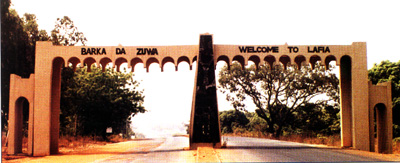
A major urban town and capital city of Nasarawa State, Lafia is an old pro at capturing the hearts of its visitors.
Formerly known as Lafia Beri-Beri and then Anane – a small town of the Arago people – Lafia became the capital of a prominent local chiefdom in the early 19th century.Modern Lafia is a collecting point for sesame seeds, soybeans, and a trading center for yams, sorghum, millet, and cotton. Besides farming, cotton weaving and dyeing are traditionally important activities of the town’s permanent inhabitants while Fulani herdsmen bring their cattle to graze in the vicinity during the dry season.
According to the 2006 census results, the town has a population of 330,712 inhabitants and is the largest municipality in Nasarawa state. In addition to the emir’s palace, Lafia has a central mosque, a Roman Catholic secondary school, and a government health office. If you are visiting Nigeria’s central region, spend quality time looking through these environs to see the town’s true colors. If you love Lafia, it will definitely love you back.
TOP THREE ATTRACTIONS
The emir’s palace
The emir’s palace, located in the outskirts of Lafia is inhabited by the Emir who is the revered traditional leader and paramount ruler in the area. Although the palace was severely damaged by a fire in 2013, it has been refurbished.
The central mosque
A majority of the inhabitants of Lafia are Muslims, and the central mosque is the preferred center for religious activities and worship.
Lafia Township Staduim
The Lafia Township Stadium is home to Nasarawa United, Nasarawa State’s most famous a football club , nicknamed Solid Miners. A multi-use stadium, It is based in Lafia, has a capacity of 5,000 people, and is currently used mostly for football matches.
LODGING
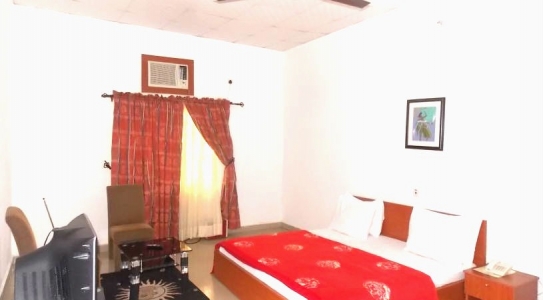
From the looming, ancient beauty of Lafia to the soft bustle of its inhabitants, accommodation options are diverse and plentiful. Most travellers will find that prices here are reasonable, even for the higher end lodges. Also, most hotels these offer incredible deals on Jovago.com for those travelling on strict budgets. Choose your base carefully depending on your priorities – not everywhere is close to a major sight.
SHOPPING
Lafia may not be a shopper’s paradise as it may not offer as much fun as neighboring towns and cities; however, you are bound to find affordable items from the local shops and markets. The stores located across the city, stock everything from food items to footwear, furnishing and clothes.
DINING
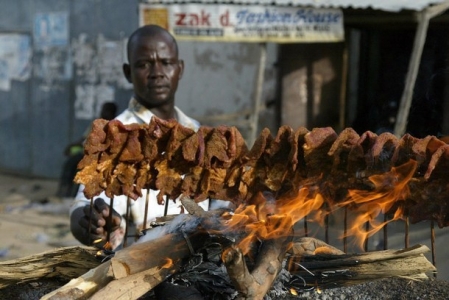
Like most towns in Nigeria, Lafia has some local foods which adventurous tourists are bound to enjoy. The streets are rich with street food vendors and bukkas where local delicacies are offered. There are also a number of fast foods and proper restaurants.
FUN FACT
Lafia boasts of coal deposits in the southeastern part of the town. Tin and columbite are also mined nearby.
The Nigerian Stock Exchange, NSE Boss,Oscar Onyema has said that the capital market lost over 30 billion dollars in market capitalization to global crude oil slide.
Onyema, who spoke at the NSE 2015 Market Recap and 2016 Outlook on Thursday in Lagos, said that the amount was lost between June 2014 when the slide started and now.
He said that other factors that contributed to the loss apart from the persistent oil fall were volatile foreign exchange, currency slide, macro-economic concerns and political risk.
Onyema said that 2015 was uneasy for the global economy expected to have grown at 3.1 per cent against 3.4 per cent in 2014.
He listed the three biggest contributors to the global slowdown as normalisation of monetary policy by the U.S. Federal Reserve; slump in commodity prices and slowdown in China.
He said the global economy is poised for moderate economic growth in 2016.
Onyema said that emerging markets witnessed recession amid weakening oil and other commodity prices.
He said the nation’s economy grew by four per cent in 2015 in spite of weak emerging market growth rates, coupled with domestic security challenges, declining oil prices and volatile currency trend.
The Nigeria Customs Service, NCS, has recorded 467 seizures worth N2.7 billion in an intense battle against smugglers.
Also, no fewer than 316 suspects have been arrested by the Zone C in connection with smuggling of contraband into Nigeria.
Besides Imo State capital, Owerri, which serves as its operational headquarters, Enugu, Abia, Delta and Edo States are also in Zone C.
The Customs Area Controller (CAC), Federal Operation Unit (FOU), Owerri, Imo State, Comptroller Victor David Dimka, who disclosed this in a statement said the featwas in line with its responsibility of nipping all forms of smuggling activities both in the South-East and South-South zones of the federation in the bud.
According to him, the 467 seizures of illegally imported items have an overall Duty Paid Value (DPV) of N2.7 billion in year 2015.
The CAC revealed that while 316 suspects were arrested in connection with the smuggling while one suspect was successfully convicted in court. He added that not less than 23 cases are now in court for the same purpose of which no fewer than seven cases were won by NCS.
Dimka revealed that underpayment recovered for some items stood at N130 million. According to the Customs chief, an analysis of the seizures made within the year involved 343 vehicles; 378 bales of bags/suitcases with 466 pieces; 6,472 pieces of imported used tyres; 8,855 cartons of foreign frozen poultry products; and 2,758 bales of imported textile materials.
Others were 10 cartons of foreign beverages/juice; 2,584 bags of 50kg imported rice; 6,747 pairs of foot wears; 45 cartons of electrical/electronic equipment; 108 cartons of foreign vegetable oil; 1,387 packages of foreign furniture with 126 pieces; and 412 cartons of foreign soaps and detergents.
The immediate past President Goodluck Ebele Jonathan was on Thursday, January 14, honored by the Southern Christian Leadership Conference in Atlanta, Georgia.
He was awarded with the Presidential Award in recognition of his leadership in advancing human rights, social justice and the fight for universal freedom.
The SCLC, founded by the late American Civil Right leader, Dr. Martin Luther King Jr, in January 1957 is currently led by Dr. Charles Steele Jr.
The event is part of the activities leading up to the celebration of Dr. Martin Luther King Jr Day on Monday, January 18th, 2016.
Before his remarks at the event, Dr. Jonathan met privately with the president of the SCLC.
The president of the SCLC, Dr. Charles Steele Jr proposed to work with the Goodluck Jonathan Foundation to advance the cause of peace around the world and to bridge the gap between people of color in the Diaspora and Africa.
Former President Jonathan responded that his vision is to help stabilize and promote democracy and peace in Africa. He went on to say that without peace you can not have economic progress.
JonathanLutherHe revealed that this was the reason he pushed for Nigeria’s intervention to ensure peace in various African nations such as Côte d’Ivoire while he was in office.
Dr. Goodluck Jonathan and President Steele then agreed to collaborate along the lines suggested by the former Nigerian President.
The Chief Executive Officer of the Nigerian Stock Exchange, NSE, Oscar Onyema on Friday, January 15 advised investors to take a portfolio approach to investing in the market.
The Nigerian stock market has lost about N1.2 trillion in capitalisation since the beginning of the 2016 to headwinds resulting from declining oil prices at the international market and foreign exchange challenge in the country.
However, presenting the NSE 2015 market recap and 2016 outlook in Lagos, Onyema said the current state of the market creates both challenges and opportunities for investors.
“We believe that taking a portfolio approach to investing provides the best risk adjusted alternative for participating in the capital market. As such, we want to ensure that the NSE provides a repertoire of products that will allow investors to create well diversified portfolios of uncorrelated asset classes,” he said.
According to the NSE, the negative performance of the stock market is a reflection of the domestic economy and to some extent, international economic performance. He said assured investors not to panic, saying once there is recovery in economy, the stock market will equally bounce back.
“It would have been more worrisome if the economy is going down and the stock market is going up. But what is currently happening is a reflection of the heath of the nation’s economy,” he said.
Looking ahead, Onyema said while the anticipate 2016 to be a challenging year for the market and the domestic economy, “We intend to continue our collaborative efforts with the new administration and other private sector players to create a framework for financing the Nation’s infrastructure and capital requirements. Additionally, we plan to work with the FGN to ensure that the appropriate messaging is conveyed to the investor community.”
The NSE boss said the exchange will in 2016 will focus on executing its strategy in order to continue to provide a credible platform for financing the economy.
Executive Secretary, Electricity Consumers Association of Nigeria, ECAN, Goodluck Enyinna, has tasked Distribution Companies (DISCO) to pay more attention to ministries, departments and agencies (MDAs) in its debts recovery.
He gave the advice in an interview with the News Agency of Nigeria (NAN) in Abuja.
“I am advocating that DISCOs should pay more attention to MDAs to collect their debts because these are the organisations owing DISCOs huge sums in debt” he said.
According to him, if MDAs, Army and Navy will pay all the debts they owe DISCOs, consumers will not need to pay more tariff.
He said that the new tariff which would be introduced in Feb. 1 by Nigerian Electricity Commission (NERC), would run for 10 years. He said that no new tariff would be introduced until the end of the 10 years. Enyinna listed credible tariff for Nigerians, revenue short falls for DISCOs and good revenue to enable DISCOs to get their upstream market obligations as reasons for the new energy tariff.
According to him, an energy consumer will pay, on the average, about N8,000 every month when the new tariff becomes operational.
Enyinna called on consumers to go to the nearest distribution company and pay N25,000 for their prepaid meter through the Credit Advance Payment for Metering Implementation (CAPMI) programme introduced by NERC.
According to him, if the meter is not installed within 60 days of payment for the meter, DISCOs have no right to disconnect such a customer.
He said the money a consumer paid for installation of his meter would be repaid to him in two years and this would be done by capturing it in his tariff. Enyinna said that the consumer would also be given 14 per cent interest on the amount he paid for the meter.
He listed challenges of the association to include funding which, according to him, is not the case overseas,” he said. He explained that due to lack of funds, NGOs could not effectively carry out their duties. Enyinna said ECAN went to court in 2011 to challenge DISCOs on charging maintenance fees on consumers and the association was able to stop them from collecting the fee from customers.
The Africa Development Bank said it had approved the sum of $12.5m equity investment in Alitheia Identity Fund to invest in Small and Medium Enterprises being driven by women.
AIF is a private equity fund managed by Alitheia Identity Managers, a joint venture between two established women-owned fund management companies, Alitheia Capital Limited of Nigeria and Identity Development Fund Managers of South Africa.
According to a statement by AfDB, AIF intends to raise $100m in two closings to make equity investments in high-growth established SMEs, with emphasis on women-managed SMEs in 10 African countries.
The countries are Malawi, Lesotho, Swaziland, Botswana, Namibia, South Africa, Zambia, Zimbabwe, Ghana and Nigeria.
Diamond Bank Plc has been named and awarded the Best SME Bank in West Africa by the famous Banker Magazine in the 2015 West Africa Awards. The Bank also emerged as the Best Microfinance Bank in West Africa.
According to the awarding institution, the awards are in recognition of the Bank’s high value addition to the growth of micro businesses in West African and its leading role in stimulating the productive capacity of the Small and Medium Enterprises (SME) as the engine that drives industrialization and sustainable economic growth and development.
A message from the awarding institution as reflected in the award certificates signed by Robin Amiot, Chief Executive Officer and Georgina Gongs, Managing Editor, stated that Diamond Bank’s success in the fiercely contested award categories by a lot of nominated banks in West Africa, is in recognition and reward for the quality of its financial products purely tailor-made to stimulate the productive strength of the SME sector and the unrivalled excellence in services to customers.
“The publishers of Banker Africa understand the importance of best-in-class benchmarks and growing a dynamic and successful regional finance industry. Your institutions success in the Banker Africa – West African Awards as category winners for Best SME Bank West Africa and Best Microfinance Bank West Africa,” reflects Diamond Bank’s superior creative vigour that has stamped her as a dominant financial house in the region.
Winners in each of the award categories emerged after nominated financial institutions were subjected to a rigorous and transparent voting process by registered website users across Africa.
According to Uzoma Dozie, Diamond Bank’s CEO, the investment and focus on the MSME segment is strategic and predictive. In his view, the future of sustainable banking in Nigeria is retail, therefore it is necessary to grow and consolidate its strength in the segment.
Commenting on the success of the Bank in growing the SME sector, Ayona Trimnell, Head, Corporate Communications Division stated that the award is a huge testament of Diamond Bank’s strategic growth plan to see the SME as the hub of economic activity in the country, noting that an area in which the Bank has moved ahead of the pack is in the designing, management and delivery of SME stakeholder-orientated banking products and services.
“This award to Diamond Bank as the Best SME Bank is a strong testament of our focus, commitment and conviction that SMEs represent and remain the main driving engine for sustainable economic growth and development. We recognize that the SME segment is a critical arm of the private sector and holds the key to addressing the perennial problem of youth and adult unemployment, and subsequently created a compelling value proposition comprising financial and nonfinancial solutions to address MSME needs. Today, our Bank is the model in the industry, and in the last four years has groomed and developed a pool of SME stakeholders into a strong productive force in the economy. We cherish this award,” she stated.
With a firm footprint in SMEs financing in the last five years combined with vigorous retail business, Diamond Bank has gone from being Nigeria’s 10th largest bank by assets in 2012, to the sixth largest by the end of 2014 with over NGN1.8trn in assets.
Although the Bank’s business focus consists of corporate, retail and public sector businesses, the Bank’s SMEs footprints has become a model for the industry. Particularly interesting are the many financial products that SME operators could easily access without encumbrances.
To deepen its SME thrust and penetration, Diamond Bank has also embarked on the continuous development of women-friendly propositions and services aimed at empowering women economically. This includes the Diamond Woman Proposition, a fully-fledged business support initiative designed to empower its female customers by building their capacity in managing their finances, family life, career and businesses through platforms such as seminars, conferences, networking events and an active online community.”
The bank has remained the key driver of entrepreneurship across Nigeria, the effects of which include the creation of jobs for millions of people, particularly at the grassroots. The success recorded in this area has led to numerous invitations for strategic partnerships by multilateral international agencies including the IFC, USAID, Women’s World of Banking, Shore Cap Exchange and DFID.
Diamond Bank currently has over 250 branches in Nigeria in addition to subsidiaries in Benin Republic, Senegal, Côte d’Ivoire, Togo and the UK. The Bank was first listed on the Nigerian Stock Exchange in 2005 and in January 2008, its global depositary receipt was listed on the Professional Securities Market of the London Stock Exchange. Diamond Bank was the first bank in Africa to record this feat.
Lagos, Nigeria, 2016. In recognition of its strict adherence to global best practices, Red Star Express Plc., a foremost logistics company in Nigeria, has been re-certified by the Standard Organization of Nigeria adjudging them as being compliant to quality management, as a result of their conformity to the requirements of NIS ISO 9001:2008 standard.
The re-certification came after a successful audit carried out by Standards Organisation of Nigeria (SON) to certify the company’s conformed to the requirements of NIS ISO 9001:2008 standard.
The Managing Director, Red Star Express Plc., Sule Bichi, reiterated that, the certification was a giant stride in Red Star’s pursuit of excellence in logistics industry by evolving and marketing a range of technology-driven services designed towards quality delivery to its teeming customers. “We are glad that SON deemed it fit to re-certify our company after the successful audit and we hope to keep giving our best in quality delivery”.
Speaking also on the re-certification by SON, Quality Assurance Manager, Red Star Express Plc., Toyin Owolabi, stated “that the successful audit of the company’s Quality Management System was an attestation of Red Star’s commitment to continually adhere to global best practices and standards in all of its operations and processes. It is a privilege to be re-certified by SON, this highlights our constant desire in maintaining excellence since the last accreditation in 2013. We hope to keep up with the standard in order to ensure quality service to our customers.”
Red Star Express Plc., is a premium logistics solution provider in Nigeria in area of revenue, network coverage and market share in the domestic and international market. It enjoys a domestic strength of 169 offices in Nigeria, deliveries to additional 1,500 communities, over 1400 highly trained personnel and over 500 vehicle fleet. It prides itself of automatic proof of delivery and advanced technology with all operations done online and real-time. It operates as the Nigerian licensee of FedEx, which is the world’s largest express transportation company, providing fast and reliable delivery to more than 220 countries and territories around the world.
Leading financial services provider, First City Monument Bank (FCMB) Limited, has introduced the first tracking and reconciliation solution with electronic invoicing capabilities in the Nigerian banking industry.
Known as ‘’FCMB E-invoicing, the solution is a unique payment offering, designed to help SMEs keep track of their cashflow, especially as it affects payments, receivables, reconciliation and other financial transactions, through internet banking, cards and other channels.
In addition, this value added offering from FCMB combines basic inventory management and accounting (with electronic payment) services. This provides SME customers with tripartite advantages of; convenience of receiving payments regardless of the bank’s card used, the ease of generating and sending invoices to their customers and the means to be competitive in their business space.
In a statement, FCMB’s Retail Banking Divisional Head, Mr. Olu Akanmu, said that “This offering is to demonstrate the Bank’s value as a helpful financial institution and further amplify our commitment to enhance the operations and fast-track the growth of SMEs. We understand that one of the best ways to grow SMEs is to offer products and services that are simple, convenient, secure and at the same time add significant value to their businesses”.
“We are excited to pioneer this initiative. It is another testimony of our unequalled commitment in offering exceptional offerings. We always want to go the extra mile to satisfy our customers and this is sustained by investing in initiatives that enhance customer experience and best practices as an inclusive lender’’.
Mr. Akanmu further stated that “FCMB supports its SME customers with collections and payments platforms that are convenient, easy to use and that help to manage their receivables and collections effectively with their customers, ensuring that our SME customers maximize the full potential of their business opportunities”.
Also speaking, the Group Head, SME Banking, Mr. George Ogbonnaya said,
“With the introduction of the FCMB E-invoicing solution, we have taken our alternate channels to another height’’.
He explained that apart from the flexible nature of the platform, it has other features such as instant invoice generation, the ability to bill clients instantly, track and monitor payments, reconcile receivables and allows businesses make payments conveniently to their suppliers. The Group Head disclosed that signing up to FCMB e-invoicing is at no extra cost to SMEs.
Mr. Ogbonnaya added that FCMB E-invoicing solution provides various benefits to users including enabling customers keep tab on their daily sales and cash flow, reconcile daily receivables, including those by cash, card or credit sales, customers who need to electronically present invoices to their clients as well as to those who are comfortable to receive payments via alternate channels, among other transactions.
FCMB has continued to make giant strides in the Nigerian banking industry since it successfully transformed into a retail and commercial banking-led group. The impact of the bank in the SMEs space is significant going by its financial, advisory, skill acquisition and other forms of support to operators. As one of the banks appointed by the Central Bank of Nigeria for the disbursement of the N220billion Micro, Small and Medium Scale Enterprises (MSMEs) Development Fund, FCMB has so far disbursed about N2billion to SMEs. This is among the highest so far disbursed by any bank under the Fund.
Moreover, the Bank has enhanced its lending strategy to SMEs by introducing a new and separate SME credit policy tailored to suit the needs of the various businesses and value chains in the MSMEs space. FCMB equally has dedicated lending officers in its branches in order to bring services closer to SMEs.
Following these developments and other initiatives, FCMB has been rated by KPMG, a leading international consulting firm, as the 4th most customer-focused bank in the SMEs sector with a score of 74.94 percent following a survey conducted by the firm among bank customers nationwide. The rating, as contained in the 2015 report of the KPMG Banking Industry Customer Satisfaction Survey (BICSS), was on the basis of Customer Satisfaction Index (CSI), which took into account convenience, product/service offering, executional excellence, value for money and customer care.
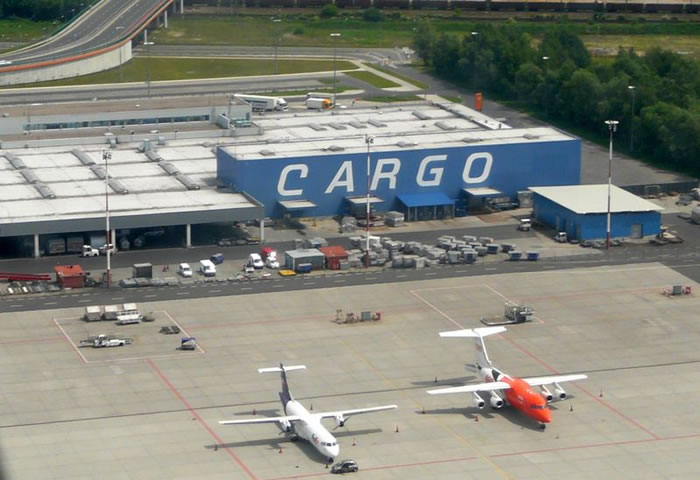
Imo State Governor Rochas Okorocha, former Permanent Secretary Ministry of Aviation Hajiya Binta Bello and some officials of the ministry have inspected the Sam Mbakwe International Cargo Airport (SMICA) Owerri, in a bid to quicken the completion of the facility.
During the inspection, Governor Okorocha said the state was interested in partnering with the ministry to complete the project and commence cargo operations which he said would boost economic activities in the state and open it up to the business world.
Okorocha pointed out that the development of the airport with the support of the federal government would fulfil President Buhari’s promise of making SMICA Owerri a functional cargo airport which has always been the dream of the people of the South East Zone who are predominantly businessmen.
Speaking on the occasion The Managing Director of Federal Airports Authority of Nigeria (FAAN), Saleh Dunoma noted the problem of manpower shortage at the airport, especially in the Fire and Security department. Saleh assured the governor that measures have been put in place to address the shortage, as basic trainings are already being done to ensure that the recently recruited staffs of Fire and Security are completely ready, before their postings to airports.
The National Working Committee of the Peoples Democratic Party, PDP rose from a meeting on Thursday charging the National Assembly to commence impeachment of President Muhammadu Buhari for the various constitutional breaches especially the submission of two version of the 2016 budget.
The party said the National Assembly should thoroughly investigate the shameful act, including the distortion and banding of figures to accommodate their personal interest and ensure that appropriate sanctions is meted to whoever has a hand in the dubious action that has brought embarrassment to the legislative body.
The party also asked the Ministers of Finance, Budget and National Planning to resign having failed to provide the much needed capacity in the management of the nation’s economy resulting in the embarrassing crashing of the nation’s currency to as low as N305 to a dollar.
Also the party asked the Governor of Central Bank of Nigeria CBN to resign for plunging the country’s currency policy into chaos an action that thrown investors into total confusion.
The party admonished the government to stop pretending that it knows what to do when feelers from the seat of power shows clearly that Nigerians by voting for APC have just discovered they boarded a once chance bus.
The Federal Government has commended moves by the Nasarawa State government to construct an airport in Lafia.
The director of projects in Aviation, Dr Ibrahim Idris gave the commendation when he led a delegation of the ministry on talks with the Nasarawa state Governor Al Makura towards the take off of the airport project.
The director who was accompanied by some officials of the ministry and agencies under it, including the Managing Director of the Federal Airports Authority of Nigerian, Mr Saleh Dunoma assured the state government of the readiness of the federal government to partner with the state.
Governor Tanko Al-Makura, stated that “the proposed airport in Nasarawa State will serve as alternate airport for the Nnmadi Azikwe International Airport, Abuja. It will also serve as cargo airport for agricultural produce and serve neighbouring states of Benue, Kogi,Kaduna, Plateau and Taraba.”
The FAAN boss in his remarks thanked the state government for its foresight in proposing the construction of the airport. He also said that the airport would open up the state to the rest of the world, stimulate economic activities, and create more jobs