Two suspected terrorists with arms and ammunitions in Kaduna village have been arrested by the Nigerian Army, The troops arrested the suspects in Gidan Waya area of Jema’a local government area of Kaduna State following a tip off.
Some villagers alleged that the suspects have been responsible for the attacks and killings of villagers.Over 11,000 people in Southern Kaduna have been killed by terrorists’ attacks since 2011.
Meanwhile, the suspected terrorists were taken to an unknown location by the troops who have been drafted to flash point in Southern Kaduna.
From sightseeing to adventure, a vacation does not only spice up your life, it takes away the daily pressure that come with living in Nigeria. Even more, people who tend to travel often, tend to succeed more at work and business than those who do not. Curious to know how this happens? Jovago.com, Africa’s No.1 online hotel booking site gives 5 ways travelling can give you the much needed boost at work.
Fosters social skills
Networking is an important skill surviving in any work environment. When you travel, you often find yourself nestled in a new environment with their cultures, languages, society and lifestyle very unlike your own and you would have to find a way to acquire the knowledge you need about these different cultures.
Travelling tests your social skills: ability to communicate freely, patience, tactfulness, and etiquette. If you can pass this test while travelling, it becomes so much easier to scale through similar tests in your career with ease.
Fuels Creativity
Travelling has a way of opening the mind and enhancing creativity. Most people who work in offices or other corporate environments agree that they find it easier to focus on their jobs after a vacation and they find themselves becoming much more creative. This is because have a clearer perspective about almost everything and become less pessimistic.
Creativity is all about finding new, different ways to get things done and handling the impromptu challenges that arise on a journey gives you the skills to solve them.
Advances travelers’ link with technology
While the main idea behind going on vacation is to break free from work, ironically, travel has a way of forcing you to rely on technology while breaking free of corporate hassles at the same time.
Most travellers in Nigeria usually they have to book their hotel rooms or flight tickets online and rely on apps and news websites to keep up with events going on at home. All these help improve their adoption of technology which eventually helps at the office.
Improves the way they organize
This mostly applies to people whose jobs are in Human Resource, Accounting, or Logistics. Whether you are travelling solo or with family and friends, there are certain things you need to put in place.
Before you set out for the trip, ensure your passports and IDs are all updated. Sort out where to stay, what to do, where to eat and they type of fun you want to have. In the process of sorting out all these, you improve your organisational skills. You find that it becomes easier to follow procedures, create and tick off checklists and this also helps you at work positively.
Entries have opened for application for the second annual Tony Elumelu Entrepreneurship Programme (TEEP) for start-up businesses based in Africa. The application portal which opened on Friday January 1, 2016 will run through midnight on March 1, 2016.
Successful applicants who complete the programme will receive the local currency equivalent of Naira 850,000 as non-returnable seed capital, and are eligible for a further Naira 850,000 in the form of either debt or equity, depending on business need and other criteria.
Selected entrepreneurs will join the existing cohort of 1,000 Tony Elumelu Entrepreneurs, from 51 countries, who formed the inaugural 2015 cycle of the programme and have thus far, received considerable benefits from their participation, including 12 weeks of training on how to set up and manage businesses with mentoring and financial support offered by The Tony Elumelu Foundation.
Asides this, successful applicants will also have access to additional external funding through the platform provided by the Foundation as well as network opportunities across the continent and business sector.
Calling for a broader participation, the chief executive of the TEEP, Parminder Vir OBE, said “we encourage women and men with business ideas from all sectors, from every region, city, town and village across Africa, to apply.
Mr Nduka Obaigbena, President Newspapers Proprietors Association of Nigeria and Chairman, Editor-in-Chief, THISDAY Newspapers Group, yesterday wrote the Economic and Financial Crimes Commission, EFCC to further clarify the payments of N670 million compensation to Thisday newspapers and members of Newspapers Proprietors Association of Nigeria, NPAN, following Boko Haram attack on Thisday office and confiscation of copies of newspapers and circulation vans of newspaper houses.
In his letter, Mr Obaigbena explained how the compensation was arrived at following an agreement for out-of-court settlement and how the payment was made by the office of the National Security Adviser, NSA.
He told the anti-graft commission that the newspaper houses “were victims of a horrendous terrorist attack and should not be victimized any further as the terrorists will be celebrating what we are now being put through.”
According to him, “We do not deserve further trauma because some official(s), outside of our control, may or may not have followed due process. All victims of terrorist attack deserve a fair and just compensation. The fact that we have received some remedy should be reason to accelerate compensation for all victims of Boko Haram attacks across Nigeria, however big or small. We never wished this upon ourselves. The central purpose of government is the security of life and property of all citizens. And the United Nations Declaration of Human Rights, the United Nations Covenant on Civil and Political Rights as well as other international law instruments and conventions of which Nigeria is a signatory underscores this – and in fact requires that we receive effective remedy and compensation”.
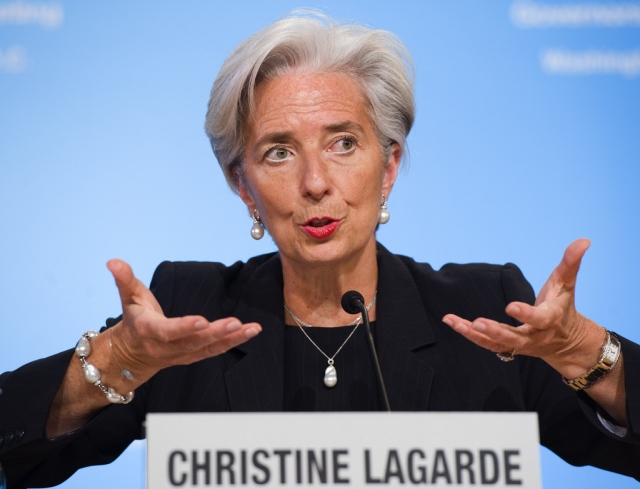
The Managing Director of the International Monetary Fund (IMF), Christine Lagarde, arrived Abuja on Monday to begin a four-day visit to Nigeria. The visit is part of a two-nation West African region tour to engage policy makers and top officials of Nigeria and Cameroon on economic developments affecting both countries and the West African sub-region.
Prior to Ms Lagarde’s arrival, the IMF had explained that the visit would underline the Fund’s strong relationship with its African member countries.
While in Abuja, Ms. Lagarde would meet with President Muhammadu Buhari, the Minister of Finance, Kemi Adeosun, and Central Bank, CBN governor, Godwin Emefiele, along with members of the National Assembly, top business leaders, and civil society representatives.
A statement issued by the fund said the discussions with President Buhari would focus on various economic issues, particularly the impact of the declining crude oil prices on the country’s economy.
The IMF has been one of the international finance organisations that have been critical of some policies by the Buhari administration, particularly the CBN’s monetary policy on restriction of access to foreign exchange to strengthen the Naira and stabilize the Nigerian economy.
The CBN had removed 41 items from accessing its foreign exchange window on grounds that they could easily be produced in Nigeria rather than spend the country’s reserves on importing them.
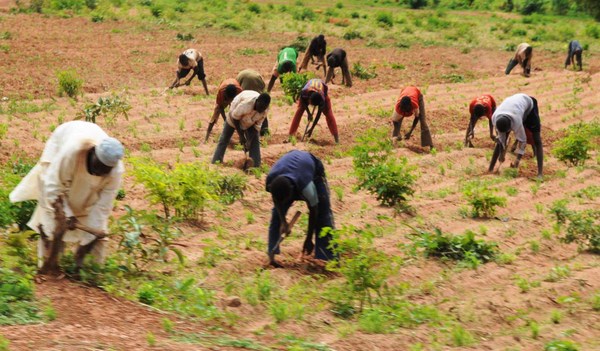
Dr Idris Badiru, a Senior Lecturer, Department of Agric Extension and Rural Development, University of Ibadan, says dry season farming yields more money to farmers.
Badiru, speaking to the News Agency of Nigeria (NAN) in Ibadan, said that the crops planted during the dry season (between November and March) are usually vegetables and maize sometimes, stressing that the products are always fresh and healthy.
Badiru emphasised that planting during the dry season pays more to farmers as the vegetables are usually more expensive and neat unlike the ones gotten in rainy season.
“With dry season farming the products can grow throughout the year because ordinarily at that particular time of the year, people don’t normally cultivate.
“The practice is virtually the same with that of rainy season, just that farmers will water the crops themselves.
“They should do the normal land clearing, till the soil, do some weeding after all and also apply insecticide to control pests and diseases,” he said.
Dr Morufat Balogun, a Principal Lecturer at the Department of Crop Protection and Environmental Biology, University of Ibadan, said vegetables especially pumpkin (ugu) could be gotten very fresh when grown out of season.
Balogun noted that farmers can plant in close containers like pot, saying that it requires no labour as they will not need to water it too often.
The Geneticist emphasized that a farmer depending on the capacity can choose any of the systems, stressing that access to information on the technologies is important.
She further explained that planting around the riverside is better and cheaper as the farmer will not need to pump/pour water on the plants and there will be enough water for cultivation in dry season.
Mobile telecommunications operators in the country have posted 11.9 per cent growth between September 2014 and September 2015 in their subscriber figures.
According to the latest statistics released by the Nigerian Communications Commission (NCC) on its website, MTN, Glo, Airtel and Etisalat, who are the major operators, led the growth as subscriber base grew from 134.5 million to 150.6 million.
The NCC database figures showed that only the Code Division Multiple Access (CDMA) and fixed wired/wireless segments of the sector did not contributing anything to the growth, as these two segments continue to experience consistent decline in their subscriptions.
Also, the figures showed that the deactivation of mobile lines as instructed by NCC led to a loss of 357,997 active lines on various mobile networks last month in September. From 151,018,624 active telephone lines in August, the number of active telephone lines on mostly GSM operators including MTN, Globacom, Airtel and Etisalat declined to 150,660,631 phone lines in September.
Furthermore, the teledensity, which is used to determine their number of telephone lines available to 100 people within a given geographical area, plunged from 107.87 per cent in August to 107.61 per cent in September, representing a fall of 0.26 per cent. It varies widely across the nations and also between urban and rural areas within a country.
The Naira on Monday, January 4, weakened by 0.8 per cent to exchange at N265 to the dollar at the parallel market.
The News Agency of Nigeria (NAN) reports that the greenback lost N2 to the dollar from its weekend value of N263.
However, at the official interbank window, the Naira exchanged at N197 to the dollar.
Traders at the market were optimistic that the Naira would rebound in 2016 if the CBN continued to enforce its policies at the foreign exchange market.
Currency dealers, including hawkers, are making tremendous profits from the sale of scarce foreign exchange, a situation beyond the control of the Central Bank of Nigeria.
It was gathered that despite the scarcity of foreign exchange in the economy, billions of dollars are lying fallow with the Deposit Money Banks, Bureux De Change operators and currency hawkers waiting to be sold at parallel market rates to prospective buyers.
Parts of the forex are currently being sold for between N260 and N263 per dollar to various categories of buyers, according to top bank officials and currency dealers.
For intending travellers, Personal Business Allowance and Business Travel Allowance are being sold at the parallel market rate between 260 and 263, instead of the official rate of 199 plus a 3.5 per cent commission prescribed by the Central Bank of Nigeria.
It was learnt that currency dealers, mainly commercial banks, the BDCs and foreign exchange hawkers, were having a field day making bumper profits from the sale of forex with the CBN watching helplessly.
“If you want $20m now at the rate of N263 to a dollar, I will get it for you from the bank,” a currency dealer said on Friday.
“The forex is there but it won’t go for anything less than the parallel market rate; banks have it, the BDCs also have it,” the dealer added.
Banks and the BDCs are meant to sell the BTA and the PTA to intending travellers abroad with valid documents at the official rate of 199 plus 3.5 per cent commission.
This is expected to bring the resale value or the ollar exchange rate to N205.9. Instead of this amount, prescribed by the CBN, the BDCs and banks are selling the PTA and the BTA to thousands of intending travellers at rates above N260.
The Petroleum and Natural Gas Senior Staff Association of Nigeria, PENGASSAN, has moved against the proposal by the Independent Petroleum Marketers Association of Nigeria, IPMAN, that the nation’s four refineries be sold.
PENGASSAN,in its argument stated that it is a fraudulent way of ripping the country off its national assets.
The Port Harcourt refinery is Nigeria’s oldest, built in 1965, nine years after crude was first found under the marshy soil and creeks of the delta, where the Niger river meanders to the Gulf of Guinea.
Refineries in nearby Warri and Kaduna in the north central region were built in the years that followed, while a new plant was added to the same site in Port Harcourt in 1989.
In recent years, however, it became a byword for corruption, a murky, state-run body where billions of dollars in revenue apparently disappeared.
PENGASSAN National Public Relations Officer, NPRO, Emmanuel Ojugbana, who spoke on the issue described the call by IPMAN as sabotage against national interest.
He commended the efforts of the government in ensuring that the four state owned refineries were back on stream, especially with the recent report credited to the Minister of State for Petroleum Resources, Emmanuel Ibe Kachikwu, that the Kaduna and Port Harcourt Refineries would soon commence production after a long while.
Ojugbana said: “Nigerians need to ask the IPMAN leadership why they want the refineries which can be said to be in good form now to be sold as scrap. Even when the government has shown that the refineries can work and take care of 75 per cent of the nation’s local demand of refined products.
The proof that the refineries are still viable and profitable was exhibited by the Port Harcourt Refining Company, PHRC, which posted a net profit of N11.2 billion for December 2014, representing N8.2 billion or 250 per cent above the N3.2 billion posted by the company in preceding November 2014. This is attributed to the improved financial performance for the phased rehabilitation programme, which was done by the workers.
“The challenge confronting the functionality of the refineries is not the ownership. We have examples of countries even in West Africa such as Ghana and Chad Republic, just to mention a few where refineries are owned by the government.
The Federal Government generated a total of N2.92tn from taxes in the first nine months of 2015, statistics obtained from the Federal Inland Revenue Service have revealed.
The amount when compared with the N3.44tn, which the Federal Government had set for the FIRS as target for the nine-month period, represented a decrease of N520bn.
A breakdown of the tax revenue earned by the service within the period showed that the sum of N756.7bn was collected in the first quarter of 2015 as against the quarterly revenue target of N1.02tn.
The N756.7bn was raised from Petroleum Profit Tax, which contributed the sum of N368.59bn, and non-oil taxes on which the sum of N388.1bn was collected.
For the second quarter, a total sum of N1.18tn was collected by the FIRS made up of N306.14bn from PPT, while the balance of N881.9bn was generated from non-oil taxes.
In the third quarter, the FIRS statistics showed that the sum of N980.48bn was generated from taxes as against the quarterly target of N1.14tn. The PPT generated the sum of N325.86bn and non-oil taxes accounted for N654.6bn.
The National Association of Government-Approved Freight Forwarders, NAGAFF, has warned that high import tariffs placed on several goods by the federal government will see more importers closing shops in 2016 thereby, leading to higher unemployment and loss of government revenue.
The chairman of Murtala Muhammed Airport arm of NAGAFF, Segun Musa, who made the prediction, revealed that the unfavorable import policies drove many importers out of the country to set up in neighboring countries.
“This is a big way through which the government is losing money. They end up enriching the neighbouring countries through whose ports the importers now use to bring in goods into Nigeria.
“The revenue leakage is more than the revenue collected in Nigeria, the tariff on imports is so high and that has taken a lot of business out Nigeria,”he said.
“High import tariff by Customs is not favourable to importers and has led to poor relationship between importers and the Customs,” Musa added.
“We have criticized the Pre-arrival Arrival Report (PAAR) that government should not saddle the Customs with issuance of that certificate but the Customs came with all kinds of snow whiting discuss that there won’t be any query again when they start issuing the Certificate, but that has not been the case,” he noted.
He however, called on the federal government to engage the private sector in policy formulations in order to get things right stressing that importation was not responsible for the demise of some major industries in the country but as a result of bad roads, insecurity and poor power supply.
The unstable value of the naira and related regulations, remain the biggest challenge plaguing real estate funding, Head of Real Estate Finance for West Africa at Stanbic IBTC, Adeniyi Adeleye, has said.
He said most property development projects are financed in dollars for the creation of sustainable and predictable funding environment for the assets.
Adeleye suggested that dual currency funding structures can bring stability to real estate deals in sub-Saharan Africa, as developers and retailers seek solutions to the volatility currently faced in domestic economies.
Dual currency structure refers to utilising a combination of hard and local currencies, while hedging the interest rate risk.
“These facilities would provide a natural hedge and create a win-win between developers and retailers.
“For example, a local currency facility can be accessed to hedge leases that are unlikely to be sustainable or easily adjusted in shock currency devaluation scenario, for defined periods. This way the exchange rate risk can be more effectively shared between retailers and developers by keeping lease exchange conversion rates constant for periods of volatility,” he said.
“This has exposed tenants to rental increases because their rents are indexed to dollars. The devaluation of currencies in countries like Nigeria and Ghana has been quite significant,” he said.
“Over time, these cost increases will inevitably be passed on to consumers, which will in turn create additional affordability challenges. The level of interest from property developers has not waned in spite of the strained environment.”
“In fact, most developers are positive about the long-term prospects of the economy and options available to them, largely because of the supply gaps in these markets. They are now challenged with trying to create robustness in their operating models to ensure they can continue to execute projects in the short-term,” Adeleye said.
He added: “It is now more about new solutions that are needed to improve the structuring of these deals, so developers can manage the challenges caused by policies aimed at shoring up dollars, the high local interest rates relative to dollar-based interest rates and weakening currencies.”
The Chief Executive Officer of Travel Investment Company Limited, TICO, Irene Uti-Egbeogu, has said the merger of travel agencies could generate over $2 billion annually.
Uti-Egbeogu said without consolidation, the market share would be small for travel agencies who need to explore wider segments and product initiatives to enhance profitability
In an interview, she said the coming together of four travel agencies: Touchdown, Quantum, Finchglow and Dees Travels in TICO has triggered a revolution in the travel agency sector, with economies of scale for the partners .
According to her, the firm was favorably disposed to discussions on partnership with travel management companies to expand the business.
Uti-Egbeogu said:”Indeed, we are open to more travel management companies interested in partnering with us in our quest for best practices. Interests within our scope include training and networking opportunities.
“We like to believe that travel agencies that have indicated interest in joining us are equally motivated by the same passion that informed this consortium, which is the overall advancement of the Industry.”
“The government can aid the industry’s growth by providing better infrastructure – good roads, power and truncating the red tape in getting through regulatory bodies.
“This would be with a view to making Nigeria a prime destination for travellers and tourists; even beyond recreating Nigeria as a tourist attraction to the international business community, we need to build an enabling environment for investors in the hospitality business.
“It takes funds to build hotels and refurbish or repackage tourist centres and facilitate electronic platforms that enable smooth logistics or accessible hospitality.”
“The prospects in the industry is huge, the reason is that Nigeria has a unique history and character that somehow seems to defy the norm. Even during the economic downturn, people were still travelling as high traffic in travel transactions were recorded.”
The equity segment of the Nigerian Stock Exchange, NSE, opened the year on a negative note with N94 billion loss.
This is against expectation of analysts as they believe that investors may take position on low priced stocks with significant upside potential coupled.
The NSE All Share Index depreciated by 0.95 per cent to close at 28,370.32 basis points, compared with the 3.11 per cent appreciation recorded previously
Market breadth closed negative as Learn Africa led 12 gainers against 18 losers topped by Skye Bank at the end of the trading’s session which was an unimproved performance when compared with previous outlook.
Market turnover closes negative as volume declined by 60.75 per cent against 82.13 per cent decline recorded in the previous session.
Austinlaz Plc, FBN Holdings Plc, Transnational Corporation of Nigeria Plc, Access Bank Plc and UBA Plc were the most active to boost market turnover. While Nestle Nigeria Plc and Guaranty Trust Bank Plc top market value list.
Top on gainers’ log was Okomu Oil Plc with a gain of N1.48 kobo to close at N31.78 kobo. Others include Cement Company of Northern Nigeria Plc with N0.31 kobo to close at N9.66 kobo, Zenith Bank Plc with N0.25 kobo to close at N14.30 kobo per share, and Oando Plc with a gain of N0.10 kobo to close at N6.00 kobo per share.
On the flip side, Nestle Nigeria Plc topped losers chart with N30.00 kobo to close at N830.00 kobo, GlaxoSmithKline Plc with N1.71 kobo to close at N32.49 kobo per share, Ashaka Cement Plc with N1.00 kobo to close at N24.00 kobo and Transcorp Hotel Plc with N0.29 kobo loss to close at N5.51 kobo per share.
Read more at http://www.dailytrust.com.ng/news/business/2016-stocks-shed-n94bn-in-first-trading-day/127282.html#5LoKT8BAmAtCBAO4.99
Oil prices jumped on Monday, January 4, following a breakdown in diplomatic ties between Saudi Arabia and Iran that some speculated could result in supply restrictions.
Saudi Arabia’s execution of a dissident cleric on Saturday inflamed sectarian tensions, sparking some worry among traders that crude output in the world’s most prolific oil-producing region could be threatened. Saudi Arabia and several of its allies have severed or downgraded diplomatic ties with Iran.
Bahrain and Sudan have severed diplomatic ties with Iran in solidarity with Saudi Arabia. The United Arab Emirates has downgraded its diplomatic team.
Saudi Arabia produced 10.2 million barrels a day of crude oil in November, or about 11% of global output of crude and related liquids, according to the International Energy Agency. Iran produced 2.9 million barrels a day of crude that month.
Light, sweet crude for February delivery recently fell 41 cents, or 1.1%, to $36.63 a barrel on the New York Mercantile Exchange. Brent, the global benchmark, fell 20 cents, or 0.5%, to $37.08 a barrel on ICE Futures Europe.
Brent prices fell 35% last year, their third straight annual loss, as a global supply glut showed few signs of abating. U.S. prices posted a second straight annual loss for the first time since 1998.
More than 18 months into the crude-price rout, oil production remains high around the world as producers compete for market share, keeping global inventories high.
Some oil analysts and investors have argued for months that the low price of crude doesn’t adequately account for a possible supply disruption due to violence or unrest.
The oil market has been vulnerable to sharp rebounds in recent months as traders who had bet on lower prices quickly reverse course.
Increased concerns about geopolitical conflicts could have prompted some traders to close out their bearish bets.
But further tension between Saudi Arabia and Iran could also expand the global glut of crude oil, weighing on prices, analysts said, as the two producers compete for market share.
Iran is expected to increase its output by hundreds of thousands of barrels a day this year if international sanctions on the country are lifted, and Saudi Arabia has already expressed its unwillingness to cut production to make room for Iranian barrels.
The Central Bank of Nigeria, CBN, will on Wednesday, January 6, sell $10,000 to each of the 2,839 bureaux de change, BDC, operators it approved last week.
President of the Association of Bureau De Change Operators of Nigeria (ABCON), Aminu Gwadabe, who disclosed this on Monday, January 4, said the apex bank took the decision because demand for dollar is still low as business activities were yet to pick up after the holidays.
He said the CBN has promised to continue the intervention to bridge the widening gap between the official and parallel market rates, saying the naira still exchanges for between N262 to N265 against the dollar at the parallel market, but exchanges for N199 at the official market.
Also, the CBN has issued new guidelines for the operation of BDCs which pegged the minimum capital base and cautionary deposits for intending operators at N70 million.
The guideline, which is in line with the exercise of the powers conferred on it by the Central Bank of Nigeria Act of 2007 and the Banks and Other Financial Institutions Act 2004 (BOFIA), also stipulates a non-refundable application fee of N100,000 and non-refundable licensing fee of N1 million.
The circular, which took effect on January 1, orders retail money exchanges to deposit a mandatory cautionary deposit of N35 million in an account with the CBN, in addition to a minimum capital requirement of N35 million.
The CBN has been struggling to shore up the naira, hit by the plunge in oil prices which started late last year.
According to the guideline, an intending BDC operator is also to provide non-refundable annual licensing renewal fee of N 250,000 and a non-refundable change of name fee of N100,000.
The new guideline stipulated that no person shall carry on the business of BDC in Nigeria, except with the prior authorization of the CBN. It also stipulated that a BDC shall be construed as any company that is licenced to carry on small scale foreign exchange business in Nigeria and whose sole object is the carrying on of such business on a stand-alone basis. It said the application for BDC licence shall be processed in two stages, namely: approval-in-principle (AIP) and final licence.
The , recorded stable power supply of 4,143.87 Megawatts from the Transmission Company of Nigeria, TCN, for five days.
According to Power Statistics posted at the Ministry of Power’s website on Monday, January 4, the quantum of power that the company sent out on December 28 remained unchanged till January 2.
During the period under review, power generation also remained unchanged at 4,241.39Mw, while peak energy generation remained unchanged at 4,553.2Mw.
Meanwhile, of the 4,241.39Mw generated, TCN was only able to evacuate 4,143.87Mw leaving 97.52Mw stranded in the network.The Minister of Power,Works and Housing, Babatunde Fashola said TCN lacked the capacity to evacuate the total power that the generation companies (GenCos) produced to the distribution companies (DisCos).
He said: “We intend to strengthen this part of our responsibility so that we can hold the GenCos and DisCos to their contracts with the citizens.We must play our own role of providing gas and expanding the transmission network.”
Fashola maintained that government is budgeting to carry power from GenCos to the DisCos.
He said: “We have identified a total of 142 projects of which 45 are at 50 per cent level of completion and about 22 can be completed within a year.
“The budget estimates are known and we intend to aggressively pursue completion to increase the carrying capacity from the GenCos to the DisCos.
“From there, we must expand the carrying capacity to run ahead of the generating capacity so that in future, there will always be capacity to carry whatever power is generated,” he stated.
The value of Nigeria’s crude oil export to India jumped by N31 billion, from N352bn in the second quarter (Q2) to N383bn in the third quarter (Q3) of 2015.
The National Bureau of Statistics, NBS, in its Foreign Trade Statistics for Q3, 2015 released recently, said India remains the largest buyer of Nigeria’s crude oil.
The value of Nigeria’s crude oil exports to the world’s third largest crude importer amounted to N381bn in Q1, but fell to N352bn in Q2 before climbing to N383bn in Q3, 2015.
The NBS quarterly report, which is largely from secondary data sources, showed, however, that the
Netherlands displaced Spain to become the second largest buyer of Nigeria’s crude.
In Q3, crude oil export to the Netherlands amounted to N228bn, while export to Spain declined from N260bn in Q2 to N160bn in Q3.
The NBS report also said Nigeria’s crude oil exports plunged by N372.8bn, or 18.8 per cent over the previous quarter, but contributed N1.6 trillion or 69.1 per cent to the value of domestic exports in 2015. Natural gas recorded N265.2bn of the total export value during the period under review.
The Nigerian Bulk Electricity Trading Plc, NBET, has topped power agencies under the Federal Ministry of Power, Works and Housing in votes allocation as it will get N60.754 billion for capital projects.
It had N194.198m in the previous budget.
NBET helps to cushion what could be dislocations in bills payment by paying upfront to the relevant parties before the Discos collect electricity bills and pay back for power consumption.
The agency NBET had in late 2015 lamented the partial payment of power bills by the distribution companies (Discos), leading to accumulated debts for power generation and gas-to-power.
The Minister of Power, Works and Housing, Babatunde Fashola, described the situation, in his maiden briefing, as critical, saying the accumulating gas debt could jeopardise the improving power supply.
The Nigerian Electricity Regulatory Commission, NERC, which got N202.290m for capital projects in 2015, will not have any allocation this year.
It is expected that it gets 1.5 per cent of every collection in the electricity market to run its business, the newly approved electricity tariff shows.
The ministry has also earmarked about N293.296bn from a total of N467.645bn allocation to cater to the headquarters’ needs.