








Home Blog Page 2987

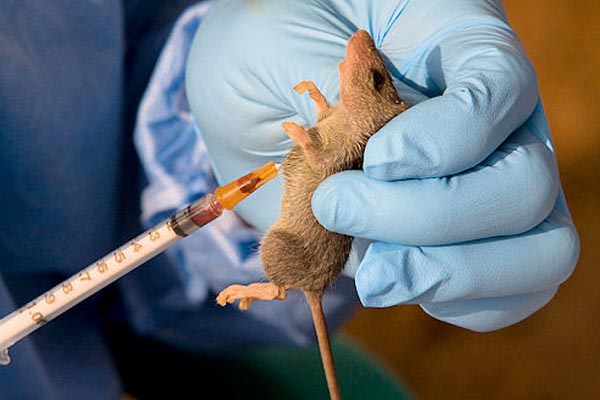
Lassa Fever: Tension Rise as Patients, Nurses Flee FMC, Asaba.

Lassa Fever

The death of two patients at the Federal Medical Centre (FMC), Asaba over the Lassa fever outbreak has continued to unsettle patients in the hospital as tension grew daily, with many patients and nurses running off from the hospital over fears of the disease which has reportedly killed 55 persons across the country in the last few weeks since its outbreak.

Delta state Health Commissioner, Dr. Nicholas Azinge said “I know some persons have died, I cannot speak further on that because the Federal Ministry of Health is already doing something to sensitize the people and we in Delta State are also sensitising our people”.

The acting Medical Director of the Hospital, Dr. Victor Osiatumeh said “It is not as if Nurses or patients have fled the hospital, as for the nurses and doctors, they are careful with protective measures to ensure they too are not contacted, the situation as a matter of fact is precarious but we are managing it, especially the twenty two persons quarantined”.

Two weeks ago a 65-year old woman from Anambra State died of the disease at the Federal Medical Centre (FMC), Asaba after being managed for a period of time. Since then there has been panic and fear of the unknown across the State.

NLC Boss Commends President Buhari on N500 Billion Social Security Fund

The organised labour movement in Nigeria on Sunday said that it will support the proposed conditional cash transfer programme by the administration of President Muhammadu Buhari.

Mr Issa Aremu, General Secretary, National Union of Textile, Garment and Tailoring Workers of Nigeria, stated this in Kaduna during the 40th day “Fidau’’ prayer held for his late wife, Hajia Hamdalat.

Aremu said that the labour would collaborate with the Office of the Vice President as directed by the President. The proposed conditional cash transfer is a social security program model after developed nations of the world.

“The Buhari administration deserves commendation for setting aside N500bn in the 2016 Budget currently undergoing the approval of the National Assembly, for direct social transfers.

“The Office of the Vice President as directed by the President, must work with NLC and TUC to realise this objective. “The conditional, legitimate transfers should serve as the basis for a national comprehensive social security program for Nigerians.
“As a worthy investment in our country’s human infrastructure, not stomach infrastructure, it is as important an investment as physical infrastructure,” Aremu said.

He praised President Buhari` s gesture in ensuring that those who are living on less than a dollar per day were able to access national resources as a matter of right.

Aremu also commended the school feeding programmes of some states government including Kaduna.

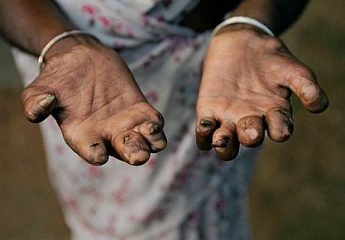
Nigeria Records 3,000 New Cases of Leprosy Annually – FG

The federal government has said that Nigeria records about 3,000 new cases of leprosy annually, with children accounting for about 10% of the new cases recorded.

This was made known by the Health Minister, Professor Isaac Adewole at the World Leprosy Day briefing which was organised by The Leprosy Mission, Nigeria. According to him, the ancient disease cannot be said to be over as deficiency of knowledge about the signs and symptoms is lacking as even most health workers do not know the traits.

Professor Adewole disclosed that the federal government has developed a national policy on strategic plan from 2016-2020 which is committed to working with partners towards achieving the Bangkok commitment of 2013 which stipulates that the disease should be addressed by government of highly endemic countries.

 It is expected that at the end of 2020, visible and recorded achievements will include “aiming to reach 0.1 case per million population, zero grade 2 disabilities among new child leprosy cases and all states to report less than 1% case.”

The national director of TLM, Dr Moses Onoh, said the Mission is out to create awareness about the disease so that people can understand it’s signs, symptoms, prevention as well as treatment, based on the standard of the World Health Organisation, WHO.

Lagos Boat Collision Leaves 1 Dead, 3 Injured

The Lagos State Government at the weekend confirmed the fatal boat collision incident reported at Ibeshe in Ikorodu axis of the state on Thursday January 21, 2016, just as it restated its commitment to continue to improve on safety on the State waterways.

In a statement signed by the Managing Director of the Lagos State Waterways Authority (LASWA), Mrs. Abisola Kamson said the incident which occurred at about 8:05am was as a result of the early morning fog which led to poor visibility for the captains of the two boats.

She said the Authority was able to ascertain what led to the incident from its information gathering machinery and onsite water guards.

According to her, one of the boats (MV Cherio) which had 20 passengers on board was operating at high speed and by the time it noticed the second boat (Olaoluwa) which had no passengers on board, it was too late to avoid a collision.

She said the impact of the collision claimed the life of a passenger on board and left three other persons injured.

According to her, the three injured persons were immediately rushed to Ikorodu General Hospital and have since been transferred to LUTH for further treatment.


Falana Petitions ICC to Investigate Individuals Indicted in $2.1 Billion Arms Deal Scam

Human rights lawyer, Mr Femi Falana, is asking the International Criminal Court (ICC) to investigate allegations of crimes against humanity said to have been committed against the Nigerian people by some former and serving military officers as well as public officials and private persons.

In a petition sent to the Prosecutor of the ICC, Fatou Bensouda, Mr Falana alleged that on account of the deliberate refusal of the former military authorities to equip and motivate the members of the armed forces involved in combat operations, the insurgents have killed about 25,000 soldiers and civilians including children and displaced over 2,000,000 people.

Speaking on behalf of a firm of civil rights lawyers based in Lagos, Mr Falana asked the ICC to urgently commence an investigation into the allegations of the criminal diversion of the security fund of $2.1 billion and N643 billion earmarked by suspected perpetrators, with a view to determining whether these amount to crimes against humanity within the Court’s jurisdiction.

He is also asking the ICC to bring to justice, those suspected to bear full responsibility for deliberate underfunding of the armed forces through widespread and systematic corruption in Nigeria.

Falling Oil Prices May Force National Assembly to Review $38 Crude Oil Benchmark

Members of the Nigerian National Assembly are reportedly in a state of dilemma over what to approve as the official crude oil benchmark for the 2016 budget. The N6.07 trillion budget proposed by the Presidency is set to be referred to the committee stage on conclusion of the second reading this week after undergoing two days of deliberation on the general principles.

Majority of the law makers are said to be of the view that the $38 per barrel proposed by the President is no longer realistic following the plunging price of crude oil, with oil prices already under $28, about $10 less than the budgeted figure, at a time the budget had yet to reach the committee stage.

The Senate had also concluded plans to seek the opinion of both domestic and foreign-based economists and financial experts on the best approach to adopt in arriving at a realistic oil benchmark for the 2016 budget implementation.

The Senate spokesperson, Senator Sabi Abdullahi, and the Chairman, Senate Committee on Finance, John Enoh, argued that the most realistic option at the moment was for the National Assembly to approve the downward review of the benchmark in conformity with current oil price.

Niger State Reestablishes Grains Board to Help Reduce Poverty

The Niger State government is re-establishing a Grains Board in order to help farmers reduce poverty in the state. This was made known in a statement by the Niger State Commissioner for Information, Culture and Tourism, Jonathan Vatsa, on Sunday in Minna, the state’s capital.

With the economic challenges faced by the country, Mr Vatsa expressed belief that the board would also create more jobs for the teeming youths.

He said that the board would help to checkmate people who act as middle men that are in the habit of exploiting farmers in the state.

The statement, while calling on the people of the state, especially farmers to embrace the board, stated that the Niger State government had made agriculture one of its topmost priorities since the fall of oil price.

The Commissioner promised that the State government would put everything in place to encourage farmers to achieve their desired goals, assuring the farmers that the government would buy their produce from them.

He said that the three senatorial zones in the state would be identified with a particular crop and they would be assisted to produce such crops to attract international markets.

“Zone ‘A’ is known for the production of rice and banana, zone ‘B’ produces yam and zone ‘C’ is into cotton and rice, which at the end of the day will generate enough revenue to develop the state,” he said.

Mr Vasta admonished the people to go into mechanised farming, adding that the government would simplify ways of farming without stress.

He said that the government has practically demonstrated its commitment in agriculture, youth and women empowerment as contained in the budget recently presented to the State Assembly.

The Commissioner said that Niger State government had resolved to embark on people oriented programmes and projects tailored towards ensuring that the people get value for the lean finances of government.

He promised that the government would constantly engage the people by adequately informing them of its programmes and policy which are in conformity with the direct principle of good governance and rule of law.

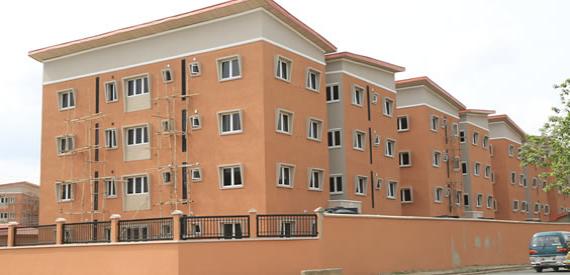
Lagos HOMS: CPC Gives Lagos State Government 7-DAY Ultimatum.

The Consumer Protection Council has given the Lagos State Government a seven-day ultimatum to get back to it on the state of the Lagos State Home Ownership Mortgage Scheme.

The CPC asked the state government to investigate the delay in the completion of the Mushin project and alleviate the pains of the winners.

The Lagos HOMS winners had written the CPC after an earlier letter to the state Governor, Akinwunmi Ambode, did not yield any response.

The winners who were said to win flats in the Lagos HOMS at Mushin, in a letter to CPC on November 7, 2015, said their hopes had been dashed by the state government after committing their life savings to the project, stating that for over a year the government had given them several completion dates for the project but have met with none.

The head of the CPC, Lagos State, Mr. Joshua Nggada, in a letter dated January 15, 2016, and addressed to the Managing Director of Lagos HOMS, asked the state government to look into the matter within seven days.

Five Basic Qualities a Healthy Home Should Possess

Housing is often regarded as one of the basic human needs. It ranks second after food and thereafter clothing. It is a pre-requisite for the survival of man.Housing as a unit of the environment has profound influence on the health, efficiency, social behaviour, satisfaction and general welfare of the community.

The importance of providing adequate and quality housing in any country can neither be overstated nor disputed in time or space. It is a stimulant to the national economy.

The World Health Organisation (WHO) describes housing as residential environment which includes the physical structure used for shelter, all necessary services, facilities, equipment and devices needed or desired for the physical and mental health and social well being of the family and individuals.

A healthy building does not necessarily mean a building that costs you millions of naira or a very expensive one, a healthy building simply means a building that has facilities necessary for your everyday life in order.

What most people do not know is that many illnesses and ailments are as a result of staying under poor housing conditions. These illnesses don’t show up easily, rather they accumulate over time, and are then manifested either as a result of stress, noise e.t.c.

For a building to be classified as healthy, it must possess at least these five basic qualities:

  • A healthy building should not be densely populated: depending on the size of the house, a healthy home should not be overcrowded.
  • Its window design and layout should facilitate natural ventilation and penetration of daylight;
  • It should be isolated from noise and air pollution sources;
  • Its water supply and waste discharge systems should be properly installed maintained and managed;
  • its environmental conditions should be clean

Considering getting a house? Then look out for a healthy building, remember Health is Wealth.

Niger Dock Delivers 420MCF Gas To Boost Power Generation

Power generation at the weekend spiked with the completion of the SONAM Non-associated Gas Well Platform Production Topside Module by Niger Dock Plc.

The exercise was part of the Domestic Supply Obligation(DSO)-MEREN Gas Gathering Compression Platform and SONAM Non-associated Gas Wellhead Platform sponsored by Chevron and the NNPC.

Chairman of Nigerdock and the Jagal Group, Anwar Jamarkani, who spoke at the completions and load-out of the topside ceremony in Lagos, said that a total of 3,268,537 manhours were expended on the project which has an overall tonnage of 3,500 tonnes.

He said:“All of these structures are required to deliver a combined cubic feet per day of natural gas to Chevron’s Excravos Gas Project which provides feedstock for power generation, a major demand for Nigeria’s power sector”

He also said that the project will significantly eliminate gas flaring from the project sponsor’s assets in fulfillment of government’s gas flaring policy. According to him, the project will further attract gas investment opportunities, thereby boosting present administration’s effort to diversify the economy from crude oil proceeds.

“We are truly humbled to play a part in such a landmark achievements which will no doubt have a transformative effect on our country.However, we believe we can do much more and raise the bar,” he said.

Nigerdock is prepared to take on even more ambitious projects and “we commit not to rest on our laurels but to ensure that Nigerians have something to be proud of,” he said.


FG Plans To Attract $15billion ICT Investments From China

The federal government has reached advanced talks with Chinese investors to attract about $15 billion additional investments into the Nigerian information and communications technology (ICT).

This investment would create opportunities for further diversification of the industry as well as the creation of 40 million new jobs for the youth.

The minister of communications, Adebayo Shittu, disclosed this at a two-day Nigerian communications sector retreat which ended at the weekend in Ibadan, Oyo State.

“I just led an industry delegation to China and after discussions with the investment community and unveiling investment potential in the Nigerian ICT industry, the Chinese investors have decided to come to Nigeria to invest about $15 billion into our ICT sector,” he said.

Shittu had last week returned from two international conferences on space technology in Belarus and China where he marketed Nigeria’s cyberspace and telecommunications sector potential to foreign investors. This visit also coincided with the award of a Carrier Spectrum Management (CSM) contract to one of the agencies in the ministry, Nigeria Communications Satellite Limited (NigComSat), by the Republic of Belarus.

The Ibadan retreat had in attendance lawmakers from the communications committees of both the House of Representatives and Senate as well as telecommunication operators, industry associations, original equipment manufacturers (OEMs), small and medium businesses (SMBs), chief executives of the five agencies under the ministry, other industry participants as well as the governor of Oyo State, Abiola Ajumobi.


Operators Foresee Entry Of Foreign Investors on Further Naira Devaluation

Nigerian capital market operators have said the devaluation of naira will bring in new and existing foreign investors back to the Nigerian Stock Exchange (NSE).

According to them, the devaluation of the naira is long overdue for Nigeria as its currency has been badly hit by the consistent crash in oil prices.

They also noted out that the measures would end the sell pressure caused by speculation on possible naira devaluation.

The managing director of Highcap Securities Limited, Mr David Adonri, said, “Foreign investors participation in the Nigerian capital market have declined considerably due to the economic crisis and a lot of them have exited the market.”

Adonri attributed it to the issues centered on the prospects in the economy against the backdrop of declining crude oil price in the international market, saying that a lot of them have benchmark activities in the economy and the stock market against the movement in the price of crude oil. He said that depending on the direction of the movement of the price, investors would either decide to come in or exit and also noted that the price movement of crude oil price have direct bearing on the value of the domestic currency, the naira.

“If crude oil earnings decreases then it will affect the fiscal offers and the sovereign wealth funds that was accumulated. It is the offers that defended the value of the naira; with reduced foreign incomes and depletion of the sovereign wealth funds, fiscal offers are diminished and so the value of the naira from the analysis of foreign investors is that it cannot remain static when the fiscal offer that supports the value have depleted. Yet, the government is still keeping the value at rate as if nothing happened which they know is not sustainable,” he said.

He also said that the foreign exchange management system in the country is not a market driven system, noting that it is an administrative driven system wherein the Central Bank of Nigeria (CBN) fixes the price or rate of the naira. He further noted that for foreign investors to be attracted to the economy there must be a realignment of the exchange rate and the only way it can be realigned is through devaluation via running a dual exchange where the official market defies the exchange rate.


TSA, Zero-CoT To Chop Deposit Banks’ Revenues By 20%

Nigerian banks are grappling with an estimated 20 per cent reduction in their revenues following implementation of the Treasury Single Account (TSA) as well as removal of Commission on Turnover (CoT)

With  predictions that the Nigerian economy will face hard times in 2016, the banking sector may be worst hit as the impact of TSA and removal of CoT fully sinks in.

While banks had so much free funds in their coffers from federal government revenues, the implementation of TSA has already seen more than N2 trillion withdrawn from the banking sector, a figure that would continue to increase.

The Central Bank of Nigeria, (CBN), zero-CoT directive which kicked off in January  is widely believed to further reduce banks’ revenue generating ability in 2016.

The CBN had introduced a gradual phase out of CoT from N3 per mile in 2013, to N2 per mile in 2014, N1 per mile in 2015 and zero-CoT in 2016.

Commenting on this, the managing director and chief executive of Afrinvest, Ike Chioke, has said many banks in the country will have to lay off staff by the second quarter of the year to remain profitable.

Speaking in Lagos at the weekend, Chioke said he expects Nigerian banks to consolidate and or raise capital in the course of the year. He noted that banks will have to make more provision for losses in the 2016 financial year as companies begin to feel the crunch of the economy.

“If they can raise capital and stay independent that will still be good. We are also projecting that we will soon see the effect of all these things on the banking sector. ”

Likewise, analysts at Financial Derivatives Company Limited in the monthly economic bulletin noted that the removal of the Qcommission on turnover and the single treasury account is expected to wipe out 20 per cent of revenues in the banking industry.


“Nigeria Faces Dismal Economic Growth Prospect” – KPMG

A survey by Multinational audit firm, KPMG has shown that Nigeria’s economy faces low economic growth prospect, a survey by

According to the report, a group of Chief Financial Officers were interviewed in a survey by the consulting firm.

The CFOs are concerned about business risks, as well as the economic slowdown and the falling oil price.

Its Partner and Head, Audit Services, Tola Adeyemi, said the CFOs were the least optimistic about growth. The other concerns are uniting leaders, increasing taxation and regularities complexities. And the continued slowdown in the economy, according to them has heightened fears that a key engine of growth is stalling. There are also worries about the impact of falling oil revenues on the overall economy.

He noted that the CFO observed that the threats they face are becoming more complex with exchange rate instability and the state of infrastructure.

One issue also identified is lack of balance in the economy. As a result, the rewards of a growing economy are not shared equally, leaving some sectors feeling markedly stronger than the others.

The business suggested growth levels across most sectors slowed considerably.


NDIC Remits N15.4billion into Consolidated Revenue Fund

The Nigeria Deposit Insurance Corporation, NDIC, remitted a total of N15.4 billion to the Consolidated Revenue Fund between 2007 and 2014.

The Fiscal Responsibility Commission (FRC), made this known in a commendation letter it wrote to the NDIC lauding the Corporation.

It hailed the management of NDIC for compliance with the submission of its audited financial statements of 2007- 2014 and prompt payment of operating surplus.

This letter dated December 14, last year was signed by the FRC Acting Chairman, Victor Muruako.

The FRC report indicated that the NDIC was well above average in compliance with Sections 21- 23 of the Fiscal Responsibility Act (FRA) 2007 and “had fully complied with the provisions of the General Reserve Fund into which 20 per cent of its Operating Surplus was retained in accordance with Section 22 (2) of the FRA 2007”.

The report also commended the Corporation’s compliance with the payment of 25 per cent of its Gross Revenue to the Consolidated Revenue Account of the Federation in accordance with Ministerial Circular on Internally Generated Revenue (IGR).

According to the FRC, “it is quite commendable that NDIC is one of the few Corporations that have fully complied with IFRS, which has greatly improved financial reporting of the activities of the agency,” the report observed.”

The FRC also reviewed the Corporation’s annual approved budget and considered it to be of high standard in terms of process and content. “The accounts were generally of high standard and depict compliance with international best practice,” the FRC wrote.


“Deposit Banks Will Not Profit from N50 Stamp Duty”- Skye Bank MD

The Group Managing Director/Chief Executive Officer of Skye Bank Plc, Timothy Oguntayo, has stated that deposit money banks (DMBs) are not expected to make any profit from the N50 stamp duty levy imposed on bank customers by the federal government.

He made this clarification during a breakfast luncheon with top stockbrokers and allied professionals in Lagos.

It would be recalled that the federal government had on Tuesday instructed the Central Bank of Nigeria to collect N50 stamp duty from customers for money received into their accounts.

According to the apex bank: “As part of efforts to boost its revenue base, the federal government of Nigeria is exploring revenue opportunities in the non-oil sectors especially taxes and rates. It is in recognition of this fact that banks and other financial institutions are enjoined to support government’s revenue drive through compliance with the provisions of the Stamp Duties Act, LFN 2004 as reinforced by the court judgement in Suit No FHC/L/CS/1710/2013.

“In this regard, the CBN pursuant to the provisions of its enabling laws, hereby issues this circular to all DMBs other financial institutions. With immediate effect, all DMBs and other financial institutions shall commence the charging of N50 per eligible transaction in accordance with the provisions of the Stamp Duties Act and Federal Government Financial Regulations 2009, that is, all receipts given by any bank or other financial institution in acknowledgment of services rendered in respect of electronic transfer and teller deposits from N1, 000 and above.”

Oguntayo, who spoke on the rationale behind the imposition of the N50 stamp duty, said: “In my own understanding, there is a NIPOST Act that makes it mandatory for customers to pay stamp duty on any transaction they do.

As such, the money collected goes directly to NIPOST and not to the banks. The banks are not expected to profit from it.”

He was however quick to admit that the implementation of the policy means that cost of doing transaction is going to increase.

The Skye Bank boss also hinted of plans by the bank to raise fresh capital during the first quarter of 2016 to beef up its capital base and improve its working capital.


Stock Market Retains Bullish Momentum as Index Rises By 0.59%

Transactions on the floor of the Nigerian Stock Exchange, NSE, closed Friday, January 22, on a positive note as the All Share Index scooped0.59 per cent to close at 23,826.50 points from 23,686.67 on Thursday, January 21.
Similarly, market capitalization also jumped from N8.146 trillion to N8.194trillion.

The market posted 30 gainers today led by Cadbury with a gain of N1.29 or 10.24 per cent to N13.89 followed by NAHCO with a gain of N0.32 or 9.88 per cent to close at N3.56 while Transcorp gained N0.11 or 9.40 per cent to close at N1.28 per share.

On the other hand, Forte Oil topped 12 stocks on the losers’ chart with N16.50 loss or 5 per cent to close at N313.50 followed by Nestle that lost 37.00 or 4.97 per cent to close at N707.15 per share, and Northern Nigeria Flour Mills that lost N0.42 or 4.91 per cent to close at N8.13 per share.

All together, a total of 1,005,167,671 shares worth N1.888 billion exchange hands in 4,229 deals.

“Lift Forex Restriction on 41 Items” – LCCI Urges CBN

The Lagos Chamber of Commerce and Industry, LCCI, has urged the Central Bank of Nigeria, CBN, to lift the foreign exchange restrictions it placed on 41 items.

The Chamber said the measure was no longer necessary, especially now that the regulator’s official forex window has been closed.

LCCI’s Director-General, Muda Yusuf, in a statement on Sunday, January 24, said the restrictions have caused considerable loss of jobs, insisting that “many more jobs are at risk as many firms run out of stock of their critical inputs for production,” adding, “for the sake of economic policy coherence, any product that is not on the official import prohibition list of the Federal Government should have access to the autonomous foreign exchange market.”

He agreed that import prohibition is a vital trade policy matter which should be undertaken in an integrated manner with inputs from other government agencies, including the Ministry of Finance, National Planning and the Nigeria Customs Service, among others, but cautioned however that the consequences of import prohibition are far reaching and go beyond the narrow perspective of conservation of foreign exchange.

“ The dimensions of inter sectoral linkages, employment implications, Customs revenue implications, breaches of regional and other international trade treaties should be taken into account,” pointing out that fiscal policy measures, such as taxation and import tariffs could be used, as and when necessary, to shape the behavior of economic operators as the policy thrust of government dictates.

The LCCI chief called for a proper understanding of the significance of the foreign exchange policy in the Nigerian economy, given the fact that the economy is not only highly import dependent, but also the fact that it is assuming greater integration with the global economy. In this regard, he called for transparency, and the need to ensure that there is adequate liquidity and stability in the administration of the foreign exchange market.


“87 Delisted Broking Houses Not Registered With NCRIB” – Council

The Nigerian Council of Registered Insurance Brokers, NCRIB, has said of the 108 broking firms delisted by the regulatory body, the National Insurance Commission, 87 firms are not registered with the Council.

President of the NCRIB, Kayode Okunoren, made this known at a forum in Lagos. According to him, only 21 of the affected brokers are members of the broking fraternity.

He said the NCRIB had made frantic efforts to ensure that the affected brokers were given soft landing as against the withdrawing of their licences.

He appealed to NAICOM to ensure sustenance of effective communication channels with the NCRIB in such a way that its members are notified in good times on any aspect of compliance in which they are on the path of erring, stressing that this could even be done through the Council in the spirit of the existing cordial relationship.

Okunoren said: “As you are aware, NAICOM recently advertised the names of 108 brokers delisted over compliances issues. Out of the 108 Brokers, 21 of them are registered members of the Council.

“Suffice it to say that the NCRIB is not happy that any operator in the market will continue to flout regulatory requirements as enshrined in the law. However, the Council on my assumption of office, made a representation to NAICOM on this and sundry issues for which, as usual, we got assurance of support from the Commission.’’


Turnover on Fixed Income Market Plunges by N2.7trillion in December

Total turnover posted in the fixed income and currency market declined by N2.66 trillion in December to settle at N7.42 trillion, reflecting the dwindling trend in the nation’s capital market.

This represented 26.40 per cent decrease month-on-month and N3.14 trillion or 29.67 per cent drop year-on-year.

Monthly data of transactions in the fixed income released by FMDQ OTC Securities Exchange Plc showed that bearish sentiments prevailed in the Fixed Income market within the period under review.
Activity in the fixed income segment dominated the market, contributing 34.74 per cent to the total market turnover, while activities in the Treasury Bills segment accounted for a market share of 26.27 per cent of total turnover.

Further analysis of the figure released showed that secured market transactions (Repos/Buy-Backs) accounted for 25.15 per cent of total turnover in December, while FGN5 bonds’ contribution accounted for 8.94 per cent.

Activities in Unsecured Placements/Takings contributed 4.74 per cent of total turnover. Specifically, turnover in the FX market for the month settled at $10.89 billion, representing 27.41 per cent increase compared to the value recorded in November, with an average daily turnover of $0.52 billion.

Also, member-member trades leaped by $0.33 billion (41.52 per cent), while member-client trades showed an increase of $2.01 billion, 25.95 per cent increase month-on-month.

Spot and Swap transactions increased by $1.80 billion (25.90 per cent) and $0.65 billion (44.76 per cent) MoM, to record turnovers of $8.75 billion and $2.11 billion respectively. The total value of Fixed Income securities traded in the month of December was N2.61 trillion; a N2.87 trillion (52.32%) MoM decline. T.bills turnover came to N1.95 trillion, accounting for 74.27 per cent of total Fixed Income Market turnover.

On a Year-on-Year basis, turnover on T.bills decreased by N312.17 billion (13.79%) and on FGN bonds, increased by N74.34 billion (12.62%). Trading Intensity for T.bills and FGN bonds decreased to 0.38 and 0.11 respectively, compared to 0.78 and 0.22 recorded in the month of November.

On the average, the yield curve shifted upwards by 63 basis points. Outstanding FGN bonds increased by N50.00 billion (0.85%) to settle at N5.94 trillion from N5.89 trillion recorded in the previous month.

BizWatchNigeria.Ng
Privacy Overview

This website uses cookies so that we can provide you with the best user experience possible. Cookie information is stored in your browser and performs functions such as recognising you when you return to our website and helping our team to understand which sections of the website you find most interesting and useful.