









Home Blog Page 2981

POLITICS & GOVERNMENT JOBS | Humanitarian Affairs Officers at the United Nations – Abuja

The United Nations is the one international organization with the reach and vision capable of solving global problems.

The United Nations Foundation links the UN’s work with others around the world, mobilizing the energy and expertise of business and non-governmental organizations to help the UN tackle issues including climate change, global health, peace and security, women’s empowerment, poverty eradication, energy access, and U.S.-UN relations.

The United Nations Foundation is honored to work with you and the United Nations to foster a more peaceful, prosperous and just world.

We are recruiting to fill the position below:

Job Title: Humanitarian Affairs Officer

Job Opening Number: 53740
Location
: Abuja

Responsibilities

Within delegated authority, the Humanitarian Affairs Officer will be responsible for the following duties:

  • Monitors, analyzes and reports on humanitarian developments, disaster relief/management or emergency situations in assigned area.
  • Organizes and prepares studies on humanitarian, emergency relief and related issues.
  • Organizes follow-up work, including inter-agency technical review meetings to support policy development work and decision-making on important issues.
  • Drafts and prepares regular situation papers/reports highlighting relevant operational factors affecting the humanitarian situation and response efforts.
  • Prepares or contributes to the preparation of various written reports, documents and communications, e.g. drafts sections of studies, background papers, policy guidelines, parliamentary documents, briefings, case studies, presentations, correspondence, etc.
  • Ensures appropriate monitoring and reporting mechanisms; provides information and advice on a range of related issues.
  • Reviews and provides advice on policy issues related to safeguarding humanitarian principles and ensuring the effective delivery of humanitarian assistance.
  • Partners with other humanitarian agencies to plan and evaluate humanitarian and emergency assistance programmes and help ensure that latest findings, lessons learned, policy guidelines, etc. are incorporated into these activities, including gender related considerations.
  • Provides substantial support to sector / cluster working groups as required and facilitate exchange on cross cutting issues.
  • Establishes and maintains contacts with government officials, other UN agencies, non-governmental organizations, diplomatic missions, media, etc.
  • Supports advocacy initiatives on issues impacting humanitarian needs and response efforts through the collection of information, liaison with humanitarian partners, government officials, the media, etc.
  • Manages the production of appeals for international assistance; ensures the proper use and spending of donor contributions channeled through OCHA.
  • Undertakes and provides support to technical assistance and other field missions, e.g. participates in field trips to undertake in-depth reviews of specific country work mechanisms.
  • Organizes and participates in working groups, meetings, conferences, consultations with other agencies and partners on humanitarian and emergency relief-related matters.
  • Performs other duties as required.

Competencies

Professionalism:

  • Knowledge of a range of humanitarian assistance, emergency relief and related human rights issues, including approaches and techniques to address difficult problems.
  • Analytical capacity and in particular the ability to analyze and articulate the humanitarian dimension of issues which require a coordinated UN response.
  • Ability to identify issues and judgment in applying technical expertise to resolve a wide range of problems.
  • Ability to conduct research, including ability to evaluate and integrate information from a variety of sources and assess impact on the humanitarian rights situation in assigned country/area.
  • Ability to work under extreme pressure, on occasion in a highly stressful environment (e.g. civil strife, natural disasters and human misery); ability to provide guidance to new/junior staff.
  • Shows pride in work and in achievements; demonstrates professional competence and mastery of subject matter; is conscientious and efficient in meeting commitments, observing deadlines and achieving results; is motivated by professional rather than personal concerns; shows persistence when faced with difficult problems or challenges; remains calm in stressful situations.
  • Takes responsibility for incorporating gender perspectives and ensuring the equal participation of women and men in all areas of work.

Team Work:

  • Works collaboratively with colleagues to achieve organizational goals; solicits input by genuinely valuing others’ ideas and expertise; is willing to learn from others; places team agenda before personal agenda; supports and acts in accordance with final group decision, even when such decisions may not entirely reflect own position; shares credit for team accomplishments and accepts joint responsibility for team shortcomings.

Planning & Organizing:

  • Develops clear goals that are consistent with agreed strategies; identifies priority activities and assignments; adjusts priorities as required; allocates appropriate amount of time and resources for completing work; foresees risks and allows for contingencies when planning; monitors and adjusts plans and actions as necessary; uses time efficiently.

Qualifications

  • An advanced university degree (Master’s degree or equivalent) in Political Science, Social Science, Public Administration, International Studies, Economics, Engineering, Earth Sciences or a related field is required.
  • A first-level university degree in combination with two additional years of qualifying experience may be accepted in lieu of the advanced university degree.

Work Experience

  • A minimum of five years of progressively responsible professional experience in humanitarian affairs, emergency preparedness, crisis/emergency relief management, rehabilitation, development, or other related area is required.
  • Experience in the UN common system is desirable.

Languages:

  • English and French are the working languages of the United Nations Secretariat. For the post advertised, fluency in English is required.

Assessment Method:

  • Evaluation of qualified candidates may include an assessment exercise which may be followed by competency-based interview.

United Nations Considerations:

  • The United Nations shall place no restrictions on the eligibility of men and women to participate in any capacity and under conditions of equality in its principal and subsidiary organs. (Charter of the United Nations – Chapter 3, article 8).
  • The United Nations Secretariat is a non-smoking environment.

Application Closing Date
11th March, 2016.

How to Apply
Interested and qualified candidates should APPLY

“Nigerians Purchased Fuel at N119 Per Litre in December” – NBS

The National Bureau of Statistics, NBS, has reported that Nigerians bought petrol at an average of N119.61 per litre in December 105.
The Premium Motor Spirit (PMS) Watch report for last month released on Sunday, January 17  indicated that Nigerians paid N4.26 per litre higher than the N115.35 per litre paid the previous month.

As at December 2015, the official pump price of petrol in Nigeria stood at N87 per litre but the PMS Watch reports for the last one year showed that the least average price Nigerians bought the product was N93 in February 2015.

 As at January 1, the federal government reviewed downward the official price of the product by 50k per litre but compliance and full enforcement have remained a challenge for the regulators.
Details of the latest report revealed that the oil-rich state, Bayelsa, continued to top the list of states where residents bought the product exorbitantly. Bayelsa, Taraba and Kogi residents bought petrol at N154, N153.33 and N146.67 per litre respectively in December.
Katsina State topped the list of states where residents bought the product at the least market price. Katsina, Lagos and Kano residents bought petrol at N89.17, N89.80 and N93.14 per litre respectively. Residents of the nation’s capital, Abuja, bought the product above government regulated price at N114.78 per litre.

UAE Investor Indicates Interest in Nigeria’s Infrastructure, Mining, Other Sectors

Nigerian Trade Centre, Dubai, UAE, has revealed that Nigeria’s foreign direct investment is about to receive a boost as one of the leading United Arab Emirates’ (UAE) business moguls, Sheikh Abdullah Ahmed Al Ghurair, has indicated interest in different sectors of the country’s economy.

Director, Nigerian Trade Centre, Dubai, UAE, Mohammed Aliyu Baiwa, told newsmen that “Al Ghurair, who is the chairman of Al Ghurair Investment, is planning to invest massively in the oil and gas, power and financial sectors as well as agriculture and mining sectors, and Infrastructure.”

He said Abdullahi Al-Ghurair, who has expressed confidence in the administration of President Muhammadu Buhari, is the chairman of over 36 companies, He is chairman of Mashreq Bank, the oldest bank in the region.”

His empire cuts across a wide variety of businesses that helped in bringing prosperity to the UAE from its earliest days and also extends to more than 20 countries of the world.

Abdullah Al Ghurair serves as the chairman of UAE Bankers Association, chairman of Al Ghurair University and member of Dubai Economic Affairs.

He recently donated a third of his wealth to education charity with a view to helping underprivileged Arab youths.

Gombe Nets N10million from Airport

Gombe State government raked in over N10 million in 2015 from the Gombe International airport, the Permanent Secretary, Gombe State Ministry of Works, Mohammed Bappa, stated this over the weekend in Gombe.

Bappa said apart from the sum of N10 million realised, some airlines were yet to settle their indebtedness.

He said the funds realized were used for developmental projects in the state, particularly with revenues from the federation account becoming lean as a result of fall in price of crude oil.

BUA Sugar Refinery Discontinues Credit Facilities to Customers

The management of BUA Sugar Refinery, BSR, has discontinued credit facilities to its customers following the prolonged currency fluctuation and the nation’s sugar industry’s dependence on imported raw sugar.

The company, in statement issued over the weekend in Lagos, said the decision is expected to guard against any currency and transaction risks as well as prevent hedging.

The management of BSR said that whilst the official exchange rate had remained stable, significant currency and transaction risks still exist for customers who collect sugar on credit.

As a result, the company is temporarily discontinuing its credit lines to those customers effective today, January 18, till further notice.

This measure, according to the statement, will however not affect the company’s operations and that sugar deliveries will continue to be made against verified payments.

In a related development, BSR has reiterated its support for the Backward Integration Policy (BIP) of the federal government’s National Sugar Master Plan.

The company said that extensive work is ongoing at its Lafiagi, Kwara State BIP site with over 20,000 hectares and that it has another 50,000 hectares of farmland in Bassa, Kogi State.

“These two operations form the fulcrum of BUA’s backward integration programme for sugar and it will further reduce the country’s dependence on imported raw sugar while supporting the value chain in sugar production within Nigeria,” it said.

NSE Index Sheds 2.99% on Lingering Bear Hold

The equity segment of the Nigerian Stock Exchange, NSE, retained a downward trajectory on Friday, January 15.
The All-Share Index slid by 2.99% to 23,514.04 points, compared with the depreciation of 3.44% recorded yesterday.
Week-on-Week, the Index plunged by 13.00% while Year-to-date (YTD), it depreciated by 17.90%.

Similarly, the Market Capitalization fell by 2.99% to close at N8.09trn, compared with the depreciation of 3.44% recorded yesterday to close at N8.34trn.

The losses recorded in the share prices of GT Bank, Access Bank, Nestle, Zenith Bank and Dangote Cement were mainly responsible for the depreciation in the value of the Index.

The total value of stocks traded on the floors of The NSE today was N6.18bn, up by 156.59% from N2.41bn traded yesterday. The total volume of stocks traded was 476.65mn in 4,448 deals.

The three most actively traded stocks were: GT Bank (120.39mn), Zenith Bank (113.75mn) and UBA (44.61mn). The most actively traded sectors were: Financial Services (400.33mn), Conglomerates (32.18mn) and Consumer Goods (18.66mn).

Migrants From Outside Europe Earning Below £35,000 In UK Face Deportation

Migrants from outside Europe who have lived in the United Kingdom UK for over five years will now have to prove they will be paid the new minimum threshold in order to stay in the country.

According to The Independent, a new Home Office policy stipulates that those who fail to demonstrate earnings of more than £35,000 will be denied settlement in the UK and will face deportation.

However, the UK’s Home Secretary, Theresa May is facing pressures to rethink the “discriminatory” new earnings threshold of £35,000 for non-EU migrants that could starve Britain of vital talent in the teaching, charity and entrepreneur sectors when the changes take effect in April.

Overseas workers who have lived in the UK for five years will have to prove they will be paid the new minimum threshold in order to stay in the country.

The UK Government temporarily exempted nurses from the new rules last autumn in response to fears about widespread shortages of workers across the NHS.

But the earnings threshold could be applied to migrant nurses in the future should the Government decide to take them off the Shortage Occupation List.

Former Cabinet minister Alistair Carmichael, who was David Cameron’s Scottish Secretary before the election, said that discriminating on the basis of income would harm the UK’s place at the “forefront of the global economy”, while shadow immigration minister Keir Starmer said there were “real concerns” over how key industries would be affected.

Mr Starmer, who served as the Director of Public Prosecutions from 2008-2013, urged ministers to “look more closely” at the threshold, which is currently £20,800 – around £5,000 less than the average UK salary.

A petition launched earlier this week to try to force the UK Government to rethink the sharp rise in the minimum income requirements has attracted more than 2,000 signatures.

The petition, which is urging the Government to scrap the new £35,000 threshold for non-EU citizens, could be debated by MPs if it reaches 100,000 signatures but only needs 10,000 to receive a response from the Government.


NNPC To Build 109 New Fuel Stations to Cushion Effect of Fuel Scarcity

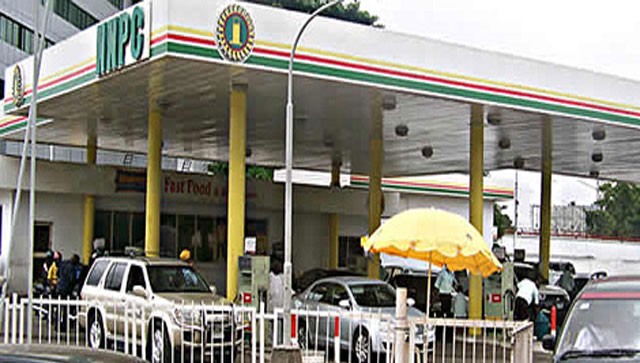
NNPC

The Nigerian National Petroleum Corporation (NNPC) has unveiled plans to build a mega station in every Senatorial district of the nation, thus upping its market share in the fuel retail business from the current 12 per cent to a significantly higher number.

The state-run oil firm, in a statement, on January 17,  by its spokesman, Ohi Alegbe, said the move was part of efforts to expand its retail outlets across the country to ensure efficient distribution and country-wide penetration of petroleum products.

The  corporation, which had already flagged off nationwide consultation with stakeholders aimed at getting support for the planned project, maintained that the project would go a long way in ensuring product availability across all parts of the country.

The group executive director, Commercial and Investment, Babatunde Victor Adeniran,  during the flag-off of consultation with a visit to the governor of Kaduna State, Malam Nasir el-Rufai, said the purpose of the visit was to solicit the support of Kaduna State government to provide lands for building new NNPC petrol stations in the state.

He said:“Our mission is to build three mega stations in states, one each in the three senatorial districts of the state. We need about 5,000 square metres for each of the station. Each station will have six pumps including that of Liquefied Petroleum Gas which is cooking gas.”

In his response, el-Rufai who expressed gratitude to NNPC management for deciding to flag-off the outlets expansion programme in Kaduna State, gave express approval for lands to be made available for the mega stations.

He said: “I want to assure you that we will give you all the support that you need. The state director of lands will take the NNPC project team round the state to look at alternative sites. I don’t know how many you are building; we can give you as many as 10 sites if you want.”


Stock Market Posts Lowest Trading Activities Since 2008

Transactions on the Nigerian Stock Exchange, NSE, for year 2016 have recorded worst trading sessions seen since 2008, when recession rocked the world economy.

The stock market benchmark index was on a negative since the beginning of 2016 , which so far recorded N1.764 trillion loss in 10 days of trading.

This is the first time in the last eight years that the Nigerian market is making attempt to break the long-drawn recession that has seen investors lose a cumulative N8 trillion since March 2008.

The current trend in the market is going in the same direction of 2008/2009 when market capitalization of quoted companies, which had peaked at a record high of N12.6 trillion in March 2008, nosedived to N6.96 trillion by December 31, 2008 and dropped further to N4.48 trillion in March 2009.

Trading during the first week of the year had declined by N555 billion dropped further last week with N1.209 trillion. The NSE All Share Index and market capitalisation of quoted companies, which had started this year at 28,642.25 points and N9.851 trillion, ended last week at 23,514.04 points and N8.087 trillion respectively.

The market situation on the exchange also indicates broad market sadness with loses spread across all sectors. The NSE-30 Index, which serves as gauge for the market’s 30 most capitalised companies, recorded a loss of 18.85 per cent.

The petroleum-marketing sector index carried a negative return of 6.44 per cent while banking and food and consumer goods sub-sectors declined by 22.66 per cent and 18.06 per cent respectively. The insurance and industry sub-sector also remained an underperformer with a decline of 5.20 per cent and 15.66 per cent respectively.

The NSE Lotus Islamic Index which tracks Islamic compliance stocks slumped by 13.22 per cent, while pension index compliance stock and Alternative Securities Market Index dropped 19.07 per cent and 0.34 per cent correspondingly.

Consequently, premium board and main board index plunged by 23.57 per cent and 14.75 per cent respectively.

NCAA Warns Airline Operators Against Arbitrary Increase Of Airfares

The Nigerian Civil Aviation Authority ,NCAA, has threatened to penalize any carrier that arbitrarily hikes miscellaneous charges included in airfares without the authority’s approval.

NCAA’s General Manager, Public Affairs, Samuel Adurogboye, in a statement made available to the News Agency of Nigeria (NAN) in Lagos on Sunday, January 17, said any further breach would attract heavy sanctions.

The statement warned that NCAA would clamp down on any airline that hiked its airfare arbitrarily without filing the proposed add-on charges with the regulatory authority for approval.

“The Nigerian Civil Aviation Authority is directing all airlines to file any proposed add-on charges, surcharges or other miscellaneous charges with it with immediate effect, or risk being sanctioned.

“In the procedure of filing same, all justifiable reasons for increment must be adduced in accordance with parts of the Nigerian Civil Aviation regulations which relate to the approval of charges on all flights within Nigeria or originating from Nigeria to international routes.

“This is as contained in the Nigerian Civil Aviation regulations in requesting for approval of any add-on charges or surcharge, “ it said.

The statement said that an air carrier was required to provide justifiable basis for the proposed increment with a consideration of all relevant factors


“BDCs To Source Forex From Oil Companies, Exporters, Others” – CBN

The Central Bank of Nigeria, CBN, has said Bureau de Change operators can source foreign exchange from oil companies, exporters, or other agencies as well as individuals.

The apex bank stated this days after it announced that it will no longer sell foreign currency to money changers.

This was also confirmed by the umbrella body of BDCs in the country Association of Bureau de Change Operators of Nigeria (ABCON).

Acting president of the association Aminu Gwadabe stated that the modalities for accessing the foreign exchange will be issued to BDCs this week.


“Stock Market Lost N1.63trillion in 2015” – NSE Report

Data from the Nigerian Stock Exchange, NSE, as of December 31, 2015, showed that the nation’s stock market lost heavily in key indicators in 2015.

Precisely, its Market Capitalization, which opened trading for the year at N11.478 trillion, lost N1.63 trillion to close the year’s business at N9.851 trillion.

Likewise, the All- Share Index slid by about 17.36 per cent to close trading at 28,642.25 points, as against the opening index of 34,657.15 points.

Reviewing the stock market performance for 2015, the NSE Chief Executive Officer Oscar Onyema, explained that the significant plunge was as a result of continued depreciation of the naira against the dollar and uncertainty around the direction of economic policies, which fueled already prevalent bearish sentiments in the Nigerian capital market.

The data further showed that NSE Banking Index was the worst hit, plunging 23.6 per cent, followed closely by the NSE 30 Index and NSE Main Board Index, (both down 17.6 per cent); showing that all the NSE market indices performed poorly, relative to their 2014 performance, except for NSE Industrial Index which saw an uptick of 1.3 per cent.

The market for new equity listings was flat throughout the year, with only four new equity listings, one on the Main Board, and three ETFs. In contrast, five companies were delisted in 2015, bringing the number of listed companies and number of listed equities to 184 and 190, respectively.

Turnover volume declined through 2015 by 17 per cent, with equities turnover declining 28.8 per cent to N952.8 billion ($4.8 billion), and a foreign and local participation rate of 54.24 per cent and 45.76 per cent, respectively, in total value traded.

In the NSE bond market, market capitalisation jumped by 32.7 per cent to N7.14 trillion ($35.82 billion) as corporates took to the debt market to raise a total of N112.0 billion ($562.0 million) in 7 new listings; majority from financial services sector.

The Federal and State Governments raised N76.5 billion ($383.7 million) and N35.8 billion ($179.6 million) in debt capital, respectively.


“Inflation Spikes to 9.6% Over Fuel Scarcity” – NBS

The consumer price index showed that as at December 2015, inflation stood at 9.6 per cent year-on-year in December, up 0.2 percentage points from November, the National Bureau of Statistics revealed on Sunday, January 17.
According to the NBS,  the increase in the headline index was driven by higher prices within key divisions which contribute to the index, particularly imported food items and drinks, as well as clothing and footwear and transportation as a result of intermittent PMS supply shortages.

Food price inflation accelerated to 10.6 per cent year-on-year in December 2015 from 10.3 per cent in November.

All major food groups which contribute to the Food sub-index increased at a faster pace during the month with the exception of the Milk, Cheese and Eggs group, the NBS said.

Inflation had risen to 9.4 per cent in November after a drop to 9.3 per cent in September, moving further out of CBN single digit target band.

According to analysts at Financial Derivatives Company Limited, who say inflation is expected to rise to 9.5 per cent, exchange rate pressure, intermittent fuel scarcity, policy uncertainty and trade restrictions contributed to a higher consumer price index in December.

“Increased demand due to seasonal festivities resulted in higher food prices. Furthermore, the fuel scarcity that spilled over from November led to a spike in transport fares.”

Similarly, analysts at Standard Chartered Bank say sampling shows a 0.64 per cent rise in inflation, noting that items subject to foreign exchange restrictions, such as rice and tomato paste recorded the highest price gains with price increases of between nine to 18 per cent between June and December 2015.

Meanwhile the Nigeria’s inflation rate climbed to the highest in more than two years in September as food prices soared, exceeding the central bank’s target for a fourth month.

Oil Prices Poised for Further Plunge From $29 Per Barrel As Iran Begins Production

Global oil prices are set for a continued free fall this week after Iran said it was ready to add half a million barrels a day to crude exports after international sanctions were lifted this weekend.

The prospect of Iran pumping the market with more crude had already hit prices last week, pushing Brent crude below $30 a barrel, to $29.20 by Sunday, January 17.

Iran’s return to the international oil market may worsen the global oil glut as the country looks to ramp up its crude oil exports with estimated 500,000 barrels per day.

Iran’s president, Hassan Rouhani, lauded a “glorious victory” as his country relished reconnecting to the global economy following the formal announcement, late on Saturday, that sanctions were ending thanks to moves by Tehran to scale back its nuclear programme.

Echoing Friday’s sell-off on commodity and global stock markets, shares in the Middle East tumbled yesterday.

Saudi Arabia’s Tadawul index plunged more than 6% as the latest drop in crude prices intensified worries over the economic outlook for the major oil producer.

In Egypt, shares extended last week’s losses on broader worries over emerging markets and the EGX 30 index was down 3%.

The lifting of sanctions includes an end to an EU embargo on imports of Iranian oil and yesterday the country confirmed it was geared up to raise exports.

“With consideration to global market conditions and the surplus that exists, Iran is ready to raise its crude oil exports by 500,000 barrels a day,” the deputy oil minister, Amir Hossein Zamaninia, was quoted as saying by the Shana news agency.

Oil prices have almost halved in the last six months amid concerns about oversupply and reclining demand on the back of a weaker global economic outlook and a downturn in China, the world’s biggest energy user.


Fidelity Bank’s SME Deposit Liability Surges to N120billion

One of Nigeria’s most capitalized financial institutions,Fidelity Bank Plc, has said it intends to intensify support for Micro and Small Medium Enterprises, MSMEs, through initiatives channeled towards raising their level of competitiveness.
The bank hopes to increase its loan book in 2016 by aggressively lending to MSMEs which have been touted to be the engine of growth for the economy.

Speaking at the Fidelity SME Forum, a weekly radio talk show programme on Inspiration FM. Radio Lagos, Managing Director/ Chief Executive Officer, Fidelity Bank Plc., Nnamdi Okonkwo, disclosed that the bank currently boasts of a 50 percent SME loan to deposit ratio, which is an indication that it remains highly committed to supporting MSMEs in Nigeria, particularly in the area of access to finance.

He explained that Fidelity Bank’s SME deposit liability which is in excess of N120 billion and loans in excess of N60 billion are clear testaments to the bank’s commitment to the sector.

Okonkwo pointed out that the bank has made significant headway in the disbursement of the Central Bank’s MSME Development Fund as 70 customers have already accessed requisite credit to expand their business. “We are currently one of the top two (2) leading banks in the disbursement of the Fund”, he added.

According to him, Fidelity focuses more on productive segments of the economy where margins are not robust. This move, he added helps MSMEs in these industry to vertically optimise the performance of their respective businesses.

“The structure and pricing of the funds provide us the window to finance SME related transactions, which otherwise would have been expensive to finance from our balance sheet for the SMEs”, he explained.

Propelled by its one-on-one business advisory services and other capacity building initiatives, Okonkwo, said the lender has one of the strongest SME franchise in Nigeria, Africa’s largest economy by GDP.


“We Lost N1.46trillion in 6 Months to Forex Restriction” – Organized Private Sector


The 2015 financial year was one of the most challenging for the Nigeria’s Organized Private Sector (OPS) as difficulties in the business environment, foreign exchange crisis, funding constraints, policy inconsistency among other glitches almost stifled many operators.

Particularly, the last six months was considered as the most difficult period for the operators, who, according to the Lagos Chamber of Commerce and Industry (LCCI), lost about N1.46 trillion in stalled business activities resulting from forex shortages.

This cuts across the private sector operators including fast moving consumer goods, steel, furniture, pharmaceuticals and manufacturing.


According to National Bureau of Statistics (NBS), Nigeria’s real Gross Domestic Product (GDP) fell to 2.84 per cent in the third quarter of 2015, compared to 6.23 per cent in the same period in 2014. In fact, sectors like manufacturing and the services slipped into recession after recording successive declines over the last three quarters in 2015.

The Manufacturers Association of Nigeria (MAN), noted that the movement in manufacturing activities followed dismal performance of Nigeria’s macro-economy in 2014, which was ascribed to crude oil price crash during the period.

The association identified high cost of credit, poor power supply, high cost of alternative energy and non-availability of local input material as major challenges to the growth of the sector.

It stated: “The average cost of borrowing charged to manufacturers during the period was high and at double digit, which is discouraging to further investment or re-tooling in the manufacturing activities.

“Local raw materials content of manufacturing in the second half fell below the performance in the first half of the year. The scenario obviously highlights the non-diversification and the mono-product nature of the Nigerian economy, which needs to be urgently addressed. It also underscored the negligence in developing the non-oil sector and the non-optimisation of the potentials of the abundant petroleum oil resources in the country.”


IT/TELECOMS JOBS | Sr Sales Excellence Mgr EPG at Microsoft Nigeria

Microsoft Nigeria – If you have unique experiences, skills and passions-and we believe you can bring them all to Microsoft for a rich, rewarding career and lifestyle that will surprise you with its breadth and potential. Just imagine the excitement and satisfaction of what you can do, where you can go, and the difference you can make with the resources of Microsoft behind you.

We are recruiting to fill the position below:

Job Title: Sr Sales Excellence Mgr EPG

Job #: 952553
Location: Lagos, Nigeria

Purpose

  • The Sales Excellence Manager (SEM) role is a critical role that has the left-right perspective of the business that will provide critical business and leadership experience.
  • The SEM Manager role is a key member of the Area/Subsidiary Leadership Team, acting as a strategic and trusted advisor, and sales coach, running and transforming the business in partnership with the Segment Lead.
  • The SEM Manager is a change agent, operationalizing company strategy , leading behavior and culture change and landing seller role accountabilities.
  • The SEM Manager runs a rigorous and disciplined business, constantly extrapolating business insights that accelerate segment priorities, optimize operational processes, increases seller productivity and capability, coaching to drive impact growth, revenue and share.

Key Responsibilities
Shifting focus from operations to growth and transformation: Key responsibilities include but aren’t limited to:

Operational Excellence:

  • Manages Budget Cascade
  • Manages Quota Process and Cascade
  • Manages Segmentation Process
  • Drives pipeline standards and hygiene
  • Orchestrates and Manages the ROB
  • Manages Customer/Partner Planning Rhythm
  • Manages T-36-or T-12 and OTRRR process
  • Manages the forecast

Sales Leadership:

  • Maximizes Budget investments and resource allocations, lands blueprint
  • Advisor to sales leaders in understanding compensation and quota allocations
  • Leads , drives and monitors Segment growth and recovery planning
  • Drives and Monitors Pipeline Health
  • Operationalizes strategy by mainstreaming Consumption in to the ROB, driving quality
  • Coaches and reviews on account/partner plans
  • Leverages TLI’s, and other business insights to identify COE and growth opportunities
  • Coaches on cross-sell/upsell opportunities, growth & recovery
  • Enables Sales and Services alignment
  • Engages with Sales teams, Customers and/or partners to accelerate deals, share operational practices and improve overall pipeline health

Change Management:

  • Strategize and support design, requirements and landing of WW processes and tools in partnership with M&O, UES
  • Partners with UES and SMSGR to ensure readiness plan quality
  • Derive BI from corporate assets to give Segment LT a POV of trends in the business beyond line of sight to forecast future direction.

Experiences Required
Key Experiences, Skills and Knowledge:

  • Core Competencies: Organizational Leadership , Strategic Insights, Trusted Advisor, Strategic Sales Planning, Sales Team Leadership
  • Professional Competencies: Adaptability, Customer Focus, Drive for Results, Influencing Impact, Judgement, Collaboration, Executive Maturity, Value Selling, Analytical Problem Solving
  • Experience: 5+ years of related experience in: Sales management/Leadership, Change Management, Business Transformation – Business Management/ Planning

Education

  • Bachelor’s Degree, MBA/Master’s a plus with focus on Economics, Finance, Organizational Management, Business Management.
  • Professional Training: Six Sigma training/certification is a plus.

Application Closing Date
Not Specified.

How to Apply

interested and qualified candidates should APPLY
MEDICAL & HEALTHCARE JOBS | Garki Hospital Abuja (GHA) Fresh Job Recruitment (10 Positions)

Garki Hospital Abuja is owned by the Federal Capital Territory Administration (FCTA). It was closed in 2001 for full renovation. In March 2007, a concession agreement for the management and operation of the new Garki Hospital Abuja was signed between FCTA and Nisa Premier Hospital, after a competitive bidding process. This is in line with the Federal Government’s Public Private Partnership (PPP) Policy. Today Garki Hospital Abuja is a model 100plus bedded hospital in the FCT breaking barriers and setting the pace in both general and specialized services.

We are requesting for applications from suitable qualified candidates for the following vacant positions:

CLICK HERE TO VIEW JOB DETAILS AND APPLY

POLITICS & GOVERNMENT JOBS | British Council Fresh Graduate and Exp. Job Recruitment (3 Positions)

The British Council is the world’s leading cultural relations organization and creates opportunities for people in the UK and worldwide to understand each other, to work together and learn from one another. We see this as crucial to building secure, more prosperous and sustainable futures for us all. We build trust and understanding between different countries and cultures and develop strong international links that are of benefit to people in Britain and the rest of the world.

We are recruiting to fill the following positions below:

CLICK HERE TO VIEW JOB DETAILS AND APPLY

Equities Shed N1.2trillion in a Week As Sell Pressure Intensifies

Massive sell pressure rocked the equities listed on the Nigerian Stock Exchange, NSE, as the market hit a new 3-year low of N8.087 trillion with a loss of N1.209 trillion in a week.

Index movement that the NSE All-Share Index and market capitalization slid by 13 per cent to close the week at 23,514.04 basis points and N8.087 trillion respectively.

Likewise, all other Indices finished lower during the week, with the exception of the NSE Alternative Securities Market Index that chalked up by 0.07 per cent to close at 1,204.49 points.

According to 2016 outlook of CardinalStone Research, local intervention, exchange rate stability and NSE market initiatives will primarily influence equity market performance in 2016.

The financial firm’s believed that increased local retail and institutional participation will be a key determinant of market recovery in 2016.

It further opined that the recovery of the equities market in 2016 will depend on increased local participation by both retail and institutional investors (pension fund managers etc).


BizWatchNigeria.Ng
Privacy Overview

This website uses cookies so that we can provide you with the best user experience possible. Cookie information is stored in your browser and performs functions such as recognising you when you return to our website and helping our team to understand which sections of the website you find most interesting and useful.