FMDQ OTC provider of Over- The-Counter trading platform for fixed income in Nigeria saw its turnover leap from N103.60 trillion in 2014 to N137.40 trillion in 2015, a growth rate of 33 per cent year-on-year.
This growth came in spite of the challenges the market faced in 2015.
In the first half of 2015, the dealing members achieved an overall OTC market turnover of N58.60 trillion and by December 2015, this rose significantly by 134 per cent to close at N137.40 trillion.
This figure saw the forecast of N125 trillion turnover for 2015 surpassed by 10 per cent.
According to FMDQ OTC, the most actively traded products were Treasury Bills (T.bills), accounting for the largest share of the market turnover at 35 per cent, followed by foreign exchange (including FX derivatives) with a share of 25 per cent and Repurchase Agreements (Repos)/Buy-Backs at 23 per cent.
Unsecured Placements/Takings and Federal Government of Nigeria (FGN) bonds, on the other hand, had a smaller share of the market, accounting for 9 per cent and 8 per cent respectively.
The turnover represents trades executed between dealing members, dealing members & clients, and dealing members & the Central Bank of Nigeria (CBN).
FMDQ, like in 2015, is optimistic about the year ahead, albeit with caution, considering the expected challenges the financial markets will likely face, and remains committed to initiating and engaging in initiatives that will develop and make the FMDQ markets globally competitive by improving liquidity, transparency, governance and efficiency in the Nigerian capital market.
To achieve success in its objectives, FMDQ will continue to work collaboratively with and garner the support of its stakeholders.
The National Bureau of Statistics, NBS, in a report released over the weekend showed that Nigeria spent N1.80trn on importation of petroleum products in 2010, N3.19trn in 2011, N2.89 trillion in 2012 and N3.04 trillion in 2013.
The report revealed that the country spent N3.20trn on petroleum product imports in 2014 and N1.88trn in 2015.
Analysis of the values based on products showed that import of Premium Motor Spirit (PMS), also known as petrol, gulped N12.54trn over the six-year period.
A breakdown of the values showed that Nigeria spent N1.5trn, N2.71 trillion, N2.19trn, N2.33trn, N2.35trn and N1.45trn on petrol import in 2010, 2011, 2012, 2013, 2014 and 2015 respectively.
Over the period under consideration, the import of Automotive Gas and Oils (AGO) amounted to N2.17trn while Household Kerosene (HHK) import amounted to N1.27trn.
The report showed that AGO import cost Nigeria N290.496bn, N475.23bn, N318.24bn, N328.69bn, N452.64bn and N305.29bn in 2010, 2011, 2012, 2013, 2014 and last year respectively.
Reacting to the massive sums, the Director Institute of Petroleum Studies (IPS), University of Port Harcourt, Prof Mike
Onyekonwu said the country has not done the right thing wasting such huge monies.
“It is a waste when you carry your raw product and send out, you don’t add value to it and you turn around and import it. We could have liberalized the sector a long time ago,” he said.
The Director, Centre for Petroleum, Energy Economics and Law, Prof Adeola Adenikinju said the sums is a reflection of the country’s unseriousness as a nation.
“You can imagine what we could do with N16trn; how many refineries we could build, how many jobs would have been created and the negative impact it has had on our foreign reserves. Now that the data is out, what is the government doing to ensure that we don’t run into this problem again?” he said.
Shareholders of Acorn Petroleum Plc have approved the increase in share capital of the company by 200 per cent at an Extra-Ordinary General Meeting (EGM) from N1,500,000,000 (One billion, five hundred Million Naira) to N4,500,000,000 .
The approval by the shareholders for a raise in share capital of Acorn Plc by 200 per cent by the creation and addition thereto of 6,000,000,000 (six billion) ordinary shares of 50kobo each to the company’s existing share capital will help to reposition the company for strong competition in the downstream sector of the oil and gas industry.
Acting Company Secretary of Acorn Plc, Deoye Ajidahun, who spoke at the meeting said “The new shares is to rank parri passu with the company’s existing ordinary shares.
The federal government has sought the World Bank and African Development Bank for $3.5bn in emergency loans to bridge the widening gap in its budget, the Financial Times of London has reported.
The request from President Muhammadu Buhari’s government is intended to help fund a $15bn state deficit, which has been worsened by a huge increase in public spending.
Finance minister Kemi Adeosun told the Financial Times recently that she was planning Nigeria’s first return to bond markets since 2013.
However, Nigeria’s likely borrowing costs have been rising alongside its budget deficit. A projected deficit of $11bn, or 2.2 per cent of gross domestic product, had already risen to $15bn, or 3 per cent, as a result of the recent turmoil in oil markets.
The $2.5bn loan from the World Bank and a parallel $1bn loan from the ADB, which would enjoy below-market rates, must still be approved by both banks’ boards. Under World Bank rules its loan would be subject to an IMF endorsement of the government’s economic policies and bank officials say they would have to be confident the Nigerian government was undertaking significant structural reforms.
But both loans would carry far fewer conditions than one from the IMF, which does not believe Nigeria needs a fully fledged international bailout at this point.
“I think we all agree that Nigeria is facing significant external and fiscal accounts challenges from the sharp fall in…oil prices, as of course are all oil exporters,” Gene Leon, the IMF’s representative in Nigeria, told the Financial Times.
The Airline Operators of Nigeria, AON, has disclosed that fifty per cent of domestic flights have been cancelled by Nigerian airlines in the last two weeks due to harmattan haze.
According to the operators, the cancellation had not only been a cost to them but to the Nigerian economy since a lot of businesses had been affected across the country.
Chairman of AON, Capt. Noggie Meggison, disclosed this in a chat with Aviation Correspondents at the Murtala Mohammed Airport in Lagos.
He added that over 80 per cent of flights were delayed as a result of the poor visibility occasioned by weather condition.
Meggison however said weather would not have been a challenge if the country had put in place appropriate take-off and landing facilities.
He said:“Navigational facilities at most of the airports are not working. It is very shameful that we close airports over little weather situations, whereas in Europe and other places, aircraft take off with zero visibility.
The African Development Bank has expressed readiness to invest between $40 and $50 billion in the energy sector across the continent.
AfDB President Akinwumi Adesina said this in Addis Ababa, Ethiopia, over the weekend at the 31st Session of the New Partnership for Africa’s Development Heads of State and Government Orientation Committee.
Adesina said the AfDB plans to invest $12 billion in the energy sector over the next five years.
He said the bank would also triple its climate finance to Africa to $5 billion per year by 2020 in order to support climate change adaptation and mitigation efforts on the continent.
He said the bank had already worked with the African Ministerial Conference on the Environment and the African Union with strong support from the G7, especially Germany and France, to develop and launch the Africa Renewable Energy Initiative at the COP 21 in Paris.
The AfDB chief said while over 645 million Africans lacked access to electricity, 700 million did not have access to clean cooking gas.
He said: “Regular supply of power, which is taken for granted in developed countries, is a luxury in Africa in the 21st Century. Some 137 years after Thomas Edison developed the light bulb, Africa is still in the dark. Today, over 645 million Africans do not have access to electricity, and 700 million go without access to clean cooking energy; with 600,000 dying each year from indoor pollution from reliance on biomass for cooking.
“Africa is simply tired of being in the dark. It is time to take decisive action and turn around this narrative: to light up and power Africa – and accelerate the pace of economic transformation, unlock the potential of businesses, and drive much needed industrialization to create jobs.
“The African Development Bank has developed the New Deal on Energy for Africa and launched the Transformative Partnership on Energy for Africa, to help light up and power Africa.”
He said the New Deal on Energy for Africa was aimed at accelerating universal access to electricity in Africa by 2025.
“The goal is to add 160 GW of new generation capacity via the grid, deliver 130 million new grid connections and 75 million off-grid connections.”
The Managing Director of Iyeru Okin Micro Finance Bank, in Share, Kwara State, Alh Fasasi Balogun, has told the Judicial Commission of Inquiry that the bank lost N8.2million investments to the communal clash.
Balogun explained that he has been operating the branch of the micro finance bank in Share for about eight years before the clash on December 15, 2015.
He said that before the destruction, the bank had in no small measure improved the business and commercial activities in Share based on the high level of patronage of the people of the town.
While noting that the owner of the building which houses the micro finance bank is a native of Share, he also said that it would not be out of place to accuse the people of Tsaragi of looting the bank and then setting the office and building ablaze.
The chairman of the judicial commission, Justice Akanbi, adjourn the sitting till next monday for further hearing
Global communications and public relations organization BlackHouse Media (BHM) has announced the launch of its pioneering report on the Nigerian PR Industry.
The 106-page book is a compendium of quantitative and qualitative research augmented by industry-wide perspective and knowledgeable commentary concerning PR practice in Africa’s largest economy.
Nigeria PR Report is done in collaboration with the group’s research arm – BHM Research & Intelligence (BRI), digital agency ID Africa, and Public Relations Consultants Association of Nigeria (PRCAN).
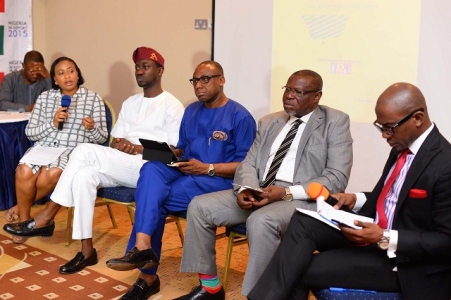
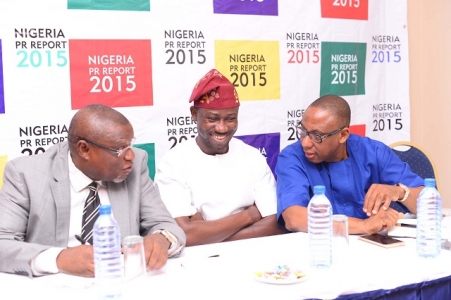
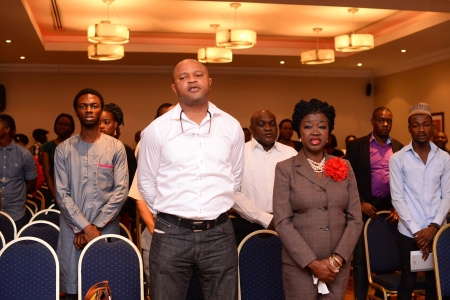
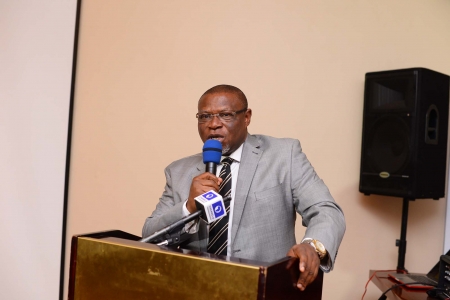
Notable dignitaries from the PR, advertising and academic sectors converged on the Protea Hotel, Ikeja, on January 29, 2016 where the report was officially made public, to discuss and review its findings.
“The inaugural Nigeria PR Report is an unbiased endeavour to depict the history, current state, existing challenges and prospects of the PR industry in Nigeria. Despite increasing intervention by PR to help communities, organizations and governments resolve problems they considered insurmountable, there is little data, if any, on the role of in-house PR teams and external consultancies in aiding local and international brands make sense of Nigeria’s chaotic business environment. This is the latest focus of BHM Research and Intelligence,” Ayeni Adekunle, Founder and CEO BHM Group said.
Ayeni disclosed that BHM Research & Intelligence (BRI) is the group’s independent intelligence team working from Nigeria, Germany and England, to gather and analyze data for brands and organizations in public relations, advertising, ICT and Media.
“In particular, achieving the maiden edition of the Nigeria PR Report took almost a year of research, data collation, and analysis. We aim to make this an annual publication and shore up available information about Nigeria’s formal PR industry,” he added.
The report joins a host of groundbreaking initiatives executed by the BHM Group. In 2014, the company launched Nigeria’s first PR app, simultaneously recording over one billion social media impressions for its portfolio of client campaigns. Recently, BHM Group launched its own digital agency, ID Africa, and has since its inception in 2006 been at the forefront of efforts to develop the media and public relations sector in Nigeria and the rest of Africa. Leveraging on its savvy knowledge of African audiences, the group continues to maintain its staying power, as evidenced by a retinue of local and multi-national clients.
BRI’s report covers an overview of public relations in Nigeria, its evolution, and an analysis of BHM’s #PrisDead campaign. For the campaign, about 200 Nigerians from three major cities (Lagos, Port-Harcourt and Abuja) were interviewed for the offline section of the research, with findings already presented in a series of videos, infographics, memes, blurbs and articles.
Also contained is a detailed overview on the perception and reception of PR in Nigeria. Here, case studies include the defunct Virgin Nigeria, Indomie Noodles and even musicians Don Jazzy, Dr. Sid and Sound Sultan. Readers can also expect inside analysis on challenges such as the “brown envelope” syndrome bedevilling the media industry, and the future of PR with a focus on how social media is disrupting the industry and how practitioners can adapt.
Ayeni explained that: “the aim is to shed more light on the workings of the PR industry in Nigeria and chronicle the public – and practitioners’ – perception of the industry, with a view to ensuring its development moves apace with global standards of practice and the changing consumer demographics and preferences Nigeria is experiencing.”
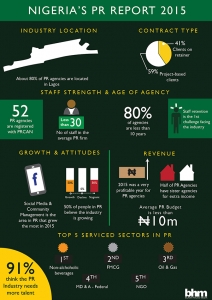
The report concludes powerfully, with the data-rich results of BRI’s survey of PR firms, analysing various indices of the industry, including: revenue; average PR budget; clients & contracts; services offered, as well as age and staff strength of the reviewed firms.
It proffers recommendations, alongside extensive quotes from eminent experts in Nigeria’s PR Industry, including Yomi Badejo-Okusanya, MD CMC Connect Burson Marstellar, Biodun Shobanjo, Chairman Troyka Holdings; Chido Nwakanma, MD,Blueflower Communications Limited and John Ehiguese, President, Public Relations Consultants Association of Nigeria (PRCAN) and CEO of Mediacraft Associates.
President, PRCAN, John EhigueseTampiri Irimagha Akemu, MD Sesema PR
The primary audience for the maiden and subsequent issues of the Nigeria PR Report are chief executives, brand managers, students, institutions, journalists, consultants, regulatory bodies and researchers.
Ayeni notes the ultimate goal of the Nigeria PR Report is to“purposefully place Nigeria on the global PR map by producing annual analyses; giving insights into tools, trends, campaigns and issues the industry should pay attention to.”
The report can be downloaded for free on the BlackHouse Media website, as well as on Amazon and iTunes.
A popular and historic city in Akwa Ibom State, Ikot Ekpene also referred to as “raffia city”, is largely regarded as a citadel of arts. The city derives its name from the village of Ikot Ekpene which originally was made up of ten families with a long and rich history. However, it is now mainly inhabited by the Anang people who are noted for their cane furniture and basket handicrafts. Significant exports include basket weaving, sculpture, and most notably, raffia cane furniture which form the basis for the casual name of the town.
Ikot Ekpene is located on the A342 highway parallels to the Calabar coast on the southeast and Aba to the west, with Uyo on the road just to the east an umuahia to the north.
THREE FAMOUS SITES
Ikot Ekpene town plaza
Located in the heart of Ikot Ekpene. The town plaza consists of a long tree lined promenade with two outdoor dining areas either side of an exciting central fountain. A bandstand forms a major architectural feature and is a venue for outdoor entertainment along with a large outdoor viewing screen to show soccer games and films. Complimenting facilities include a maintenance building, car park, public toilets and an access footbridge which in actual fact, seems to draw tourists from far and wide.
The Raffia-Co-operative Stores
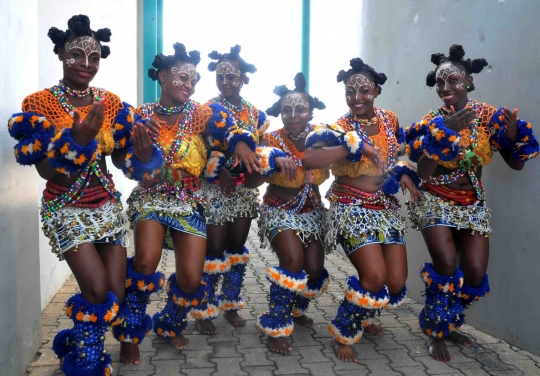
A major tourist attraction, the Raffia-Co-operative Stores at Ikot Ekpene is popular for the raffia crafts and masquerades.
Ikot Ekpene Main Market
An old market in the city, this market provides an interesting glimpse into city’s culture. It is usually abuzz with middle class shoppers, all swarming around its roadside stalls and showrooms. tourists most times explore this markets for souvenirs.
LODGING
From budget B&Bs and Motels to stylish boutique hotels as well as the new Starwood hotel – Four Points Ikot Ekpene, the city has some fantastic overnight options. The best choices are the numerous small budget hotels and B&Bs scattered around the old town. The rooms start from as low as NGN1,500 (New Kevino Hotel )on Jovago.com, and the stylish boutique hotels are affordable at a range of NGN 7,000 – NGN10,000. A popular city in the area, the top choices are often full, so visitors may want to make reservations well in advance, especially for weekends.
SHOPPING
Shopping is always a personal experience and Ikot Ekpene offers a opportunities to gain this experience. The city’s diverse neighborhoods offer virtually every type of shopping imaginable, from local foods and products to arts and crafts, also trendy threads. The vibrant atmosphere the local markets also can make shopping lots of fun. In fact, Ikot Ekpene has some of the best markets in India, with a lot of art and handicrafts. These town plaza as well is a treasure trove of merchandise waiting to be discovered.
EATING
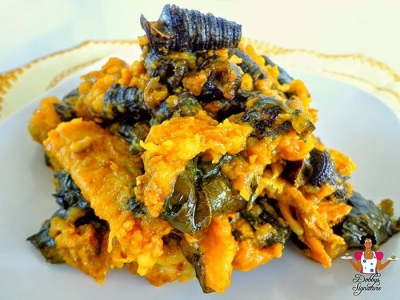
Full of culinary secrets, a walk through the boulevards of Ikot ekpene is likely to lead you to countless food joints that are drenched with the aromas of good food and the hum of both hungry and satisfied customers. Thanks to a preponderance of bukkas, street food vendors, fast foods and fancy restaurants, Ikot Ekpene can be a foodie’s paradise; lending a much-needed retail counterpoint to all that earnest craft and art exhibits around the city. Favourite food spots include Foodsput, Hi-Point bar, tenlex bar e.t.c , and some of the local foods to try include: Ekpang Nkukwo, Afang, Atama Soup and Editang Ikong .
FUN FACT
The people of Ikot Ekpene have a holiday tagged “ Ikot Ekpene Day”. The day is set aside to honour the city of Ikot Ekpene, also called “the Raffia City”. The celebration which is observed by the town’s inhabitants and original families, takes place shortly after Christmas and is celebrated annually .
The Nigerian equities market maintained a positive outlook for the second week as investor took advantage of undervalued stocks.
At the end of weekly trading, index movement shows that the NSE All-Share Index and market capitalization appreciated by 89.65 points and N31 billion represented 0.38 per cent to close at 23,916.15 points and N8.225 trillion respectively.
Transaction level by volume and value of trades recorded a decline of 48 per cent and 12 per cent respectively in contrast to last week’s closing levels. In the week under review, a total of 1.13 billion shares valued at N9.46 billion were exchanged in 16,336 number of deals compared to 2.18 billion shares valued at N10.75 billion exchanged in 20,136 deals recorded in the previous trading week.
On day by day transactions, financial sector pushed the equities market on Monday as market capitalization appreciated by N48 billion to settled at N8.252 trillion from N8.194 trillion.
Also the NSE All Share Index closed at 23,963.64 points after gaining 137.14 points as a result of investor demand in low priced stocks particularly in the financial sector.
The total value traded increased to N2.1 billion from N1.8 million having gained 11.5 per cent while volume traded decreased by 78.6 per cent to settle at 215.2 million units.
Despite the positive return seen in the broader market, the Consumer goods sector lost 0.3 per cent, on the back losses of 4.8 per cent decline in Nigerian Breweries stock prices. This was despite solid gains recorded by and 7-Up and Guinness Nigeria. In addition to this, Lafarge Africa also lost 1.2 per cent of its share price pushing the Industrial Goods sector returns to -0.2 per cent. Conversely, the financial services sector returned 2.4 per cent as gains in Zenith Bank and
Guaranty Trust Bank pushed up returns. Gains in Oando and Seplat Petroleum Development Company also drove the 0.9 per cent return seen in the Oil and Gas sector.
The total value traded decreased to N1.61 billion having lost 21.9 per cent while volume traded decreased by 33.6 per cent to settle at 142.9 million units. Market breath closed lower as 15 equity prices rose while 23 declined.
Investors’ confidence remained fragile, as outcomes of the Monetary Policy Committee meeting appeared to have done little in calming investor nerves.
The market capitalisation however recorded another N109 billion gain on Friday to settle at N8.225 trillion.
The All share Index also surged by 317.30 points represented 1.34 per cent to close at 23,916.15 points.
Summary of price changes shows that 38 equities appreciated in price during the week, higher than 27 equities of the preceding week.
Twenty-Nine equities depreciated in price, lower than 41 equities of the previous week, while 123 equities remained unchanged, higher than 122 equities recorded in the preceding week.
Giant soda manufacturer, Coca-Cola has bought a 40 percent stake in Nigerian juice and snack producer Chi Ltd, it said on Saturday, January 30.
The U.S. drinks maker bought the stake from unlisted TGI Group, the two companies said in a joint statement, but did not disclose the value of the sale.
Coca-Cola “intends to increase ownership within three years, subject to regulatory approvals while working on other long-term commercial structures”, the statement said.
It already has a significant presence in Nigeria selling its fizzy drinks.
One industry source said Coca-Cola was paying a “triple-digit-million-dollar” amount for the stake. Sources told Reuters last year Chi was valued at as much as $1 billion.
Lagos-based Chi Ltd, whose owners had been considering a sale for some time, produces mostly fruit drinks, iced teas, snacks and dairy products. TGI is owned by a European family, according to industry sources.
“The parties have agreed to jointly discuss and explore other opportunities in the region to further develop this relationship,” the statement said, without elaborating.
The Union of Tomato Paste Manufacturers in Nigeria has called on the federal government ease up on the Central Bank of Nigeria’s foreign exchange policy in order to avail them more time for backward integration.
The group, which spoke in Lagos through the Managing Director, Sonia Foods Industries Ltd, Nnamdi Nnodebe, said it is committed to the growth of the economy and wants to boost the country’s GDP through the production and exportation of tomato paste.
“However, we will be pleased if the government can avail us more to time to allow for backward integration just like it applies to some other sectors of the country,” he stated.
“We have begun the process of backward integration in some parts of the country but support for the process is critical to its success,” Nnodebe added.
The Nigeria Football Federation, NFF, will now engage assistant coaches of the various national teams on part-time basis.
A top official disclosed: “The assistant coaches will now be on part time, strictly for when there is a tournament concerning their respective teams.
“They will therefore be free to work with the clubs when they are now with the national teams.
“We have to be realistic, we have been paying many people for many years without doing anything and the financial obligation caused by just salaries of the coaches is just too huge.
“There is one of the Eagles assistant coaches who has insisted he is owed over N18million from salaries and what have you over the years.”
It was also revealed that one of the Eagles assistant coaches has not been paid for the past nine months.
The NFF have already decided that developmental teams from U-17 downwards will no longer be entitled to match bonuses as they save on costs.
Lassa Fever was first discovered in the 1950’s but the cause of the deadly fever was not identified until 1969. It is mainly found in Sierra Leone, Liberia, Guinea, and Nigeria and is spread by rats. Other neighboring countries are also at risk because the type of rat that spreads the virus is also found throughout the West African region. Due to the clinical course of the disease is so variable, detection of the disease in affected patients has been difficult but prompt isolation of affected patients, good infection protection and control practices and rigorous contact tracing can stop outbreaks.
Humans usually become infected with Lassa virus from exposure to urine or faeces of infected Mastomys rats. Lassa virus may also be spread between humans through direct contact with the blood, urine, faeces, or other bodily secretions of a person infected with Lassa fever. There is no epidemiological evidence supporting airborne spread between humans
SIGNS AND SYMPTOMS
The signs and symptoms of Lassa fever commonly happen 1-3 weeks after a person has come into contact with the virus. For most of those with a Lassa fever virus infection; around 80%, symptoms are mild and under-diagnosed. Mild symptoms include: Weakness, Headaches, Slight fever, General malaise, Repeated vomiting, Respiratory distress, Pain in the back, chest and abdomen, Facial swelling
DIAGNOSIS
The symptoms of Lassa fever are varied and non-specific, clinical diagnosis is often difficult, especially early in the course of the disease. Definitive diagnosis requires testing that is available only in specialized laboratories. Laboratory specimens may be hazardous and must be handled with extreme care. Lassa virus infections can only be diagnosed definitively in the laboratory using the following tests:
‘Ribavirin,’ is an antiviral drug that has been used with success in people affected by Lassa fever in its early stage.
Effective protective measures include:
Storing grain and other foodstuffs in rodent-proof containers, disposing of garbage far from the home, maintaining clean households and keeping cats. Because Mastomys are so abundant in endemic areas, it is not possible to completely eliminate them from the environment. Familymembers should always be careful to avoid contact with blood and body fluids while caring for sick persons.
Supportive involves maintenance of:
Oxygenation, Blood pressure, Treatment of complicating infections, Appropriate fluid and electrolyte balance.
Lassa fever should be considered in febrile patients travelling across West Africa, especially if they have had exposures in rural areas or hospitals in countries where Lassa fever is known to be endemic.
Health-care workers seeing a patient suspected to have Lassa fever should immediately contact local and national experts for advice and to arrange for laboratory testing.
More than 700 Sage Business Partners across Africa gathered at the Sandton Convention Centre in Johannesburg for the Sage Business Partner Conference 2016.
The conference, featuring keynote presentations from Sage CEO Stephen Kelly and Sage International President Ivan Epstein, took place from 26 to 28 January. It brought together Sage’s African business partners representing all of its major software solutions and brands at one venue for the first time.
It marked a significant milestone in Sage’s vision of becoming a true global market leader for an integrated portfolio of accounting, payroll and payment systems that address the needs of businesses of all sizes. Other speakers at the conference included Allon Raiz, CEO of Raizcorp and a pioneer and maverick in the business incubation industry, social media law expert Emma Sadleir and Gilan Gork, South Africa’s Mentalist.
“Thousands of business leaders, business owners and financial professionals trust us to help them to focus on their business and leapfrog to the future. In turn, we depend on our vibrant, motivated and professional network of business partners to help our customers use our solutions to drive their growth,” said Ivan Epstein, President of Sage International and Chairman of Sage Foundation.
“We’re excited to be able to bring so many members of our business ecosystem together to share the latest news about our technology and solutions over the past three days. Together with our business partners we can help entrepreneurs and enterprises that create jobs and prosperity to turn their business dreams into reality.”
Stephen Kelly, CEO of Sage, was in South Africa to present at the conference, meet with African business partners, and support the African launch of Sage Foundation. The Sage Foundation sets a new benchmark for corporate partnerships with charities, social enterprises and non-profit organisations through its innovative 2+2+2 model for working with the community.
“Sage is inventing the future for the world’s small and medium businesses, those true heroes of the global economy. Africa is central to that vision, and we want to build closer links with our network of business partners as they embrace the cloud, and so that they can continue to help their customers contribute to the growth this region is seeing,” said Kelly. “It is an honour to be here to meet some of these partners, and to launch our global philanthropic initiative, Sage Foundation.”
Every Lagosian understands the need to wake up early and hit the road before traffic builds up. For those who have mid-day appointments, they also need to set out to their destination at least an hour earlier than is required to accommodate possible delays and emergencies, and so, it is no secret that many of these people who live and work in or even visit Lagos have and use alarm clocks on the regular. From the vintage types that decorate their tables and walls to the ones that come with mobile phones and gadgets, they literally run their lives based on the alarm’s dictates.
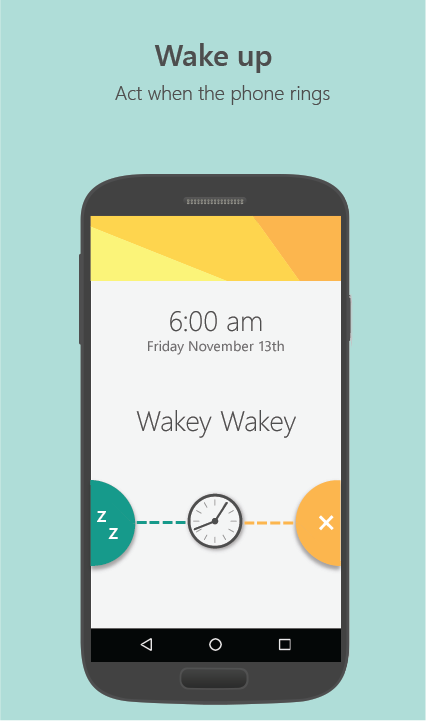
Unfortunately, the brain tends to grow resistant routines and sometimes the chimes of the alarm are no longer effective. Fortunately, for those who are constantly in a struggle to keep up with their alarm, Jovago.com, Africa’s No.1 online hotel booking service has the solution: Mimicker – Microsoft’s recently launched Android. An Android alarm clock app from the Microsoft Garage, the app has proven very effective. If you are living in Lagos and not yet heard of it. Read on to discover 4 reason why you need to quickly get it on your device.
It is persistent and effective
The app ensures the user performs a task difficult enough to rouse them completely from slumber before it goes off. The task could include: mimicking certain facial expressions, taking a picture of an object that matches whatever color the app decides on for the day, or by repeating a tongue twister. The process is such that you start with dismiss or snooze, and if snooze, the default lasts for 5 minutes while delaying the game, however, if you dismiss, the alarm is muted, but then you are given 30 seconds to complete a challenge . And if you do not complete the challenge within the 30 seconds, the app assumes you have fallen asleep and the whole process starts again, the alarm starts to ring again. Basically, to shut off the alarm, you must complete the task set, and usually, the tasks takes away the urge to sleep. The good thing is, you can choose the sounds and games you prefer to play.
It is trendy
This Mimicker app is not the same as all the other boring alarm apps or systems you are used to. It incorporates a lot of recent trends, like it has an “Express Yourself mode” which asks you to take a selfie that matches a mood. Everyone likes a selfie, so that’s a good incentive to people who enjoy the trend. Tech wise, it is also up-to-date as it uses Microsoft’s Project Oxford machine learning technology to understand the emotions in your selfie, recognize the color green in your photos, and identify correctly that you’ve said a tongue twister properly.
It is a simple app
Although the Mimicker is an intelligent app that engages your brain, it is very easy to understand and use. If you find the games too tedious or irritating, you can actually just turn them off and use the app as a normal alarm clock, but then what would be the fun in that? The design of the app is also simple and not entirely boring. Also, you do not have to struggle with in-app purchases and all the add-ons that come with a lot of other apps.
It is available for android
Most of the cool apps are usually released just for IPhone, but this app is available for just android users for now. This is great news for Lagosians as a majority of inhabitants own and use android phones and gadgets. So, android phone owners, but not iPhone or Windows Phone users, who have real struggle with waking up in the morning or punctuality in general, can now download the Mimicker Alarm through Google Play now.
It makes waking up fun (if you love games)
The Mimicker alarm is far from the regular alarm. Rather than just sound an irritating and reoccurring alarm until you shut it up, this app actually calls you out to play! From taking selfies with particular emotions to find an object that matches a color, or repeating a completely tongue twisting phrase like “how much wood could a woodchuck chuck if a woodchuck could chuck wood?” ,it certain makes waking up fun. Some of the commands on the app such as: “Make a surprised face”, are bound to put a smile on your face, which certainly puts you in a good mood and decreases stress.
For anyone looking to live a healthy lifestyle and get their mojo back, going on vacation is the surest way to achieve this. Travelling can rejuvenate as well as help you reduce the unwanted fat around your waist.
To some people gaining weight is actually an accomplishment. However, as you take the much-needed break from your daily routine, it is important to streamline your activities to ensure that with all the rest and food you get, your weight does not spiral out of control. Jovago.com, Africa’s No 1 hotel booking portal gathers 5 helpful tips that can help you stay healthy while on vacation.
Take advantage of local delicacies
Travel is incomplete if you do not act or eat like a local wherever you are on vacation. This offers you the best of travel as it gives you the opportunity to tremendously enmesh yourself in the sights and sounds of a city like Kano. So, rather than consuming processed food whose nutritious content are diminished, it is advisable to eat traditional food. These local specialties contain less preservatives which make it very nutritious. Imagine eating Edikaikong when you visit Calabar!
Watch your sugar
Your body system needs a certain level of sugar to function properly. Equally, too much sugar can lead to weight gain and metabolic dysfunction. It is better to consume items that have relatively low levels of sweeteners like fruits.
Book a kitchen equipped accommodation
If you are open to cooking your own meals while on vacation, do not hesitate to book a hotel room that has a kitchen. This will allow you prepare your meals while on the road. Here, you are certain of what you eat. In addition, try as much as possible to cook at least one healthy meal during the period of your vacation.
Explore on foot
Driving often can retain the extra calories you have accumulated since your vacation kicked off. If your destination is a walking distance, make it a habit to walk. This will keep your body in good shape and help you shed calories.
Sleep when you can
For some business minded people who are travelling, they have very little time to sleep due to their tight schedule. Despite the fact that they are on vacation, they still receive calls to attend one meeting or the other. Hence, whenever you have the time and chance to take a nap, do not hesitate. Perhaps, switching off your phone can aid your sleeping.
The Nigeria Union of Teachers (NUT), Lagos Chapter said on Friday in Lagos that it would soon begin distribution of laptops to its members to improve e-learning in schools.
The state Chairman of the union, Mr Segun Raheem said, the distribution of the laptops was in line with the introduction of “tablet to students project’’ by the state government.
Raheem said the equipment would improve the standard of teaching and learning in schools as obtainable in advanced countries.
According to him, the world is going digital and there is the need for teachers to be technologically compliant.
“Our children are ICT compliant and teachers would improve the children’s learning ability if they are ICT compliant.
“ There should be mass training and retraining of teachers to meet up with the art of teaching in the 21st century,’’ he said.
The chairman also stressed the need to improve the welfare of teachers, especially in the areas of their health.
He disclosed that the union would embark on free medical check-up for all teachers in public primary and secondary schools in the state.
Leading financial services provider, First City Monument Bank (FCMB) Limited, has successfully upgraded its Service Delivery platform by deploying the Finacle Core Banking solution version 10 to enhance world-class service excellence and customer experience.
In a statement, the Bank explained that the new generation banking platform will also accelerate innovation and support its business growth in the rapidly changing business environment in which it operates.
With this development, the advancedservice-oriented architecture(SOA) of Finacle 10 enables the bank optimise its processes, enhance system reliability, performance, scalability and security, among others. This ensures that transactions at the Bank’s branches and other touch points are now faster with rare occasions of service unavailability at its alternate channels, while offering more innovative products to customers.
While expressing gratitude to customers for their patience and understanding during the upgrade process, the Bank assured that it will continue to expand its platforms and further raise the bar in products and service offerings in line with its culture of excellence and values as a simple, reliable and helpful lender.
Commenting on the development, the Group Managing Director/Chief Executive of First City Monument Bank, Mr. Ladi Balogun, said, the Bank is excited to have successfully concluded the Finacle 10 service delivery platform upgrade. He stated further;
“’We are conscious of the needs of our target market and the evolving dynamics of the society with an increasing technology savvy population. The new Finacle 10 solution provides us the flexibility required to create new pathways for enhanced offerings and service excellence using cutting edge technology. It has also placed us on a higher pedestal to sustain our rapid expansion drive and keep pace with market demands and trends”.
Also speaking, the Executive Director, Service Management and Technology of FCMB, Mr. Nath Ude, stated;
‘’The pace of change in the financial services sector is unprecedented, driven by growth in disruptive technologies that are changing how we bank and conduct business. This new environment creates challenges, but more importantly, provides us with a unique opportunity to lead the sector and serve our customers as they embrace new technologies and seek secure, easier and more flexible ways to look after their daily banking needs. With the functionalities available in the new Finacle 10, we are optimally positioned to help our customers realize their financial goals while delivering products and services in a targeted manner that takes into account, our customers unique needs and preferences.’’
FCMB’s deployment of the Finacle Core Banking solution version 10 is seen by analysts as the beginning of another era in the commitment of the Bank to create more value by deepening support to the growth of the personal and business aspirations of its customers, target market and the society at large.
First City Monument Bank (FCMB) Limited is a member of FCMB Group Plc, which is one of the leading financial services institutions in Nigeria with subsidiaries that are market leaders in their respective segments. Having successfully transformed to a retail and commercial banking-led group, FCMB expects to continue to distinguish itself by delivering exceptional services, while enhancing the growth and achievement of the personal and business aspirations of its customers.