The Senate, on Monday, February 1, queried the N10bn hike in the personnel cost of the parastatals under the federal ministry of education as proposed in the 2016 budget estimate.
The minister of state for education, Anthony Onwuka, who spoke during budget defence at the Senate, said N98bn was proposed for the personnel cost of all parastatals under the ministry of education this year as against N88.1bn budgeted last year.
A member of the committee, Olusola Adeyeye (APC, Osun Central) expressed shock over the increase saying “whereas the main ministry, colleges of education, polytechnics, and universities have their personnel cost slashed, that of the parastatals has been increased.”
In her response, the Permanent Secretary of the ministry, Folasade Yemi-Esan said the personnel cost was collated based on the submission of the institutions.
Trading in equities closed in the red on the Nigerian Stock Exchange, NSE, on Monday, February 1, yesterday, bring to a screeching halt the bull trend that trailed trading on Friday, January 29.
Specifically, the All Share Index slid 0.3 per cent to close at 23,826.76 points, compared to the decline of 1.34 per cent recorded on Friday to close at 23,916.15 points.
Market capitalisation shed N31 billion to close at N8.19 trillion as against the decrease of N30 billion recorded on Friday to close at N8.22 trillion. An analysis of the price movement table indicated that Forte Oil Plc led the losers’ pack with a loss of N14.89 to close at N282.94 per share.
Seven Up Plc trailed with N9.80 to close at N186.20 per share, while Total Nigeria Plc shed N7.50 to close at N142.50 per share. Guinness Nigeria Plc declined N4.30 to close at N111.20, while Conoil Plc dipped N2.40 to close at N22.34 per share. Conversely, Seplat Plc led the gainers’ table, increasing by N9.71 to close at N203.96 per share. Zenith Bank Plc added N1.08 to close at N13.69 per share, while International Breweries Plc increased by 80 kobo to close at N16.80 per share.
Cement Company of Northern Nigeria Plc added 48 kobo to close at N10.08 per share, while UAC-Property Plc was up by 26 kobo to close at N5.46 per share. Further analysis showed that United Bank for Africa Plc (UBA) recorded the highest volume, exchanging 96.5-4 million shares worth N278.26 million.
Dangote Cement Plc followed with 30.29 million shares valued at N3.63 million, while FBN Holdings sold 23.15 million shares worth N93.20 million. Zenith Bank Plc exchanged 21.97 million shares valued at N297.22 million, while FCMB Plc sold 18.82 million shares worth N18.46 million. In all, investors spent N5.95 billion on 262.36 units of shares in 3,887 deals
The incessant attacks on pipelines reportedly carried out by Niger Delta militants has cut crude oil export of the Nigeria Agip Oil Company, NAOC, by 16,000 barrels.
The oil company’s pipelines which cut across Orukari, Golubokiri and Kpongbokiri communities in Brass Local Government Area, Bayelsa State, were attacked on Thursday last week.
The explosion occurred barely two weeks after an earlier attack on pipelines in Delta State forced the Warri and Port Harcourt refineries to shut down.
An Agip Spokesman who confirmed the explosion yesterday said the oil firm was working to repair the damaged sections and resume production.
The company said security agencies were still investigating the cause of the explosion.
Agip said: “The Eni production impacted by the incident was 16,000 barrel oil equivalent daily, (boed) and as at Monday morning, all the activities aimed at restoring production have been activated.”
Production data obtained from Eni’s website indicated that NAOC exports some 40,000 barrels of oil equivalent from the oil firm’s crude export terminal before the explosion cut production by 16,000 barrels.
Sources at National Oil Spills Detection and Response Agency (NOSDRA) said the blast was an act of sabotage which fell within the scope of security agencies.
Acting Director-General of the agency, Haruna Baba Jauro, who briefed the Senate Committee on Marine Transport in Lagos on Monday, February 1, said the money was remitted by the agency between 2011 and 2015.
In the breakdown of the remittances, the agncy explained that N450million was remitted in 2011 while N6, 441, 383, 583, 587 was paid in 2012. In 2013, N13, 833,431,883 was remitted while N9,732,349,682 and N11,770,978,562 were remitted in 2014 and 2015 respectively.
Jauo said all the remittances added up to a total of N42, 278,143,714.99.
He added that $39,025,017 and N4,985,000,000 operating surplus for last year were also remitted to the Federation Account.
The statutory revenue disbursement of the agency, according to Jauro, include 25 per cent maritime fund and five per cent development for Maritime Academy, Oron.
He also told the committee that over N51billion Cabotage Fund domiciled with NIMASA to promote the development of indigenous commercial shipping capacity in international and coastal trade is safe.
About 30,000 of the 200,000 bureaux de change, BDC, workers would lose their jobs within the first quarter of 2016.
President of the Association of Bureau De Change Operators of Nigeria, ABCON, Aminu Gwadabe, who disclosed this on Monday, February 1, said the planned downsizing followed the continued loss of business by operators after the Central Bank of Nigeria’s (CBN) stoppage of weekly dollar sales to body.
The ABCON boss listed those to be affected as directors, auditors, operations managers and compliance officers, as well as chief executives.
The CBN Governor, Godwin Emefiele had announced a new foreign exchange policy which included the stoppage of weekly dollar sales to BDCs. He ordered the apex bank to henceforth discontinue sales of foreign exchange to BDCs.
“Operators in this segment of the market would now need to source their foreign exchange from autonomous sources. They must however, note that the CBN would deploy more resources to monitoring these sources to ensure that no operator is in violation of our anti-money laundering laws,” Emefiele said.
Speaking on the development, Gwadabe said: “As law abiding citizens and partners in progress with the CBN, we respect the decision of the apex bank as the regulator of the banking industry and foreign exchange market where we operate. While we are not totally surprised by the decision, we, however, believe there are better ways of addressing the challenges in the foreign exchange market.”
He lamented that the BDCs were always blamed whenever there was naira volatility. “Suffice to mention that before the CBN started selling dollars to BDCs in 2006, there were about 270 BDCs in the country.
Despite the harsh operating environment, these operators were able to survive by servicing their clients. Secondly, the BDC industry was created by the CBN to fill a critical gap in the retail segment of the foreign exchange market. Furthermore, the decision to sell dollars to BDCs was in recognition of the role of BDCs to counter the effect of the illegal currency traffickers and the continued depreciation of the naira in the parallel market,” he said.
An aviation expert has said the massive drop in global oil price is yet to reflect on the activities of airline operators as air fares still remain relatively high.
Oil prices have plummeted by more than 50 percent over the last one year, however, the prices of commercial airline tickets had not dropped along with oil prices.
Sharon Mclean, an aviation expert said most airlines are now in fuel contracts that reflect the plummeting global oil prices, and wonders why the price is not falling especially in Africa.
In most routes in the United States and Europe airline prices has dropped.The US Bureau of Labour Statistics in a January report said air fares by foreign travellers on US airlines fell 15.0 per cent in 2015, the largest calendar-year drop since the index was first published in 1987.
The decline in ticket prices was steepest for air travel to Latin American and Caribbean (down 17.8 per cent), but there were also big drops in fares to Asia (down 14.6 per cent) and Europe (down 11.7 per cent).
The International Air Transport Associated (IATA) late last year said that ticket prices have not been cut because airlines are still in contracts for fuel that pre-date the previous months’ oil prices fall. IATA represents 240 airlines or 84 percent of total air traffic.
Aviation Experts say with oil and jet fuel costs down two-thirds since last year, airlines can expect to reduce their overheads by about 20 per cent leading to cheaper air fares across the globe.
Experts say fuel makes up about a third of an airline’s costs. With oil and jet fuel costs down two-thirds since last year, airlines can expect to reduce their overhead by about 20 per cent.
Some airlines said they are using the windfall in fuel costs to reduce debt and to make needed reinvestment in their infrastructure.
The Nigeria Cassava Growers Association has tasked the Federal Government to intensify its effort in cassava farming, noting that country can generate about N8.5trn yearly from the product.
An associate of Lafarge Africa Plc., Chairman of NCGA in Cross River State, Augustine Oqua, who spoke at the opening ceremony of a two-day community business enhancement initiative tagged, “Cassava Cluster Scheme”, organized by the United Cement Company of Nigeria Limited, said cassava had the potential of generating between N5 trillion to N8.5 trillion annually for Nigeria if its production was maximised.
Oqua called for a concrete step towards diversifying the nation’s economy from the monolithic dependence on oil revenue.
He stated that as the largest producer of cassava globally, Nigeria had over 1.25 million cassava farmers that could be redirected to help generate the revenue adding that apart from the cassava flour, ethanol could be extracted from cassava for the production of electricity.
“Cassava is more available than any other crop in Nigeria. It can generate between N5 trillion and N8.5 trillion annually which is far above the budget of the country. Cassava alone can transform Nigeria and even Cross River State which is the largest producer in the country.
We can use it to replace crude oil. “Today, UniCem is spending millions of naira to buy gas to run electricity, but ethanol, could be got from cassava as a bi-product and used to generate electricity. Our major problem is the acquisition of land for the production of cassava and that is why we need government intervention.
” While harping on the need to diversify the nation’s economy, the Head, Public Affairs, Lafarge Africa Plc., Mr. Ayi Ita-Ayi, averred that it had become imperative to look at other areas as means of livelihood. “The essence of this workshop is to ensure that we have alternative means of livelihood. At the moment, we are having issues with the economy because of dwindling oil revenue. Our economy is oil-based and we are thinking that globally and locally there is a threat.
“That is why we have put together this stakeholder’s workshop involving UniCem, host communities in three local government areas of Cross River State, to draw support from government on agriculture intervention schemes,” he said.
A joint team of security operatives have demobilised suspected Improvised Explosive Devises, IED, planted close to the office of the Borno State Pilgrims Welfare Board in Maiduguri.
This was disclosed on Monday by the State Police Command spokesperson, Victor Isuku, in Maiduguri, the state capital.
According to Isuku, the IEDs, which were planted by suspected members of Boko Haram sect were demobilised by a joint security team.
Isuku said, “I can confirm that it was a joint police/military operation that demobilised the IEDs but thank God, no life was lost or injuries recorded.”
It would be recalled that no fewer than 50 people were on Saturday killed in Dalori village, which is situated at the outskirts of Maiduguri.
As the details of the 2016 Budget continues to unfold, it has emerged that President Muhammadu Buhari has slashed the N100 billion Constituency funds meant for the 469 Senatorial Districts and Federal Constituencies to N60 billion.
The President ordered the reduction, a situation which has placed the constituencies of the Principal Officers in the Senate and House of Representatives in jeopardy.
The National Assembly has since 2008 struck an agreement with the Federal Government whereby some projects are set aside for execution in the 109 Senatorial Districts and 360 House of Representatives seats through different Ministries and parastatals.
The projects are designated as constituency projects, though, some Nigerians went away with the impression that the funds are allocated to the lawmakers.
The amount meant for execution of the projects have remained constant at N100 billion in the past years, with each geopolitical zone getting N10 billion, while the balance of N40 billion is spread among the Senatorial Districts and Federal Constituencies of the Principal and Presiding officers in the two chambers.
Investigations however confirmed that while the President government has agreed to continue to fund the Constituency projects, it has however indicated that the amount would be slashed to N60 billion.
It was gathered that the Senators and members of the House of Representatives have been requested to submit details of the project to be executed in their constituencies to the Committees on Appropriation in the two chambers.
Sources affirmed that the cut would affect the N40 billion meant for execution of projects in the constituencies of Principal Officers of the Senate and the House of Representatives, as according to a source, all the constituencies are only to now benefit from the N60 billion allocations.
“Now that the sum of N40 billion is being removed from the constituencies of the Senate President, the Speaker, their Deputies and the other Principal officers, a huge distortion might occur in the manner the allocations are made,” one of the lawmakers said.
Sokoto State Government has allocated over N34 billion to tackle the challenges in the education sector, the Commissioner of Basic and Junior Secondary Education, Dr Jabbi Kilgori, has said.
Kilgore told the News Agency of Nigeria (NAN) on Monday in Sokoto that the allocation was in line with the declaration of state of emergency on the sector by the government.
He said that the money would be channelled towards improving infrastructure, teachers welfare and feeding of students among others.
“The state government declared emergency in the sector due to the enormity of the problems bedevilling it.
“The sector has continued to be bogged down by myriad of problems in spite of the several efforts made by the state government to move the sector forward,” he explained.
Kilgori said more than one million pupils and students in primary and junior secondary schools in the state would be catered for under the schools feeding programme.
“The pupils and students in primary schools, as well as day students in Junior Secondary Schools will be getting one meal per day.
“The pupils and students would be getting nutritious meals to boost their mental and physiological growth, to enable then focus on their studies.”
Kilgori explained that all areas of critical needs in the sector would be given due attention.
He said apart from massive construction, expansion, rehabilitation and equipping of schools, the government would also construct houses to accommodate teachers.
“The state government had also introduced rural allowances for teachers this year,” Kilgori said, adding that the administration would continue to accord top priority to teachers welfare including their training and retraining.
“The state government is fully committed to ensuring the successful implementation of the state of emergency to take the education sector out of its present crisis,” Kilgori pledged.
In its bid to enhance local manufacturing in Nigeria, Unilever Nigeria Plc has disclosed that it would set up new plants within the country.
The president, Africa-Unilever, Mr Bruno Witvoet recently revealed the company’s plans to increase its investment in the country and also that the company is working on its backward integration plans, driving towards 100 per cent local sourcing over time.
“Our plans for increased investment will also bring about employment opportunities in the country as workers will be recruited for the new production line, and in the farms for the production and sourcing of local raw materials.”
The Senate president, Bukola Saraki assured that the present administration is vehemently working towards its policy to diversify the economy, also making the country business friendly. He further stated that local sourcing of raw materials will help provide ready market for local produce and thus empowering local farmers.
Saraki noted that the National Assembly will readily give its support and also provide all the incentives that are required to ensure that business and investors are encouraged to make the kind of investments promised by Unilever.
Minister of Finance, Mrs. Kemi Adeosun debunked reports, suggesting that Nigeria has applied for emergency loans from the World Bank and the African Development Bank.
The Minister, through her Special Adviser on Media Matters, Mr. Festus Akanbi, said Nigeria had not applied for any emergency loan.
She was quoted as saying, “the truth is that Nigeria, as part of the plans to fund the 2016 budget currently undergoing the approval process of the National Assembly, has indicated an intention to borrow N1.8trillion principally for investment in capital projects to stimulate the economy.”
She explained that the option of the World Bank is to ensure stable financing structure, pointing out that 2016 budget is part of the Medium-term economic framework of the Federal government, which the World Bank is aware of.
The proposed budget deficit, according to her, will be funded equally through external and domestic sources.
Nigeria is exploring the options of multi-lateral agencies like the World Bank and AFDB and export credit agencies such as China Exim Bank due to their concessionary interest rates.
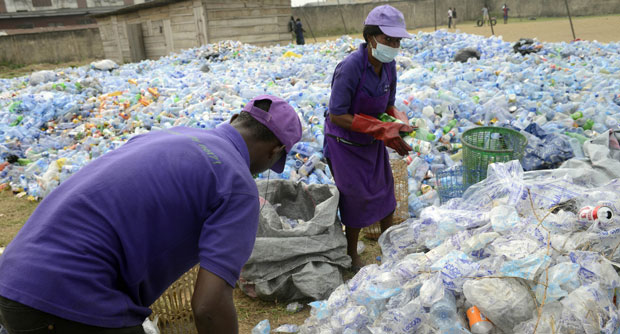
The Federal Government of Nigeria has announced plans to situate a recycling plant in the Federal Capital Territory (FCT), as part of its efforts in tackling household and community sanitation.
Minister of environment, Amina Mohammed, made this known over the weekend at the Kuje Area Council of the FCT, during the flag off of the FCT household and community sanitation exercise.
She however, commended the new collaborative initiative between her ministry and the FCT administration, saying that a healthy community encouraged a healthy living.
While emphasising on the present administration’s drive towards the fight its started 32 years ago on the War Against Indiscipline, through the national environmental day, she promised that the FCT would serve as a waste recycling pioneer for the other 36 states of the federation.
The minister of the FCT in his remarks said the FCT clean up exercise was not only a sanitation exercise but orientation effort in line with the change agenda of this administration.
Earlier in his brief remark, Haruna Jibrin, Gomo of Kuje, had urged the FCT administration to consider the establishment of a waste recycling industry for the effective management and control of the large refuse dumps that were visible in all FCT communities.
“To further strengthen and for the proper enforcement of strict environment sanitation principles among Nigerians, the present administration of President Mohammadu Buhari should consider the reintroduction of a modified War Against Indiscipline (WAI) programme, with a view of curtailing the menace of indiscriminate dumping of dirt by people,” he said.
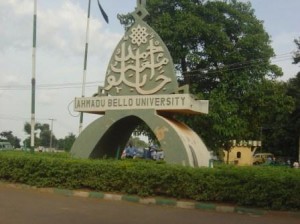
The Ahmadu Bello University (ABU), Zaria, Kaduna State, has awarded 89 first class degrees and 305 Ph.Ds for the 2013/2014 academic session.
Vice-Chancellor of the institution, Professor Ibrahim Garba, announced this at the 38th convocation ceremony of the university held at the main campus, Samaru, Zaria.
A total of 13,149 first degrees and 4,598 higher degrees and diplomas were also conferred to deserving graduates for the 2013/2014 academic session.
Garba gave a breakdown of the degrees as First Class, 89 persons; Second Class Upper, 2,086; Second Class Lower, 7,108; Third Class, 3,161; Pass, 262; and 443 Unclassified Degrees.
He said that Higher Degrees and Diplomas include 305 Ph.Ds; 2,669 Masters of Arts and Masters of Science; and 1,624 Post Graduate Diplomas.
Garba however lamented that the university, with a population of about 40,000 students, has accommodation for only 11,000 students on its campus.
“It is important to note that the growth of student population is not accompanied by any addition of hostels in the last 35 years, while the existing ones have been degraded over time.”
The VC said discussions were on with private investors to build more hostels through public-private partnership.
“A huge donation was on saturday pledged by Alhaji Aliko Dangote to build 10 hostels for ABU. This is unprecedented and has certainly come at the right time.”he said.
Guinness Nigeria, the country’s second-biggest brewer, said half-year profit fell as an economic slowdown in Africa’s most populous country hurt beer consumption.
Net income declined 66 percent to 1.2 billion naira ($6 million) in the six months through December, the Lagos-based unit of London-based Diageo said in a statement published on the Nigerian Stock Exchange website on Monday. Revenue dropped 10 percent to 49.8 billion naira.
Nigeria, Africa’s biggest economy, is facing a squeeze in consumption as the nation of over 170 million people suffers from a slump in crude oil prices that has reduced the country’s main source of revenue. The nation’s economy probably grew 3 percent last year, the slowest pace since 1999, according to the International Monetary Fund.
Guinness Nigeria shares traded at 115.50 naira at the close in Lagos on January 29.
The shares are down 4 percent this year, compared with a 26 percent decline by larger competitor Nigerian Breweries, part owned by Heineken.
Foremost logistics company in Nigeria, Red Star Express a licensee of Federal Express Corporation has restated its commitment to comply with all laws as stipulated by various organizations governing logistics operations in Nigeria, the Nigerian Customs Service inclusive. This was stated at an interview session with the Managing Director of the company, Mr Sule Bichi, recently in Lagos.
By law, all shipments crossing international borders must be cleared through Customs in the destination country prior to being delivered to the recipient. All dutiable shipments need formal Customs clearance. Customs duty is based on the value of the shipment and the commodity shipped. Clean Report of Inspection (CRI) from the appointed inspection agents are carried out. Certain items are prohibited by Customs for import to Nigeria. Red Star Express Plc as responsible corporate entity ensures all laws governing import and export are duly complied with at all times.
According to Mr Bichi “Red Star Express Plc is committed to adhering to all regulations as tabled down by the Nigerian Customs Service (NCS). We are happy with what we do, and we ensure manufacturers are offered total logistics integration and speed to market. Like our mission states, we will always provide value added logistics solutions that will be secure, prompt and effective. In order to ensure that we are in compliance with the Nigerian Customs Service, National Drug Law Enforcement, and other regulations, we are committed to ensuring that prohibited items are not shipped through our network.
Red Star Express Plc., is a premium logistics solution provider in Nigeria in area of revenue, network coverage and market share in the domestic and international market. It enjoys a domestic strength of 169 offices in Nigeria, delivers to additional 1,500 communities, over 1400 highly trained personnel and over 500 vehicle fleet. It operates as the Nigerian licensee of FedEx, which is the world’s largest express transportation company, providing fast and reliable delivery to more than 220 countries and territories around the world.
The president of the National Association of Nigerian Traditional Medicine Practitioners (NANTMP), Chief Andrew Anyanw, has called on the federal government to approve the establishment of Traditional Medicine Institutes which will aid the promotion of traditional medicine in the country.
He said that if the institutes were situated in all the 774 local government in the country, it will be a boost to the issue of traditional medicine in the nation.
Anyanwu stated that the program will facilitate the distribution of learning and instructional materials to encourage students in the propose institutes, it will also institute scholarship schemes for people who are willing to learn.
He also commended the President Muhammed Buhari for his fight against corruption in the country, while pledging the support of the association in building a good and corruption-free society.
“Buhari is the only Nigerian leader since after Gen Murtala Muhammed to take on corruption. The Nigerian state without Buhari will continue to be a gang land presided over by criminal elements whose preoccupation in power is both wholesale and primitive accumulation.
United Bank for Africa Plc, Zenith Bank Plc, First Bank and Guaranty Trust Bank have been named among the world’s top 500 banks, in a survey by The Banker magazine.
The 2016 The Banker and Brand Finance Top 500 Banking Brands report showed that First Bank retained its number one banking brand ranking in Nigeria for the fifth consecutive year, while moving up the global scale by 16 places, rising from 336th position in 2015 to 320th this year.
GTB moved to 389 in the world from 417 in 2015, while Zenith Bank dropped from 388 in 2015 to 392 in 2016.
UBA returned to the ranking in 447, while Access Bank Plc dropped from the 2016 ranking. Access Bank was ranked 496 in 2015.
First Bank’s brand value, which is the licensing rate that a third-party would need to pay to use the bank’s brand, increased to $322 million in 2016 from $300 million in 2015 while that of GTB also increased to $243 million from $213 million. The 2016 brand value of Zenith Bank increased to $238 million from $235 in 2015 while UBA, which made a return to the ranking since 2012, has a brand value of $198 million. UBA’s brand value in 2012 was $121 million.
Meanwhile, among the five countries in Africa that made the ranking, Nigeria has the highest brand value increase of $249 million. Egypt moved up by $239 million; Togo gained $134 million while South Africa and Morocco lost $878 million and $213 million respectively. While, Wells Fargo of the United States of America (USA) retains the number one banking brand in the world for the fourth consecutive year.
The Banker’s Top 500 Banking Brands ranking, in conjunction with Brand Finance, measures the value of financial services firms across the world, analysing specific sectors and geographies, and identifying the brands that have improved the most, as well as those that have suffered the greatest setbacks.
Following the twin blast that rocked the grain section of Gombi market on Friday, which killed and injured people and destroyed substantial part of the market.
Mr Halilu Kangiwa, the acting Coordinator of National Emergency Management Agency (NEMA) in Adamawa, said 11 people lost their lives in Friday’s bomb blast in Gombi market.
Kangiwa said on Sunday in Yola that 77 persons sustained injuries in the incident. He said that out of the injured, 19 persons had been treated and discharged from the hospital.
“We now have 58 others with serious injuries undergoing treatment in hospitals in Gombi and Yola towns,” he said.
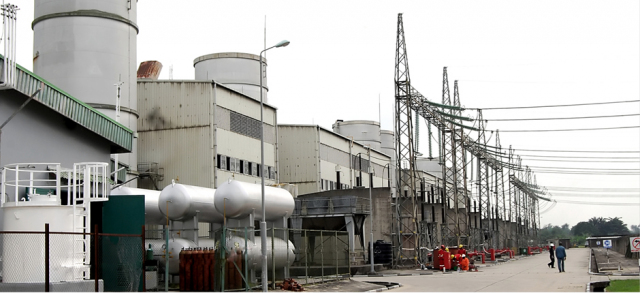
According to the Nigerian Electricity Commission (NERC) under the Multi-Year Tariff Order (MYTO), electricity consumers in the country will today commence payment on increased tariff. Also, there are inbuilt consumer protection mechanisms and incentives for improved service delivery by the Discos and fair return on investment in the new tariff order.
It was also stated in the new tariff that residential customer category (R2) in the Federal Capital Territory (FCT), Niger, Nasarawa and Kogi states, which fall under the Abuja Electricity Distribution Company (AEDC) franchise, who previously paid N14 per kilowatt/hour, will now pay N23.60 per kilowatt/ hour. An increase of N10 and N8 also applies to residents in Eko and Ikeja electricity distribution. With customers in Kaduna and Benin paying an increase of N11,05 and N9.26 respectively.
However, the minister of power, works and housing, Babatunde Fashola, stated that the new MYTO is aimed at correcting the whole system in the entire value chain of the power sector. He also said that the new tariff would galvanise the sector and boost investment which would enhance development in the country.
The acting head of the Commission, Dr. Anthony Akah said, “The Commission, in implementing this cost reflective tariff, will effectively monitor and enforce all service delivery agreements in the new tariff order, it also has a robust mechanism to ensure that electricity distribution companies fully meter their consumers and eliminate ‘crazy’ billing within one year.”