






Home Blog Page 2970

Facebook Helps West African SMEs Connect with Customers

Facebook hosted a roundtable with small and medium sized enterprises from Ghana and Nigeria on Tuesday this week as part of its effort to support entrepreneurship in West Africa. The session focused on how Facebook can help small businesses reach exactly the right customers – for less money and with greater returns.

More than 50 million small businesses around the world actively use Facebook Pages because they’re free, easy to use, and they work well on mobile. More than 2.5 million SMEs worldwide actively invest their hard-earned dollars with Facebook every month, a number that’s doubled in the past two years.

A growing number of them are in Africa – 54% of people on Facebook in Nigeria are connected to a small or medium business. But for Facebook, this is only the start of Facebook’s potential to help small and medium sized enterprises in West Africa to thrive.

Said Nunu Ntshingila, Head of Africa for Facebook: “Africa is home to some of the world’s most vibrant and exciting small businesses, and these enterprises are the backbone of the economy. These smaller businesses drive economic growth and create jobs that lift people to prosperity. The number one reason they succeed or fail is their ability to attract customers. As more and more people turn to smartphones and the web to discover and connect with businesses, Facebook is the best platform for African SMEs to promote their brands.”

Nicola Mendelsohn, EMEA vice-president at Facebook Mendelsohn, said, “Technology is driving real progress. When I visit Africa, this comes to life in every conversation and with every story I hear about entrepreneurs creating jobs and solving problems with technology’s help. We’re invigorated by how Ghanaian and Nigerian SMEs are using Facebook to grow brand awareness and boost engagement with their customers. We look forward to doing more to support entrepreneurs as they build their businesses.”

West African businesses are advertising on Facebook because it drives business objectives and sales. It’s measurable, affordable, mobile and easy to do. If an SME has a Facebook Page, it is a mobile marketer, able to post once and reach clients on desktop, mobile, any device, anywhere in the world.

Most small businesses can easily get going for a few dollars a month with lightweight solutions that they do with one click from their page – for example, boosted posts, promoted page likes and promoted links. Some examples of small West African companies that use Facebook to tell their stores include:

Jayosbie in Nigeria is an online brand and retailer for fashion-forward men. “Facebook is significantly cheaper than other channels.  Actually, it’s not even comparable,” says Dejuwon Isola-Osobu, founder and CEO. One recent campaign delivered 14,000 clicks for just 260$.

Fabulosity Hair and Fabulosity Cosmetics deliver affordable and natural hair extensions and cosmetics for women who want to look fabulous. They attribute their growth to the flexibility of Facebook advertising. Chinenye Umeh, the founder, says she loves the flexibility and affordability of Facebook, especially the fact that she can easily turn spending up and down on a month to month basis.

Skin Gourmet Limited in Ghana is a female-led producer of organic, natural and chemical free skin care products. It reports a significant return on investment in the form of more engagement and brand awareness after posting and boosting posts on Facebook.

Accra Good Markets in Ghana is a pop-up event for vendors to sell their products. Facebook is its only marketing channel for reaching vendors and shoppers alike and it sees tremendous results through its posting and highly targeted advertising activity on Facebook.

Akataasia Clothinghttps://www.facebook.com/Akataasia/?fref=ts in Ghana depends on WhatsApp to connect with the customer base.

In 2015, Facebook held 225 events across 19 countries, reaching over 200,000 small business owners with training on how to use its platform effectively to drive sales and marketing goals. Africa will be a focus region for such events for the rest of this year.
House of Reps to Review Crude Oil Benchmark

The House of Representatives in Nigeria says the National Assembly will surely review the crude oil benchmark price for the 2016 budget.

The possibility of the review was made known on Wednesday by the Chairman of the House of Representatives Committee on Appropriation, Abdulmumin Jibrin.

Nigeria’s 2016 budget had been submitted to the National Assembly in December by the President, with a benchmark of $38 less than the current crude oil price.

This price per barrel has triggered comments about how realistic the budget proposal of 6.07 trillion Naira, with 2.22 trillion Naira deficit and a crude oil benchmark of $38 was.

But on Monday, the Minister of Budget and National Planning in Nigeria, Senator Udo Udoma, tried to allay Nigerians fears, assuring them that the falling crude oil price would not affect the nation’s 2016 budget submitted with the oil benchmark of $38 per barrel.

He told the lawmakers that there was a plan to cushion all shortfalls that may arise as a result of the drop in oil prices.

A breakdown of the 2016 Budget includes;

GDP Growth Rate Projection 4.37%
Revenue Projection 3.86 Naira
Deficit 2.22 trillion Naira (equivalent to 2.16% of Nigeria’s GDP)
Oil Related Revenues 820 billion Naira
Non-oil Revenues 1.45 trillion Naira
Projected Independent Revenues 1.51 trillion Naira
Capital Expenditure 1.8 trillion Naira (30%  of total budget)
Works, Power and Housing 433.4 billion Naira
Transport 202.0 billion Naira
Interior 53.1 billion Naira
Special Intervention Programs 300 billion Naira
Education 369.6 billion Naira
Defence 294.5 billion Naira
Health 221.7 billion Naira
Ministry of Interior 145.3 billion Naira
Foreign and Domestic Debt Service 1.36 trillion Naira
Sinking Fund towards the retirement of maturing loans 113 billion Naira
Non-debt Recurrent Expenditure 2.65 trillion Naira
To address Nigerians concerns, however, the National Assembly is considering the review of the benchmark.

Mr Jibrin said that the new benchmark that would be arrived at, would be a practical figure.

The Chairman is also encouraging the executive to fully implement the Integrated Personnel Payroll System as a means of reducing the recurrent part of the country’s budget.

Avoid Budget Inflation – Reps Urge MDAs

The House of Representatives has ordered all of its standing committees to ensure they retain the budgets of their Ministries, Departments and Agencies (MDAs) so as to avoid a situation where the 2016 N6.07 trillion budget proposal would be upwardly reviewed.

The Chairman of the House Committee on Appropriation, Hon. Jibrin Abdulmumim, however explained that the committees are allowed to adjust personnel budget only if there is evidence that it has been inflated.

“We are not really celebrating the 2016 budget, because we had hoped for a situation where the recurrent would reduce, but we have a situation where both recurrent and capital are increasing,” Abdulmumim said.

He included that the increase in the recurrent expenditure can be tackled if the Federal Government ensures that all its staff are captured in the Integrated Personnel Scheme.

Abdulmumim added that the House would adjust the $38 per barrel benchmark for crude to a more practicable figure; it would also engage the Central Bank of Nigeria to discuss the possibility of any adjustment to the exchange rate of the Naira to the dollar.

FCTA Threatens to Destroy 665 Uncompleted Buildings

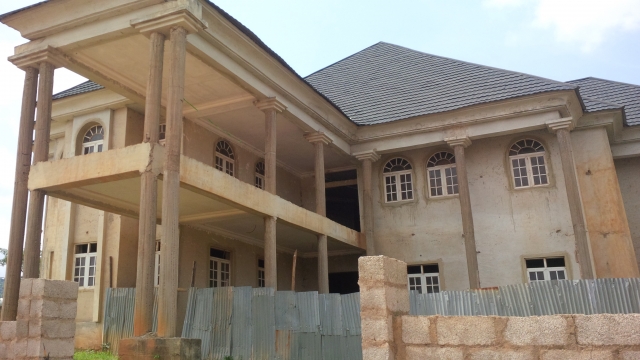
The acting director, Development Control in the Federal Capital Territory (FCT), Hamza Madaki Tayed has warned owners of uncompleted buildings in the nation’s capital to quickly complete them as the administration will soon begin demolition of such buildings.

Tayed said that the FCTA has listed 665 of such abandoned buildings currently in the nation’s capital.

He said such abandoned building pose serious security risk, adding that owners of such building will be issued a final warning after which the government will go ahead to demolish them and as well as revoke the plot of land.

He said, “The owners of such structure are doing a disservice to the FCT. You start a building and you abandon it halfway. You don’t even care who is occupying it so, this is a very serious security issue and threat to FCTA.”

He said the administration is working with security agents to ensure that criminals do not take advantage of such abandoned building as a hideout.

He said, “we will not allow undesirable elements to occupy such buildings because they can use it as a hideout for criminal activities”.

GTBank Rises in the League of the World’s Biggest Banking Brands

Foremost African financial institution, Guaranty Trust Bank plc, has been listed among the top 500 global banking brands in a study conducted by Brand Finance, one of the world’s leading brand valuation consultancy.

In the report, which is to be published in the February edition of the Banker, GTbank rises to 389th in the league table of the world’s biggest banks, 28 places from last year’s 417th position. It is one of only four Nigerian banks and tops in the country as the bank with the highest year-on-year brand value increase; from $213 million in 2015 to $243 million in 2016.

“We are excited to be named among the biggest banking brands in the world,” commented Segun Agbaje, the Managing Director/CEO of GTBank. “Our continued rise in the league of the world’s biggest banks is made possible by the passion and unwavering commitment of every member of staff, the management and the board to building a solid financial institution reputable for innovation, integrity, good corporate governance standards, and excellence in service delivery.”

Banks from five African countries made the ranking of which those from Nigeria cumulatively had the highest brand value increase of $249 million. Egypt came in second with a brand increase of $239 million followed by Togo at $134 million, while South Africa and Morocco both recorded brand decreases of $878 million and $213 million respectively.

GTBank has consistently played a leading role in Africa’s banking industry. The Bank operates from over 230 branches in Nigeria and has banking subsidiaries in Kenya, Rwanda, Uganda, Cote D’Ivoire, Gambia, Ghana, Liberia, Sierra Leone and the United Kingdom. Reputed for its superior financial performance and best in-class product and service delivery, the bank has received numerous awards from industry watchers and analysts, among these are the “Best Banking Group of 2015, Nigeria,” by the World Finance Magazine and the 2015 Bank of the Year by leading international investment and communications group, Africa Investor (Ai).

Top Tech Valentine Gifts For The Nigerian Man

We are basically fresh off of Christmas and it is already that time of year again – Valentine, the day set apart for love.  Single, hooked or married, no matter your situation, there is a man in your life who needs that special expression of love.

Nigerian men tend to become materialistic around valentine and analyze the Valentine’s gifts they receive from their sweethearts. So, in order not to leave him unsatisfied with a tie and wine, Jovago.com has selected 5 top techie gift options. As the saying goes, you can never go wrong with a tech gift with a guy.

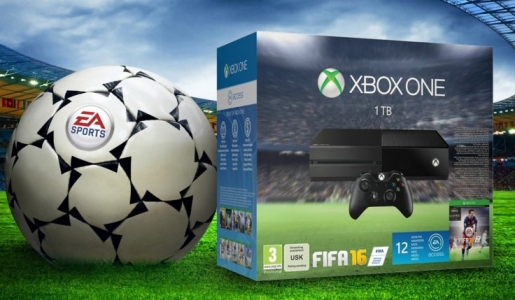
Xbox One 500GB FIFA 16 bundle

fifa-16-xbox-one-bundle

Offer a fusion of technology plus football, and you have the average Nigerian man’s fantasy gift! While this gift creates the risk of you losing even more of his attention, it proves to him that you really do love him and care that he has fun.

If you are smart, this gift can actually spice up your relationship! The brilliant Xbox One 500GB FIFA 16 bundle has options for multiple players and so you get the chance to beat him at his own game. All you need to do really is to continuously stick the pigskin past his goalie and into the onion bag. And when you are done thrashing him, you can make him tasty dinner and settle back on the sofa for an evening of romantic bliss.

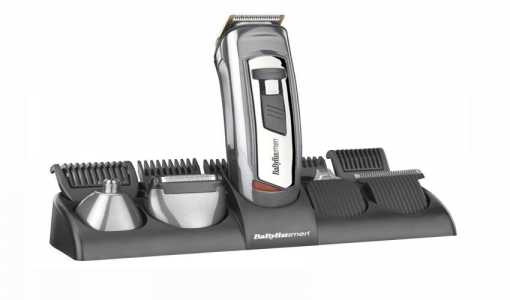
BaByliss 7235U 10-in-1 grooming system

babyliss

Most Nigerians are on huge on the “bear gang” trend at the moment, and while it is essential that you show your man that you fully support his choice, you need to help him keep the ‘fur’ on the face and other parts of his body under control with the BaByliss 7235U 10-in-1 grooming system.

Featuring a Turbo Boost mode particularly for thick hair, the kit is well suited for Nigerian men. It comes with a rechargeable multi-function trimmer featuring five interchangeable heads for his face and body, and two 5-position comb guides, enabling him to shave or trim to various lengths from 3mm to 15mm.

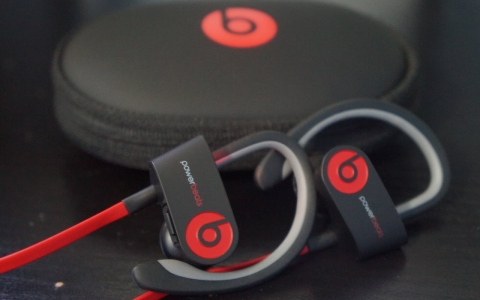
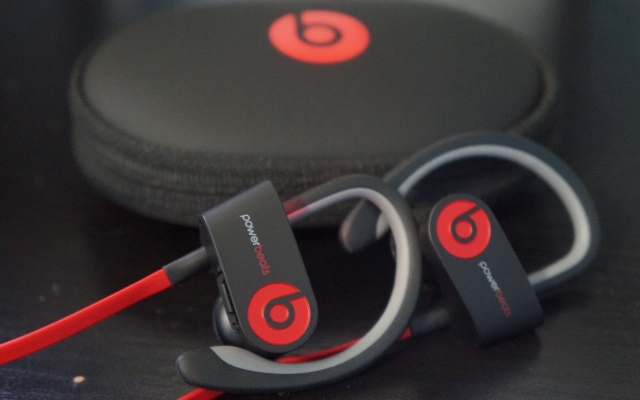
Powerbeats 2 Wireless Headphones

powwerbeat earphones

If your man is the health conscious type who goes out for a run every morning or visits the gym, you may want to get him the Powerbeats 2 headphones by Beats by Dre.

The headphones are the perfect piece for music while exercising. They are tough, sweat and water resistant, and the cable wraps around the back of the head; which means it will not get in the way of bicep curls or bodyweight exercises. The LeBron James-inspired Powerbeats which play tunes for up to six hours can also connect to a phone up to 30 feet away via Bluetooth, so he won’t have to worry about dropping a weight on his device. Think about it, If he is listening to music, he really will not have time to notice other girls.

Night Cable For iPhone or Android

night-cable-native-union

This gift is actually more for you than him. Do you enjoy talking to him late into the night, but find that the call tends to cut every time his phone battery dies out because he hates fumbling for bedside cables? The Native Union’s Night Cable fixes all that. The cable is over nine feet long, so there is literally no place it cannot reach. It comes with a weighted knot that can anchor the cable to any flat surface. Plus, its retro styling makes is manly and fashionable, and he will certainly love to leave it out on display.

Boko Haram: Senate Leadership Meets With Service Chiefs

The Senate leadership has met with Service Chiefs to review the fight against Boko Haram in the north eastern part of Nigeria.

The meeting between the Senate leadership and the Service Chiefs may be connected with the recent terrorist attacks in Dalori, Borno State where over 60 people were killed and many injured, though the meeting were held behind closed doors.

Briefing reporters after the meeting, the Senate Majority Leader, Ali Ndume, revealed that the Senate leadership held frank discussions with the Service Chiefs and reviewed the security situation in the northeast.

On January 30, suicide bombers launched an attack on Dalori village in Borno State, killing over 60 persons and  there have been conflicting reports about the death toll.

The National Emergency Management Agency has put the death toll at 65 which is less than the earlier figure of 85, given after the attack.

World Cancer Day: Nigeria to Tackle Enormous Increase in Cancer Deaths

The World Cancer day celebrated on every February 4 of each year is a day set aside by the United Nations (UN)/World Health Organisation (WHO) to raise awareness about cancer and to encourage its prevention, detection and treatment.

WHO has revealed that Nigeria is faced with significant increase in the incidence of deaths from cancer in four years. In 2008 breast cancer killed 30 Nigerian women daily; by 2012 this had risen to 40 women daily. In 2008, prostate cancer killed 14 Nigerian men daily; by 2012, this had risen to 26 men daily. In 2008, liver cancer killed 24 Nigerians daily; by 2012, this had risen to 32 daily.

According to the National Co-ordinator of the Committee Encouraging Corporate Philanthropy (CECP-Nigeria), Dr. Abia Nzelu, “Over 100,000 Nigerians are diagnosed with cancer yearly, and about 80,000 die (10 deaths every hour) with a dismal survival rate of 1:5. The situation is worse for some specific cancers. For example, the survival rate for certain blood cancers in Nigeria is 1:20 whilst at the Tata Cancer Centre in the Indian City of Mumbai, survivorship is 99:100 for the same condition. This poor survival rate in Nigeria is mainly due to inadequate infrastructure for cancer care and lack of well-organised system of prevention.”

Wife of Lagos State governor, Bolanle Ambode, has called on Nigerians to unite in the fight against the cancer scourge. She said although cancer had been a threat to the world claiming more than eight million lives yearly, all hope was not lost if everyone could unite to fight the scourge.

But speaking on the activities of Sebeccly Cancer Care, Omojole Adetoro, a board member, said the organisation was established to raise awareness on cancer, assist cancer patients for treatment and to empower survivors to live a happy and stable life after completing treatment

FG Creates Escrow Account for Looted Funds

Kaduna

The Presidency, on Wednesday, disclosed that the President Muhammadu Buhari’s administration has opened an Escrow Account into which funds recovered from those suspected to have looted the treasury would be paid.

Senior Special Assistant to the President, Garba Shehu, who disclosed it in a statement made available to the State House correspondents in Abuja, also regretted criticisms targeted at the President for not fulfilling promises that the spokesman said he never made.

Speaking on the strides made by the President so far, especially on corruption, the statement said: “He is making good strides towards improving governance, by tackling corruption. To-date a good number of persons believed to have collectively stolen billions from the taxpayer have been arrested, and are facing the courts; we are working with our allies across the world – from Britain and America to France and Germany to China and UAE to source, locate and repatriate misappropriated funds. So far, an escrow account  has been opened for money that is being returned.

“This is  only the start: the return of stolen funds is important, but it is just as critical to ensure those who seek to steal realise that no longer will there be such impunity in Nigeria. Only by ending belief in such licence we can we fully institute the rule of law.”

The statement specifically addressed criticism contained in an article by the Centre for Democracy and Development (CDS) which it said was peddling misleading information about Buhari’s promises that were not fulfilled after seven months in office.

It advised the group to “rise above petty partisanship and stop misleading Nigerians with blatantly false propaganda and misinformation to serve ulterior motives.”

The Presidency said it was very mischievous to attribute to the President promises he didn’t make during the campaign, and now hold him  accountable for them.

According to Shehu, any honest advocacy for democracy should not include distortion of facts and a misrepresentation of what President Muhammadu Buhari had promised to deal with during the campaigns.

He explained that  it was misleading to invent issues to suit one’s political bias and prejudice, and blame the President for not attending to those issues within one’s mischievous and chimerical deadline in order to play down the significant aspects of what the President has accomplished within those seven tough months.

Ogun State Customs Generated N536 Million Revenue in January

The Customs Area Controller, Ogun Command of the Nigeria Customs Service (NCS), Comptroller Wanidu Multafu on Wednesday said that the command generated N536 million in January.

Multafu made the disclosure at Idiroko, Ogun, on the sideline of the visit of the Zone `A’ Coordinator of the NCS, Mr Eporwei Edike.

The command generated N1.2billion between January and February 2015.

He said that he had designated some officers to mount surveillance in some of the bush paths in the area, while some officers were designated to be at the checkpoints.

He urged officers not to compromise the directive of the Comptroller-General of Customs, Retired, Col. Hameed Alli on zero tolerance for smuggled products.

Multafu said that he had closed the border three times since his resumption in the last few weeks due to illegal operations.

On his part, the zonal coordinator urged the officers to cooperate with the controller to enable them benefit from his experience.

He commended the officers for the “huge’’ success recorded by the command in 2015 in terms of revenue, adding that the officers should work harder and generate more revenue in 2016.

The zonal coordinator, however, urged the controller to thoroughly supervise the junior officers in order not to end up in trouble while discharging their duties.

EFCC Recovers $14 Million Unpaid Royalty From Oil Firm

The Economic and Financial Crimes Commission (EFCC) has recovered N4.380, 295, 866.00 ($14 million) as unpaid royalty from a multinational oil and gas company.

Some oil firms are also under probe for evading payment of royalty to the government. It was learnt that the anti-graft agency may arrest and prosecute tax or royalty evaders.

An  EFCC source  said: “The commission has recovered over $14 million USD (about N4,380, 295,866.00) for the Federal Government, being crude oil royalty which was supposed to have been paid between 2011 and 2012 by an oil and gas company operating in the upstream sector.
“The money was paid into the Federal Government’s account with JP Morgan Chase on January 29, after EFCC waded into the matter of recovering taxes due to the Federal Government.

“The investigation of tax defaulters in the oil industry is continuing, warning that those who failed to pay up stand the risk of arrest and prosecution for tax fraud.”

The Acting Executive Secretary of Nigeria Extractive Industries Transparency Initiative (NEITI), Dr. Orji Ogbonnaya Orji, had, at NEITI-Companies’ Forum in Lagos in December,  said 42 oil and gas companies paid $293 billion to the Federal Government between 2006 and 2012.

The cash came from the companies as taxes, royalty, dividends etc to government during the period. The breakdown is as follows: $44.7 billion (2006); $43.7 billion (2007); $60.4 billion in (2008);  $30 billion( 2009); 2010 ($44.9 billion);  $68.4 billion (2011); and $62.9 billion (2012).

The Department of Petroleum Resources (DPR) in March 2015 alleged that independent oil and gas companies had been defaulting in royalties and taxes.

In a 146-page report, the Nuhu Ribadu Committee on Petroleum Revenue Special Task Force said oil ministers between 2008-2011 handed out seven discretionary licences, but about $183 million in signature bonuses were missing.

NNPC, NASS Pledge Speedy Reforms In Petroleum Sector

The Nigerian National Petroleum Corporation (NNPC) has pledged to partner with the National Assembly in order to ensure efficiency and transformation of the downstream sector of the petroleum industry.

The Minister of State for Petroleum, Dr. Ibe Kachikwu, gave the information when he received the House of Representatives Committee on Petroleum Downstream at the NNPC’s office in Abuja on Wednesday.

Dr. Kachikwu noted that the NNPC had complied with the Federal Government’s directive on the Treasury Single Account.

In a statement issued by the NNPC’s Group General Manager on Public Affairs, Mr Ohi Alegbe, the NNPC boss called on the lawmakers to enact legislation to support the growth and development of the petroleum sector.

Dr. Kachikwu noted that the Petroleum Industry is currently undergoing fundamental changes in the face of dwindling global crude oil prices and sued for the support of the lawmakers to allow the NNPC solicit for funds from private local and international investors to execute its capital projects.

The Minister said that the compliance with the directive on the Treasury Single Account (TSA) would promote accountability in the day-to-day operations of the Corporation.

He informed the lawmakers that some of the subsidiaries of the NNPC were being unbundled in order to guarantee energy efficiency and security.

“Despite the challenging environment especially in the area of pipeline security, the NNPC is mandated to ensure steady supply and distribution of petroleum products such as Premium Motor Spirit (petrol), Automative Gas Oil (diesel) and Dual Purpose Kerosene (kerosene) across the country.

“The NNPC is going into joint venture partnership with State Governments and private companies to expand its retail outlets across the country in order to meet national energy emergency needs,” Dr. Kachikwu stated.

He urged the members of the National Assembly to enact legislations that support the growth and development of the Petroleum sector in order to make the industry work well.

“Manufacturing Sector to Grow by 5% in Four Years” – MAN”

The Manufacturers Association of Nigeria, MAN, has stated that the Nigerian manufacturing sector is capable of growing by 5 percent per annum within the next four years.

MAN is currently collaborating with Manufacturing Partnerships for African Development (MPAD) to hold an Expo in Lagos,March,2016, where it hopes to meet thousands of industry experts as a way of realizing that dream.

The Chairman Economic Policy Committee (EPC) of Manufacturers Association of Nigeria, MAN, Reginald Odiah, who made this disclosure, stated that “My vision is to see a Nigerian manufacturing sector that is developing and achieving a GDP growth of 5% per annum for the next four years”.

The Association however called for a massive investment to take the Nigerian manufacturing sector to the next level, adding that they hope “that the expected investment will come from two fronts – internally from local investors who will take advantage of new government policies and support via the Central Bank of Nigeria, CBN and Bank of Industry, BOI to expand their existing businesses and move into new areas of manufacturing.

Ddiah said:“And then foreign investors who will want to take advantage of the new government policies and the investment climate.”

“Moreover, thousands of Nigeria’s leading manufacturing experts will meet for the third annual MPAD & inaugural Nigeria Manufacturing Expo (MAN Expo) in Lagos from 15-17 March, which will be launched in response to the government’s commitment to industrialization and Nigeria’s need to diversify.”

However, he added that the country is full of business opportunities that investors can tap to offset the current economic crash.

Flour Mills Boosts Profit with N24billion Gain on Disposed Stock

Flour Mills of Nigeria (FMN) Plc escaped a loss of about N3.9 billion in its nine months results period ended December 31, 2015 following the 23.7 billion gain realised from the sale of its remaining 15 per cent stake in United Cement Company of Nigeria (UCC) Limited

However, the company ended the period with a profit after tax of N19 billion, compared with N3.3 billion profit in the corresponding period of 2014.

The unaudited report made available by the Nigerian Stock Exchange (NSE) on Wednesday showed that FMN’s operations was negatively impacted by the challenging operating environment.

Revenue grew by 8.2 per cent from N244 billion in 2014 to N264 billion in 2015.Cost of sale rose by 7.8 per cent from N219 billion to N236 billion, while marketing, distribution and administrative expenses soared by 43 per cent to N15.2 billion, from N10.6 billion. Similarly, net finance cost jumped by 38 per cent from N11.9 billion to N16.4 billion.

The company made a profit of N23.7 billion from its remaining investment in UCCN. Consequently, it ended the nine months with a profit of N19 billion.

According to FMN, despite the pressure on top line sales, coupled with operational and logistics issues in Apapa, the group and company succeeded in growing revenues by eight per cent year-on-year. The improved top line growth was impacted by devaluation of the Naira which led to rising input costs. In addition, the decline in profit before tax was partly driven by higher financing costs. It is pleasing to note that a gain of N23.7 billion realized on sale of the remaining 15 per cent of the group’s investment in UCCN was a big boost to the group’s bottom line.”

However, commenting on the third quarter(September-December 2015) performance, FBN Capital said FMN recorded pre-tax and after tax losses of N4.3 billion and N5.2 billion respectively.

“The losses compare with pre-tax and after tax losses of N2.1billion and N1.3 billion in Q2. Although sales grew by nine per cent year-on-year(y/y) to N86.1 billion, gross margin expanded by 153bps y/y to 11 per cent and operating expenses (opex) declined by 16 per cent y/y to-N4.3 billion, a 1,054 per cent y/y rise in other losses and interest expense of N5.1 billion proved more significant and were the key drivers of the losses,” the firm said.

NNPC Records Cumulative Loss of N267billion in 2015

Nigerian National Petroleum Corporation, NNPC, monthly oil and gas operational report of 2015 has shown that the corporation posted a cumulative operational loss of N267.138 billion last year.

Details in the summarised report, which was released by the corporation last night and obtained by THISDAY in Abuja, showed that the NNPC earned over N2.046 trillion in revenue but spent over N2.313 trillion in its operations, leaving it with a deficit of N267.138 billion.

While four of its subsidiaries — the NNPC Retail, Nigerian Petroleum Development Company (NPDC), Integrated Data Services Limited (IDSL) and the Nigerian Gas Company (NGC) —made profits of N5 billion, N16 billion, N2 billion and N34 billion respectively, its seven other subsidiaries made losses with the Corporate Headquarters recording the highest loss of N162.736 billion.

NNPC’s product supply and distribution arm, the Pipelines and Products Marketing Company (PPMC), posted a loss of N62 billion, and all the three refineries made a combined loss of N82 billion in the year under consideration.

The corporation noted in the report that it paid N1.095 trillion to the Federation Account Allocation Committee (FAAC) from what it realised from the sale of 245 million barrels of focalised crude oil it lifted on behalf of the federal government.

The corporation’s 2015 year-to-date financial report also showed that it almost posted losses every other month of the year. It explained that with about 254 billion cubic feet of gas it sent to the country’s power sector, generation from gas-fired plants averaged a daily volume of 2957 megawatts from the gas powered plants.

Also, petrol supplied by the corporation for the year was put at 7.5 billion litres.

N5.2 Billion Aviation Scam: Trial of Borishade, Others Stalled on AGF’s Directive.

The hearing of a case filed by the Economic and Financial Crimes Commission (EFCC) against the former Minister of Aviation, Babalola Borishade and four others, has been postponed on the request of the Attorney General of the Federation for a brief on the matter.

On Wednesday, Mr Borishade and four others were to appear before Justice Abubakar Umar of the High Court in the Federal Capital Territory, Abuja,

In a statement issued by the spokesperson for the anti-graft agency, both parties were present in court, but Justice Umar informed them that the matter could not go on as planned, as the AGF had requested for a brief on the case by the EFCC since the matter had been in court for about seven years.

“He presented a letter dated February 2 from the AGF requesting for an adjournment of the case and records of court proceedings so far.

“Counsel to the EFCC, Chile Okoroma, told the court that his hands were tied with regards to continuing the proceeding, as the AGF, being the Chief Law Officer, has power over him,” the statement read.

The statement further read that Mr Okoroma said that “under the Administration of Criminal Justice Act, and Section 174 of the Constitution, the AGF has the power to take over, continue or discontinue a case”.

Counsel to the first defendant, Kehinde Ogunwumiju and Regina Okotie- Eboh, representing the 4th and 5th defendants, who had initially sought for a dismissal of the case which was earlier slated for ruling on Wednesday, could not have their applications taken as a result of the letter from the AGF.

Justice Umar adjourned the case to February 17, 2016 for ruling and continuation of hearing pending the decision of the AGF.

Mr Borishade, his former personal assistant, Tunde Dairo, and two others allegedly mismanaged a 5.2 billion Naira Aviation Safe Tower contract.

Others on trial for the alleged offence are former Managing Director of Nigeria Airspace Management Agency, Rowland Iyayi; an Australian, George Eider and Avsatel Communications Limited.

The suspects were arraigned on November 19, 2009 by the EFCC on a 15-count charge of taking bribe and forging aviation contract documents.

NNPC Made N267 Billion Loss in 2015

According to the monthly oil and gas operational report of the Nigerian National Petroleum Corporation (NNPC) for 2015, it has been revealed that the corporation unveiled a cumulative operational loss of N267.138 billion last year.

Reports have shown that the NNPC earned over N2.046 trillion in revenue but spent over N2.313 trillion in its operations, leaving it with a deficit of N267.138 billion.

Meanwhile, four of its subsidiaries — the NNPC Retail, Nigerian Petroleum Development Company (NPDC), Integrated Data Services Limited (IDSL) and the Nigerian Gas Company (NGC) —made profits of N5 billion, N16 billion, N2 billion and N34 billion respectively, its seven other subsidiaries made losses with the Corporate Headquarters recording the highest loss of N162.736 billion.

The Pipelines and Products Marketing Company (PPMC), posted a loss of N62 billion, and all the three refineries made a combined loss of N82 billion in the year under consideration.

NNPC noted in its report that it paid N1.095 trillion to the Federation Account Allocation Committee (FAAC) from what it realised from the sale of 245 million barrels of localised crude oil it lifted on behalf of the federal government.

It explained that with about 254 billion cubic feet of gas it sent to the country’s power sector, generation from gas-fired plants averaged a daily volume of 2957 megawatts from the gas powered plants. And also petrol supplied by the corporation for the year was put at 7.5 billion litres.

7Energy Invests $800million In Gas Infrastructure

The chief executive officer (CEO) of 7Energy, Phillip Ihenacho, has expressed worry customers inability to offset the huge gas debt is threatening the industry.

He said that the company has invested about $800,000,000 to boost gas infrastructure but all the efforts are being hampered by the current price regime and huge debt profile of customers.

Iheanacho, who spoke with LEADERSHIP in an interview, noted that most of the pronouncements of the previous administration were in connection with the domestic supply obligation of the international oil companies (IOCs).

He explained that the previous government requested that the IOCs supply gas at a certain price and that price was below the commercial price of gas.

He stated that the previous government tried to encourage the IOCs to consider supplying gas to the domestic market by making pronouncements of higher gas prices, but argued that in an ideal world, there should be no government intervention on gas prices.

“The price should be negotiated between the gas buyers and the gas suppliers and price should be down to basic demand and supply and this should work as it does for any other commodity. Ultimately, we need to work on a willing buyer/willing seller basis. Actually, the social impact of a commercial and reliable gas supply is very positive. It means that remote areas and villages could be electrified in the future.

“People in these remote areas are currently using firewood or small diesel generators and as we know, diesel is about four times more expensive than gas. We see this on a macro-scale with our industrial customers where we are significantly reducing their cost of energy by supplying gas as opposed to diesel and other substitutes.

“When a customer pays for gas, they are paying in part for the gas infrastructure, such as pipelines that is required to connect their location, but even when you factor that cost in, it is still far lower than burning diesel” he ,” he said.

Ihenacho pointed out that if more independent operators were given access to gas acreage in order to develop gas businesses to supply the domestic market, it will have a big social impact on Nigeria.

Speaking further, he said, “As the gas price becomes more commercial, the IOCs too will come to the party. We are in an environment that is blessed with plenty gas and over time, provided a commercial price is paid for the gas, the supply will come to meet the demand.”

Nigeria’s Total Debt Stock Jumps To N12.6trillion

The Debt Management Office, DMO, on Wednesday, February 3 , revealed that Nigeria’s total debt leaped to N12.60 trillion or $65.42 billion as at December 2015, up from N11.2 trillion naira in 2014, an increase of 12.5 per cent

The debt office said on its website that foreign bonds and loans stood at $10.7 billion at the end of December, equivalent to about 16 percent of total debt and up by 9.3 per cent from $9.71 billion at the end of 2014.

Total local debt of the federal government at the end of 2015 stood at N8.836 trillion of $44.85 billion with bonds accounting for 65 per cent of the debt. Debt stock from bonds totaled N5.818 trillion while government Treasury Bills debt stock was N2.77 trillion at the end of 2015.

Federal government total external debt stood at $7.348 billion accounting for 68.5 per cent of total external debt while the external debt stock of the 36 states and the Federal Capital Territory stood at $3.369 billion.

Lagos state held the largest foreign debt of $1.207 billion accounting for 35.8 per cent and 11.2 per cent of states and total debt respectively. It was followed by Kaduna state which has an external debt stock of $226.368 million.

Nigeria is planning to borrow as much as $5 billion to help fund its budget deficit due to the plunge in oil prices which has also sent the naira currency into a tailspin.

The African Development Bank (AFDB) on Tuesday said the West African nation has asked the bank for a loan of $1 billion to help fund the deficit. Nigeria expects a deficit of N3 trillion in 2016, up from an initial N2.2 trillion estimate.

But the continuous drop in oil prices has left Abuja’s ability to pay bills and fund new projects in doubt, with rising domestic debt obligations. Local debt rose to N8.83 trillion last year, up from N7.9 trillion in 2014.

In 2014, Nigeria rebased its GDP, almost doubling the size of its output to more than $500 billion to become the largest economy in Africa. But a weaker naira caused by the fall in oil prices has lowered its growth. Output for 2014 finished at $453 billion, leaving total debt at around 14 per cent of GDP.


Health Sector Budget Exceeds N200 Billion – FG

The Federal government disclosed that the fund allocated to health in the 2016 budget is above N200 billion contrary to an online medium report which claimed that the N3.8 billion allocated to Aso Rock Clinic was more than money allocated to all teaching hospitals.

According to the Senior Special Assistant to the President on Media and Publicity, Mr. Garba Shehu, the 2016 budget presented to the National Assembly contains N3.8 billion for the State House Clinic.

 “Contrary to the published newspaper report, the total for health institutions as given by the Director-General, Budget Office is more than N200 billion. The 17 teaching hospitals have more than 50 per cent of that allocation.

“Anyone interested can check out the detailed allocations to the teaching hospitals, the federal medical centres and the specialist hospitals owned by the federal government.

“It is also important to explain that the State House Clinic is not the President, or anyone’s personal clinic but one which looks after government officials and many others who are not.

“The increased spending on government health institutions in the current budget should be seen in the light of the administration’s plan to improve medical facilities at home as a way of discouraging overseas trips in search of treatment by citizens which eat away from our foreign exchange.” He said.

BizWatchNigeria.Ng
Privacy Overview

This website uses cookies so that we can provide you with the best user experience possible. Cookie information is stored in your browser and performs functions such as recognising you when you return to our website and helping our team to understand which sections of the website you find most interesting and useful.