Dangote Cement Plc has announced the commencement of the construction of new cement plants in two communities in the country.
The new plants are expected to add 9 million metric tonnes (MMT) per annum to the company’s current local cement output of 29.25MMT, bringing it to a total of 38.25MMT per annum.
The company listed the communities the new plants are sited as Okpella in the northern part of Edo State with a 3MMT per annum plant, and another 6MMT per annum capacity plant in Itori in Ogun State.
The group managing director/chief executive officer, Dangote Cement Plc, Devakumar Edwin, who made the announcement in Lagos, explained that the Okpella plant would be made up of one line and would produce a total of 3 million metric tonnes per annum, and the Itori plant, which will deliver approximately 6 million tonnes per annum from two production lines. Both plants are expected to come on stream within the next three years.
Devakumar said the move by the company was to help expand the spread of the company’s manufacturing outfits, thereby reducing the transportation cost component of their operations.
He added that the new investments would further lower the cost of production, bring about a future reduction in the price of cement and also generate employment opportunities for the youths of host communities.
The Nigerian Telecommunications Limited, NITEL, and its mobile subsidiary, MTEL,are to employ 10,000 Nigerians, the House of Representatives Standing Committee on Communications has been informed.
The new owners of the once state-owned telecommunications giant, NATCOM, which is a consortium of seven local and foreign companies, revealed this at an investigative public hearing by the committee over the weekend in Abuja.
NATCOM chairman, Olatunde Ayeni, had told the House committee that having met all requirements and due diligence in the process leading to the acquisitions of NITEL and MTEL, the company has put in place a programme of resuscitating the two ailing telecoms companies.
Ayeni said efforts were ongoing at overhauling the entire cable system while 10,000 Nigerians would be employed to set the companies on the part of competition with other players in the market.
While expressing satisfaction with NATCOM and its work-plan, the Hon. Saheed Fijabi-led committee directed both the Bureau of Public Enterprise (BPE) and the Nigerian Communications Commission (NCC) to meet and discuss the sale of the two national telecoms firms.
The parley according to the committee, was to review the commercial and technical areas of the sale as they affect the telecommunications regulatory body and the BPE.
The committee particularly expressed its concern over the settlement of the indebtedness of NITEL by its new owner, NATCOM.
The director- general, National Automotive Design and Development Council, NADDC, Aminu Jalal, in a recent interview with Leadership, reveals that local production of cars in the country is not feasible until 2017.
Jalal stressed that until nation’s policy structure begins to encourage local production of vehicles and discourage importation, the plans for Made-in-Nigeria cars will remain a pipe dream.
He said the proposed launch of the Made-in-Nigeria vehicles in 2017 is not realistic due to unfriendly government policies that encourage vehicle importation to the detriment of local production.
According to him, Nigeria’s import duty is 10 per cent for commercial vehicles and 20 per cent for cars and complete knock downs are being imported at 5 per cent.
“About 50,000 new and 150,000 used vehicles are imported into the country yearly. Nigerians spend an average of N550 billion on importing passenger-cars and by the time you add trucks and other vehicles, the amount Nigerians spend on imported vehicles will be running into N600 billion annually,” he said
Nigeria’s capacity and capability to meet a significant portion of its automotive needs has been undermined by massive wholesale, and seemingly, juicy imports. Facts about the operation capacity of Nigeria’s automotive sector in the past are well documented.”
“The assembly and component manufacturing plants in the 1970s and 1980s peaked at over 120,000 cars, commercial vehicles, and tractors, per annum.” Jalal said.
Trading activities on the floor of the Nigerian Stock Exchange, NSE, ended the week on a negative note on Friday, February 5, as the All-Share Index and Market Capitalization slid by 1.73% to close the week at 23,501.87 and N8.083 trillion respectively.
Likewise, all other Indices finished lower during the week, with the exception of the NSE ASeM Index, NSE
Insurance Index, and the NSE Oil/Gas Index that appreciated by 0.07%, 0.86% and 4.02% respectively.
Thirty equities appreciated in price during the week, lower than 38 equities of the previous week. Forty equities depreciated in price, higher than 29 equities of the previous week, while 120 equities remained unchanged, lower than 123 equities recorded in the previous week.
A turnover of 5.087 billion shares worth N18.487 billion in 16,711 deals were traded this week by investors on the floor of the Exchange in contrast to a total of 1.133 billion shares valued at N9.463 billion that exchanged hands last week in 16,680 deals.
The Financial Services Industry (measured by volume) led the activity chart with 4.896 billion shares valued at N11.396 billion traded in 9,840 deals; thus contributing 96.25% and 61.64% to the total equity turnover volume and value respectively. The Conglomerates followed with 78.909 million shares worth N211.328 million in 604 deals. The third place was occupied by the Industrial Goods Industry with a turnover of 38.917 million shares worth N4.185 billion in 1,010 deals.
Trading in the Top Three Equities namely – Wema Bank Plc, FBN Holdings Plc and Zenith International Bank Plc, and.(measured by volume) accounted for 4.261 billion shares worth N8,548 billion in 3,763 deals, contributing 83.76% and 46.24 % to the total equity turnover volume and value respectively.
Also traded during the week were a total of 34,089 units of Exchange Traded Products (ETPs) valued at
N604,908.34 executed in 34 deals, compared with a total of 183,064 units valued at N1.552 million transacted last week in 34 deals.
A total of 4,190 units of Federal Government Bonds valued at N4.884 million were traded in 5 deals, compared with a total of 120,100 units valued at N142.951 million transacted last week in 5 deals.
A total volume of 4,950,000 units belonging to 16.5% BNU FEB 2022 were admitted to trade at the Exchange on Thursday 4th February, 2016.
The Federal Ministry of Agriculture is to generate the sum of N904.739 million as its internally generated revenue (IGR) in 2016.
The minister of agriculture and rural development, Audu Ogbeh, who spoke during a joint budget defence of the Senate and House of Representatives committee on agriculture in Abuja, said the targeted amount included N664.998 million from taxes and N239.740 million from independent sources.
He said in 2015, the ministry generated N812.657 million IGR, out of which N593.748 million was from taxes and N218.908 million was from independent revenue.
The whole amount would be remitted to the appropriate authorities, he said.
Ogbe added that the ministry’s 2016 budget proposal was N40.918 billion, out of which N34.501 billion was for capital projects, N6.182 billion for personnel cost and N235.259 million would be for overhead cost.
He said the main focus of the ministry in 2016 was diversification of the economy, jobs creation, consolidation of the Gross Enhancement Scheme (GES), expansion of agricultural commodity value chains, establishment of staple crop processing zones among others.
The minister said the major challenges of the ministry were inadequate funding to attain desired key performance indicators, non-synchronisation of budgetary releases with the desired roll-out of agricultural inputs to farmers, insecurity and climate change, resulting in flooding and desertification.
The telecommunications sector contributed N1.39 trillion to Nigeria’s Gross Domestic Product (GDP) in the third quarter of 2015, the National Bureau of Statistics revealed at the weekend in Abuja.
The sector’s contribution to the nation’s GDP was 7.71 per cent, a slight increase relative to the 7.57 per cent contribution recorded in the third quarter of 2014.
However, analysis showed that it was lower than the 9.57 per cent recorded in the second quarter of 2015.
The NBS stated that the decrease may not be unconnected to a large extent to “seasonal patterns of the telecommunications sector and whole economy.”
The report indicated that the annual growth rates recorded in the second and third quarters of 2015 were 4.66 per cent and 4.69 per cent respectively, lower than the 6.15 per cent and 6.25 per cent recorded in the same quarters of 2014.
“The share of telecommunications in real GDP tends to fluctuate over the course of the year, due to different seasonal patterns, but nevertheless annual averages declined every year between 2010 and 2014,” the report stated.
Saudi Arabia’s oil minister Ali al-Naimi has discussed cooperation between members of the Organization of Petroleum Exporting Countries, OPEC, and other oil producers to stabilize the global oil market with his Venezuelan counterpart, state news agency SPA reported on Sunday, February 7.
Also. Venezuela’s Oil Minister Eulogio Del Pino is on a tour of oil producers to lobby for action to prop up prices.
“It was a successful meeting and (conducted) in a positive atmosphere,” SPA cited Naimi as saying.
Both ministers discussed the outcome of del Pino’s meetings with other officials focused on “the cooperation of those countries to stabilize the international oil market,” and the importance of the continuation of such consultations, SPA added. (Reuters)
According to the macroeconomic projections published by the National Bureau of Statistics, NBS, on the nation’s Gross Domestic Product (GDP), inflation, and merchandise trade spanning 2016 to 2019 will be at double digit in 2016.
This, will be the first time since 2012 that the inflation rate will cross the single digit.
However, the nation’s economy is expected to grow yearly by an average of 5.41 per cent between 2017 and 2019, the projection revealed.
“In the near term, the reset may not yield fruits as quickly as Nigerians expect. Economic growth in 2016 is expected to increase to 3.78% from 2.97% in 2015, an increase of less than 100 basis points,” the projection revealed.
The NBS projects that beyond 2016, growth is expected to be recorded as infrastructure developments take shape and provide support for both the oil and non-oil sectors.
The report also forecasted that inflation rate may rise from the current 9.55 per cent to 10.16 per cent in 2016.
However, the rate is expected to moderate beyond this year and average 9.01 percent between 2017 and 2019.
The projections indicated that the value of total trade is expected to slow in 2016, increasing by 2.41 per cent as a result of moderations in imports and exports.
Meanwhile, beyond 2016, both imports and exports are expected to increase and total merchandise trade is expected to average 15.61 per cent growth during the period.
The Nigerian Communications Commission, NCC, has announced Globacom as the leader in new internet subscriber acquisition in the country’s telecommunications industry.
Based on a report on the 2015 third quarter (Q3)statistics currently on the NCC website, the Nigerian telecoms firm gained the highest number of internet users in September of 2015 with over a million new internet users on its network.
The industry regulator said that Globacom had 21,896,229 internet users on its network as at the end of September, up from 20,765,379 data users in August; the figure showed an addition of 1,130,850 new internet subscribers.
Globacom’s figure was much more than the total number of new internet users who joined the three other major telecom operators, MTN, Airtel, and Etisalat. The three recorded a combined total of 716,450 new internet subscribers in September. The closest to Globacom was MTN which recorded an additional 423,448 new internet users on its network. Airtel placed third with 235,941 new subscribers while Etisalat recorded the least number of new internet users in the industry with additional 57,061 new data subscribers joining the network in September.
Globacom has for several months been leading the race for the acquisition of new internet users in the market. For instance, the network added 1,434,830 data users last August while MTN recorded 309,960 and Etisalat 147,149 new internet surfers. Airtel on its part had a drop of 110,838.
The steady growth in the number of data subscribers on the Globacom network is said to be am offshoot of the improved data services which followed the network’s improvement exercise carried out by the company. Globacom had also launched several attractive and user-friendly packages which appeal to data users.
Chief Executive of the company, Eric Fajemisin, in a statement in Lagos, said the company has emerged as Nigeria’s leading PFA with over one million retirement savings account holders under management.
Fajemisin said the company is paying more than N2.1 billion to over 38,000 retirees monthly, adding that over N204 billion has been paid to retirees since they began operations in 2005.
He noted that their aim is to continue to set higher standards of service delivery and ensure that “our retirement savings account holders derive maximum value from their contributions,” Fajemisin said.
He said in line with its commitment to enriching customer experience, the company would continue to broaden and enhance its service channels for efficient service delivery. He said: “This is in fulfillment of its promise to provide quality and stress-free pension fund administration and financial management services to our clients and Nigerians wherever they may be.
The cardinal value propositions of the PFA are participation, accessibility, quality, convenience and efficiency.
This move is a part of the country’s efforts to deepen existing ties between both countries and further integrate sustainable development in the country.
The chargé d’affaires of the Chinese Embassy in Nigeria, Mr Qin Jian, who said this in a statement yesterday, while commemorating the 45th anniversary of its diplomatic activities in Nigeria, described economic cooperation between both countries as “fruitful.”
Qin said that China was willing to integrate its development with independent and sustainable development in Nigeria and other African countries, so as to achieve common development.
He noted that at the “successful and historic” second edition of the Forum on China-Africa Cooperation Summit held in Johannesburg, South Africa, the Chinese President, Xi Jinping, proposed five major pillars for China-Africa relations. According to the Chinese envoy, China and Africa should seek equality and mutual trust in politics, cooperation in economy, mutual learning in civilisation, mutual assistance in security as well as unity and coordination in international affairs.
Qin said, “China’s 10 key cooperation plans with Africa in the fields of industrialisation, agriculture modernisation, infrastructure, among others will serve as an all-around blueprint for China’s cooperation with Africa in a period to come and symbolise that China-Africa relations will take a big stride and enter a new era.
“To fulfil the 10 plans, China has pledged $60 billion in development funding to Africa. When carrying out cooperation with Africa, China sticks to the principle of ‘four nos and three priorities.’ These include attaching no political conditions, interfering in no African country’s internal affairs, raising no demanding requirements and making no empty promises,” the statement said.
Centrally collected revenue shared by the federal, state and local governments slid by N2.8 trillion between 2014 and 2015, a Federal Ministry of Finance report has shown.
Analysis of official documents from the Ministry of Finance shows that the three tiers of government shared N8.6 trillion in 2014 but the figure slumped to N5.8 trillion in 2015 due to the continuous global slide in crude oil prices.
A barrel of crude oil sold for $105.71 in the first quarter of 2014 but plunged to $37.28 in the last quarter of 2015, data obtained from the Central Bank of Nigeria (CBN) shows.
BudgIT, a budget-tracking advocacy group, said in its new report: State of the states, that the three tiers of government were going insolvent for their failure to build adequate fiscal buffers in the past when the crude oil price stood at about $100 per barrel for 42 consecutive months.
Dwindling revenue
In the first quarter of 2014, the Federal Accounts Allocation Committee (FAAC) document showed that N2.1trillion was shared to the federal, state and local governments as follows: N666.3 billion for January, N776.7 billion for February and N720.8 billion for March.
For the second quarter of the same year, N2.6 trillion was shared to the three tiers of government as follows: N685.1 billion (April), N1.1trillion (May) and N851.3 billion (June).
In the third quarter, N2 trillion was shared thus: N731.3 billion (July), N673.1billion (August) and N620.5 billion (September).
For the fourth quarter, N1.8trillion was shared as follows: N610.1 billion (October), N628.7 billion (November) and N580.3 billion (December).
In 2015, the distributable revenue was however reduced to N1.5 trillion in the first quarter: N500.1 billion for January, N567.8 billion for February and N435 billion for March.
For the second quarter, the figure marginally rose to N1.7 trillion – N388.3 billion for April, N418.4 billion (May) and N923.8 billion (June).
For the third quarter of 2015, the revenues further slumped to N1.3 trillion: N521.2 billion (July), N442.6 billion (August) and N389.9 billion (September).
The downturn continued as revenues slipped to N1.2 trillion in the last quarter of last year: N473.8 billion for October, N369.8 billion for November and N387.8 billion for December.
Apart from the monies shared to the federal, states, and local governments within the period, the FAAC disbursement included deductions for the cost of collections by the Federal Inland Revenue Service (FIRS), Nigerian Customs Service (NCS) and Department of Petroleum Resources (DPR) among others.
The federal government allocation dropped by N907.7 billion in 2015, slipping from N3.4 trillion in 2014 to N2.5 trillion in 2015.
The states’ allocation dipped by N500 billion in 2015, changing from N2.0 trillion in 2014 to N1.5 trillion in 2015.
The 774 local government areas’ total allocation dropped by N393 billion in 2015. They got N1.5 trillion in 2014 and N1.1trillion in 2015.
The 13 percent derivation fund shared to the eight oil producing states also dropped from N690.1billion in 2014 to N593.7 billion in 2015.
The oil producing states are; Abia, AkwaIbom, Bayelsa, Delta, Edo, Imo, Ondo and Rivers.
The steep fall in revenue took its toll on the states’ ability to deliver on development programmes in areas such as education, health and roads.
Zenith Bank International Plc at the weekend sold a total of 210 million ordinary shares of 50 kobo each valued at N2.3 billion.
The Share sales were in nine pre-arranged transactions that were merely formalized through the Nigerian Stock Exchange (NSE).
A confidential report on the transactions indicated nine deals were struck at the weekend to transfer 210 million shares of the bank.
According to the report, the deals were done through the off-market, negotiated cross deals window of the Exchange and as such were not subjected to the dynamics of price discovery for the particular period. Off-market trade implied that the deals were sealed outside the floor of the NSE.
The negotiated cross deal platform of the Exchange is a special-purpose trading platform that is meant for voluminous transaction. By the cross deal, it implies that the buyer and the seller had been prearranged and the transfer at the stock market was a mere perfection of the agreement between the two. The negotiated cross deal allows the parties to the deal to close the deal at reduced cost.
In the first tranche of four deals, 120 million shares were crossed at N11. The deals were negotiated cross deal between, CSL Stockbrokers Limited and Stanbic IBTC Stockbrokers Ltd, which sold to Fortress Capital Ltd.
In the second tranche of five deals, a total of 90 million shares were crossed at N11 as negotiated cross deals between Stanbic IBTC Stockbrokers Ltd, CSL Stockbrokers Limited and Fortress Capital Ltd.
The negotiated cross deal price of N11 represents a discount of 14.3 per cent to Zenith Bank’s current market price of N12.83 per share at the NSE.
Zenith Bank, NSE’s second most capitalised bank and the fifth most capitalised quoted company, has been under selling pressure as investors reappraise banking stocks. Zenith Bank’s share price has dropped by 8.68 per cent so far this year.
Exotix Partners LLP, a global finance and investment firm, has said 2016 could be challenging for Nigerian banks citing further downside risks materialising with the continued fall in oil prices and foreign exchange uncertainties.
The report titled “Nigerian Financials: Oil prices and FX constraints pressure metrics”, was signed off by Nashwa Saleh, a chartered financial analyst and director, head of financials credit research, Exotix Partners LLP.
“We expect both banks’ asset quality metrics and foreign exchange liquidity to be negatively impacted,” Exotix stated.
Vastly cultural, justifiably traditional, and fairly cosmopolitan, Ile-Ife in Osun state, Southwest Nigeria is like an egg that is always accorded respect by all and sundry. The greatness attributed to Ile-Ife is well-deserved because it is the cradle of an important Nigerian race; Yoruba. This is part of the reason why the Ooni of Ife, the custodian of Ife norms and traditions, is revered and powerful at home and abroad.
Adding to the cultural fascination of Ile-Ife is an aesthetic tourist destination that is known for giving visitors an indelible treat. One thing this city is recognized for globally is its age-long art history depicted by bronze heads of the kings of Ile-Ife which dates as far back as the 1300 BC. Unfortunately many of these heads have been looted. Jovago.com, Africa’s No 1 hotel booking portal shines the spotlight on this culturally and art rich town.
Top three sites
Oranmiyan Staff
In an ancient city like Ile-Ife, mysterious finds are never rare. One top tourist attraction that has defy explanations how it got there is the Oranmiyan Staff (Opa Oranmiyan). The staff is 18 feet above the ground and some deft designs are on it. The mystery attached to the staff has brought tourists from all over the world to see it. The Oranmiyan Staff can be seen at the Oranmiyan Shrine at the Arubidi quarter of Ile-Ife. Although certain traditional rites are performed there, it is still open to tourists. But there are some parts of the shrine that could only be accessed by those who are can only be peopled by initiates. The Oranmiyan obelisk is hundreds of years old and has history behind.
National Museum, Ife
The national Museum, located in Ile-Ife Osun State Nigeria, is well known for it’s archaeological exhibits of the Yoruba art of terracotta and bronze figures. It is the next door neighbour of the Ooni’s palace. The museum is an excellent place to learn about the people, culture, art and craft of Ile-Ife.
Ooni’s Palace
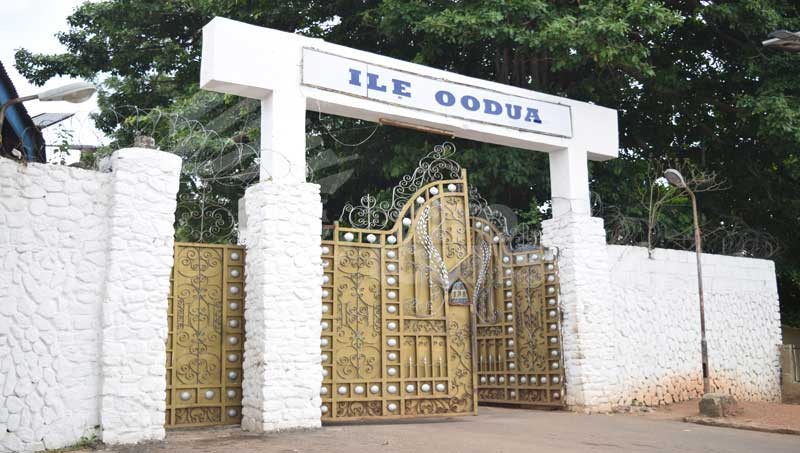
A visit to Ile-Ife is not complete without checking out the magnificent palace of the Ooni of Ife otherwise known as Ile Oduduwa, named after the first king of the Yoruba race. The palace is an in-depth reflection of ancient Ife because the palace existed alongside the city as far back as 500 BC. It is a perfect symbol of power, authority and pride for all who trace their heritage to Ile-Ife. Even with the modernization of the palace, traditional and cultural part of it is still preserved. The palace is a sacred place where you do not just indiscriminately wander. The present Ooni of Ife is the 40-year-old Oba Enitan Adeyeye Ogunwusi, Ojaja II who recently ascended the throne of his fathers after the death of Oba Okunade Sijuwade. You can pay homage to the king and will be warmly welcomed but ensure that you follow proper protocol while at the palace. The palace is located in Enuwa Area of Ile-Ife.
Where to Sleep
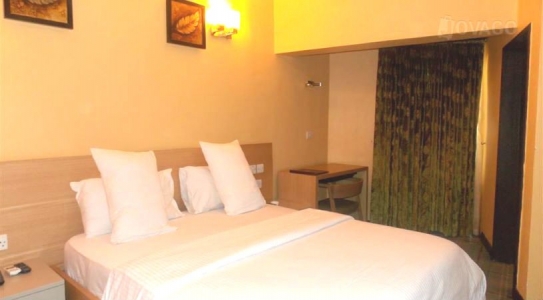
Despite being an evolving city, the presence of the Ooni’s Palace, the celebration of the Olojo festival and education environment of the Obafemi Awolowo University formerly the University of Ife has made many business minded persons to establish nice hotels in the flourishing town. Some of these hotels are Kriscourt Hospitality limited, Xela Hotel and Resort, Molak hotel, Abike Guest House Limited and Molak hotel. More of these hotels can be perused and booked on Jovago.com.
Where to Eat
The people of Ile-Ife are predominantly Yorubas. Do not be surprised if you see them munching foods you are familiar with in other Southwest states. Nevertheless, you do not need to worry about where eat when you are hungry. There bukkas and restaurants where you can satisfy your biting stomach. These restaurants are Eda restaurant, Forks and fingers, captain cook restaurant and sekodun restaurant.
Shopping in Ile-Ife
Obasewa shopping complex, Shop-Right, Mayfair Shopping Complex, and Ipetumodu market are some of the places you can do your shopping in Ile-Ife.
Fun Fact
The present Ooni of Ile-Ife-Oba Enitan Adeyeye Ogunwusi, Ojaja II is young, dynamic and handsome. He is in the forefront of uniting the Yoruba race. He displayed this trait unity when he visited the Alaafin of Oyo. The last visit of an Ooni to the Alaafin was 79 years ago.
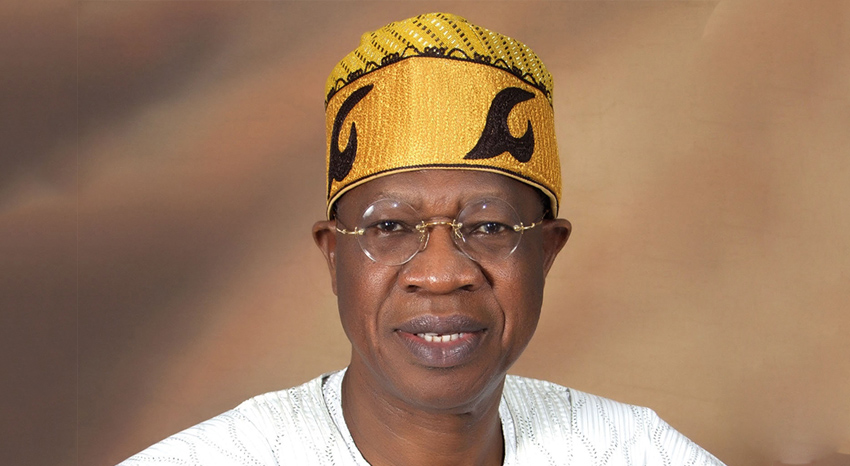
The Minister of Information and Culture, Alhaji Lai Mohammed, has said that Nigerians largely misunderstood the Change mantra which the All Progressives Congress used to campaign and win the 2015 presidential election, as the expected change will not happen overnight.
The minister, who spoke at a stakeholders’ meeting with the Executive Council of the Advertisers Association of Nigeria (ADVAN), stated that though the party campaigned using change mantra, it has been taken by Nigerians to mean that as soon as Buhari was sworn in, the next day, things would change completely in Nigeria.
The minister however maintained that Nigerians must understand that things do not happen that way because the country cannot continue to be doing things the same way and expect a different result.
According to him, it is the reason the Buhari-led government is coming up with the ‘Change Begins with You Campaign’. “The malaise crippling the fabric of the society today, ‘everybody is guilty,” he noted.
The Minister observed that an average Nigerian, given the slightest opportunity, would cheat, noting that corruption cuts across professions, age and gender in the country.
“Nigeria cannot adequately account for the lives that had been lost simply because some pharmacists decided to adulterate drugs. We cannot quantify how many lives we have lost because of the danfo drivers that wake up in the morning to drink paraga before hitting the road. Most of the traffic bottleneck in Nigeria today is due to indiscipline,” he said.
In moving forward, he solicited for the partnership of members of ADVAN, especially in executing some of its campaign and election promises to Nigeria, to which the President of ADVAN, Mr. David Okeme, pledged its members unalloyed support.
Etisalat has issued a statement faulting the acquisition of Visafone, a Code Division Multiple Access (CDMA) operator, by MTN Nigeria, a Global System for Mobile Communications (GSM) operator.
According to the statement, the acquisition of Visafone by MTN, would give MTN undue dominance over other GSM operators, especially in MTN’s use of the 800 MHz spectrum in rolling out its broadband services, which initially belonged to Visafone, prior to the acquisition.
On the basis of this argument, Etisalat Nigeria has brought a legal action against MTN Nigeria and Visafone Ltd., challenging MTN’s use of the 800 MHz spectrum following the acquisition of Visafone.
Etisalat wants the NCC to reverse the sale, insisting that NCC gave approval to MTN for the acquisition of Visafone in error.
The action was considered necessary to prevent the use of the spectrum by MTN at this time, as it would entrench the dominance of MTN in the retail data services market.
This is because MTN Nigeria was declared dominant by the NCC in 2013 and remains dominant in the wholesale leased line and retail voice markets, Etisalat said in a statement.
According to the statement, “the use of the 800 MHz spectrum to deploy broadband services ahead of its competitors, particularly those who prior to MTN’s purchase of Visafone, held similar spectrum bands as MTN, will further entrench MTN’s dominance in the Nigerian telecommunications sector.
“We have in addition and in line with Section 86 of the Nigerian Communications Act, 2003 engaged the NCC to understand the basis of its decision to approve the acquisition, the statement further said.
The market indicators of the Nigerian Stock Exchange, NSE, on Friday, February 5, slumped marginally by 0.07 per cent following loses by some blue chip stocks.
The market capitalization shed N6 billion or 0.07 per cent to close at N8.082 trillion against N8.088 trillion recorded on Thursday, February 4, News Agency of Nigeria (NAN) reports.
An analysis of the price movement chart showed that Forte Oil led the losers’ chart, dropping by N10 to close at N300 per share.
Beta Glass trailed with a loss of N3.45 to close at N50, while total fell by N2.50 to close at N140 per share.
Okomu Oil lost N1.50 to close at N29 and Glaxosmithkline dropped N1.21 to close at N23.16 per share.
Conversely, Mobil recorded the highest gain leading the gainers’ table with N7.03 to close at N147.63 per share.
Seplat chalked up N6.91 to close at N243, while UACN improved by N1.89 to close at N20.89 per share.
Nigerian Breweries rose by 95k to close at N96.05, while International Breweries gained 90k to close at N20.45 per share.
NAN also reports that investors’ bought and sold 554.65 million shares valued N4.32 billion exchanged in 2,304 deals.
This was in contrast with 2.64 billion shares worth N3.74 billion traded in 3,057 deals on Thursday.
FBN Holdings was the toast of investors’ having accounted for 237.99 million shares valued N941.99 million.
Zenith Bank traded 219.75 million shares worth N2.44 million, while Transcorp sold 21.78 million shares valued N24.94 million.
FCMB Group recorded a turnover of 15.83 million shares worth N253.26 million, while GT Bank accounted for 15.83 million shares valued 253.26 million. (NAN)
Nigeria’s interbank rate eased on Friday, February 5, to an average of 0.5 percent for overnight lending, down from to 1.25 last week, with excess liquidity, Reuters reports.
The Central bank had injected about 240 billion naira in matured open market operation (OMO) treasury bills and refunds on cash reserves to some banks on Thursday, boosting liquidity and forcing down the cost of borrowing among banks.
Commercial lenders on as at Wednesday , had a combined credit balance with the central bank of 312 billion naira, and liquidity was expected to rise further with the funds from the retired bill and refunds from the surplus cash deposited for foreign exchange purchases.
The secured Open Buy Back (OBB) also fell to 0.50 percent from 1 percent last week.
Nigeria’s interbank rate mirrors the level of naira cash liquidity in the banking system.
The Chinese Ambassador to Nigeria, Gu Xiaojie, has said that Nigeria-China trade volume surpassed $13 billion in 2015,.
The envoy expressed confidence in the bilateral relationship between both countries, while speaking during a reception to mark the 45 years of diplomatic relations between both countries in Abuja.
He said, “As good brothers, both countries pursue the independent foreign policy of peace, respect each other’s choice of development path and promote south-south cooperation to safeguard common interests of developing countries.”
He stressed that both countries show mutual understanding and support to each other on issues involving core interests and major concerns of each side.
“China and Nigeria have enjoyed long standing friendly exchanges 45 years ago on February 10,1971 since the two countries established diplomatic relations. “In 1971, the bilateral trade volume was only $10million, nowadays the bilateral trade volume is hundred times that of 1971.
“Nigeria is China’s largest engineering contracted projects market in Africa; Nigeria is the second largest export market of China in Africa and Nigeria is also the third biggest trading partner and major investment destination in Africa,” he stated.
“Cooperative projects such as the launch of satellite, construction of railroad and the fast development of Lekki and Ogun free trade zones are the true story of China- Nigeria pragmatic cooperation,” he said.
Oil price soared two cents on Friday, February 5, in a volatile session as bearish fundamentals pressured prices, despite bullish indications earlier in the week.
International benchmark Brent crude futures were two cents higher at 34.48 dollars per barrel at 1135 GMT, trading in a range of around 34-35 dollars a barrel.
U.S. West Texas Intermediate crude futures were up 11 cents at 31.83 dollars a barrel.
Crude futures benefited earlier this week from the sudden liquidation of a 600 million dollars leveraged fund bet on falling prices.
An effort by Venezuela to rally support for concerted action to boost prices also buoyed futures.
Venezuelan Oil Minister Eulogio Del Pino is due to meet his Saudi counterpart Ali al-Naimi in Riyadh on Sunday, after meeting the Qatari and Omani ministers this week.