Trading activities on the Nigeria Stock Exchange, NSE, remained in the green zone on Monday, February 15, as the All Share Index increased by 0.56% to close at 24,827.50 points, compared with 0.10% recorded last Friday. Year-to-date (YTD), the NSE ASI depreciated by 13.32%.
Likewise, the Market Capitalization jumped by 0.56% to close at N8.54trn, compared with the appreciation of 0.10% recorded last Friday to close at N8.49trn.
The appreciation recorded in the share prices of Dangote Cement, GT Bank, UBA, Transcorp, and Seplat were mainly responsible for the gain recorded in the Index.
The total value of stocks traded on the floors of The NSE today was N2.92bn, down by 67.35% from N8.95bn traded last Friday. The total volume of stocks traded was 283.52mn in 3,030 deals.
The three most actively traded stocks were: Zenith Bank (140.80mn), GT Bank (23.18mn) and Fidelity Bank (21.36mn). The most actively traded sectors were: Financial Services (255.89mn), Oil & Gas (13.58mn) and Consumer Goods (12.61mn).
The United Arab Emirate owned telecommunications firm, Etisalat Group reported a 3.95 per cent fall in preliminary full-year profit to Dh8.26 billion compared to Dh8.60 billion due to slower regional economic growth.
The telco, which operates in Nigeria and 17 markets across the Middle East, Asia and Africa, reported a 6.61 per cent increase in full-year revenues to Dh51.72 billion compared to Dh48.51 billion a year earlier.
Sukhdev Singh, vice-president at market research and analysis services provider AMRB, said the growth in revenues is a good performance in the face of regional economic instability.
He said: “It is not a surprise that the telco feels that growth in subscriber base or bundled services to consumers and enterprise segments in the UAE have helped them to grow. Data and connected services are certainly going to drive the growth in the immediate as well as long term.”
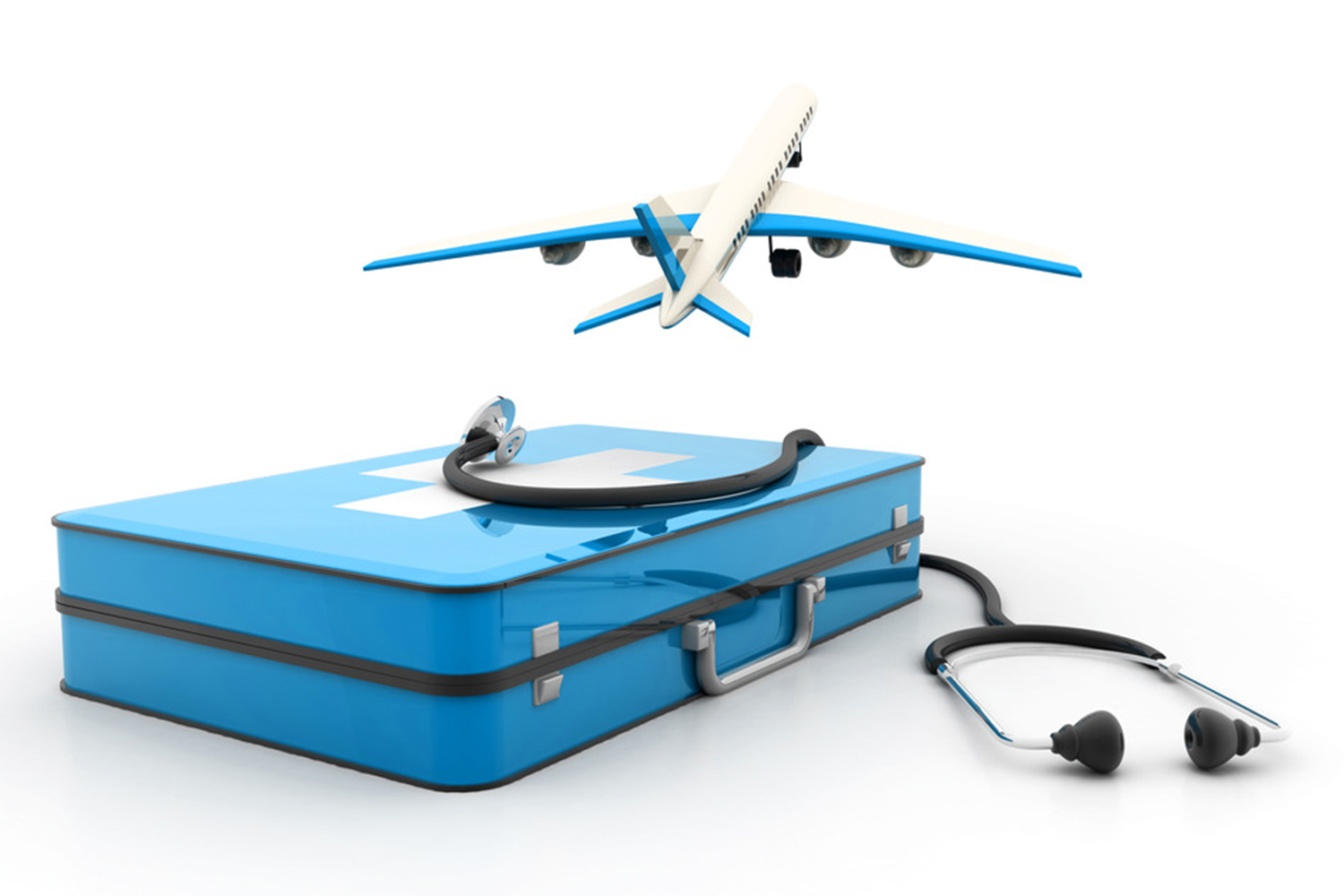
The Nigeria Sovereign Investment Authority, NSIA, has partnered with the International Finance Corporation, IFC, to cut the over $1 billion spent on foreign exchange on medical tourism yearly.
The partnership seeks to achieve this by providing health facilities that would cater for the 80 per cent of the $1 billion expended on medical tourism by Nigerians on Oncology,Orthopedic, Urology and Renal or Kidney conditions.
Chief Risk Officer and Executive Director of NSIA, Mrs. Stella Ojekwe-Onyejeli, said at a media briefing after a hospital focused round table event held in Lagos to foster collaboration among health sector operators.
Mrs.Ojekwe-Onyejeli said NSIA is seeking to catalyze private sector investment in the healthcare space by establishing Public-Private Partnerships and innovative solutions, which is their core mandate as they are saddled with the responsibility to invest on behalf of the government.
She said NSIA has set aside $400 million for investment in the economy and could use 35 per cent, about $140 million of it on the health sector, which though small, would serve as the start-up capital, hence the need to look for co-investors like the IFC.
IFC’s Country Manager for Nigeria, Eme Essien-Lore, said the funding agency is committed to help increase access to affordable quality healthcare services, by financing and facilitating financing for integrated networks which would support the development of critical health infrastructure and attract private capital into the sector.
“We are working with NSIA to boost investments in the healthcare sector and bridge the gap in undersupply of quality healthcare in Nigeria,” she said.
The Lagos Deep Offshore Logistics (LADOL) base and Samsung Heavy Industries have injected $400 million into vessel fabrication and integration yard in Lagos.
Additional $200 million will also be injected in the yard in the next few months, The Nation has learnt.
It was learnt that the yard has the capacity for Floating Production Storage and Offloading (FPSO) integration and conversion.
The $600 million LADOL free zone within the Apapa Pilotage District is a world-class facility. Access to the place is restricted.
It has extensive infrastructure and equipment layout, making it an ideal environment for vessel integration, offshore oil and gas mega-fabrication, pipe coating, engineering and agricultural processing centre.
A senior official of the Federal Ministry of Transport (FMoT) told The Nation that the base, a wholly indigenous organisation, has created jobs in the offshore logistics sector. On completion, he added, it will promote local content.
The official said, LADOL has the biggest vessel fabrication and integration yard in the region, with capacity for FPSO integration and conversion, top-side FPSO modula fabrication, large offshore fabrication and range of general steel construction at a rate of 10MT per year.
LADOL has also expanded its fabrication capacity from 10,000 tonnes to 40,000 tonnes to service FPSO, oil rigs, ship repairs and maintenance.
“The move is to concentrate on mega oil and gas and maritime fabrication jobs for West Africa in the country. Several countries in Africa, such as Sao Tome, South Africa, Ghana, Angola, Ivory Coast and Equatorial Guinea currently look up to the facility for the discharge of oil and gas cargoes.”
The Japanese government has offered $800 million credit line to Nigeria that will be used to rehabilitate and extend the lifespan of the Jebba power plantas part of its support for Nigeria’s power sector.
To this end, the federal government and the government of Japan are expected to firm up all relevant agreements that will ease the way for the 578.4 megawatts (MW) installed capacity Jebba hydro power plant to access the loan.
This comes as one of the plant’s turbines with a generation capacity of 96.4MW which was rehabilitated by Japan after a fire incident, was commissioned yesterday to increase the plants available generation capacity to 482MW.
Speaking during the handing over of the overhauled unit of six generating turbines plant to Nigeria, the deputy head of mission at the Japan Embassy, Mr Masaya Otsuka, said the $800 million credit line will be used to rehabilitate and extend the lifespan of four extra units of the plant.
Otsuka noted that if approved under a government-to-government agreement, the loan will be used to refurbish the four generating turbines which have not undergone any form of mandatory overhaul since they were commissioned in 1983.
The loan he explained is under the Tokyo International Conference on African Development (TICAD) framework, and will include 1.4 per cent concessionary rate for 40 years.
He said that the repair work on the turbine which was commissioned by the minister of Power, Works and Housing, Mr Babatunde Fashola, was undertaken with N5.2 billion after it was burnt down in April 2009.
Otsuka explained that negotiations for the new $800 million rehabilitation loan have progressed very well and should be concluded in a matter of time for Jebba to access it and mobilise for the repairs.
“The ambitious projects on repairing four generators will provide good megawatts for the people of Nigeria. I believe it will help Nigeria become more attractive place for investors as well as residents,” Otsuka said.
A German firm in conjunction with other international finance cooperation and Nigeria indigenous company, are set to begin the construction of a 125 megawatts (MW) solar power plant in Kankia, Katsina State.
This partnership is set to give a boost to the partnership between Nigeria and Germany on energy.
The German company, Nova Solar power, in partnership with the katsina state government is to construct the 125mw solar plant under the Public Private Partnership Agreement (PPP).
This was revealed at a forum of Nigeria, Germany energy partnership forum, in Abuja, according to a statement by the Assistant Director, Press, Ministry of Power, Works and Housing, Ibrahim Haruna.
Speaking at the event, the Permanent Secretary, Power, Engr. Louis Edozien, who chaired the meeting, stated that the energy partnership between the two countries is yielding positive results adding that it would assist Nigeria to tackle poverty and improve standard of life through employment generation.
Edozien pointed out that the German Development Agency, (GIZ), has promote renewable energy, energy efficiency and rural electrification on one hand and sustainable development on the other as well as deepened economic development in Nigeria.
While noting that Nigeria has demonstrated policy stability in the energy market, he disclosed that the federal government will continue to provide enabling environment for investors in the energy sector which would ensure the provision of uninterrupted power supply to Nigerians.
On his part, State Secretary, Federal Foreign Office, Germany, Stephan Steinlein, stated that Nigeria and Germany need to learn from each other on how to decarbonize their economies in the most efficient and cost effective way.
Steinlein pointed out that Germany has decided to decarbonize its energy sources and has provided a stable investment framework for renewable in the country.
He further pledged Germany’s support to help Nigeria tackle energy shortage, reduce carbon emission and embrace renewable energy models, following the country’s demonstrated eagerness to increase its power production in an emerging economy of more than 180 million people.
Steinlein also stated that generation cost for all renewable sources are now at the same level as for fossil fuels without additional external risks such as air pollution and disposal, adding, “let us not forget that renewable energy plants do not require any kind of logistics for fuel supply. It is therefore not surprising that the global capacity in renewables has more than doubled since the beginning of the millennium.”
The naira crashed to a record low of N345 to the dollar and N463 to the British pounds at the parallel market on Monday, February 15.
The local currency eased 1.47 per cent from Friday’s close of N340 to the dollar, while the official rate remained at N197.50 to the dollar at the close of trading yesterday.
Traders said the black market rate had weakened as Nigerians with school and medical bills to pay abroad anticipated that the Central Bank would stop allocating currency for such payments.
The apex bank has however refuted such plans saying it has no immediate intention to end foreign exchange sales for school fees and medicals.
The Central Bank of Nigeria, CBN, on Monday, February 15, in its Economic Report of the Nigerian Economy for the month of November 2015 said it recorded $2.48 billion foreign exchange inflow and $2.50 billion outflow.
This situation, the apex bank said resulted in a net out flow of $2million.
According to the report “Foreign exchange sales by the CBN to the authorized dealers amounted to $2.20billion and represented a 0.5per cent decrease below the level in October 2015.
The average exchange rate at the inter-bank segment remained same at N196.99 per US dollar as in the preceding month, but showed a depreciation of 15.13 per cent relative to the level in the corresponding period of 2014.
The report stated: “At the BDC segment, the average exchange rate, at N233.94 per US dollar, depreciated by 4.1 and 33.0 per cent, relative to the levels in the preceding month and the corresponding period of 2014, respectively. Gross external reserves increased by 3.2 per cent above the preceding month’s level.”
According to the CBN “At N20.4708 trillion, aggregate credit to the domestic economy, on month-on-month basis, fell by 4.1per cent at end-November 2015, compared with the decline of 0.8 per cent at the end of the preceding month.
The development reflected the 22.0 and 2.0 per cent fall in claims on the Federal Government and private sector, respectively. Over the level at end-December 2014, net domestic credit grew by 6.2 per cent at the end of the review period, compared with the growth of 10.8 per cent at the end of October 2015. The development reflected the increase in claims on the Federal Government and private sector.”
It said that “Banking system’s credit (net) to the Federal Government, on month-on-month basis, fell by 22.0 per cent to N1.7640 trillion at end-November 2015, compared with the decline of 18.9 per cent at the end of the preceding month. Government securities The development was attributed to the 33.9 per cent decline in banking system’s holding of Government securities.
Over the level at end-December 2014, aggregate banking system credit (net) to the Federal Government grew by 53.4 per cent, compared with the growth of 96.7per cent at the end of the preceding month”. It also said that “At N18.7068trillion, banking system’s credit to the private sector, on month-on-month basis, fell by 2.0 per cent, in contrast to 1.9 per cent growth at end-October 2015.
The gaining streak on the Nigerian Stock Exchange, NSE, was extended for the sixth consecutive day with N48 billion gain on Monday, February 15.
Market capitalization of 190 listed equities jumped from N8.491 trillion to close the day at N8.539 trillion.
Market breadth closed positively as Seplat Petroleum Development Company led 13 gainers against 25 losers topped by Nestle Nigeria at the end of the trading session which was an improved performance when compared with previous outlook.
Market turnover closed negative as volume dropped by 9.12 per cent against 24.8 per cent decline recorded in the previous session.
Banking stocks drove the market with substantial volume as Zenith Bank Plc traded 140.801 million worth N1.638 billion, followed by Guaranty Trust Bank Plc with 23.188, Fidelity Bank Plc traded 21.165 million valued at N26.327 million and UBA Plc transacted 15.280 million at N44.477 million.
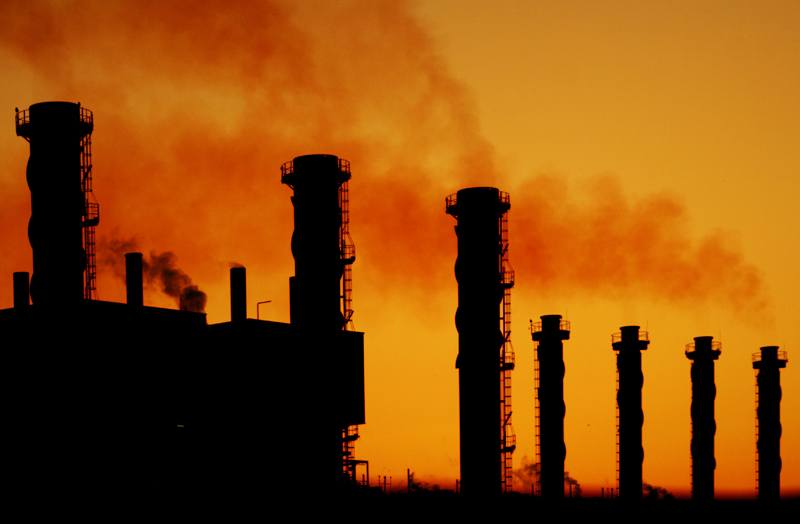
Oil price jumped on Monday, February 15, triggering last week’s speculation that the Organization of Petroleum Exporting Countries might agree to slash production to reduce a supply glut that has pushed prices to the lowest in over a decade.
Brent crude futures LCOc1, the global benchmark, were up 21 cents at $33.57 a barrel at 1428 GMT.
U.S. futures CLc1 traded at $29.68 a barrel, up 24 cents on Friday’s close. Trade is likely to be thinner than usual on Monday due to the U.S. Presidents Day holiday.
“Some traders still think about the chances of an OPEC plus Russia (production) cut and close their short positions,” said Frank Klumpp, oil analyst at Stuttgart-based Landesbank Baden-Wuerttemberg.
Non-OPEC member Russia said on Monday it was in talks on coordinated output cuts with individual OPEC members, mainly Venezuela, but not with the organisation itself, news agency Interfax quoted Russia’s representative to OPEC as saying.
The Bank of Industry, BoI, has recorded a profit after tax of N12 billion and an exceptional income of N37 billion from the disposal of WAMCO shares for the financial year ended December 31, 2015.
The bank, hinging its improved profitability on operational efficiency during the financial year, also disbursed loans worth N83.5 billion to 776 enterprises, (47 large enterprises and 729 SMEs) in the year.
A breakdown of the bank’s earnings for the year showed that the bank recorded an unaudited profit before tax of N50.4billion for the year ended December 31, 2015, representing an operating profit of N12billion up by 100 per cent from N6 billion achieved in 2014 and an exceptional income of N37 billion made from the disposal of WAMCO shares.
The bank said that the loans to large enterprises went to companies in Nigeria’s real sectors such as agro-processing, food processing, solid minerals, gas value-chain, engineering and technology and light manufacturing.
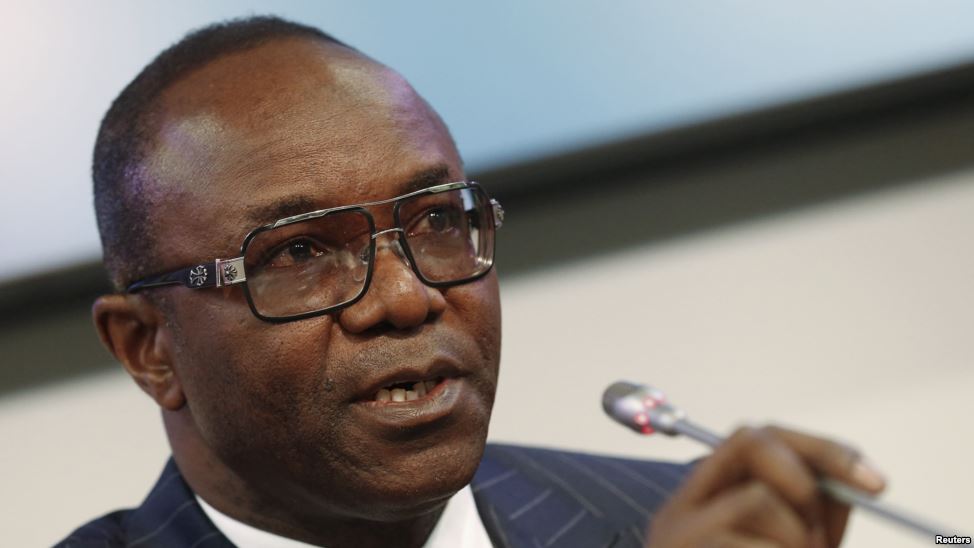
Minister of State for Petroleum Resources, Ibe Kachikwu, has said he would meet his Qatari and Saudi counterparts to map a way out of the lingering plunge of crude price in the global market.
Kachikwu, who made this known in an interview with Reuters, said: “Have we got to the point where we can say there is a definite strategy? In terms of production reduction or freezing, no, I don’t think we have got there. But there is a lot of energy (behind the idea).
“As you get closer to the statutory (OPEC) meeting dates … you are going to see a lot more people get active in those conversations and try to find solutions.”
The prices of crude in the international market have slumped by more than 70 percent to near $30 a barrel over the past 18 months as OPEC, led by top producer Saudi Arabia, sought to drive higher-cost producers out of the market by refusing to cut production despite a supply glut.
However, the Organization of the Petroleum Exporting Countries, OPEC, has expressed concern over the continuous fall in crude prices, saying a decision must be reached on how to end the fall.
He said: “There’s increased conversation going on. I think when we met in December … they (OPEC members) were hardly talking to one another. Everyone was protecting their own positional logic. “Now I think you have cross-logic … they are looking at what are the deficiencies, what is the optimum.”
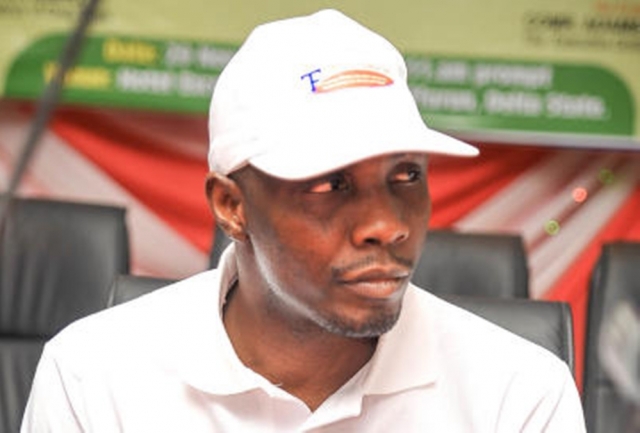
The whereabouts of the former ex-militant leader, Chief Ekpemupolo, otherwise known as Tompolo remain unknown four days to the February 19 date given by a Federal High Court sitting in Lagos to the nation’s security agencies to produce him.
This is just as his Ijaw relatives had vowed not to disclose his hideout to the security men.
A royal father, who spoke with Vanguard on condition of anonymity, said: “No Gbaramatu man will reveal the hideout of Tompolo to any security man even if he knows, unless that person does not have a true Ijaw blood flowing in him.
“Tompolo is an institution, not only in Ijawland, but in the whole of Niger Delta. He has touched many lives and is the current symbol of the struggle.
“Therefore, it is not easy for any full-blooded Ijaw man to betray him. From what I can see, the whole thing is about business transaction, the Federal Government should settle the matter and let peace reign.he said.
Alhaji Mai Musa, who is the Chairman, Gujba Local Government of Yobe, said people who fled the area due to the Boko Haram insurgency had returned to their respective communities and engaged in irrigation farming.
Musa disclosed this in an interview with the News Agency of Nigeria (NAN) in Damaturu.
He said residents of Wagir, Nyakire, Mutai, Buni Gari, Gujba, Katarko and Garin Itace, who fled their communities, had mostly returned.
“The people have engaged in irrigation farming in most of the communities, while business activities have picked up in the village markets,” he said.
The chairman said except Buni Yadi, headquarters of the local government, most of the communities had returned and engaged in various means of livelihood.
Musa also said trading activities had also improved in Wagir, adding “we have recorded increase in livestock trade in Wagir after the liberation of the area.”
He commended the military/civilian relationship in the liberated communities, saying it had strengthened mutual trust between the army and the host communities.
“Members of the host communities have constituted vigilance groups working closely with the army and, this has recorded tremendous success in identifying the insurgents and effectively fighting them,” the chairman said.
He said the resettlement of people in the reclaimed areas had consolidated the success recorded by the military over insurgents.
President Muhammadu Buhari, on Monday, sacked the Chief Executives of the Nigerian Television Authority (NTA), Mr. Sola Omole and the National Orientation Agency (NOA), Mr. Mike Omeri.
Also sacked are heads of Federal Radio Corporation of Nigeria (FRCN), Mr. Ladan Salihu; Voice of Nigeria (VON), Sam Worlu, News Agency of Nigeria (NAN), Ima Niboro and the Nigerian Broadcasting Commission (NBC), Mr. Emeka Mba.
The six disengaged executive officers headed information-related parastatals under the Ministry of Information and Culture.
Minister of Information and Culture, Alhaji Lai Mohammed, announced the disengagement during a meeting he held with them on Monday.
He directed the disengaged Chief Executives to hand over to the most senior officials in their various establishments.
Alhaji Mohammed thanked them for their service to the nation and wished them the best of luck in their future endeavours.
The Independent Corrupt Practices and other related offences Commission has arraigned four more officials of the Nigerian Tourism Development Corporation over alleged abuse of office and mismanagement of over N500m.
The Director-General of the NTDC, Mrs. Sally Mbanefo, was alleged to have, among others, misused N52,014,821 released to the corporation as capital budget from March to July 2014. The arrested NTDC officials were granted an administrative bail and “are cooperating with the ICPC operatives.”
The ICPC Head of Enlightenment, Rasheedat Okoduwa, said, “I have confirmed that investigations are ongoing and that is the best I can tell you. When we conclude investigations, we will take our findings to the Legal Department and if there is a case, we will proceed to court to file the charges. When the charges are filed, they become public property.”
An invitation letter by the acting Head of Special Investigations in ICPC, H.M. Hassan, to Mbanefo directed her to release the Head of Administration and Personnel and the Director of Finance to assist the commission in the investigation of a petition relating to the violation of the ICPC Act 2000.
Both officials were told to produce the list of the NTDC’s employees as of December 2014 as well as the “personnel files of all members of staff employed under the leadership of Mrs. Sally Mbanefo as Director-General” and money received from the government.
The anti-graft body also demanded the budget and file containing major contracts awarded and executed in 2013 and 2014.
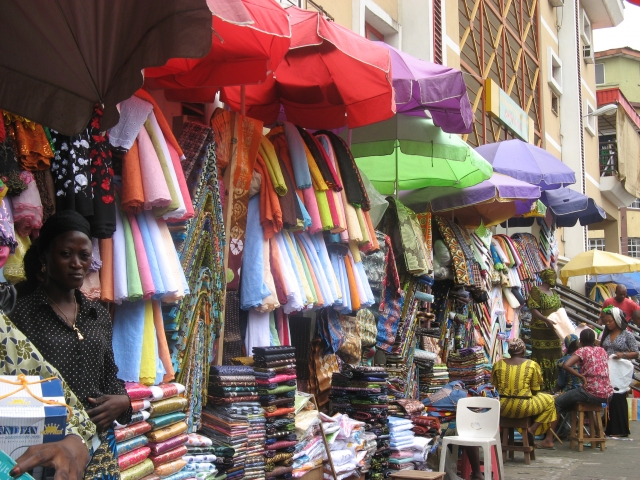
Traders at the Rauf Aregbesola Market, Iyana Ipaja, Lagos, have appealed to the Lagos State Government to intervene in the deadlock between them and Alimosho Local Government Council.
The local government on Friday threatened to eject the traders to pave way for the demolition of the structures to upgrade the market.
The traders told the News Agency of Nigeria (NAN) in Lagos on Sunday that this was the second attempt by the local government authorities to forcefully eject them from the market.
According to the traders, in 2012 when the market was under Egbeda/Akowonjo Local Development Authority, the council asked them to submit their allocation papers for an upgrade of the market.
They said that the upgrade was suspended when their lawyer challenged the council after an advice from the Lagos State Ministry of Physical Planning and Urban Development.
The traders queried the rationale of the local government for planning to take over the shops that were sold to them on owner-occupier terms at the first instance.
“We bought these shops in 2004 at the price range of N300,000 for those located inside and N400, 000 for those facing the road.
“We pay our yearly permit of N4, 100 as responsible citizens, abide by every rule governing the state and expect due consideration from government.
“However, it is unfortunate that a government that we chose to represent us and oversee our welfare is working secretly to destroy our source of livelihood,’’ a trader said.
However, many traders testified that they were unhappy with the decision and believe it is just a way to deceive them.
Mr Lateef Abiodun, the Market Master for Alimosho Local Government, said that the planned upgrade of the market was in line with the megacity plan of the State Government.
Abiodun also serves as the Chairman, Nigeria Union of Local Government Employees (NULGE), Alimosho Branch.
He said: “There’s going to be an upgrade, but we will not displace them, all the previous tenants will be put back in their rightful places.
“We have had meetings with the committee members set up by the market on this issue. We do not intend to create untold hardship on them, but rather to protect them.
“If they are resisting, what happened in Oshodi market may happen there, we are not saying we are the ones to do it.
“Because, those people (Oshodi) have been on it for quite a long time and the state government just took action, we do not want that to happen here.’’
Kano State government and the federal ministry of agriculture has pledged partnership and support for a N6 billion rice processing investment in the State.
The Minister of Agriculture and Rural Development, Chief Audu Ogbeh, who was in Kano for a program on agriculture, has assured that the Federal government would support millers and investors in the rice value chain to ensure that Nigeria becomes self sufficient in rice production and even export.
He said huge potential for rice production exists in the country which he said can feed its growing population and export to earn revenue.
The Minister, who made the assertion during an inspection of A.A. Ibrahim Integrated Rice Mill Ltd., at Challawa Kano noted that the rice millers help in reducing poverty among small holder farmers by assisting them to grow from subsistence to commercial production.
He therefore commended the management of A.A. Ibrahim Integrated Rice Mill Ltd. for investing N6 billion in the project, which he noted, is on the verge of completion, promising that the Federal Ministry of Agriculture would assist the company with a rice color sorter to encourage its management.
Chief Ogbeh also expressed satisfaction with the company’s zeal to create jobs for Nigerians and disclosed plans by his Ministry to assist rice farmers across the country to harvest the commodity and sort it without leaving behind sand particles.
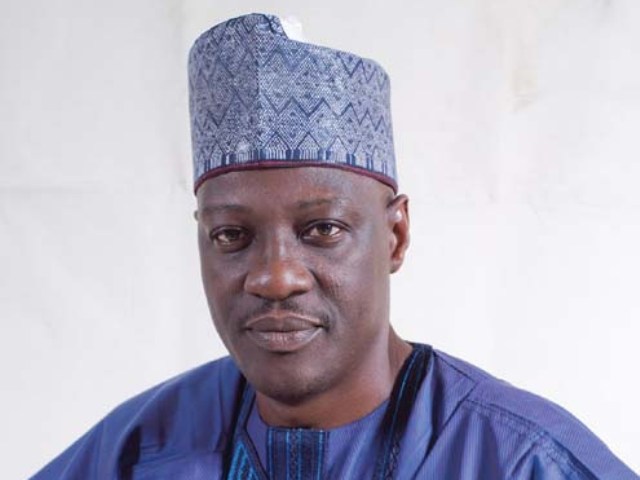
Kwara State Governor, Abdulfatah Ahmed, has announced that his government will soon conduct verification exercise for the state civil servants in order to flush out ghost workers in the state.
Governor Ahmed made this known while addressing members of the All Progressives Congress (APC) across the state in Ilorin, Kwara State capital.
The workers, according to him, include primary school teachers, local government workers amongst others as well as pensioners in the state.
The Governor lamented that declining fund has affected the smooth running of government as there was no more excess funds to be shared indiscriminately, saying that fund expected to be returned from the payment to ghost workers would be channelled towards provision of essential needs of the people.
Governor Ahmed warned those involved in the shady deals to desist to avoid being dealt with in accordance with the law.
According to the Minister of Health Prof. Isaac Adewole, the Federal Government has confirmed its commitment to end polio in Nigeria, saying that it would not allow any new outbreak with the appreciable progress in the interruption of the transmission of the wild polio virus in the country.
In July 2015, World Health Organization (WHO) removed Nigeria from Polio endemic country after 15 months without single case of the polio virus in the country. It is expected that if Nigeria sustains the momentum, by 2017 it would be certified a polio free country.
“With respect to funding even though we will not boast of taking care of all your needs but we would certainly do our best, we are quite committed. Once we get approval, we will give you priority because it would be a shame to us if we have one single outbreak, I describe the Lassa outbreak as embarrassment it would become a shame if we have further outbreak of polio virus.”
“We are proud of you, we would continue to support you, you made us proud so the only thing we can do is to continue to play our role as a nation and with the support of Mr. President and international backing, we have no option than to succeed in the final eradication” ,he said.
The Minister appreciated members of the committee for making the country proud. “let me thank you and our partners particularly outside the country, because we really value your support and we would love to see more in the health sector.