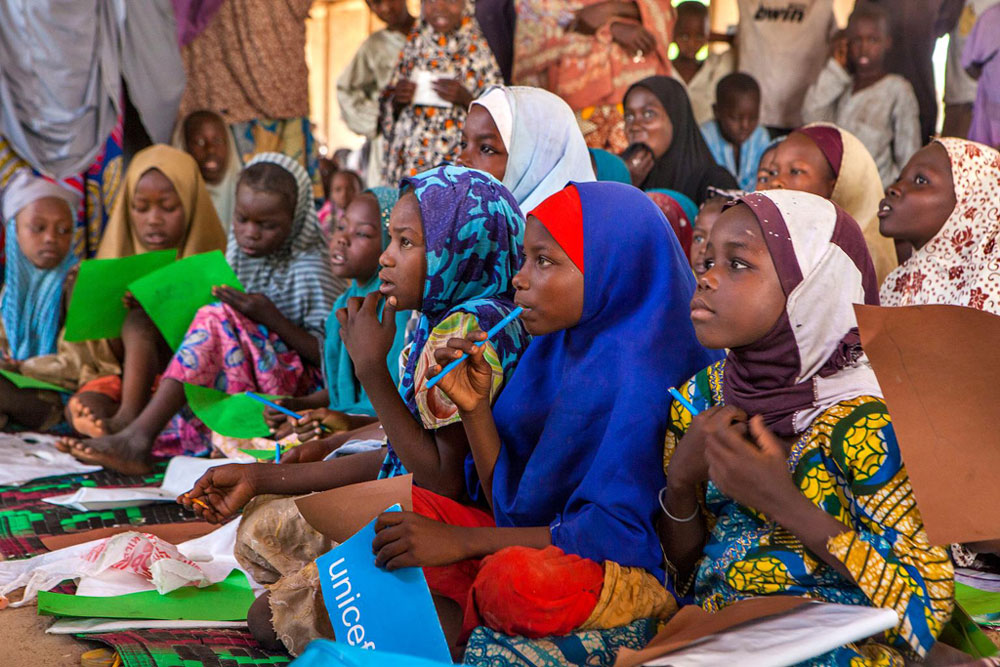
Katsina State government and the United Nation’s Children Fund (UNICEF) has signed a N1.3bn Memorandum of Understanding for partnership on development of the state. The multi million naira MoU is for the state and UNICEF to partner in the critical sectors of education, health and water supply.
Governor Aminu Bello Masari signed on behalf of the state government, while Ms Padamavathi Yelda, the UNICEF chief field officer, signed for UNICEF.
The governor pledged to redeem the state’s counterp art funding so as to ensure effective implementation of the laudable initiatives.
He lauded the UNICEF and other development partners for their support, adding that the critical sectors of education, health and water supply which covered the central areas of the MoU are part of the state government’s priority agenda.
UNICEF representative urged the state government to fulfil its part of the agreement by ensuring prompt payment of the counterpart fund so as to ensure success.
First Bank of Nigeria Limited is leading 14 other commercial banks in the utilization of foreign exchange from the Central Bank of Nigeria, CBN.
With a total of $25,701,921.17 FirstBank reported the highest amount of forex purchased from the CBN on behalf of its customers.
The allocations ranged from fuel, machinery and pharmaceuticals imports, all the way down to invisibles dominated divestments by foreign investors exiting the Nigerian equities and bond markets, and forex allocations to school fees.
For the second time, school fees accounted for the highest number of allocations across several of the banks, but not in value, reflecting the lack of confidence Nigerian parents in high and upper middle-income brackets have in the country’s education sector.
FirstBank was followed by Zenith Bank Plc and Stanbic IBTC Limited with $23,811,329.77 and $20,618,105.09 respectively.
Standard Chartered Bank with total returns of $17,795,338.87 came in fourth, while Diamond Bank Plc reported returns of $17,691,840.54.
Guaranty Trust Bank Plc (GTBank) reported returns of $15,828,891.14 to occupy the sixth place, while Ecobank Nigeria Limited reported returns of $14,684,365.28.
Also, while Union Bank of Nigeria Plc reported returns of $12,550,289.46; Access Bank Plc published returns of $11,994,742.86; Citibank Nigeria Limited — $9,238,688.09; Fidelity Bank Plc — $7,447,530.26; and United Bank for Africa Plc (UBA) Plc — $6,711,545.29. Others included Sterling Bank Plc with total returns of $4,792,887.67 and Keystone Bank Limited which also reported returns of $3,732,629.81.
For the first time, three merchant banks also published their returns on utilisation of funds. They were Coronation Merchant Bank Limited — $4,838,429.62; FSDH Merchant Bank Limited — $3,701,840.84; and Rand Merchant Bank Limited which reported total returns of $2,225,002.42.
But in terms of volume, the purchase of foreign exchange for other invisibles such as school fees, business travel allowance (BTA) and personal travel allowance (PTA), was the highest.
Trading activities on the floor of the Nigerian Stock Exchange, NSE, travelled farther south on Wednesday, February 17, as the All Share Index decreased by 1.87% to close at 24,056.12 points.
Year-to-date (YTD), the NSE ASI plunged by 16.01%. Similarly, the Market Capitalization depreciated by 1.87% to close at N8.27trn, compared with the depreciation of 1.26% recorded yesterday to close at N8.43trn.
The depreciation recorded in the share prices of Dangote Cement, Guinness, Nestle, Unilever and GT Bank, were mainly responsible for the loss recorded in the Index.
The total value of stocks traded on the floors of The NSE today was N1.95bn, down by 32.22% from N2.88bn traded yesterday. The total volume of stocks traded was 335.61mn in 2,847 deals.
The three most actively traded stocks were: Resort, Savings and loans (108mn), UBA (82.76mn) and FCMB (24.92mn). The most actively traded sectors were: Financial Services (297.87mn), Industrial Goods (15.12mn) and Consumer Goods (9.48mn).
Contributors under the Contributory Pension Scheme (CPS) jumped from 6,581,031 at the end of the first quarter of 2015 to 6,696,793 in the second quarter, indicating a 1.76 per cent growth in the pension scheme membership.
In a report, the National Pension Commission, PenCom, said the expansion in the industry membership was driven by the Retirement Savings Account (RSA) Scheme.
It said the membership of the Closed Pension Fund Administration Scheme (CPFA) experienced a negative growth while membership of the Approved Existing Scheme (AES) remained unchanged.
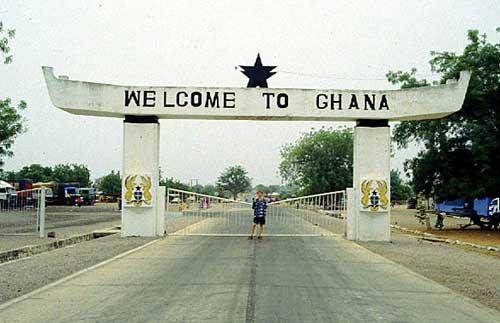
Ghana has banned some items from entry into its domain, following Nigeria’s bold move of restricting 41 items from access to foreign exchange.
Ghana placed a ban on some goods from being imported into the country. Ghanaian Minister of Trade and Industry, Ekwow Spio-Garbrah stated yesterday that Ghana and Nigeria are said to account for some 68 per cent of the ECOWAS region’s Gross Domestic Product.
Nigeria accounts for almost 10 per cent of Ghana’s foreign trade volume, whereas Ghana is listed as the 9th largest trade partner to Nigeria.
Ghana remains Nigeria’s largest trade partner and favourite investment hub in the West Africa sub-region, as Ghana imports the largest share of all Nigerian oil exports in the West African sub-region.
The Independent Petroleum Marketers Association of Nigeria, IPMAN, has said the 78 percent import allocation granted the Nigerian National Petroleum Corporation (NNPC) has caused a disruption in the distribution of petroleum products, leading to scarcity within the Lagos metropolis
As such, IPMAN has called on the Corporation to step up import of Premium Motor Spirit (PMS) also known as petrol to avert another round of scarcity.
National Operations Controller of IPMAN, Mike Osatuyi, said that the fuel situation has been fragile since the NNPC assumed the role of the sole importer of petrol.
“There is supply gap over a period of time now, the NNPC imports 78 percent of the petrol needs of the country. I can only say you should tell them to improve on imports.
They have access to forex because they do the SWAP deal and therefore, are not constrained by the challenge. But for marketers, it is difficult to source the Dollar and therefore not profitable to import under present condition”, he said.
But, NNPC has said the hitch in the petroleum distribution chain in Lagos was as a result of the leadership tussle between the Petroleum Tanker Drivers (PTD) union and the national leadership of PTD.
The Corporation in a statement by its Group General Manager, Group Public Affairs, Ohi Alegbe,said that, the management of its midstream subsidiary, the Pipeline and Products Marketing Company (PPMC) has intervened in the dispute and that normalcy will soon be restored.
An indigenous company, Integrated Oil and Gas Ltd., has been given initial license to begin preliminary work for a 20,000 capacity modular refinery in one of the islands on the coast of Lagos.
The refinery is expected to quaff between $75 – $250 million, Chief Executive Officer, CEO, of the company, Capt. Emmaneul Ihenacho, said.
Ihenacho, who stated this in Lagos on February 17, said that his company has gotten preliminary approval from the Department of Petroleum Resourses, DPR, and has commenced work on the Environmental Impact Assessment, EIA.
He explained that the company is working on other necessary requirements needed before the final approval for the refinery can be granted.
Ihenacho described the process leading to the final licensing for the project as a “continuous” one which is given in stages, saying that he intends to get funding for the project from both foreign and local banks.
According to him, “If you go to the DPR website you will see all the terms and conditions for granting of refinery licenses. The DPR gives you license in stages, it gives you license to establish, license to construct and after that it gives you license to operate.
“DPR would not sit down and say let us go and do an EIA and after that they will give you license. They give you license based on the technology that is used for refining and your ability to give then very good presentation on that subject before they say alright go and start it.”
The stock market on Wednesday, February 17, was hit by mix performances as the volume of trading leaped, while the value of trading plunged.
Investors traded 335.61 million shares valued at N1.95 billion in 2,847 deals, compared 290.944 million shares worth N2.88 billion exchanged in 2,934 deals the previous day.
The bearish trained sustained momentum as the market saw 27 price losers and only 13 gainers.
At the close trading, the NSE Industrial Index and NSE Consumer Goods Index shed 2.3 per cent and 1.8 per cent respectively. The NSE Banking Index also closed 0.9 per cent lower. However, the NSE Oil & Gas Index and the NSE Insurance Index appreciated by 0.7 per cent and 0.1 per cent respectively.
The equities segment of the Nigerian Stock Exchange, NSE, saw a decline for the second straight trading as mid-week business lost N158 billion on Wednesday, February 17.
Equities had, in the last two trading, dropped by N266 billion from N8.539 trillion on Monday to close at N8.273 trillion when the closing gong rang yesterday.
In spite of weak market sentiments, analysts at the United Capital Plc still expect to see a good level of demand in equities over the course of the week as the upcoming earnings season comes into focus and investors continue to play for attractive dividend yields.
Market turnover closes positively as volume moved up by 15.35 per cent against 2.62 per cent uptick recorded in the previous session. Resort Savings Plc, UBA Plc and FCMB Plc were the most active to boost market turnover, while the Guaranty Trust Bank Plc topped market value list.
The naira on Wednesday, February 17 recorded its worst exchange value against some foreign currencies in the parallel market.
Transactions at the Wuse Zone 4, an Abuja Bureau de Change colony monitored by our reporter, indicated that the value of the naira kept dropping hour after hour as customers thronged for business.
The local currency was exchanged at N380 a dollar, N505 a pound sterling and N395 a euro in Zone 4, while in Lagos, it was traded at N375 a dollar, N504 a pound sterling and N396 a euro.
The free fall of the naira started early in February after the Central Bank of Nigeria (CBN) allowed the BDCs to source for the foreign exchange independently from the market and suspended its weekly auctions to them.
However, the foreign currencies remained firm at the official market. A dollar was N199, pound sterling – N285 and euro – N222.
Integrated gas company, Seven Energy International Limited, on Wednesday, February 17, announced that it had secured US$100 million of new equity capital.
The new equity comprised of US$50 million from existing shareholders of the group, including Temasek, Petrofac, Capital International Private Equity, Standard Chartered, International Finance Corporation and IFC African, Latin American and Caribbean Fund, by way of an open offer and US$50 million invested by the IDB Infrastructure Fund II, sponsored by the Islamic Development Bank and other institutional investors.
Seven Energy’s chief executive officer, Phillip Iheanacho, said:“I am pleased by the continued support shown by our leading shareholders and the vote of confidence in our business plan demonstrated by the investment from the IDB Infrastructure Fund II. Seven Energy is now established as a significant participant in the rapidly developing Nigerian gas market,’’
Oil prices climbed on Wednesday, February 17, as efforts led by Russia and Saudi Arabia to broker a deal to pause production levels and ease a global glut turned to Iran.
Iranian oil minister, Bijan Zanganeh, is set to meet his counterparts from Venezuela, Iraq and Qatar at 1030 GMT in Tehran.
An Iranian official earlier said Iran would continue increasing its crude output until it reached levels seen before the imposition of international sanctions.
“Asking Iran to freeze its oil production level is illogical,” Iran’s OPEC envoy, Mehdi Asali, was quoted as saying by the Shargh newspaper.
Brent crude LCOc1 was up by 28 cents at $32.46 a barrel by 0904 GMT, after settling down to $1.21 in the previous session. U.S crude CLc1 rose by 16 cents to $29.20 a barrel.
The Organization of Petroleum Exporting Countries (OPEC) has said five oil exporting countries, including Nigeria, Angola, Venezula, Azerbaijan, and Russia are mostly affected by falling currency value.
The cartel, in a paper detailing the impacts of recession on the global oil market, said the nations were picked among several others as having showing serious effects of fall in currency value.
OPEC said depreciation in the cuurency value is common in the in oil exporting countries, adding that whether it is the Venezuelan bolívar, or the Russian rouble, low oil prices are wreaking havoc in oil exporting economies and on their national currencies.
OPEC said: ‘’ In most cases, the scenario is similar: over the past decade, oil exporting countries used excessive revenues from oil to expand public services, or simply pursue populist policy in order to buy political stability. Once oil prices started to fall, the budgets did not shrink accordingly, which created a wide gap between the oil revenues and swelling fiscal demands.’’
According to OPEC, governments were forced to devalue their national currencies in order to stem the rapid outflow of foreign reserves.
‘’An unwanted consequence is almost always the rise in inflation and household prices, along with a decline in living standards and stalled economic growth,’’ it added.
OPEC gave a bit by bit accounts of impacts of falling curency value on the five countries thus.
The Joint Health Sector Union (JOHESU) and Assembly of Health Care Professionals (APHA), may commence their suspended industrial strike tomorrow, February 18, 2016. The group has given the Federal Government until Wednesday to meet their demands, after which they will act on their threat.
President, Pharmaceutical Society of Nigeria (PSN), a member of AHPA, Ahmed I. Yakasai, has called for 15 per cent of the national budget to be allocated to the health sector as well as full implementation of the National Health Act with provision for the one per cent of the consolidated national fund, which is about N60 billion.
“I hope the government will not allow this to degenerate into a strike because the vulnerable, especially the patients, will pay for it. If you have money to fly out, the downtrodden, the masses, cannot afford that. So, the government has to do something quickly to prevent that kind of thing from happening.
“We have said it is 3.65 per cent but we thought that the one per cent of the consolidated revenue will be reflected in the budget. Do not forget that even the minister said that the budget submitted was not really the actual budget. So, they will go back to the drawing board and come back.
“We hope that probably the N60 billion from the one per cent consolidated fund will be reflected. If we really want to improve Primary Health Care (PHC), that one per cent must be there.
As a result of the rising challenges facing micro, small, and medium enterprises (MSMEs) in the country, with access to finance being the major bottleneck, the Nigerian Association of Small and Medium Enterprises (NASME) has revealed plans to involve the executive and legislative arms of government to approve policies to reduce the cost of funding MSMEs in the country.
According to the president, NASME, Mr Degun Agboade, made this known at a press briefing recently in Lagos, the move by the NASME will not only bring down the cost of funding the MSME sector, but also provide a window for continuous pool of funds for the MSMEs to access with conditions similar to what is obtainable in developed economies.
“We have to seek ways to make access to low interest funding accessible to MSMEs in the country at a single digit rate. Most developed economies of the world have been able to transform their economies by providing low interest seed funds to boost MSME development. Except we do this, we will not be able to develop the MSME sector,” he said.
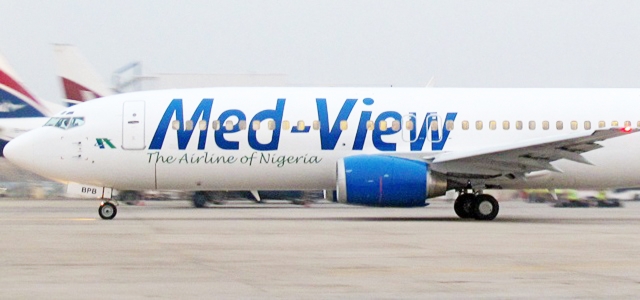
Medview Airline has signed an agreement with Air Atlanta of Iceland for the acquisition of a B747-400. Stated in the agreement is that Air Atlanta will deliver the 463-capacity aircraft to Medview to shore up its fleet as the airline prepares to open up more international routes.
It will specifically be deployed for Hajj operations and also to support the London and Jeddah routes.
The signing ceremony at Medview Headquarters, Ikeja, was graced by the presence of the managing director and chief executive officer (CEO) of Medview Airline, Alhaji Muneer Bankole, the head of Engineering, Lookman Animashaun, and Air Altanta director, Sales, Magnus Asgeirsson.
The airline’s CEO remarked that the agreement is a turning point in the 10 year-old partnership with Air Atlanta as both parties have kept faith with the existing relationship, “and we have moved a step further.”
Meanwhile, the airline has taken delivery of another B737-400, bringing the fleet size to six aircraft.
The 159 members of the World Trade Organisation (WTO) at its 10th Ministerial Conference in Nairobi, Kenya, have signed a new international agreement to eliminate subsidies for farm exports.
The WTO director-general, Roberto Azevêdo, made this disclosure in Abuja, yesterday during a meeting with the organised private sector (OPS).
“The WTO members, especially developing countries, have consistently demanded action on this issue due to the enormous distorting potential of these subsidies for domestic production and trade. The Nairobi meeting decision tackles the issue once and for all,” he said.
Azevêdo, added that the legally-binding decision would eliminate these subsidies and prevent governments from reverting to trade-distorting export support in the future. Also that developed countries have to eliminate export subsidies, except for a handful of agriculture products, and developing countries would do so by 2018 while developing members would keep the flexibility to cover marketing and transport costs for agriculture exports until the end of 2023, and the poorest and food-importing countries would enjoy additional time to cut export subsidies.
He further stated that the decision contains disciplines to ensure that other export policies are not used as a disguised form of subsidies, such as terms to limit the benefits of financing support to agriculture exporters, rules on state enterprises engaging in agriculture trade, and disciplines to ensure that food aid does not negatively affect domestic production. Developing countries are given longer time to implement these rules.
Union Bank yesterday in Kaduna has intensified its efforts to ensure that its customers enjoy services akin to that of new generation banking system. To this effect, the bank decided to trash with its slow pace and analogue way of banking that had tagged Union bank over the years as an old school bank.
The Director of the Union bank, Ibrahim Kwargana, encouraged customers to migrate to online banking with the bank.
He added that customers can open current account with only N5, 000.00 with little or no stress to get documented.
“Our goal is to make banking simpler and smarter for our numerous customers across the country.
“We have refurbished 50 branches of the Union bank across the country, putting into consideration, the behaviour of our customers towards modern banking”.
According to an official of World Bank, Dr Tunji Adekola, the federal government and the World Bank have earmarked over $100 million for girl-child education in five northern states. He said the initiative would be implemented under the Nigeria Partnership For Education Project. The benefiting states are Sokoto, Kano, Katsina, Jigawa and Kaduna.
‘’The project is also aimed at improving equity in education, as well as ensuring uniformity in access for all. This is to bring back the out- of- school children to schools thereby improving gender parity between boys and girls,’’ he said.
Governor Aminu Waziri Tambuwal disclosed that the state government has provided the sum of N75 million as counterpart funding for the project, also that the state government would provide N50 million annually to support other components of the project. The project would also be used to fully integrate the Quranic schools into the formal education system.
The governor further said the state government declared state of emergency in the education sector due to the poor state it had been in the state.
He said that the issues of teacher training and retraining, teacher-welfare and the schools’ feeding programme are among the top provisions under the state of emergency.
The Road Transport Employers Association of Nigeria (RTEAN) has lamented that despite contributing over 90 per cent of movement of goods and passengers in the country, road transport sector remains unregulated.
RTEAN president, Alhaji Musa Shehu Isiwele said the association will partner with the federal government on its plans to introduce toll gates across the country, adding that the association is concerned about how to achieve effective and efficient road transport system in country.
He stated that RTEAN has already partnered with the federal ministry of works established modern workshops in each state of the federation, including FCT Abuja.
Isiwele revealed that the association has established drivers’ academies in each geo-political zones of the federation, to train our drivers, on a continuous basis to improve the capability of the Nigerian drivers with a view to encouraging greater sanity on our roads, as statistics have shown that human errors account for 93 per cent of road accidents in Nigeria.
“the whole idea behind the projects as mentioned above is to economically empower our members to serve Nigerians better and to create jobs for our teaming Nigerian youths in addition to creating opportunities for skills acquisition for them.