Citibank Nigeria Limited, the leading global financial services company, provides consumers, corporations, governments and institutions with a broad range of financial products and services.
We are recruiting to fill the following vacant positions:
UBS has withdrawn its fixed-income research coverage of Nigeria’s banks, as international investors increasingly shun Africa’s biggest oil producer and economy,a source privy to the development revealed.
The lender cut its coverage of five banks, including Guaranty Trust Bank and Zenith Bank, Nigeria’s two biggest lenders by market value, citing a lack of liquidity in their Eurobonds, said the person, who asked not to be identified because it hasn’t been made public.
Access Bank, Diamond Bank and FBN Holdings, owner of First Bank of Nigeria, were the other lenders affected, said the person.
JPMorgan removed Nigeria from its local-currency emerging-market bond indexes, tracked by more than $200 billion of funds, in September, because of central bank curbs on currency trading that made it difficult for foreign investors to buy and sell naira debt. Barclays followed suit about two months later with its equivalent bond index.
Those trading restrictions, which the central bank has had in place for almost a year to support the naira’s peg of roughly 197-199 to the dollar, may also cause Nigeria to be removed from the MSCI Frontier Markets Index of stocks, Charles Robertson, the chief economist at Renaissance Capital, said in a note to clients Feb. 10. Nigeria has the second-biggest weighting in the gauge after Kuwait.
Nigeria, which derives most government revenue and almost all export earnings from oil, has been battered by the slump in crude prices to 12-year lows. Economic growth slowed to 3 percent last year, the least since 1999, according to the IMF. — Paul Wallace, Bloomberg New.
The Auditor- General of the Federation, AGF, Samuel Ukura on Thursday, February 18, faulted the assertion that the 2016 budget is zero-based budgeting.
Ukura specifically contradicted the Presidency on template adopted for details of the N6.08trillion budget estimates.
The AGF noted that the template used for the budget proposal before the National Assembly remained enveloped based budgeting and not zero based as claimed by the Budget and National Planning Office.
Ukura made the clarification when he appeared before Senate Committee on Public Accounts for the budget defence session of his Office in Abuja.
He noted that though the earlier intention of the government was to adopt zero-based budgeting template, realities on the ground later forced it to adopt the usual enveloped based budgeting system.
Ukura said the N2.9billion budget proposal for his office was not arrived at through zero budgeting but handed over to his office as an envelope by the Ministry of Finance.
He said: “Budgets of all Ministries, Departments and Agencies of government this year are all enveloped based and not zero-based as it has been the case over the years, including that of my office, which is even largely done for us by the supervising ministry.”
Reminded by Senators Akpan Albert Bassey (Akwa Ibom Northeast) and Foster Ogola (Bayelsa West),that his submission on the 2016 budget template ran contrary to what President Muhammadu Buhari told a joint session of the National Assembly on December 22 last year, the AGF insisted that the budget remained envelope based.
He said: “It is envelope. The zero-based budgeting, they wanted to introduce was not adhered to at the end of the day.
“In zero-based budgeting, it is assumed that such expenditure does not exist, you start from zero and justify why that expenditure must be used.
“ So, it is a system which is good and which would have also helped to set targets, but that wasn’t applied at the end of the day, perhaps because it was hurriedly being introduced.
“Budget proposal and by extension, defence, is not about fighting but discussing on what is made available for one to work with because what they want, they give.”
Transactions on the floor of the Nigerian Stock Exchange, NSE, closed Thursday, February 18, in the green zone as the All Share Index gained 0.85 per cent to close at 24,261.69 points from 24,056.12 on Wednesday, February 17.
Similarly, market capitalization jumped from N8.273 trillion to N8.344 trillion.
The market recorded 18 gainers today led by Ecobank with a gain of N0.75 or 5.00 per cent to N15.75 followed by SEPLAT with a gain of N13.71 or 5.00 per cent to close at N288.08 while Glaxosmith gained N1.09 or 4.97 per cent to close at N23.02 per share.
On the other hand, Eterna topped 16 stocks on the losers’ chart with N0.16 loss or 8.38 per cent to close at N2.85 followed by Mobil that lost N9.60 or 6.02 per cent to close at N150.00 per share, and Dangote Sugar that lost N0.31 or 5.64 per cent to close at N5.19 per share.
All together, a total of 119,338,722 shares worth N959.773 million exchanged hands in 2,464 deals.
An official of the Federal Ministry of Health, Evelyn Agbanyim has revealed that ver 700 babies die daily in Nigeria due to lack of hygiene to ward off preventable infections at birth.
Agbanyim identified the major causes of neonatal deaths in Nigeria to include low birth weight, birth asphyxia and infections, which account for 80 per cent of deaths among children.
The Health official, who spoke at an awareness seminar in Awka on how to stem the tide of neonatal mortality in Nigeria, attributed the development to ignorance, poor funding and ineffective application of life-saving neonatal commodities for women and children’s health.
According to her, the Federal Government decided to carry the campaign to the relevant stakeholders in the country following the worrisome situation, adding that those targeted were policy makers, religious and traditional rulers, professional associations and regulatory bodies and the media.
She said: “Over the last decade, progress in addressing the high rate of neonatal mortality in Nigeria has been rather slow due to skills gap, poor referral network, inadequate training of health personnel, poor policy implementation and inadequate supply of the commodities.”
According to her, maintaining the current trend will not significantly reduce neonatal mortality and so, there is need to accelerate efforts towards adequate funding to redress the situation.
She observed that despite in interventions in the past, much remained to be done to ensure access, affordability and availability of the commodities to the most vulnerable group in the country, adding that one of the major barriers of access to essential healthcare services in Nigeria was shortage and inequitable distribution of appropriate cadres of health work force to deliver the services where they were most needed.
FMDQ OTC Securities Exchange on Thursday, February 18, admitted N7.23 billion and N2.77 billion Guinness Nigeria Plc Commercial Papers (CPs). The CPs represent series 2 and 3, under the company’s N10 billion CP Issuance Programme.
The Divisional Head, Marketing & Business Development of FMDQ, Tumi Sekoni, who spoke on the listing said that Guinness Nigeria CPs as the second and third nonbank real sector CPs to be quoted on the exchange, following the quotation of the pioneer non-bank real sector CP, the N17,709,445,000.00 Nigerian Breweries Plc in November 2015.
She said the quoted Guinness Nigeria CPs would gain access to the full complement of the FMDQ quotations service, which includes but is not limited to global visibility, transparency and continuous disclosure of relevant information (such as issuer rating, issuance type, outstanding value and issuer history).
In his speech, Managing Director of Guinness Nigeria, Peter Ndegwa, said: “We are very pleased with the successful quotation of this CP issuance for Guinness Nigeria Plc and the support received from FMDQ and our advisors to enable this. The quoting of this CP has allowed us successfully diversify our short-term funding sources at a reduced cost whilst delivering value to our shareholders. We will continue to access the CP markets for optimal funding as ideal windows open for Guinness Nigeria to access funds from a varied pool of investors.”
In his remark, Managing Director/Chief Executive Officer of FMDQ, Mr. Bola Onadele. Koko congratulated Guinness Nigeria Plc on its decision to quote its CPs on FMDQ. He said the quotation of these CPs, being non-bank real sector institution CPs, was evident of the positive progression of the Nigerian CP market, serving to instill confidence in the possibilities of the Nigerian debt capital market.
He stated that FMDQ, as a securities exchange with an insatiable desire to develop the Nigerian CP market, promotes credibility for quoted CPs, through a highly efficient registration process, instituting requisite world-class standard financial market infrastructures to drive transparency, governance, market oversight, credibility and market liquidity to power growth in the Nigerian financial markets with a view to protecting stakeholder interests.
“As a securities exchange and self-regulatory organisation, with a commitment to facilitate growth and development in the financial market and Nigerian economy at large, FMDQ is committed to promoting an efficient, transparent and well regulated market, which will attract and retain investors (domestic and foreign),” he said.
The Federal Government, on Thursday, February 18, said it has earmarked N500 billion to boost the growth of the Micro, Small and Medium Enterprises, MSMEs, sector of the economy.
The Minister of Trade, Industry and Investment, Okechukwu Enelamah, said at a press briefing in Lagos, Thursday, that the Federal Government would continue to ensure that low cost financing are available to the nation’s MSMEs.
Enelamah said the N500 billion Social Protection Fund was meant for cooperatives, trade organisations and larger number of others in MSME sector.
According to him, the funds would be disbursed to two million Nigerians, specifically traders, artisans and those engaged in micro, small and medium enterprises.
This, he explained, would further make Nigeria achieve sustainable economic development as well as even creation of wealth among the citizens.
He said, “SMEs are grossly under-served in terms of low cost financing citing the sheer scale of numbers of SMEs that need funds to make appreciable impact as part of reasons for this trend.”
The Minister said the importance of financing SMEs has never been lost on the government, but for lack of access to affordable loans, adding that several deliberate and sustained financial initiatives have been put in place by the Central Bank of Nigeria (CBN), except that SMEs still remain grossly under-served.
He listed cooperatives, market women and trade groups, artisans and start-up companies as veritable partners who are being engaged towards the creation of wealth with overall goal of boosting job creation and ultimately, economic growth and development.
Yobe State Governor Ibrahim Gaidam, on Thursday, February 18, signed the 2016 budget of N89,932,740,000.00, into law, even as he swore in newly appointed Caretaker Committee Chairmen of all the 17 councils of the state.
The assent on budget followed the passage of proposal he submitted to the House of Assembly on 31st December 2015.
The twin events of the signing budget into law and swearing-in of the caretaker chairmen took place at the WAWA Hall, Government House, Damaturu.
Gaidam, who spoke at the signing ceremony, said, even though the country was facing economic challenges, with improvement in the security situation in the state, he was optimistic that the appropriation Bill would be sourced/financed through adequate utilization of the Internally Generated Revenue, apparatus in the state.
The Minister of Transportion, Rotimi Amaechi, on Thursday, February 18, revealed that the federal government would expend an aggregate of N120 billion for its two new standard (guage) railway tracks to be constructed on the Lagos-Kano and Lagos-Calabar rail corridors from its 2016 budget.
Amaechi, who made the disclosure after a train ride on the completed 186-kilometre Abuja-Kaduna railway project, from Idu terminus at the Federal Capital Territory (FCT), said the N60 billion apiece on both corridors will be for new standard gauge, adding that the narrow gauge on those corridors are already functioning.
“We have N120 billion on the 2016 projects. As you are aware of the dire financial situation, and putting into cognizance that President Muhammadu Buhari has taken all the rail projects as priority, out of this, N60 billion is for the Lagos-Kano standard gauge as the narrow gauge is working already,” the Minister said.
According to him, government is spending N60 billion apiece as part of its counterpart contributions, while the Chinese Exim bank will offset the balance payment for the project as part of their obligation. He added that the two fresh projects are however not contractual.
Amaechi said: “In fact, when I was at the National Assembly, they wanted to know if the new projects were on contract terms, I told them no.”
He said the federal government was currently implementing the projects that it met on the ground.
Shell Petroleum Development Company, SPDC, on Thursday, February 18, confirmed that it has suspended operation at its Forcados Terminal in the nation’s Niger Delta area.
Spokesman’s of the company, Precious Okolobo, stated that the development was an offshoot of the company’s investigation of the source of a crude oil spill which was observed on water around Forcados Terminal on Sunday (February 14).
Although Okolobo did not disclose the amount of crude shut-in, Forcados has the capacity to export about 150,000 bpd.
This initial investigation will enable the company to quickly determine what suitable response is further needed.
He said in a statement: “SPDC JV and third party production into the terminal has been suspended as a precautionary measure. SPDC has activated its Emergency Response and Oil Response teams to manage the incident, while booms and other oil containment resources have been deployed to the area to try to stop the spread of spilled oil.
“The support of industry group – Clean Nigeria Associates (CNA) has been enlisted for a comprehensive response to the spill.”
The relevant authorities including security agencies have been informed of the incident, preparatory to a joint investigation visit which will determine the cause and volume of oil spilled.”
The volatilty in the unofficial market on led to a steep fall in the value of the naira to exchange at N391, o per dollar, on Thursday, February 18.
The naira had yesterday exchanged at N372 to dollar on Wednesday, an indication that it is losing an average of N20 per day as importers scramble for the greenback.
President, Association of Bureau De Change of Nigeria (ABCON) Aminu Gwadabe said the importers are busy mopping up any dollar they can find because they are unsure of what will happen the next day.
He said the Central Bank of Nigeria (CBN’s) decision not to sell dollar to the bureaux de change (BDC) operators has created the ongoing panic in the market. He said the CBN is even rationing dollar for manufacturers and others that legitimately need the greenback to fund their operations.
Gwadabe said his group is discouraging BDCs from buying or selling at the current rate because it does not add value to the economy.
“We have supported the government and will keep doing so. So, we have advised members of ABCON not to buy at current rates,” he said.
“In my own view, the central bank should address the supply side of the market by allowing oil companies and banks to sell dollar to bureau de change operators as an immediate measure to reduce pressure on the naira,” Gwadabe.
The outgoing Executive Secretary of the Petroleum Products Pricing Regulatory Agency, PPPRA, Ahmed Farouk, on Thursday, February 18, disclosed that subsidy removal has saved the nation billions.
Giving account of his time at the helm of PPPRA, Ahmed said a sum of N2.6 billion accrued into a special account in the Central Bank of Nigeria (CBN) from the operation of the price modulation regime the federal government implemented from January 1, 2016.
“At the beginning of last year we were having 58 marketing companies that participated in the importation including NNPC and NNPC Retail. Today we have 18 because we are looking for efficiency.”
“There is no point for you to give allocation to a marketer and he gives you excuse why he has failed to import and Nigerians continue to suffer because of insufficient product in the market. Outside NNPC and NNPC Retail we have 16 marketing companies,” he said.
Access Bank Plc, on Thursday, February 18, announced an upgrade of its national scale credit rating by Fitch Ratings.
Fitch Ratings, a global leader in credit ratings and research, has affirmed the Long-term IDRs of Access Bank Plc (Access) and upgraded the National Ratings.
The National Rating of the Bank has been upgraded to ‘A(nga)’/‘F1(nga)’ from ‘A-(nga)’/‘F2(nga)’ to reflect the improvement in creditworthiness over time relative to peers and to the best credits in Nigeria.
In Fitch’s opinion, banks will continue to face multiple threats in the course of 2016, particularly from tight foreign currency liquidity, worsening asset quality and pressure on regulatory capital ratios. However, Access’ Viability Rating (VR) is affirmed as these risks are to a large extent already captured in the ratings.
The Long-term Issuer Default Ratings (IDR) of Access remains on Stable Outlook as the rating is driven by its Viability Ratings (VR) and there is no expectation of any material change in the Bank’s intrinsic creditworthiness.
Access’ Support Rating Floor (SRF) of “4” reflects the authorities’ unchanged ability and willingness to provide extraordinary support. The agency believes that while there is a limited probability of external support, the authorities have a stronger ability to support the bank’s local currency obligations if required.
The senior debt rating of Access (issued via Access Finance BV) is in line with its long-term IDR. The senior debt rating is affirmed due to the affirmation of the bank’s long-term IDR.
Access Bank’s major strengths, which underpin its long- and short-term ratings, include its size and franchise, its strong risk management and the group’s solid capitalization.
The bank’s improved rating further reinforces its resolve to deliver leading innovative and differentiated products and services to its customers in its quest to become the world’s most respected African bank by 2017.
Minister of State for Petroleum Resources, Emmanuel Ibe Kachikwu has said that the cost of importing oil into the country ranked the highest in the world.
Kachikwu made this known on Thursday, February 18, while delivering the 45th Convocation lecture of the University of Nigeria, Nsukka (UNN) entitled, “the Petroleum Industry and the future of Nigerian nation.”
The Minister, who also doubles as the GMD of the NNPC, lamented the price of oil which has remained unpredictable but expressed hope that in future it will not be bleak because the price might appreciate.
The oil industry in Nigeria, he said, is plagued by a lot of factors among which is that some individuals are working contrary to the growth of the industry.
He gave Nigerians hope that in the near future, more refineries will be built so that Nigerians will enjoy their God endowed natural resources.
He said the refineries were built to work for Nigerians and for this reason, Nigerians should enjoy their endowment.
“Nigerian refineries must work for Nigerians,” he said pointing out that at present, two refineries have started producing and pumping oil to Nigerians.
Shell Suspends Operation at its Forcados Terminal
Shell Petroleum Development Company, SPDC, on Thursday, February 18, confirmed that it has suspended operation at its Forcados Terminal in the nation’s Niger Delta area.
Spokesman’s of the company, Precious Okolobo, stated that the development was an offshoot of the company’s investigation of the source of a crude oil spill which was observed on water around Forcados Terminal on Sunday (February 14).
Although Okolobo did not disclose the amount of crude shut-in, Forcados has the capacity to export about 150,000 bpd.
This initial investigation will enable the company to quickly determine what suitable response is further needed.
He said in a statement: “SPDC JV and third party production into the terminal has been suspended as a precautionary measure. SPDC has activated its Emergency Response and Oil Response teams to manage the incident, while booms and other oil containment resources have been deployed to the area to try to stop the spread of spilled oil.
“The support of industry group – Clean Nigeria Associates (CNA) has been enlisted for a comprehensive response to the spill.”
The relevant authorities including security agencies have been informed of the incident, preparatory to a joint investigation visit which will determine the cause and volume of oil spilled.”
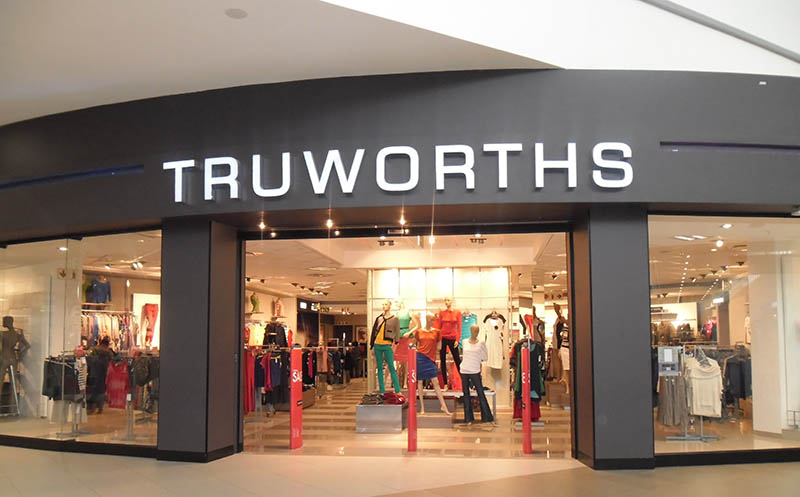
South Africa owned retail store, Truworths has pulled out of the Nigerian market as a result of high rentals and import restrictions.
The store’s Chief executive,Michael Mark revealed on Thursday, February 18.
“We were unable to operate the stores properly any longer because we were unable to send merchandise to the stores because there’s regulation preventing that,” Michael Mark told Reuters in a telephone interview.
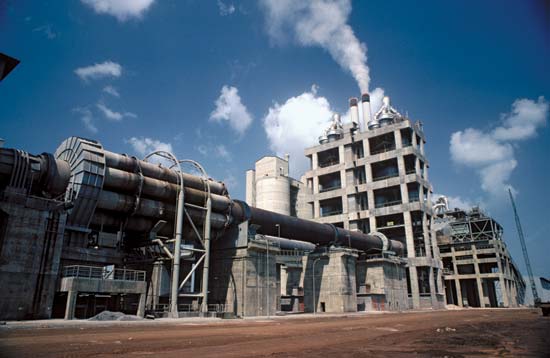
BUA Group, Nigerian conglomerate, is in talks with China’s Sinoma to build a steel plant in Nigeria and two cement plants in East Africa for $1.9 billion.
BUA Chairman, Abdulsamad Rabiu told Reuters the two cement plants, which will have an annual capacity of 3 million tonnes each, will cost $700 million.
The steel plant will have a capacity of 1.2 million tonnes and will cost $1.2 billion.
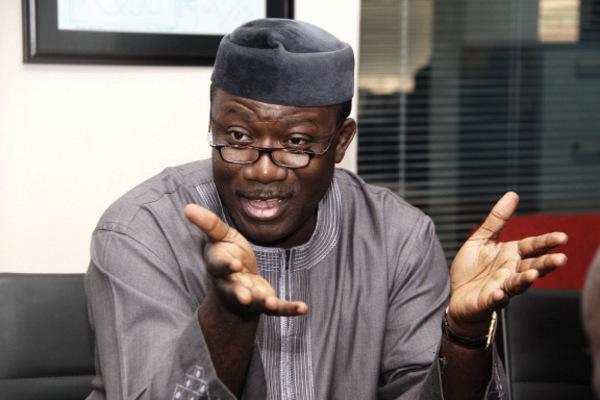
Dr Kayode Fayemi the Minister of Solid Minerals and Steel Development, on Thursday said that his ministry had discussed with the Central Bank of Nigeria, CBN, and commercial banks in the country so that they could establish a desk for solid minerals development.
Fayemi made this known at the budget defence of his ministry, while responding to the question by a member of the Senate Committee on Solid minerals, Senator Tijjani Yahaya Kaura on whether it is appropriate to establish Solid Minerals Development Bank in order to funds activities that will lead to the diversification of the economy.
“Hon. Minister, you recall that you promised the Senate during your screening that you were going to turn things around and giving your credentials, one is not in doubt. We want to know how far, your ministry has gone with arrangements of establishing Solid Minerals Development Bank?” Kaura asked.
The Minister noted that establishing Solid Minerals Development Bank at this time would have viability problems, hence what the ministry is doing is to liaise with the CBN and commercial banks to set up a desk that would specifically fund the sector which they have agreed.
“For now, setting up Solid Minerals Development Bank would have viability problems because the sector was still under developed and instead we decided to discuss with the CBN and Commercial Banks to set up a desk so as to fund solid mineral related activities,” he said.
“The administration was already working towards positioning the sector as one of the economic mainstay, but in doing this, steel sector component was critical and I want to solicit the cooperation of the Senate in this direction,” Fayemi added.
Meanwhile, the Chairman, Senate Committee on Solid minerals, Joshua Dariye alongside other Committee members having noticed increase wage bill of the Ministry, sought for the list of staff with a view to ascertaining if it reflects true federal character.
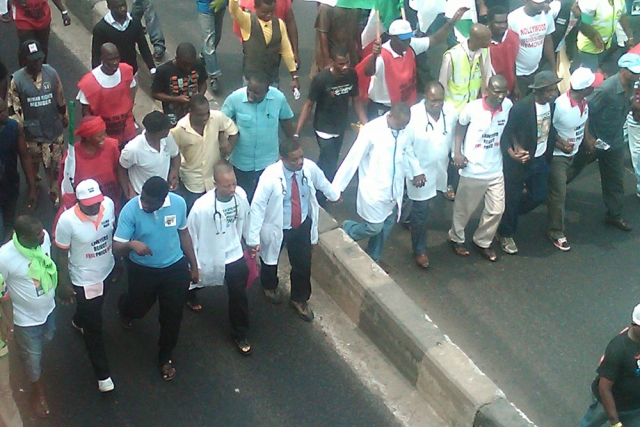
The Nigerian Medical Association has distanced itself from the proposed strike by health workers in Nigeria over alleged breach of agreements with government.
In a statement issued in Abuja on Thursday by its Chairman, Publicity and Publication Committee, Dr. Obitade Obimakinde, the association described the proposed strike as illegal and said, “The NMA will however wish to caution that issues which have been concluded in the past negotiations or supported by government circulars and memoranda should not be reinvented or distorted in this impasse.”
The organisation also called on security agencies to beef up security around hospitals and give maximum protection to doctors.
The Joint Health Sector Unions and Assembly of Healthcare Professional Associations had threatened to embark on a nationwide strike following the expiration of their two weeks ultimatum.
Obimakinde informed Nigerians that doctors were not part of the planned withdrawal of services in hospitals nationwide by health workers
He said, “Medical doctors are reporting promptly and available at their duty posts. We are carrying out the responsibilities of saving lives as much as possible within the limits of available facilities and resources provided by the hospitals. We also call on the law enforcement agencies to intensively guarantee protection of doctors in the discharge of their legitimate duties.”
The workers had earlier handed the government a 15-day ultimatum with effect from February 3, 2016, to accede to their 10-point demand or risk nationwide strike.
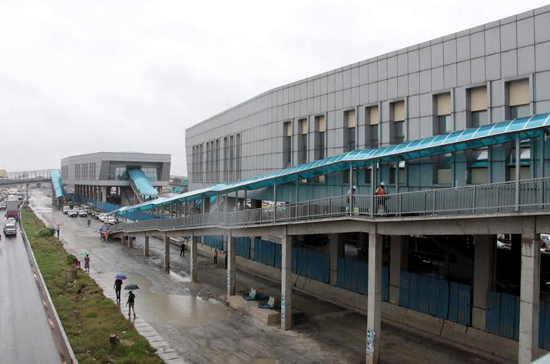
Governor Akinwunmi Ambode of Lagos state has said that his administration is working to ensure that the Blue Line of the Light Rail Project begins operations by December 2016.
Governor Ambode, who spoke at the 5th Lagos Corporate Assembly, a forum for public-private sector engagement held at the Banquet Hall of Lagos House, Ikeja, while responding to questions from captains of industries and members of the Organised Private Sector (OPS), described allegations that construction work had stopped on the first phase of the project connecting Mile 2 to CMS as false.
According to him, his administration was also about to conclude the channelization of the waterways in Lagos to improve on water transportation so as to encourage investors and reduce the pressure on the road networks in the state. The governor also assured members of the OPS as well as would-be investors that the state is more than willing and ready to create an enabling environment for businesses to thrive with the overall aim of improving on the socio-economic wellbeing of the citizens.
He said as part of measures to further improve on the creation of enabling environment for businesses to thrive, his administration was also in the process of establishing Lagos Micro Finance Bank, which would go a long way in providing succor for business owners.
Governor Ambode said that the government was also in the process of transforming the Kuramo beach into a World Trade Convention Centre, assuring that he was very much committed to showcasing the economic potentials of the state to the rest of the world.
Speaking on the strategy to drastically reduce traffic in Apapa and make life comfortable for people and businesses in the axis, Governor Ambode recalled the security tour he recently embarked upon to Ishawo and Oke-Oko creek in the suburb of Ikorodu where he met with military personnel carrying out the “Operation Awatse”, a joint military operation of all the security agencies to tackle the menace of pipeline vandalism in the Arepo axis.
“The idea is that when we open up the area and construct the Ishawo-Oke-Oko creek road to connect the Lagos-Ibadan Expressway from there, we would have greatly reduced the traffic gridlock on the expressway and then finally put a stop to the activities of pipeline vandals so that we can begin to directly pump petroleum products from Atlas Cove in Apapa to Mosimi, and then the tankers will have no business to come to Lagos to lift product,” Governor Ambode said.
The Governor, who spoke on several issues affecting businesses in the state, assured that he would work on perfecting a methodology for collection of rates, and that he would soon come up with a grand plan to permanently tackle the menace of touts.
On power, Governor Ambode said between now and 2017, he had an agenda to create clusters of Independent Power Projects (IPPs) across the state to improve on power generation and ensure 24hours power supply in Lagos.
Following the recent sack of about 13 vice chancellors from the newly established federal universities and the appointment of new ones, the Coalition of Civil Society Group, on Wednesday, in Abuja, constituted an obstruction to movement at the entrance of the National Assembly and the Ministry of Education.
The group protested over what it described as an illegal termination of the appointments of five of the vice chancellors whose tenures were yet to elapse.
Addressing newsmen in Abuja, at the venue of the prostest, the president of the group, Etuk Bassey said the act was a breach of the provisions of the University Miscellaneous Provisions Act No. 11, 1993.
Etuk, who demanded the immediate sack of the Education Minister, Mallam Adamu Adamu, said five out of the 13 sacked VCs were yet to exhaust their tenures, and as such, declared that they should be reinstated.
The civil society president, who also accused the minister of tribalism in the appointment of the new VCs, described this as an aberration to the Federal Character Act.
“Among the new vice chancellors, four professors are from Bayero University, Kano, two from UNIJOS, two from ABU and the rest are from Port-Harcourt, Owerri, Lafia, Kashere and Dutse, respectively, while the newly appointed chairperson of the University Governing Council including the vice chancellor are from Kano State.
“Is this not a clear violation of the Federal Character principle meant to engender unity in the country?,” he queried.
However, the protesters were denied access into the National Assembly by security operatives even as they waited endlessly to be addressed by relevant persons who never showed up.
The group carried placards with inscriptions like “Mallam Adamu Adamu must go now”, “Professors demand respect not embarrassment”, Mr President call your Minister of Education to order”, “We want due process in the education sector”, “Reinstate sacked chancellors now”, among others.