The former chairman of the Nigerian Electricity Regulatory Commission, NERC, Sam Amadi has said that the last regulatory audit of the metering gap in Nigeria’s power sector showed that up to two million electricity consumers are yet to be provided with meters by the electricity distribution companies, Discos.
Amadi stated in an interview in Abuja that the metering audit by the NERC was done in December 2015 preparatory to the conclusion of the new tariff review.
He however noted that the gap can be bridged through multiple creative means, which include government subvention and private investments.
According to him, such subventions or investments in bridging the metering gap would have to be backed by the regulator.
Amadi said: “We still have like two million meters backlog by the last assessment. The metering gap can only be closed by investments mandated by the regulator, recovered through tariff but spread out over the years. But government can help now by making investments.”
The naira gathered strength at the parallel market on Monday, February 22, as an overflow of dollars chased the local currency.
The value of the naira had leaped to around N367 to the dollar causing panic in the money market and the economy at large.
Bureau de Change operators as well as street hawkers sold the greenback between N367 and N37. While the pounds sold at around N496 to N499. As at last week Friday, the value of the naira stood at N370 to the dollar and N500 to the British Pounds.
Also the official rate at the Central Bank of Nigeria (CBN) rose in value to N196.5 to the dollar, even as the external reserves of the country rose slightly for the first time this year. The reserves which had dropped to $27.789 billion rose slightly to $27.793 billion as at February 19, 2016.
Last week the value of the naira had dropped to an all time low of N398 to the dollar and N520 to the pounds.
he Forcados terminal has the capacity to export 400,000 barrels of crude oil per day.
According to a statement issued by the company, the force majeure was declared on Sunday, following the disruption in production caused by the spill on the Forcados Terminal subsea crude export pipeline the previous day.
The spokesman Precious Okolobo said the oil company is intensifying efforts on containment and oil recovery from the February 14, 2016 spill, while also finalising repair plans.
Four commercials banks were in 2015 sanctioned for non-reversal of ATM cash dispense error within the specified 48 hour timeframe given by the Central Bank of Nigeria, CBN.
However, Nigerian banks in the past year paid out almost N400 million as cashback on the use of point of sale terminals.
CBN Assistant Director, Payment Policy and Oversight, Banking and Payment System, Shola Agboola, who spoke with newsmen on Monday, February 22, at a press conference organized by the Nigeria Inter Bank Settlement System (NIBSS), noted that following the issuance of a circular directing banks to install and automize auto reversal, the apex bank had found four banks wanting.
“When we carried out our oversight function on the banks to ensure at they have done what they were asked to do, four banks were penalized and sanctions last year, he stated adding that “a situation whereby customers will have a problem, they go and complain and the bank will not attend to them can no longer continue.”
The cashback was introduced in 2014 as an incentive for customers to use their cards for payments and to drive the usage of PoS, customers are paid back 40 per cent of the 1.25 per cent that merchants are charged on POS usage.
Anambra State government has partnered with a courier and cargo company, ABX World, to facilitate the export of about $5.2billion worth of agro-allied products to European countries yearly.
ABX Anambra, World Chief Executive Officer Captain John Okakpu, who made this known, listed others in the deal as Arik Air and Skyway Aviation Handling Company (SAHCOL), adding that it would facilitate the packaging and air freighting to European countries.
Okakpu described the partnership as part of the state government’s efforts to lead the way in its commitment to developing agriculture. The gesture, he said, is capable of generating jobs, eliminating poverty and restoring investor’ confidence in the state.
He said the state had become a trailblazer in this regard, as “different state governments, realising their dwindling fortune in the wake of falling oil revenue, are now interested in the agro-allied exports.” He said Anambra State was leading the way through serious commitment to agriculture , adding that the state is far ahead of others in grassroots structure and technology deployment to aid farmers.
He said: “When we entered into agreement with them, we discovered that they have gone very far. For instance, the state has over 1400 corporative societies and they have gone to the extent of training most of the farmers and also the certification of the corporative societies.
“The next step was the geo-mapping of the area for easy identification of the farmlands from any part of the world. This is a sure step to curb the incessant rejection of agro-allied produce from Nigeria at the European and the rest of the world markets.
“The EU certified trainers were in Nigeria about three months ago. So, after that training and certification programme, the participants were guaranteed of three years contract to supply agro-allied produce to Europe and can use it for the rest part of the world.
“This is the real capacity building we are talking about. There is no other better way to fight poverty and encourage farmers than to provide markets for them.”
Okakpu added that they are working with other partners, Arik Air and SAHCOL to ensure that about 75 farm products of which Ugu-pumpkin leaf tops the list, are exported from Nigeria to Europe and rest of the world.
He expressed optimism that the project will create millions of jobs in the country as more states queue-in into it.
He said that ABX World will use its partnerships around the world to make a difference, “create agricultural revolution whereby we bring in the off-takers to take agricultural products as long as they meet the international standard and requirements.”
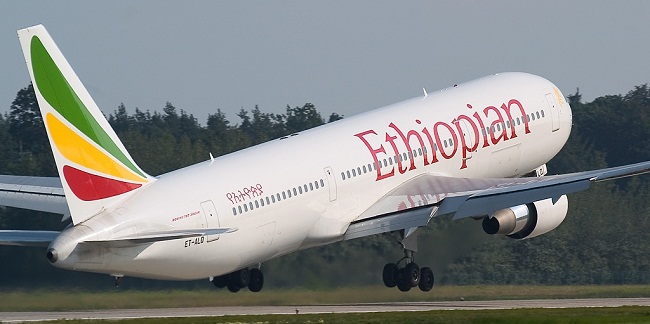
Ethiopian Airlines and Bombardier Commercial Aircraft have sealed a firm purchase agreement for two additional Q400 turboprop aircraft, that will bring the airline’s Q400 aircraft fleet to 19 aircraft.
The transaction is valued at approximately $63 million.
Group Chief Executive Officer, Ethiopian Airlines,Tewolde Gebremariam, said: “We are continuously working to have the right fleet with agility, optimal range, load and passenger comfort which is critical for us to keep our leadership position in the market.”
“The Q400 aircraft continues to be an integral part of our expansion strategy in Africa.Through our strategic partnerships with ASKY Airlines in Togo and Malawian Airlines in Malawi, the Q400 airliner has played a vital role in availing convenient connections, as well as increasing frequencies to support air travel growth in Africa and successfully create a missing link.”
”The Q400 aircraft is also our core fleet to our domestic and regional destinations, thereby ensuring excellent passenger experience, operational flexibility and economics. We continue to work with Bombardier to support and maintain the aircraft through our approved Q400 Authorised Service Facility and our Q400 aircraft simulator,”Gebremariam added.
It was also gathered that by the end of 2015, China’s non-financial direct investment to Nigeria was $1.55 billion.
Chinese Ambassador to Nigeria, Gu Xiaojie who spoke at the symposium of “China/Nigeria Diplomatic Relations at 45: Possibilities, Prosepct and Challenges” in Abuja at the weekend, said the trade volume between China and Nigeia almost doubled in the past few years.
The trade volume however is in favour of China, a development that has been a source of concern to the Federal Government.
“In the trade area, the trade volume between China and Nigeria almost doubled in the past few years. In 2015, our two countries were affected by the sluggish world economy, with trade volume between them last year standing at $14.94 billion, 17.2 per cent less than that of 2014.
“However, Nigeria remains the largest market for Chinese contracted projects and the second largest market for Chinese contracted projects and the second largest market for Chinese exports and the third largest trading partner in Africa.
“Nigeria is also a major destination for Chinese out-bound capital. By the end of 2015, China’s non-financial direct investment to Nigeria is $1.55 billion, 17.6 per cent more than that of 2014,” the envoy said.
He also said in the area of people-to-people communication and cultural exchange, China has established two confucius institutes and four Chinese language centres in Nigeria.
The envoy said China currently issues about 100 government scholarships, while another 400 Nigerian students funded by their family study in China.
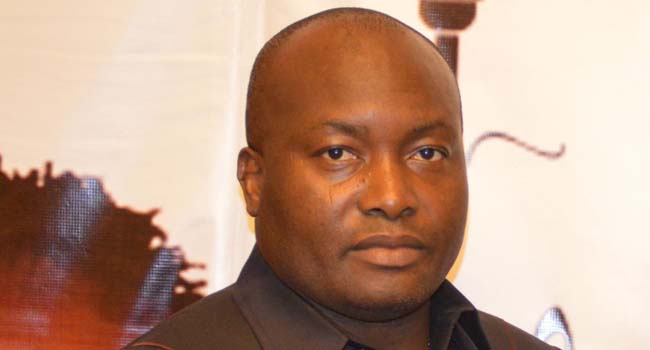
The Chairman of Capital Oil and Gas, Ifeanyi Ubah on Sunday has said he has what it takes to restore the naira to 200 against the dollar in one month, if consulted by President Muhammadu Buhari.
Speaking with Channels Television, Ubah, however, dismissed the insinuation that the short fall in naira was as a result of the activities of the Bureau De Change, BDC, operators.
He said, “Look at the economy, look at the position of the naira today; some of us have ideas on how we can restore this.”
“It won’t take me one month, if Buhari gives me part of that consultancy, and naira would come back to 200.
“I can bet my life with it, naira would come back to N200. If you call me for that consultancy, I would put naira back to 200.”
“Look at the economy, look at the position of the naira today; some of us have ideas on how we can restore this,”
“Do you know how many Burea De Change people who food has been taken out of their families because of this? If you say they are the ones causing it, then where are you today?
When asked on how he intends to go about achieving such feat, Ubah said: “Don’t worry, that’s my business and business is secret.”
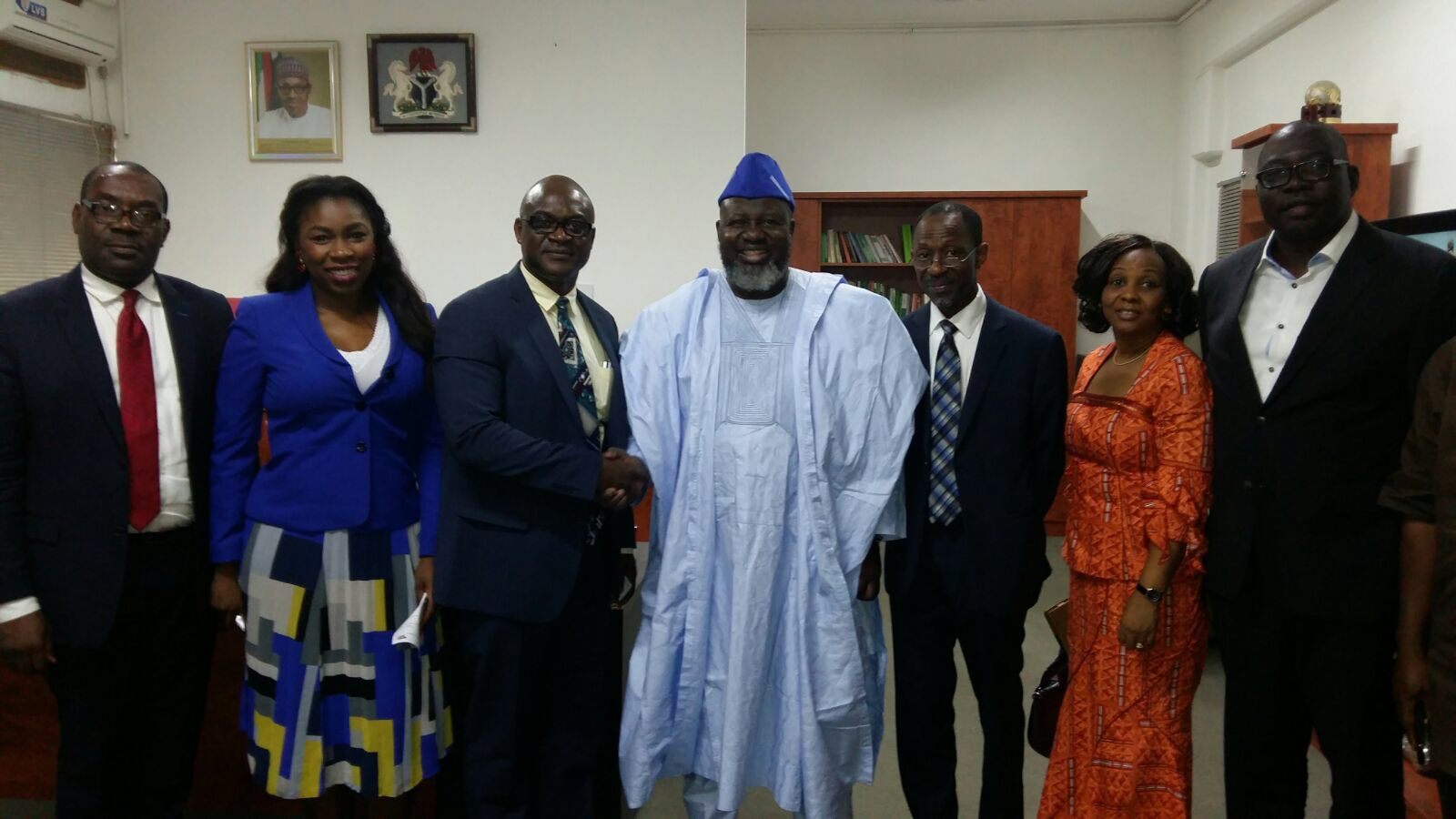
The Honourable Minister for Communication & Technology Barrister Abdur-Raheem Adebayo Shittu shaking hands with Dr. Uyi Stewart, Chief Scientist, IBM Research Africa laboratory (3rd from left); Taiwo Otiti, Country General Manager IBM West Africa (3rd from right) and other IBM executives during a courtesy visit of the IBM team to the Minister recently.
Can African nations innovate themselves out of their current macro-economic doldrums? Yes. No. Possibly. How?
Economists and development experts hardly agree on any matter. However, everyone involved in Africa’s ongoing development debate agrees that more than any other time in history, Africa’s struggling and fast growing economies now need more trade, more investments, more technology and a culture of innovation.
Increased collaboration and knowledge sharing between citizens, countries and companies will accelerate social and economic reengineering, even as policy and development experts must be wary of reinventing the wheel. They must quickly begin to tap new insights from available data, connect to the global information infrastructure and join forces with established institutions with a proven track record of achievements and transformative results.
IBM’s support for Africa’s businesses and governments date back to the 1920s, and in Nigeria since 1961 when the Federal Statistics Bureau in Lagos operated its first IBM equipment. In 1963, IBM provided the very first machines used by computer science departments in Nigerian universities. Last year IBM provided tertiary institutions in Nigeria and Ghana with high end servers and advanced software to enhance student training and curriculum development.
The company’s continued commitment to Africa is driven by a desire to support national and sub-national jurisdictions with leading edge technology solutions and services that will help upgrade current social and economic conditions, says Dr Uyi Stewart, Chief Scientist of the Nairobi, Kenya-based IBM Research Africa laboratory. “In all areas of human development, technology now exists to allow our people all over the continent to quit living in the past,” Stewart states.
Dr. Stewart made these salient points last week during meetings with government and business leaders in Nigeria’s administrative capital, Abuja and in Lagos, Nigeria’s commercial hub. “It is important that government lead the way by becoming more efficient in the delivery of services to citizens and this can only happen when technology begins to be at the core of decision making and public sector administration,” Dr. Stewart says.
Named last year as one of Africa’s top 50 most influential thought leaders by The Africa Report magazine, Nigerian-born Dr. Osamuyimen “Uyi’ Stewart is a distinguished IBM engineer and a leading inventor and innovator of repute. As Chief Scientist of IBM’s 13th global and first IBM research lab on African soil, he is responsible for ensuring that the work of the lab is deployed into resolving some of the continent’s most challenging development issues. His commitment to science and research form part of the company’s history of innovation.
The Honourable Minister for Trade & Investment Dr, Okechukwu Enelamah (3rd from right); Dr. Uyi Stewart, Chief Scientist, IBM Research Africa laboratory (2nd from right); Taiwo Otiti, Country General Manager, IBM West Africa (2nd from left) and other IBM executives during a courtesy visit of the IBM team to the Minister recently.
The global technology firm reportedly invests as much as $6bn on technology R&D annually; and it continues to shape the future of computing through cognitive computing and cloud platforms that will help clients drive transformation across multiple industries. In 2015, IBM topped the list of annual U.S. patent recipients, receiving 7,355 patents. The company’s inventors have received more than 88,000 U.S. patents during the past 23 years.
As much as 70% of the world’s data is currently managed on IBM systems. Often hailed as the silent engine behind the world’s ATM networks, 80% of Nigerian banks currently depend on IBM enterprise systems to drive their critical back-end and service delivery operations.
Dr. Stewart says IBM is equipped to support the Nigerian government’s drive to create a conducive environment for innovation, investment and entrepreneurial activity. Vice President Yemi Osinbajo has repeatedly said government is desirous of quickly improving Nigeria’s ease of doing business status and by extension stimulating a pro-business, pro-development milieu for trade and commerce.
Nigeria has dropped 75 places over the past decade to 169th out of 189 countries ranked in the World Bank’s Ease of Doing business 2016 report.
“Advanced data analytics, security and cloud computing technologies exist to resolve Nigeria’s ease of doing business challenges and ultimately make the Nigerian environment attractive to foreign direct and portfolio investments,” Stewart remarked during a meeting with the Honourable Minister for Trade & Investment, Dr. Okechukwu Enelamah.
The Honourable Minister for Communication & Technology, Barrister Abdur-Raheem Adebayo Shittu also hosted the IBM team in his office. He welcomed IBM’s initiatives and noted that public – private sector collaboration has been the cardinal focus of the ministry under his watch.
Dr. Stewart’s team which was led by Taiwo Otiti, Country General Manager, IBM West Africa, also met with Engr. Aliyu Aziz, Director-General of the Nigeria Identity Management Commission (NIMC); Senator Abdulfatai Buhari, Chairman, Senate Committee on Information Technology & Cybercrime and Mr. Uzoma Dozie, managing director, Diamond Bank Plc.
Africa is now home to two IBM research labs, located in Kenya and South Africa.
Nigeria, Kenya, Egypt, Morocco and South Africa also house IBM Client and Innovation Centers. These facilities form part of IBM’s global network of technology hubs which support local tech innovators and developers and help to bring commercially viable technology solutions to businesses, governments and society at large.
Last year, IBM generated more than 2,000 patents in areas related to cognitive computing and the company’s cloud computing and services portfolio. These investments will continue to drive transformation for IBM’s clients and business in years to come.
In one of technologies hottest areas of cognitive computing and artificial intelligence, IBM patented systems to help machines interpret motion-laden words allowing them converse in more natural ways, and to understand language by interacting with humans. IBM patents in 2015 also created machines that mimic the brain, handle information overload, give machines good judgment, and help machines understand emotion.
More than 8,500 IBM personnel residing in the U.S. and across 46 countries were responsible for IBM’s 2015 patent tally. IBM inventors who reside outside the U.S. contributed to more than 36% of the company’s 2015 patents.
#
The Top Ten list of 2015 U.S. patent recipients includes:
The National Broadcasting Commission (NBC) will take drastic steps towards promoting Nigerian broadcast industry’s content at the 22nd Edition of Cable, Broadcast and Satellite (CABSAT) conference scheduled for March 8 and 10 in Dubai.
The Deputy Director, Public Affairs of NBC, Mrs Maimuna Jimada, said that the commission had signed a Memorandum of Understanding (MoU) with Transatlantic Media Company (TMC) to maximise new opportunities in the broadcast media as the world adapt to digital content delivery, adding that NBC have come up with some initiatives to assist the industry, especially content producers and content providers in the country.
“This year, NBC is partnering with the Transatlantic Media Company, as the sole agent of CABSAT in Nigeria, to come up with the Nigerian Pavilion sponsored by the commission.
“Where all content producers from Nigeria will operate under that umbrella at CABSAT, which means that Nigeria will be represented at the conference. Before this year, other countries have been going to CABSAT but Nigeria was not represented as a country,’’ Jimada said.
Jimada further said that this time around there would be a Nigerian Pavilion sponsored by NBC where professionals in the broadcast industry would discuss business with broadcast professionals all over the world. This will enable them to carry out their businesses which can be core production, buying and selling of contents.
She added that the events would also assist NBC fast track the migration from analogue to digital broadcast in 2017, which would create employment opportunities in the industry.
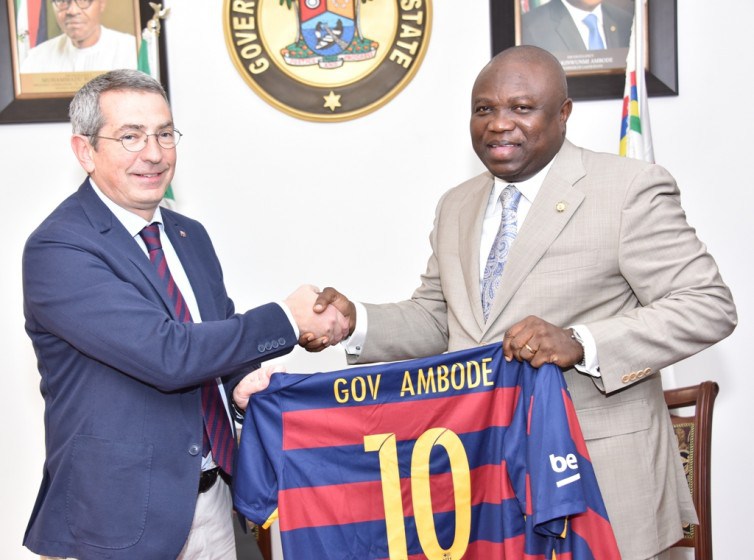
Spanish football club, Barcelona, has announced that it will be setting up its first football academy on the African continent in Lagos State. The Lagos state governor,
Mr. Akinwunmi Ambode, on Monday welcomed the decision of football giant to establish its first football academy in Africa in Lagos and also pledged the maximum support of the government in ensuring the successful take off of the project.
Governor Ambode, who spoke at the Lagos House in Ikeja while receiving senior management staff of the football club, said he was delighted with the development, as it was in sync with his administration’s philosophy for sports development.
Describing the development as an historic moment for the state, Governor Ambode said it was indeed a thing of joy coming at a time when the state was still basking in the euphoria of the successful hosting of the International Marathon.
He said the Lagos Marathon was a major pointer to how Lagos could actualize its dream of improving the Gross Domestic Product (GDP) of the state using sports as a major instrument.
The Governor, who reiterated the importance of sports to integration and development, said that sport was the future of service to create a platform for youth employment and youth engagement in Lagos.
Besides, the Governor pledged the full support of the state government to the Nigeria Football Federation (NFF) in hosting the first ever Beach Soccer African Nations Cup in Lagos, which will hold between December 10 and 23, 2016.
Earlier, Pau Vilanova i Vila-Abadal, Director of Business and Member of FC Barcelona Management Board, who led the team to the State House, thanked Governor Ambode for the support given to them so far in actualizing the project.
He said FC Barcelona decided to establish its Academy in Lagos due to the impressive population of the state, and the opportunity to share the philosophy of the team with the state.
Fitch Ratings has upgraded Access Bank’s long-term National Ratings to “A” from “A-” with a stable outlook.
Access Bank, a leading full service commercial bank with headquarters in Nigeria, and operations across major cities and commercial centres in Sub-Saharan Africa, the UK, China and UAE; today announces an upgrade of its national scale credit rating by Fitch Ratings.
Fitch Ratings, a global leader in credit ratings and research, has affirmed the Long-term IDRs of Access Bank Plc (Access) and upgraded the National Ratings. The National Rating of the Bank has been upgraded to ‘A(nga)’/‘F1(nga)’ from ‘A-(nga)’/‘F2(nga)’ to reflect the improvement in creditworthiness over time relative to peers and to the best credits in Nigeria.
In Fitch’s opinion, banks will continue to face multiple threats in the course of 2016, particularly from tight foreign currency liquidity, worsening asset quality and pressure on regulatory capital ratios. However, Access’ Viability Rating (VR) is affirmed as these risks are to a large extent already captured in the ratings.
The Long-term Issuer Default Ratings (IDR) of Access remains on Stable Outlook as the rating is driven by its Viability Ratings (VR) and there is no expectation of any material change in the Bank’s intrinsic creditworthiness.
Access’ Support Rating Floor (SRF) of “4” reflects the authorities’ unchanged ability and willingness to provide extraordinary support. The agency believes that while there is a limited probability of external support, the authorities have a stronger ability to support the bank’s local currency obligations if required.
The senior debt rating of Access (issued via Access Finance BV) is in line with its long-term IDR. The senior debt rating is affirmed due to the affirmation of the bank’s long-term IDR.
Access Bank’s major strengths, which underpin its long- and short-term ratings, include its size and franchise, its strong risk management and the group’s solid capitalization. The bank’s improved rating further reinforces its resolve to deliver leading innovative and differentiated products and services to its customers in its quest to become the world’s most respected African bank by 2017.
Ekiti State Governor, Mr Ayodele Fayose has called for the devaluation of the Naira, saying; “With the gap between the official rate of N199 and open market rate of over N400 to one dollar, Naira has already been devalued.
He said, “Therefore, President Mohammadu Buhari must stop deceiving himself and short-changing Nigerians, especially, States and Local Councils in the country with his Forex Policy.”
Governor Fayose, who said there was no time in the history of Nigeria that the gap between dollar official rate and open market rate was more than N200, pointed out that it made no economic sense for the Federal Government to be calculating the country’s revenue on the basis of the Central Bank of Nigeria (CBN) official rate of N199 to a dollar while States and Local Councils that are sharing the revenue with the Federal Government run their businesses at the open market rate of over N400 to one dollar, thereby causing business to be folding up by the day and prices of goods skyrocketing everyday.
Special Assistant on Public Communications and New Media to the governor, Lere Olayinka, in a statement issued in Ado-Ekiti on Sunday, quoted the governor as saying that apart from breeding corruption through round tripping or foreign exchange arbitrage, Nigerians are also being duped and middle class Nigerians, the main people that grows the country’s economy are being decimated.
The governor said President Buhari was applying his 1984 failed economic policy in which prices of goods were fixed not minding the cost of supply, such that essential commodities like milk and sugar became scarce and Nigerians were made to line up in the sun to buy rationed commodities.
He urged the President to pay more attention to the ailing economy of the country instead of junketing around the world, wasting $1 million per foreign trip, saying; “President Buhari has travelled to 24 countries in eight months, and will be spending 16 out of the 29 days in February outside the country, with over $500,000 being spent on estacode while the Presidential Air Fleet, which includes fuelling of the planes and allowances for crew members is said to be in the range
of $500,000.
“The President’s entourage obviously collect their travel allowances in dollars on official rate of N199 and come back to Nigeria to change it at the open market rate of N400. That must be the reason they encourage the President to be junketing abroad when life is becoming unbearable for Nigerians.”
The governor said; “The situation is such that Nigeria gets say $2 billion revenue in a month, calculates the $2 billion revenue on the basis of the official CBN rate of N199 and share the revenue among the three tiers of government.
“Also, Nigeria is now faced with a situation whereby funds are obtained from the official forex market (at lower rates) and diverted to other markets and sold at a higher rate by forex dealing banks and therefore be devalued.
”Anything other than this will mean that we are deceiving ourselves with forced foreign exchange rates and it is my position that this regime of deceit must stop.”he added.
Indigenes of Kalaba community, Okordia Clan in Yenagoa Local Government of Bayelsa State, have raised the alarm over a major gas leakage in Taylor creeks, which has contaminated their only source of drinkable water. They have called on the Nigerian Oil and Gas Company (NAOC), operators of the Agip Joint Ventures, who own the pipeline to come to their rescue before it gets out of hand.
A close watch by the community also shows the oil/gas pipelines belong to the Nigeria Agip Oil Company which crossed the Taylor Creek while a further check revealed what was suspected to be a gas leak from one of the company’s pipelines.
The Paramount ruler of the community, Chief Roman Orukali and the youth president, Samuel Oburo, reacted to the sudden leakage, saying, they were informed of the leakage which prompted them to come and investigate.
The youth President said: “ The bubbling you are seeing right on the Creek, is gas leaking from the pipeline. We noticed it yesterday morning. One Mrs. Florence Nyinkefamo rushed to me and informed me that something strange was happening at the waterside. And when I rushed to see things for myself, I noticed that it was a leakage from pipeline owned by the Nigerian Agip Oil Company [NAOC].
“You can see that people are still making use of the Creek, rowing from one end of the community to the other, washing, bathing and every other thing we use the water here for, even though it portends some health risks. This is our only source of water, nearest to the community and, it is a major resource our people rely on. It is very unfortunate that Agip has operated here for over 28 years and this community is yet to benefit anything from the company; we get only the negative impacts of their operations. Even the water project which Agip promised us, for which the community and Agip had signed a Memorandum of Understanding [MOU], it is over a year since signing the MOU and Agip is yet to execute the water project for our community.”
The traditional ruler said: “What we are seeing here is the bubbling of gas; leaking from the pipe of NOAC.
“As a trained field monitor, I also came around to see what was happening in the environment. I discovered that it was true, gas was actually bubbling. Incidentally, this Creek is our only source of drinking water and where we carry out almost all domestic activities, right now, the water is polluted.”
Globacom network has continued to rule the internet market as latest figures released by the industry regulator, the Nigerian Communications Commission(NCC) revealed that the network has widened the gap between it and the other operators in the country in the area of new data subscriber acquisition.
A scrutiny of the latest figures released by NCC showed that it was only Globacom that recorded an increase in its internet subscriber base in the last quarter of 2015.
The network had 23,285,454 internet users in October, 24,952,559 in November and 25,082,066 in December, which is an addition of 3.2 million new internet subscribers in the quarter.
Conversely, MTN, Airtel and Etisalat all lost data subscribers within the period. MTN which had a total of 41,835,294 internet subscribers at the beginning of October 2015 had 39,924,737 data subscribers at the end of December, a loss of almost two million customers.
In the same vein, Airtel which began the quarter with 17,730,955 internet customers ended with 16,835,952, a loss of nearly 900,000 subscribers.
Etisalat on its part lost 408,282 internet customers, having begun the quarter with 15,598,070 data and ended it with 15,189,788.
According to the NCC data, Globacom added 1,130,850 new internet subscribers which were much more than the total number of new internet users who joined the three other major telecom operators, MTN, Airtel and Etisalat.
The three recorded a combined total of 716,450 new internet subscribers in September.
In the latest report just published by NCC which showed the internet subscriptions of the four major service providers for the last quarter of 2015, Globacom has consolidated its position as the leader in new data subscriber acquisition.
The consistent growth in new internet subscriber acquisition by Globacom in the last few months is an indication of its preference by subscribers as a result of its improved internet service delivery.
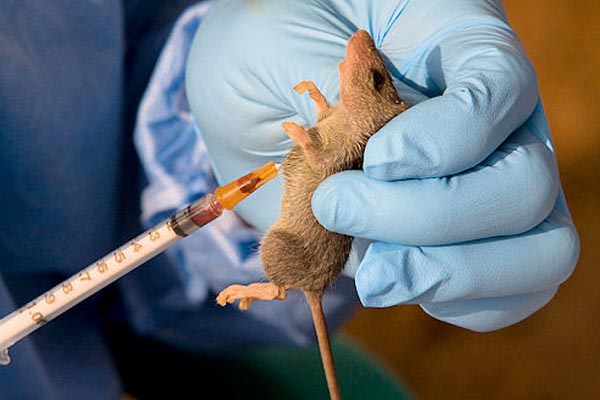
The National Council of Muslim Youth Organisations (NACOMYO) has urged residents in Nasarawa state to avoid rats in order to prevent Lassa fever.
The National President of NACOMYO, Alhaji Kamal’ddin Akintunde, said that the call had become imperative due to the effects of Lassa fever on human health and the socio-economic development of the country.
“The awareness was aimed at complementing government efforts in bettering the health needs of the people of the state and Nigerians at large, we heard reported cases of death and we even have seen how some people contacted and died of Lassa fever not only in Nasarawa state but also in some parts of the country.
“That is why I said that the Lassa fever awareness campaign in rural communities is timely. The virus can be transmitted to human through contamination of broken skin via direct or indirect contact with infected rat excreta or urine on floors, home surfaces, in food or water.
“Nigerians should improve on their environment sanitation and personal hygiene so as to avoid spreading of diseases,’’ he said.
Akintunde also call on wealthy individuals and organisations to assist the government through initiating people oriented programmes, adding that government alone cannot do everything for its citizens.
Members of the “PDP Rescue Group”, a faction of the party’s faithful, have continued to show that their not in support of the appointment of Senator Ali Modu Sheriff as the party’s national chairman.
The Chairman of the PDP Rescue Group, Ambassador Wilberforce Juta, who had sought the party’s chairmanship position, described the emergence of Senator Sheriff as an imposition by some persons in the party.
He told a press conference in Abuja on Sunday that the current chairman lacked the integrity that the PDP needed at this time.
The group is calling on the new chairman to resign, as he was never at any time nominated by the northeast wing of the party for the race.
The PDP had on February 16 appointed Senator Sheriff the party’s new national chairman.
His appointment was made at the meeting of the National Executive Committee held at the opposition party’s National Secretariat in Abuja.
Senator Sheriff had been linked with the Boko Haram sect terrorising communities in north eastern Nigeria but He however denied having a link with the group.
Experts in the health sector have identified Nigerians reluctant attitude towards science proven interventions as a bane to the fight against malaria in the country. They reiterated that sleeping on treated insecticide nets every night was key to achieving a malaria free nation.
The National Coordinator, National Malaria Elimination Programme, Dr Nnenna Ezeigwe, lamented that most Nigerians are reluctant in adopting the strategies and intervention, which according to her, has greatly hampered the progress in malaria control.
“Currently in some states we have embarked on interpersonal communication strategies in the grassroots where we get communication experts to interact with people within the communities to let them understand the need to take the interventions that have been proven to be working.
Individuals should keep their environment clean and clear all bodies of water in the general environment. They should observe general hygiene and always sleep under the net every night,” she advised.
The Country Director of Malaria Consortium, Dr. Kolawole Maxwell, disclosed that the UK government through the Department for International Development (DFID) has invested over 89 million pounds to support the malaria programme in 8 years (2008-2016), in Nigeria. The essence was to reach the general population, particularly, the poorest and most vulnerable with evidence based interventions that would help control the disease and reduce the malaria burden.
“By the end of the project, through SuNMap, alone, over four million nets were procured and distributed in public facilities and an estimated 2.2 millions nets sold through the commercial sector. An estimated 2.7 million doses of artemisinin combination therapy (ACT) and 2.7 million malaria rapid diagnostic tests were procured and distributed and SunMap supported the sales of over five million ACTs through the commercial sector.
“In terms of antimalarial drugs, 5.6 million doses of sulphadoxine-pyrimethamine for prevention of malaria in pregnancy and 1.46 sp/amodiaquine distributed for seasonal malaria chemoprevention were distributed by project end’ he noted.
The Nigeria Railway Corporation (NRC) have appealed to the Federal Government to review their remuneration along with ongoing reforms in the corporation. The workers stated that the rehabilitation of workshops, rail tracks and purchase of locomotive engines and coaches without upward review of remuneration would continue to impede on their performance and output.
The Secretary General of the Nigeria Union of Railway Workers, Segun Esho, who noticed that railway workers’ welfare was neglected, stressed that they remained poorly paid compared with their counterparts in the air and water sectors, a situation that might rubbish investments the NRC.
“We want government to get railway workers properly rehabilitated and transformed. You don’t concentrated on rehabilitating workshops, rail tracks, locomotive engines, buying coaches and engines and landscape, without the exercise positively and directly impacting on the lives of the workers. This is why we advise government to review the remuneration of workers.
“For example, in the air industry, the pilot is the king; imagine how much he earns. In the water sector, sailors, whether a government employee or a merchant sailor, earn fantastic money. But in the railway sector, a driver, who operates a locomotive that was bought at over N500m is on level six or seven. He is driving the engine along with the coaches and other facility attached to it; but he is poorly paid. This is why we want the ongoing reforms in the rail transport industry to have a human face; it should have a perspective.”
In Nigeria, travelling by air is a lot easier than going by road or water. You save more time, there are less risks and basically, you get greater value for your money. However, there some procedures that can take the joy out of the air travel, as they make what should be a seamless process rather tedious. One of those procedures is the airport security check.
In truth, packing to meet airline security guidelines is not always easy. You may want to carry along a few electronics, like your laptop and personal grooming items especially if you are going on a long trip but these can cause a lot of hitches as aside from the body scanner, your carry-on luggage can actually slow you down at the checkpoint as well.
However, the good thing is that if you plan ahead, you can get through security smoothly and have an easier flight. Jovago.com, Africa’s no.1 online hotel booking portal offers a few tips on how to pack your bags and move through airport security with ease.
Pack in layers
Do not just throw everything into your box and leave for the airport.
Take out some time and actually structure the way you pack your belongings. If you have a carry on, pack in a layer of clothes, before you pack the electronics, then possibly another layer of clothes again inside a carry-on. This does not just cushion your gadgets, protecting them from severe friction, it allows the security agents to quickly see what is in the carry-on, making it easy for them to process you faster.
Do not pack too many cords
A luggage full of tangled cords is not a pretty sight for anyone to behold, especially not the airport security as it looks risky and potentially dangerous, even if it is not.
Rather than set yourself up for a thorough and time-consuming bag check due to excess cords, ensure you pack only the cables you absolutely need, wrap the cords around their devices, and pack your chargers together in one bag, preferably a see-through bag. You can use rubber bands on them to keep them tangle-free. It is also a good idea to use retractable cables when possible to make them easier to store.
Ensure large devices are easily accessible
If you are travelling with a laptop and Ipad or any other bulky electronic device, place them at the top of your carry-on or put them in your hand bag so they are easy to reach in and pull out.
You really do not want start digging around in your bag to find your laptop, or even a gaming console when you are already security. Ensure you do not keep them in checked bags. As they certainly have to come out of your bags at screening checkpoints. Doing this will save you a lot of time and cut out undue stress.
Pack all liquid in checked bags
Generally the airport security limits the amount of liquids that travelers may carry through a security checkpoint. Make sure you pack only the liquid cosmetics you need for the trip and if you know it will be provided by the hotel, try not to pack extra from your cabinet.
You may call in advance to double check. Most hotels will have essentials like liquid soap; stain remover, body creams, and some feminine hygiene products on hand for guests. Ensure that large quantities of liquids, gels, and aerosols are packed in checked baggage rather than carry-ons.
Wait to wrap gifts
The airport security is very strict on wrapped packages, and they are allowed through security, unless the security officers can see inside the bag or package.
Most times, passengers are forced to rip open the package, especially if it electronics, sometimes, destroying the package in the process. Rather than set yourself up for the delay that come with wrapping and revealing the package, as well the disappointment of a ruined wrap job, it may be easier to just wait until you get to your destination.