The Transition Company of Nigeria, TCN, on Wednesday, March 2, said power generation soared to 4200 Megawatts (MW) on Tuesday, March 1.
Assistan. General Manager, Clement Ezeolisah, in a statement explained that power had dropped to 3,755Mw due to a ruptured gas pipeline that supplies gas to the power generating stations.
Ezeolisah noted that the electricity market had “experienced a drop to an average of 3,755Mw last week following scheduled maintenance programme on the gas pipelines supplying gas to the generating stations.”
Meanwhile, the Federal Ministry of Power in its power statistics of February 27, said power generation was 3,659.74Mw.
Ezeolisah said the TCN wheeled out 3,594.71Mw to the electricity distribution companies leaving 65.03Mw that it could not evacuate.
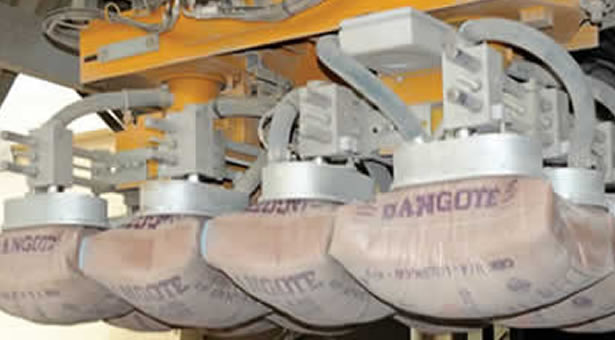
The impressive performance Dangote Cement Plc on Wednesday, March 2, lifted the Nigerian Stock Exchange, NSE, market indices to a seven-week high jumping by 2.25 per cent.
Market watchers said that the market was driven by gains in Dangote Cement after the company proposed a dividend of N8 per share for the year ended Dec. 31, 2015 against N6 declared in 2014.
They said that investors were excited by the dividend pay-out declared by Dangote Cement which boosted interest in the company’s shares.
Analysis of the price movement chart indicated that Dangote Cement led the gainers’ table, increasing by N11.17 to close at N160 per share.
The Central Bank of Nigeria, CBN, has pegged monthly value of mobile money transactions in the nation at N40 billion.
CBN Deputy Governor, Operations, Suleiman Barau, who disclosed this at the maiden edition of the Electronic Payment Financial Incentives Scheme (EFIS) Efficiency Award, said mobile money is where the future of banking lies.
Barau called on banks and other stakeholders to ensure that the e-payment space is deepen.
He said the EPIS award would create healthy competition among banks and add more value to customer.
He said the mergence of Guaranty Trust Bank Plc (GTbank) as the overall winner is a welcome development that should stimulate healthy competition in the industry.
He also lauded the performance of Zenith Bank Plc adding that both lenders have done exceptionally well in the e-payment space.
Communications Technology Minister, Adebayo Shittu has said that although Nigeria will commence new talks with South African mobile phone operator MTN, to settle a dispute over a $3.9 billion fine, the final decision rests with President Muhammadu Buhari.
Last week, the giant telco said it had withdrawn a lawsuit against Nigeria over the fine, which originally stood at $5.2 billion, and aimed for a settlement. MTN was fined for failing to disconnect unregistered SIM users and has paid $250 million toward a settlement.
“It is (now) for government to meet with them and conclude negotiations,” Shittu told Reuters late yesterday, the first reaction from the ministry.
MTN shares, which had been down 2.8 per cent yesterday, trimmed losses after the comments although they were still down 1.8 per cent by 1045 GMT (05:45 a.m. EST).
Shittu said President Buhari would make the final decision on any settlement over the penalty.
“It is within his power and jurisdiction to do that if he feels that it would be in the interests of Nigeria to so do,” he added.
The total trade volume of Nigeria and Turkey is currently at $1.145 billion, Turkish President Recep Tayyip Erdogan disclosed on Wednesday, March 2, at the Aso Rock Presidential Villa in Abuja.
He made this known during a joint press conference with his host, President Muhammadu Buhari. Both leaders were addressing State House correspondents after holding bilateral talks inside Buhari’s office.
The visiting Turkish leader stressed that the result of the trade relation was in favour of Nigeria.
He said: “Our total trade volume is currently at $1.145 billion. Our export is $314 million and our import is $831 million. As you see, the result is to the favour of Nigeria.”
“I believe that if the two countries combine forces, making use of our own respective resources, we would be able to come up with even better outcomes.”
“As we speak, our business people are connecting with their Nigerian counterparts”, the Turkish president stated.
He pledged to encourage Turkish business men to invest in Nigeria, saying “Looking at the population of Nigeria and Turkey put together, we are talking about 260 million people, and this is a very important market”.
Multinational oil company, Exxon Mobil said it would continue to cut spending owing to the lingering crash in crude prices.
However, the American oil giant added that it may look at potential acquisitions in a bid to offset a plunge in production.
The oil major, which has a triple-A credit rating, tapped the debt market this week with a $12 billion deal that has led analysts to speculate the oil major may be gearing up for an acquisition spree, Reuters said.
“We have the financial flexibility to pursue attractive opportunities and can adjust our investment programme based on market demand fundamentals,” Exxon Chief Executive Rex Tillerson said in a statement as he and other company executives met with analysts in New York.
Texas-based Exxon said it expects its capital spending, which has been falling since hitting a peak of $42.5 billion in 2013, to drop next year from the $23.2 billion it now plans to spend this year. It spent $31.1 billion in 2015.
Maximizing Agricultural Revenue and Key Enterprises in Targeted Sites, MARKETS, an agency funded by the United States Agency for International Development, USAID, said it has facilitated N20 billion as rural agricultural loans in Nigeria.
The agency added that it had mobilized Nigerian farmers to achieve N78 billion value of sales for MARKETS II commodities.
Its Director, External Relations and Capacity Building, Godson Ononiwu who spoke on Wednesday, March 2, in Kpada, Patigi Local Government Area of Kwara State at the presentation of tractor to Anfani Kin Kpada Tifin Cooperative Farming Society Limited, said: “We are providing the tractor not only to support the cooperative society and its members in furthering their own production opportunities but also to allow them develop a commercial tractor business to service the other farmers in their communities.”
The event was attended by local government chairman, Alhaji Uthman Ndako-Kpada, officials of agro-allied institutions and outfits, other dignitaries and members of the cooperative society which is chaired by Alhaji Abdul-Gana Lukpada.
The Senate Committee on the Niger Delta has warned contractors executing projects for the Niger Delta Development Commission, NDDC, to be prepared to work or refund the money paid to them.
The chairman of the committee, Senator Peter Nwaoboshi, gave the marching orders on Wednesday during a courtesy visit of members of his committee to the NDDC headquarters in Port Harcourt.
He said that those who have run away with money meant for the development of the Niger Delta would be held accountable, adding that the Senate Committee was determined to help the NDDC recover all funds due to it statutorily. “In discharging its oversight functions, my committee will ensure that every contributor to NDDC pays what they owe the commission, because we cannot afford to toy with the development of that very important region,” he said.
“It’s important that NDDC gets all that is due it from the Ecological Fund, for instance,” he said, pledging to do all that was necessary to resolve the impasse over the non-payment by gas processing companies to the NDDC fund.
Senator Nwaoboshi said that his committee had obtained the Supreme Court ruling which the Nigeria LNG Limited was relying upon to renege on its funding obligations to the NDDC. The case was not decided on merit and we have, therefore, advised the commission to follow up on the legal issues.
The committee chairman said that even the budget of the oil companies, which the NDDC could not get before now, had been obtained by the committee. “We have obtained all their budgets from the year 2000. That will enable the NDDC to appropriately calculate its own 3 per cent share of the budget and correctly determine whether they have been paying the correct percentage or shortchanging the commission,” he said.
Senator Peter Nwaoboshi said the committee was in Rivers State to carry out a holistic investigation into the activities of the NDDC from its inception to date. He stated that the committee would also address critical issues relating to the budget of the NDDC, which would soon be presented to the Senate.
Earlier in his remarks, the Acting Managing Director of the NDDC, Mrs. Ibim Semenitari said that the commission had received just over N500 billion since inception, while it was being owed N800 billion. “That is why we need the strong voice of members of the Senate to tell our story,” she said.
“We have good stories to tell like the Ogbia-Nembe Road, in Bayelsa State, which the commission is executing with Shell Petroleum Development Company, SPDC, the orthopaedic and cardiovascular hospitals in the 9 states and the proto-type hostels for universities and polytechnics.”
The Senate Committee also paid a courtesy call to the Rivers State Governor, Barr. Nyesom Wike at the Government House.
The governor called for greater inputs of states in the conception and execution of key projects by the NDDC. He said that inputs from states in the region would reduce the incidents of the duplication of projects by the states and the NDDC.
He said: “It is important for states to make inputs, so that necessary projects are executed by the NDDC.”
He regretted that there are several abandoned projects under the NDDC. He advised the Senate Committee on Niger Delta and the NDDC to take steps to end the era of abandoned projects.
The governor called for the allocation of funds for the completion of the East-West Road which cuts across the entire states of the South-South region.
He said it is too early to assess the tenure of the Mrs Semenitari, as the Chief Executive Officer of the commission, since she had only spent a short time in office.
The Economist, organisers of the Nigeria Summit has said all is now set for this year’s edition of The Economist Event’s Nigeria Summit.
In a statement, the organisers said Philip Walker, Regional Manager of The Economist Intelligence Unit, Miguel Melo Azevedo, Head of Investment Banking, Africa, Citi Group among others will, on Monday March 7 and Tuesday March 8, 2016, join eminent Nigerian businessmen and top government officials—from around the world—to review Nigeria’s current economic situation and provide an overview of the global macro-economic picture, talking through the growth prospects for Nigeria and the region.
The 2-day summit, themed The Dawn of A New Day, is scheduled to take place at the highbrow Intercontinental Hotel, Lagos.
The event will feature exhibitions, experts’ submissions, panel discussions around the opportunities and challenges that lie at the point where technology, infrastructural development, political transparency and global partnerships meet.
The forum will bring key government ministry officials, industry and business leaders as well as representatives of the Nigerian civil society; together with international investors, economists and academics to discuss and debate Nigeria’s economic direction.
The summit will also examine and review the socio economic challenges that Nigeria is facing in view of her first democratic power transfer and the implication of the global macro-economic forces as being shaped by the ridiculously low global oil prices which is the mainstay of the Nigerian economy.
The guest line up and speaker list includes: Prof. Yemi Osinbajo, Vice-President, Federal Republic of Nigeria; Alhaji Aliko Dangote, President and Chief Executive Officer, Dangote Group; Danladi Verheijen, Chief Executive Officer and Managing Director, Verod; Herbert Wigwe, Chief Executive Officer, Access Bank, Nigeria; Okechukwu Enelamah, Minister of Industry, Trade and Investment, Nigeria, Jonathan Rosenthal, Africa Editor, The Economist.
Other speakers and panelists are Alhaji Kashim Shettina, Governor, Borno State, Nigeria; Franklin Cudjoe, Founding President and Chief Execuive Officer, IMANI; Philip Lindop, Head of Africa Investment Banking, Barclays Africa Group, Fola Laoye, Chairman, Hygeia Group.
The list also includes: Alhaji Umaru Tanko Al Makura, Governor, Nasarawa State, Nigeria; Chief Willie Obiano, Governor, Anambra State, Nigeria, Issam Darwish, Executive Vice Chairman & Chief Executive Officer, IHS Towers; Adebola Williams, Co-Founder, RED among others are also billed to speak at the summit.
Now in its 11th year, the Nigeria Summit is part of the Economist’s successful high-growth markets series that has become one of the leading events in Africa where business, government and ideas people meet.
Chaired by a senior Editor from The Economist, the summit will explore the economic and social progress made to date and take an in-depth look at what the future will hold for Africa’s biggest economy
“This year’s Nigeria Summit will bring together over 350 participants drawn from different walks of life including Nigeria’s public and private sectors, international business players and investors for a discussion on how Nigeria can turn its economic growth into social and political prosperity,” Daniel Franklin, Executive Director of The Economist disclosed.
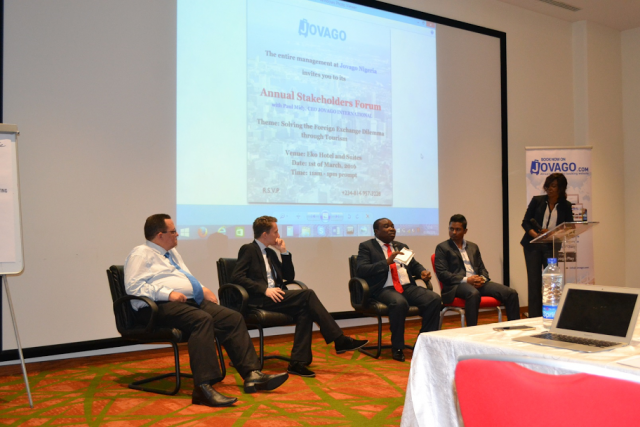
Jovago, Africa’s largest hotel booking portal called for higher investment in the hospitality and tourism sector at its landmark Annual Stakeholders Forum which held on the 1st of March at the Eko Hotel and Suites, Lagos.
The event themed ‘Solving the Foreign Exchange Dilemma through Tourism’ had Paul Midy, global CEO of Jovago, the Director General of the Lagos Chamber of Commerce and Industry ably represented, Bruce Prins, operations expert and Kushal Dutta, Managing Director of Jovago Nigeria brainstorm on tangible avenues to generate revenue for the industry in view of recent foreign exchange issues.
Speaking during the panel discussion, Paul Midy, Global CEO of Jovago, who laid the roadmap for stabilizing the hospitality market and growing Africa’s tourism industry said, “Africa’s strong performance in 2014 makes it the second fastest-growing tourist destination after Southeast Asia. Across the continent, there are around 20 million people working directly or indirectly for the tourism industry. This shows that there is a high potential here and our goal at Jovago is to support Africa in getting to number one position.”
With tourism businesses having the potential of contributing over $100million to Nigeria’s economy annually, stakeholders also called for further public-private sector partnerships as a means to boost engagement.
Vincent Nwani, Director of Research and Advocacy at the Lagos Chamber of Commerce and Industry representing the DG, Muda Yusuf, said, “Nigeria’s economy is going through a crisis. Inflation is high and the cost of doing business is hitting the roof. We need to find a way around this challenges and it’s good to know that Jovago is taking steps in this direction.”
With the Federal Government targeting the transformation of key sectors of the economy, panelists revealed that the scarcity of foreign currency can yield high benefits to the domestic market. At the time of this report, the dollar sold at N352 to the Naira.
“The forex situation Nigeria is facing has its positive slant for the industry,” said Kushal Dutta, Jovago Nigeria Managing Director, “Although its impact is affecting the Gross Domestic product (GDP), on the flipside it forces us to look inward as a country and patronize what we produce here”.
As the first African company to partner with the Nigerian Tourism Development Corporation (NTDC) and Google Hotel Ads, Jovago provides a vast portfolio of 8,000 hotels in Nigeria and over 200,000 hotels around the world at the best prices possible.
CreditRegistry Services (CR Services) Plc, Nigeria’s preferred Credit Bureau has announced its partnership with LAPO Microfinance Bank Limited to boost sustainable access to credit financing through provision of Credit Bureau services.
Speaking on the development, the Managing Director of CR Services, Mrs. Jameelah Sharrieff-Ayedun said, “This development is set to change the face of microfinance credit market in Nigeria with LAPO’s extensive coverage, CR Services’ total coverage of Nigeria’s financial industry and nover 30 million bank customer’s data base.”
Sharrie-Ayedun noted that it is expedient for credit financing providers to adopt the services of credit bureaus. This is to reduce or mitigate the scourge of bad loans which has been the bane of some microfinance institutions in Nigeria, adding that will also potentially opens up the financing market for more opportunities.
LAPO MfB is the largest microfinance bank in Nigeria with 1.1 million customers and 327 branches, currently operating in 26 out of 36 states in the country.
It will be recalled that African Development Bank Group (AfDB) granted a N2.364 billion ($12 million) credit facility to LAPO Microfinance Bank Ltd to support inclusive growth in Nigeria.
CR Services SmartScore and Credit Report are expected to improve approval turnaround time for Small and Medium Enterprises (SMEs) in the country and increase the proportion of households with sustainable access to financial services in Nigeria.
Hotels across Nigeria are set to enjoy a reprieve from some of the major accounting and reconciliation challenges they face with the roll out of a new innovative ‘Personal Computer-Point of Sale’ (PC-POS) feature on SlimTrader’s ‘MoBiashara for Hotels’ (MFH) platform.
Many hotels across Nigeria are faced with the challenge of accurately consolidating payments made on their hotel Point of Sale (POS) terminals with hotel records and room inventory; resorting instead to manual reconciliation. With SlimTrader’s new PC-POS solution; all POS terminals and PCs within a hotel can be networked.
This was revealed in the official announcement of the launch of the solution by SlimTrader, Sub-Sahara Africa’s leading turn-key ecommerce solution provider for businesses, on the 22nd of February, 2016. It was disclosed that as the launch partner for the solution, Interswitch has adapted its POS terminals to work seamlessly with the solution.
The new feature allows hotels to link their hotel computers to POS terminals, such that hotel room payments are immediately reflected in the hotel’s computer and online records. When hotels which are subscribed to SlimTrader’s MFH solution generate reservations on their hotel PCs, the transaction is sent to the hotels POS terminals for the customer to effect payment. Once this is done, the records are automatically reconciled, thereby enabling hotels to manage their inventory more efficiently.
Reservations can be made in both local and international currencies; and then paid for with local or international cards. The system also allows for payment flexibility, accepting cash and payment via other platforms.
With this iteration to the platform, ‘MoBiashara for Hotels (MFH)’ is now positioned to be the ‘one stop solution’ with which hotels get all their Personal Computers networked with their Point of Sale terminals; with a Property Management System (PMS) to manage check-ins, check-outs and general hotel inventory. In addition, the hotels have access to a channel manager that integrates with online travel agencies (OTAs) such as hotelnownow.com or TripAdvisor and so on.
Speaking on the decision to develop this new feature, the CEO of SlimTrader, Mr. Femi Akinde said,
“At SlimTrader, our vision is ‘To facilitate effortless transactions for businesses across Sub-Sahara Africa’. In working with hotels, we discovered that they face significant challenges in tying reservations to offline payments. SlimTrader gladly took on this challenge and we are pleased that today we can launch this much-needed solution for the hotel industry in Nigeria, tying multiple payment terminals to their physical and online reservations. Over the next few weeks, the solution will be scaled to work with terminals from all POS terminal providers in Nigeria.”
Remarking on the partnership with SlimTrader for this solution, the Divisional CEO, Switching and Processing at Interswitch, Mr. Akeem Lawal said, “In our position as Africa’s leading integrated payment and transaction processing company, we are always seeking new ways to help improve business efficiency with our funds monitoring, payments collection and fraud management solutions. This partnership with SlimTrader is one of the ways we are bringing our company vision to life”.
It was revealed that Interswitch developed customized software for the POS terminals to integrate with the PC-POS feature, Interswitch will also provide free POS terminals to hotels that sign up for the premium service.
In the light of the prevailing economic situation, organizations are looking to more efficient ways of managing their businesses at reduced cost; SlimTrader’s MoBiashara platform is helping to address these needs for many businesses across Sub-Saharan Africa. Today, SlimTrader’s MoBiashara Software-as-a-Service (SaaS) Platform is widely employed across the Hotel, Aviation, SMEs and FMCG industries.
Managing Director and Chief Executive Officer of SystemSpecs, Mr. John Obaro, has opined that Nigeria has the capacity to influence the global software technology landscape and reap the huge attendant benefits if the government makes a conscious effort to actualise the prosperous future that beckons the country in the sector.
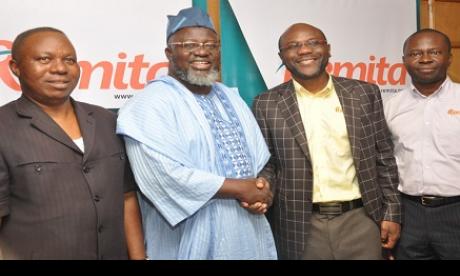
He made this known during the visit of the Minister of Communications, Adebayo Shittu, to the head office of the company in Lagos.
The minister said that the visit was to encourage the company and appreciate its flagship indigenous software, Remita.
He said had Remita been introduced to the Federal Government earlier, government’s revenues would have improved more than it is now.
“We owe Systemspecs a debt of gratitude for introducing Remita. The electronic payment platform has saved Nigeria about N2tn. In the area of e-government, SystemSpecs has done well for Nigeria,” he said.
According to Obaro, the country should quit focusing on agrarian initiatives at the basic levels, and concentrate on the potential of software technology wherein the future lies.
To attain this, he rolled out steps that the Federal Government should take, which include that government delegations should no longer embark on foreign trade missions without the inclusion of Nigerian software entrepreneurs or products.
He also requested that the Federal Government should not receive foreign software as aids donated to the country in areas where the country had demonstrated local competence that could be polished.
This is the time, according to him, for the country to take advantage of the opportunities inherent in software technology, when oil prices are at their lowest.
Stakeholders in the Information and Communication Technology sector have lauded the open data initiative, a policy guideline being proposed by National Information Technology Development Agency, (NITDA) and have said that it is crucial to the socio economic development of the country.
The stakeholders, who met in Port Harcourt agreed that for the nation to develop in line with national planning, some important data must be made available and open for easy accessibility and usage.
The forum maintained that NITDA should come up with principles that would encourage openness of data and also established guiding principle to Ministries Departments and Agencies (MDAs) for best global practice in data collation and usage.
In his welcome address, Dr. Vincent Olatunji, NITDA’s acting director general, who was represented at the forum by the Head of Standards, Guidelines and Regulations, Barrister Lazarus Ikoti informed the stakeholders that lack of data in Nigeria is hindering the development in the country.
Citing the example of insurgency in the country, Olatunji stressed that lack of data has made it difficult for the country to actually know the number of Internally Displaced persons (IDPs) in the country.
He said the issue of open data has drawn so much interest in the international community and Nigeria as a country cannot afford to lag behind.
While acknowledging the role of standard, guideline and regulations to the success of harnessing the benefit of ICT, Dr Olatunji stated that the Agency would begin enforcement of most of the guidelines the Agency has published in the past.
Cramped seats, impromptu delays, traffic jams, frayed nerves and fatigue are usual in the course of a business trip. However, travelling for work does not mean you cannot experience everything a city has to offer, especially if the destination is Warri, Delta State, Nigeria. With just a bit of forethought and a little research, it is still possible to make the most of your business trip and find time for fun.
Jovago.com, Africa’s No.1 online hotel booking site has some ideas on how to squeeze in a little bit of fun next time you are visiting the old riverine town for business.
Add on a day of vacation
The moment you confirm a business trip to Warri and you have been asked to turn in a budget and plan, try and structure your trips in such a way that you can have extra time, possibly an extra day to yourself. Plan to go a day before or leave a day after; or even better, plan to head out over the weekend. That way, you can use the extra day or two to explore the city, engage in fun leisure activities or just take some time out for yourself
Go with your ‘significant other’
Any kind of trip is much more fun when you have love around. A very good way to spice up your business trip and squeeze in loads of fun is by taking your wife, lover, girlfriend or love interest along on the trip. Most times on business trips, your flight and hotel are already catered to, and many companies would not mind if you bring anyone else along, so long as you do not bill them for extra costs incurred. Warri may not be ‘Paris”, but you have a lot of opportunities to enjoy a mini-vacation with your loved ones as well, while on a business trip.
Create your own cultural guide
Warri may be considered a metropolitan area, but it is still rich in culture and local traditions. Rather than sit and get bored in your hotel room, go out and explore! Take a camera with you and take pictures of interesting things you find, you could even make short videos or Keep a journal of your gallivanting. Nearly every locale in Warri has something interesting, it could be a strange activity being performed by a local, an unusual but historical sight, or a minor event. Do not just experience it, record it and save it to your list so you can share it with the next person traveling to Warri.
Go on a foodie tour
Food makes everything better. On a business trip, you do not pay for your own food, so take advantage of the situation and ensure you eat really good, tasty and healthy food. Of course, you could stay in and order in room service, but a little effort can uncover an interesting feast just about anywhere else. If your hotel does not have a fancy onsite restaurant, there are a number of appealing eateries and bistros around town. If you are feeling adventurous, seek out the local food hangouts within the city and try some of the native cuisines. You are bound to have an exciting time.
Meet up with a social media contact
Warri may not be as aware in terms of tech as Lagos, Abuja or Port Harcourt, but most hotels offer Wifi for their guests. Take advantage of the internet and do some virtual networking, then take it up a notch by connecting face to face. Social platforms like instamessage help you locate people close to you that are willing to meet up for a chat. If you already have someone from Warri that you have been chatting with for a while, use your travel opportunity to actually meet that person you connected with online. If nothing else, you could, at least, get treated to free drinks, great meals and a fun experience.
The President of the Dangote Group, Aliko Dangote, has retained his position as Africa’s richest person. With a net worth of $15.4 billion, the industrialist was listed as the 51st richest person in the world in the Forbes 2016 World’s Billionaires list released on Tuesday, moving up from 67th in the 2015 list.
The list, which contains 1,810 billionaires in dollar terms, also includes the Chairman of Globacom, Dr. Mike Adenuga; Chairman of Forte Oil, Mr. Femi Otedola; Founder and Executive Chairman, Famfa Oil Limited, Mrs. Folorunsho Alakija; and Chairman/Chief Executive Officer, BUA Group, Abdulsamad Rabiu.
Adenuga, whose net worth was put at $10bn, was ranked 103rd on the global list; while Otedola, with a net worth of $1.8bn, was ranked 1,011th. Also, Alakija who is estimated to be worth $1.6bn, came in the 1,121st position, while Rabiu was ranked the 1,577th billionaire in the world, with a net worth of $1.1bn.
Dangote, Adenuga, Otedola and Rabiu emerged 51st, 103rd, 1,011th and 1,577th in this year’s list, from 67th, 393rd; 1,741st and 1,741st, respectively in 2015.
Despite the economic crisis in Nigeria, the five billionaires apparently have increased their net fortunes by $7bn (N1.4tn). They had a combined net worth of $29.9bn this year, down from $22.9bn the year before.
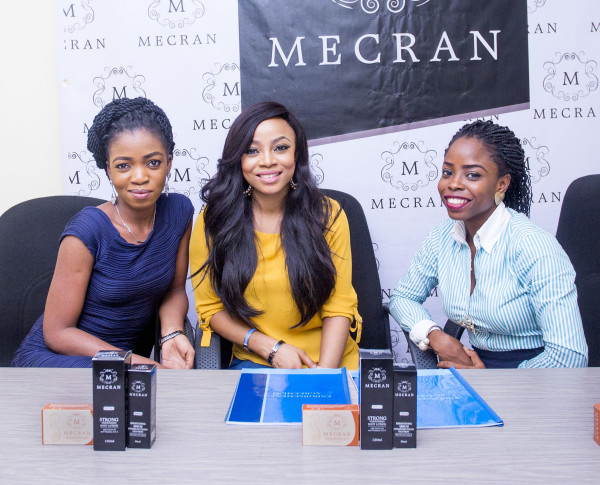
Media Personality, Toke Makinwa has joined the growing list of Nigerian celebrities who have bagged an endorsement deal this year, after she was unveiled as the brand ambassador to cosmetics brand, Mecran Cosmetics.
Makinwa shared the news with her numerous followers on her social media pages saying “what an exciting way to start the month. Guess who is the face of the latest cosmetic line in town?? I am the new face of @mecrancosmetics! Mecran is a wide-range cosmetic brand that recently launched the Mecran Skin-Lightening Beauty Set! Specially formulated in the US, with FDA approved ingredients that leave zero skin toxicity, the Mecran Skin-Lightening Beauty Set guarantees spotless, light-skinned perfection from your face to your toes!”
Commenting on endorsement deal, the brand revealed that “We are excited to have the beautiful Toke Makinwa on board our train, as we continue to emphasize safe and effective skin-lightening.”
Mecran Cosmetics is a wide-range cosmetic brand that has mastered the science of skin-lightening and warns against using creams with harmful ingredients that could result in long-term, physically gruesome side effects.
Benin City is one of the oldest cities in Nigeria and holds a lot of history, culture and thus mystery. Unfortunately, while it is regarded as metropolitan, it is yet to measure up to other cities in the country in terms of fun day activities, nightlife and amenities. There are however certain experiences that are unique to Benin and make it a treasure destination for visitors from all around the world. Jovago.com reveals 5 of the things any visitor will not enjoy doing while visiting Benin.
A taste of Pepper Rice at Mama Ebo
Anyone who visits Benin on a regular basis will attest to the peculiarity of the city’s favourite cuisine: Pepper rice. Consisting of plain white rice and much-spiced tomato sauce- locally referred to as pepper stew, the meal is served usually served on a green leaf which adds to the flavor. While this delicacy is sold in most local bukkas and restaurants found around the city, Mama Ebo restaurant on Airport road, GRA, is the number one spot for an original taste. The small restaurant is very well kept and visitors have a wide variety of sides to the meal: Moi Moi, plantain, e.t.c. A taste of this special serving is an experience any visitor will surely not forget.
A Visit to New Benin Market
Located at New Lagos Rd. Benin city, the New Benin Market is one of the markets that offer visitors impressive choices upon their visit to the city, especially if they plan to stay a while. From home appliances to electronics, fashion wares, souvenirs and even food items, the market is a one-stop-for-all. The market also is a good venue for visitors who want to interact with the locals or have a taste of the everyday life in Benin.
A long weekend at Best Western Homeville Hotel
As expected of most hotels in the Best Western hotel chain, Homeville offers one of the best lodging experience in the city as it is equipped with the necessary amenities to make your stay enjoyable. At the hotel located at Evbuomwan street, Off Sapele Road, Etete., Avbriaria, Benin City, Nigeria, you are not only in close proximity and surrounded by the sights and sounds of the city, you get relaxed and energized simultaneously as you step into some of the impressive guest rooms. The hotel also offers a well-equipped gym and an outdoor pool, and guests can enjoy therapeutic body treatments at the spa. The premises are guarded by security personnel and car hire services are also available in case you want to chance to tour the city. For visitors who just want to stay indoors, Newspapers are also provided daily.
A stroll along Igun street
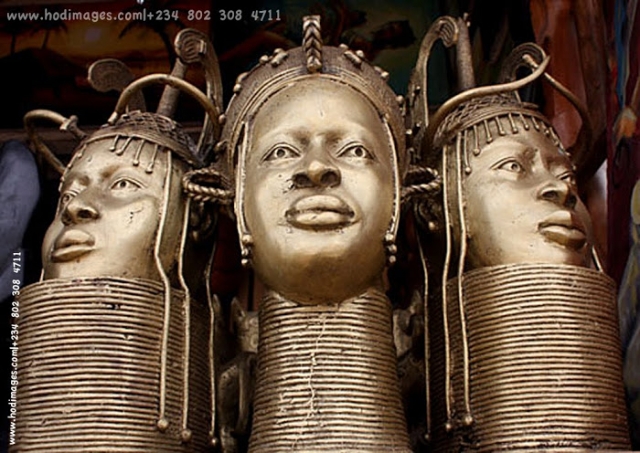
The Igun street is a popular boulevard in Benin as it plays a significant role in the appreciation of the art in the city. Listed as Cultural Heritage Site by UNESCO, Igun street is the home of the brass/bronze casting industries in Benin. Take a stroll down the street; admire and witness bronze casting from the various stages and make sure to purchase any piece of you find alluring. It will be golden opportunity to own an outstanding bronze souvenir while visiting the state.
A tour of the Oba’s palace
The Oba’s palace is a prominent location and is right in the centre of the city, very close to the King’s Square popularly called Ring road in Benin City. Its unique traditional architecture and works of arts dating back to the 9th and 10th centuries are centrally located. Anyone who knows the Kingdom properly knows that the palace is regarded as one of the greatest museums in the world because it still holds a large collection of royal court arts, scriptural pieces of past Obas in bronze and ivory and ancestral shrines. A visit will allow you a chance to see first-hand, a major memento of Africa’s ancient history.
Nigeria, Cote d’Ivoire, Ghana and other cocoa-producing countries are set to make over $21 billion as the demand for cocoa rises. This development comes despite the ravaging effect of the harmattan, which plundered cocoa flowers and buds off trees before they grow into pods.
The commodity is being used for cocoa butter, paste and cake.
According to the International Cocoa Organisation (ICCO), the price of the product, which is used for cocoa butter, paste and cake, in the global market was $2,998.47 per metric ton as at February 25, 2016.
Other cocoa producing countries are Cameroon, Indonesia, Malaysia, Papua New Guinea, Brazil, Ecuador and Colombia.
Statistics revealed that consumers of the product would need 2, 713,326 metric tons for cocoa powder, 2, 474,778 metric tons for cocoa cake and 1,962, 446 metric tons for cocoa paste.
Nigeria exported N375.2 billion worth of cocoa between 2012 and 2014, with the country recording the highest exportation of cocoa valued at N131.2 billion in 2014, generated N140billion in 2012 and 104 billion in 2013.
About 85% of the country’s cocoa is exported as beans, mostly to the Belgium, United Kingdom and other European countries. Germany and the Netherlands are the largest consumers
The Federal Ministry of Agriculture and Rural Development is to plant three million seedlings of improved cashew every year for the next four years.
The minister of agriculture and rural development, Chief Audu Ogbe revealed this during the flag off of the 2016 Cashew Festival and National Cashew Season in Ilorin,Kwara state. A director in the ministry, Mr Titus Efuntoye, Ogbe said this forms part of efforts to boost production of cashew as a foreign exchange earner for the country.
Ogbe said about 30,000 hectares of land in cashew producing states would be covered.
“Farmers would be supported in rejuvenating their old cashew plantations by replacing the old plants with the improved varieties.”
The Kwara state governor, Alh Abdulfatah Ahmed said if farmers had access to affordable credit, problems associated with the transformation of agriculture into viable agribusiness would be overcome in the country.