CODUB in conjunction with UK Trade and Investment (UKTI) will be hosting the 5th Asset Summit Africa. The event is a cross sector one that aims to attract up to 400 senior professionals from different parts of the world in both public and private sectors. Both local and international expert speakers will deliver presentations covering real business case studies that outlines the ways in which Asset Management can be well implemented and make a real difference to the society
Nigerian Banks are facing a serious threat to their international reputation as they are finding it difficult to access forex to pay their off their financial obligations to foreign lenders, Reuters has reported.
According to the report, banks looking for dollars to repay letters of credit (LC’s) to their foreign lenders have been delayed for as much as a week compared to just a day or two in the past, with the delay attributed to the Central Bank’s dollar rationing and strict capital controls which have restricted to flow of forex in and out banking system.
The implication of this is that commercial banks may soon start to experience significant defaults if this continues. According to the report outstanding LC’s could be as much as $500m. The CBN sells about $250 weekly compared to about $500m weekly before it imposed controls.
Shares of Nigerian banks have been on a decline in the past year with the Banking Index down by as much as 10% this year alone. Most Nigerian banks took to foreign currency lending in 2014 as they rushed to shore up their capital base with medium term lending. The impact of not being able to pay these loans could posse negative consequences for the financial sector.
The minister of Agriculture, Chief Audu Ogbeh, has advised that Nigeria must develop agriculture because the transition from oil to agriculture as the country’s major foreign exchange earner is vital to the country’s survival.
Ogbeh noted that Rivers State remains critical in the development of agriculture in the country, considering the fact that it hosts the two biggest fertiliser plants in Nigeria, Notore Limited and Indorama Petrochemical Company Limited.
Rivers State Governor, Chief Ezebunwo Nyesom Wike, stated that agriculture should be developed as the country’s next foreign exchange earner in view of plunging oil prices, pointing out that developing agriculture would generate employment and strengthen the economy.
He further stated that the state government has instituted school farming to encourage youths to be involved in agriculture, said his administration has also extended loans to farmers for greater agricultural production. He approved the hosting of the 2017 agricultural conference in Rivers State as requested by the Minister of Agriculture.
The Senate Committee on Communications has summoned the Attorney General of the Federation (AGF) and Minister of Justice, Abubakar Malami, and Minister of Communications Technology, Adebayo Shittu, to appear before over claims that MTN Nigeria Limited had paid N50 billion of the N780 billion fine to the federal government.
The committee also summoned the Executive Vice-Chairman of Nigerian Communications Commission (NCC), Professor Umar Danbatta, the Accountant-General of the Federation, Ahmed Idris and Chief Executive Officer of MTN to appear before it on March 10, to explain all they know about the payment and other connected matters.
According to the letter of invitation dated March 3, 2016, addressed to them, Chairman of the committee, Senator Gilbert Nnaji, the committee said it discovered during one of its recent oversight functions that NCC could not provide any proof of the payment by MTN.
The committee further said it learnt that MTN had been misguided to lodge the said N50 billion into the Central Bank of Nigeria (CBN) Recovery Account, the account it said was specially designated for recovered funds.
Therefore, the committee said it suspected foul play over the manner of the payment as well as the hasty manner that MTN withdrew its suit against NCC from the court, arguing that if there was no ulterior motive behind the moves, the payment ought to have been made to NCC.
The uproar surrounding the 2016 budget do not seem to be going away anytime soon as it was discovered yesterday that the federal government earmarked a staggering sum of N39.41 billion only for the purchase of cars in this fiscal year.
The development is contrary to the stance of the President Muhammadu Buhari administration that it is looking to cut costs in the running of the government.
According to a THISDAY report, of the N39.41 billion budgeted for vehicles in 2016 budget, N29.41 billion of them is meant for the purchase of vehicles by ministries, departments and agencies (MDAs).
It was also learnt that N24.38 billion of the N29.41 billion has been allocated for the purchase of cars; N1.67 billion allocated for the purchase of buses while another N362.65 million is earmarked for the purchase of vans.
The report also disclosed that some agencies such as the Nigerian National Petroleum Corporation (NNPC), Nigeria Ports Authority (NPA), Central Bank of Nigeria (CBN), Federal Inland Revenue Service (FIRS) have the combined budget of N10 billion for the purchase of vehicles.
The N39.41 billion budget is besides the budget for the planned purchase of vehicles by the judiciary which is not clearly stated in judiciary’s budget.
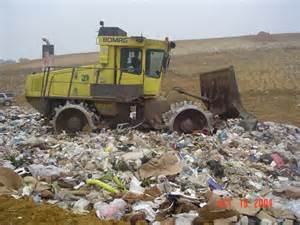
The Ogun State Government has announced that it has concluded plans to facilitate private sector participation in waste management across the state.
The state’s Commissioner for the Environment, Mr. Bolaji Oyeleye, has said, disclosed that the move was to put an end to the indiscriminate dumping of refuse across the state.
He said, “We are trying to carry out our mandate, which has to do with the protection, management, and development of the environment. We are working on waste management and also watching companies in terms of the emission levels as well as the level of noise pollution.
“Importantly, the issue of waste management is also a serious concern for us at the ministry; that is why we are trying to introduce the PSP scheme in waste management, because we have been solely responsible, as it were, for waste management in the state. We are aware that it is not sustainable on the long run; we have less to spend now as against what it used to be.”
The commissioner said the scheme would begin in the major cities such as Ado-Odo Ota, Abeokuta, Mowe/Ibafo, Ijebu Ode and Sagamu, and that cart-pushers will be banned so that people can key into the scheme, especially along the corridor of Mowe and Ibafo, where law and order have broken down and people are dumping wastes indiscriminately.
Oil workers under the umbrella of the Nigeria Union of Petroleum and Natural Gas Workers have expressed their displeasure about the plan to unbundle the Nigerian National Petroleum Corporation into 30 companies without following due process.
In a statement released on Sunday, the union stated that the move was an attempt to provoke workers in the oil and gas sector and cause industrial unrest in the country
The union stated that the unilateral action of the Minister of State for Petroleum Resources, Dr. Ibe Kachikwu, was not in consonance with the laws establishing the NNPC, and that the restructuring in the oil and gas industry, especially at the NNPC, to achieve optimal performance could not be achieved without due consultation with the unions and other stakeholders in the sector.
The statement signed by the acting General Secretary, NUPENG, Joseph Ogbebor, stressed that the unbundling and rebranding of the NNPC as announced by the minister was another public policy change, which was not consistent with the laws establishing the corporation.
He warned that the plan would be resisted by oil and gas workers in the country.
The latest figures from the financial and operations report of the Nigerian National Petroleum Corporation has shown that Nigeria’s three refineries were able to make profit at the close of business in January this year. This is the first time the refineries will be declaring a profit in 12 months.
According to the report, the refineries recorded losses consecutively from February last year up till December; but in January 2016, they made an operating profit of N5.67bn.
The plants are the Warri Refining and Petrochemical Company, Kaduna Refining and Petrochemical Company and Port Harcourt Refining Company.
Although the consolidated revenue of the three refineries indicated an operating profit of N5.67bn, an analysis of the report showed that of the three, only two actually made profits at the close of activities in January.
The two of them, according to the report, are the WRPC and PHRC, while the KRPC recorded a loss.
For specifics, the WRPC and PHRC recorded operating profits of N4.391bn and N3.397bn, respectively, while the KRPC had a loss of N2.118bn.
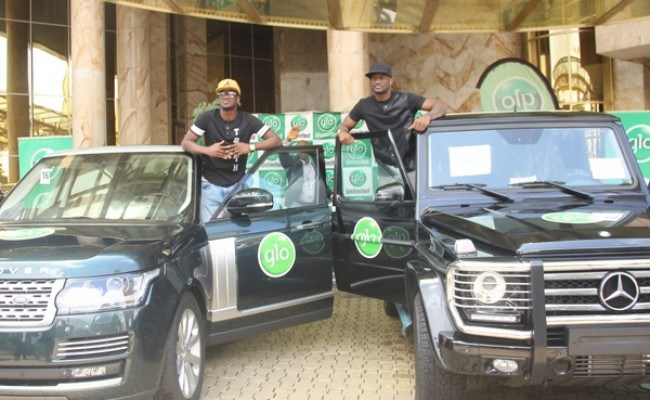
Indigenous telecoms operator, Globacom, has confirmed that the musical duo, PSquare, are still on its brand ambassadorial list.
“The twins, Peter and Paul Okoye, otherwise known as PSquare are still in our fold,” Globacom said in a statement released on Thursday from its head office in Lagos.
Globacom’s position is contrary to media speculations that the company had severed relationship with PSquare. The company posited that the reports were unfounded, as the group remains it’s brand ambassadors.
Globacom explained that it was in the process of reviewing its contract with its brand ambassadors, including PSquare, and that it was untrue that it had ended its relationship with any of them.
“We have not disengaged PSquare or any of our other ambassadors. We are currently in the process of reviewing our contracts with our brand ambassadors,” said the statement.
Globacom said PSquare had been among its flagship brand ambassadors since 2010, and that it had been a mutually rewarding relationship between the two parties.
The longest aircraft in the world is preparing for its first test flight in a few weeks’ time. Dubbed the Airlander 10, the aircraft is a cross between an airship and an aeroplane that generates lift aerostatically through being filled with helium, and aerodynamically thanks to its unique-looking wing shape.
Because it’s heavier than air, the 20-ton craft can land without tethers on most surfaces, including water.
Hybrid Air Vehicles, the makers of the Airlander 10 and based in Bedford, anticipate commercial uses such as leisure cruises, persistent, airbone research and for cargo to hard-to-reach places.
According to Sky News, the aircraft can carry up to 10 tons and could be fitted to transport 48 passengers, flying for five days continuously, cruising at 80 knots (92mph).
The Airlander 10 was originally developed from 2009 for the US Army, which abandoned the project.
Magical, splendid and awe-inspiring are the sight of waterfalls in Nigeria. As water cascade from the rocks from calculated a height, the whole being of visitors is often arrested as the eyes shimmers with so much joy in appreciation of this incredible gift of nature. Most people never want to leave as they set up camp to have a lifetime interaction with nature. It’s an experience that every Nigerian must have. These waterfalls cut across the country.
Checking out these waterfalls important now more than ever as the government encourages Nigerians to buy and patronize homemade services. It begs the question why some Nigerians prefer to go on vacation abroad rather than visiting the tourist attractions here where you are offered all round hospitality from accommodation to food and relaxation. In line with this, Jovago.com, Africa’s No 1 hotel booking portal rolls out five awe-inspiring waterfalls in Nigeria where you do not need to spend millions to visit!
The Agbokim Waterfall
Are you a Nigerian and you have journeyed round the world and never visited Calabar? You should pack your bags now, book the next flight and leave for Calabar. Why? Calabar is Nigeria’s Disney. In fact, when it comes to tourism and hospitality, Calabar possesses everything you want.
The Calabar carnival, Obudu Cattle Ranch and the amazing, amazing Agbokim Waterfalls are among the most priced possessions of the state! Agbokim Waterfall is regarded as the seven-wonders of nature because of the seven streams from which water flows. It sits comfortably in Etung local government and it is also in proximity with the Nigeria-Cameroon border.
The Gurara Waterfall
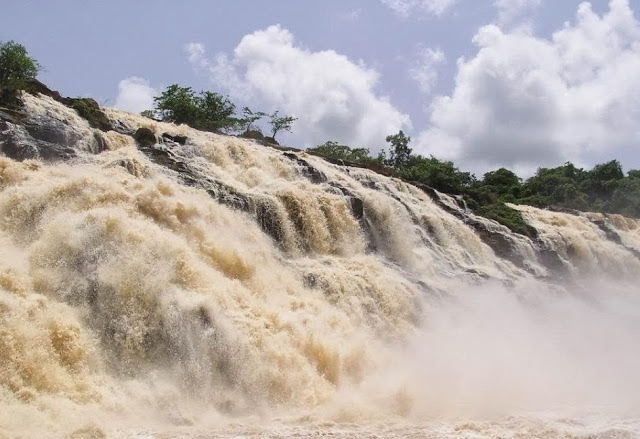
This pictures of Gurara waterfall on the internet are enough to convince you to visit this waterfall- “The waterfall is about one hour from Minna, Niger State. The sound is almost deafening with the water hurriedly splashing on the rocks below. The climb towards the fall is exciting. Navigating closer to the fall is adventurous but you to have good grip shoes because the rocks are wet and slippery. Do not go alone, come with your snacks and food to enjoy nature.” Gurara waterfall is located in Niger and it is an hour drive from Abuja. The Waterfall covers a length of 200 meters with a drop of 30 meters.
The Olumirin Waterfall
Osun State is a cultural hub in Nigeria. The Olumirin waterfall is an enhanced motivation to visit the state. It is located in Erin Ijesha in Oriade, local government area. You will be enchanted by the seven steps of rock and the seven waterfalls as it flows unhindered and majestically among the rocks and splashes downwards with massive force. It is a fascinating and picturesque scenery.
The Assop Waterfall
The Assop waterfall is located in Jos. It is a reliable place to have fun. You will not be disappointed as there is so much to do. Shrills of excitement will travel through your spine by the sheer sight of the waterfall.
Awhum Waterfall
The Coal City state, Enugu is where Awhum waterfall is tucked away. Specifically, it is located at Amaugwe village of Awhum town in Udi local government area. It cascades 30 meters downwards. It is an inviting and idyllic sight that beckons on everyone to visit. It is close to the Awhum monastery. In addition, the water is said to have some spiritual powers. Do not hesitate to have a peek at the Awhum waterfall when you are in Enugu state!
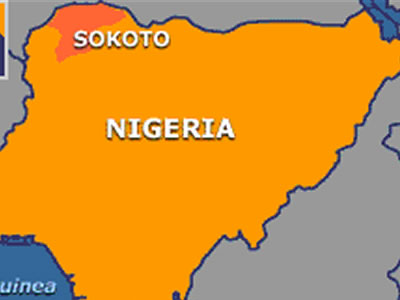
Spoiling for an adventure to the remote parts of Northern Nigeria? Sokoto State is the first place that actually comes to mind because of its popularity as the seat of the caliphate. This thriving caliphate dates as far back as 1804 where a grounded and conspicuous system of governance was instituted by Uthman Dan Fodio. Over the years, the city has preserved its air of royalty and this legacy is being carried forward by the Sultan of Sokoto, Alhaji Sa’ad Abubakar, who is the custodian of culture and the spiritual leader of Muslims.
Another thing that stands Sokoto out is the Sahara desert. Laid bare for the eyes to see is an unfiltered display of how the people have survived desert encroachment for decades. All these combined have resulted in an enviable way of life, an evergreen culture, and a resilient caliphate that wields so much influence.
Sokoto is among the earliest states created in Nigeria on February 3, 1976 with an estimated population of 4,244,399 and it has a total of 23 local governments. One can fly into the Sadiq Abubakar 111 International Airport in Sokoto from any airport in Nigeria. Jovago.com, Africa’s No 1 hotel booking portal unveils Sokoto where you are guaranteed a swashbuckling and idyllic adventure.
Top three sites
Sultan of Sokoto Palace
The magnificent and imposing palace of the Sultan of Sokoto is located in the center of the city. The Palace has gone beyond a mere edifice to become a place for taking political decisions and making religious pronunciations. In addition, it is a cultural and traditional haven where you will see relics of the different Sultans of Sokoto like regalia, robes as well as turbans. The Sultan’s Palace has also become a tourists attractions welcoming quite a substantial number daily.
Surame Cultural Landscape
The Surame Cultural Landscape is on the tentative list of the UNESCO’s World Heritage Site. It was enrolled on this list on the 8th of October 2007. The ancient kingdom existed in the 15th and 16th centuries according to the World Heritage Site reviews. Despite the seeming extinction of its ancient tombs, you will still see clear signs of the place being inhabited for decades. This is a clear indication of Hausa civilization.
Sokoto Museum
This is a museum that holds artifacts and monuments of the ancient okoto Caliphate. The museum revolves around the supposed founder of the city – Uthman Dan Fodio. On display here are some of his private belongings like his throne, regalia, sword, map and other items.
Sleeping
There are quite a number of hotels domiciled in Sokoto. Since getting a quality hotel and the best prices are currently guaranteed by Jovago.com, you don’t need to worry about where to rest for the night. Some of the available hotels are Shukuru Coral hotel, Grand Ibro Hotel, and Golden view hotel.
Unwinding
The big restaurants are scantily located in different parts of the city as there are more low budget restaurants than eateries. They include Sayala restaurant limited, Majaddas restaurant and snacks, Abusi Do restaurant, Maslaha restaurant and Hajia Rukayat restaurant.
Shopping
The level of development in Sokoto cannot be compared to that of Lagos or Kano despite the fact that it has existed for less than a century. So, you rarely find the big malls in Sokoto. Not that they are not available but they are not much. To fill up this space are the small kiosk and malls like All ages bookstore, Kofar Rini Electronics, Scanwel Nigeria limited and Spectrum books limited.
Fun fact
The Sokoto Caliphate is one of the most powerful traditional institutions in Nigeria. The Sultan of Sokoto, Alhaji Sa’ad Abubakar leads thousands of Muslim adherents in the country and he is a first class traditional ruler. In addition, he is the 20th Sultan of Sokoto.
Like the saying goes ‘some people will never appreciate a thing until they lose it’. This is actually true. Many people do not treasure their sim cards until it’s time to take it out of an iPhone. Same goes with the arrival of phones in the world.
In Nigeria, nearly everyone now uses a phone that many of us disregard its value. Nevertheless, have you ever imagined how Nigerians survived in time past without the cellular? Certainly, many Nigerians will not want to go down that route. But Jovago.com, Africa’s No 1 hotel booking will drive you there as we share 5 things you that may happen to you if phones does not exist. Perhaps, this will make you cherish that piece of technology in your hands!
Travel long distance to deliver a message
Before the coming of phones, there was nothing like breaking news in the family. When there were important messages for friends or family members, people had to travel to places where the person resided to deliver the message – God help you if he stays in Lagos while you reside in Kano. Interestingly, people looked forward to these trips in those days as the family knew they would return with ‘gifts’ from their places of travel. To the many in rural centers, going to Lagos was like visiting Nigeria’s small London!
‘On your own’ when stranded
Many move around carrying little or no cash because they can simply rush to an Automated Teller Machine to withdraw cash. In other circumstances, if you are stranded, you can call an uncle or a friend to send you money. But when you were stranded in time past, you simply had to pray to God to send a good Samaritan to help you. Perhaps, the good Samaritan came in the form of a phone to assist this generation!
Arrive at a meeting when it has already been canceled
Family meetings, Annual General Meetings or any other form of meetings called then was hinged on the availability of guests. They travel from wherever they are domiciled to attend the meeting. But if that meeting has been postponed or canceled, many people had no knowledge of this until they reached the destination. So, a round of applause to the individuals who introduced the idea of using phones for communication.
Less accidents on the road
Driving and using a phone at the same time is the trend now and many have lost their lives due to this foolhardy multitasking. It is dangerous to drive and use your phone simultaneously. When there was no phone, you had 100% concentration on the road. This culminated in the reduction of accidents. Not that there were no accidents but there were no reports that an accident happened due to driving and phoning. But today it is prevalent.
You may never again see a lady you liked
After wooing a lady that threw you off your feet, you could not ask for her phone number in the past. Or will you? No. You ask for her address. If you truly like her, you will visit her home. If you have the effrontery to visit, you have to battle with her stern dad. You didn’t even need to think of how to notify her of your presence? You just had to wait and hope for something will bring her out of the house. This is probably a reason why parents handpicked wives for their children then. Today, you can just walk up to a woman, say a few lines and the next sentence uttered is ‘Can I have your number?’
The Governor of Akwa Ibom State, Mr. Udom Emmanuel, has charged the Niger Delta Development Commission, NDDC, to accord the state a better treatment in the allocation of development projects.
The governor, was speaking on Friday at the Government House Uyo when the Senate Committee on the Niger Delta and the NDDC directors led by the Acting Managing Director, Mrs Ibim Semenetari, paid him a courtesy visit. He was represented by the Deputy Governor, Mr. Moses Ekpo, who stressed that “Akwa Ibom State deserves a bigger allocation of projects from the NDDC.”
He justified the demand for a more generous allocation by stating that Akwa Ibom State was contributing over 40 per cent to the wealth of the country through oil and was also the biggest contributor to the funds of the NDDC.
“We think that the NDDC should constantly cross-check with states in the region on projects to avoid unnecessary duplications. The commission should also monitor and supervise projects properly to ensure that acceptable standards are met. I doubt that that is being done currently.”
The Deputy Governor urged the NDDC to complete all on-going and abandoned projects in the state and thereafter begin new ones that would be relevant to the needs of the state. “There are so many projects scattered all over the state. Some are described as on-going, yet the contractors have since left the sites. NDDC should look at such cases,” he advised.
On the Amnesty Programme, Chief Ekpo regretted that former militants from Akwa Ibom State were not integrated in the rehabilitation scheme and “we don’t know why this is so.”
In his remarks, the chairman of the Senate Committee, Senator Peter Nwaoboshi, said that they were on a fact-finding mission. “We are here on referral from the Senate on the performance of NDDC. The Senate directed we should find out the impact of the NDDC on the lives of the people of the Niger Delta.”
Senator Nwaoboshi said the committee oversights NDDC, the Ministry of Niger Delta and the Amnesty Programme of the Federal Republic of Nigeria, adding that its mission was not to witch-hunt.
“We are here to find out what the NDDC has done with the funds appropriated for it. Have they been able to positively affect the lives of the people? Has the money been judiciously used for the benefit of the people? Secondly, we are about working out the details of the 2016 budget. So, we need to find out the special interest of the states in terms of projects.”
He said that Akwa Ibom State was a major stakeholder in the Niger Delta region and as such it was important for the committee to ensure that it was getting commensurate benefit from the NDDC.
The Senate Committee on the Niger Delta has advised the Niger Delta Development Commission, NDDC, to encourage contractors who are doing well in the Niger Delta region.
The Chairman of the Committee, Senator Peter Nwaoboshi, said that projects where contractors have shown capacity to deliver on specified standards should be properly funded. He spoke while inspecting NDDC projects in Akwa Ibom State on Friday.
Senator Nwaoboshi, who led the inspection team that included the NDDC Acting Managing Director, Mrs. Ibim Semenitari and directors, said the contractor working on the second phase of the Iko-Atabrikang-Opolom-IwuoAchang Road in Ibeno Local Government Area, had shown commitment worthy of emulation by others.
He said further: “I am very impressed that an indigenous contractor could execute this kind of road project in a swampy terrain. We need to encourage him so as to give hope to others like him. We will certainly capture it in the NDDC 2016 budget. This is one project that we will highlight in our report to the Senate.”
Senator Nwaoboshi commended the NDDC for recognising the importance of Ibeno LGA and Eket as major contributors to the oil wealth of the nation, noting that the oil-bearing communities deserved special attention.
The NDDC Chief Executive Officer, Mrs. Semenitari, agreed with the Senators that the extension of the 6.87-kilometre Iko-Atabrikang-Opolom-IwuoAchang Road should be properly funded. She said that at the time the phase 2 was flagged off on October 2, 2015, the NDDC had introduced a policy of not paying mobilization fees to contractors. “This policy was introduced because the NDDC wanted its contractors to show their capacity and earn milestones before being paid,” the Ag. MD explained.
Briefing the Senators at the project site, Engr. Nnanna Anwara, the Project Manager for the contractor, said that the 3-kilometre road with a 6-span bridge was being built on a swampy land that required the removal of unsuitable materials several metres deep. He noted that the challenges were enormous as both the difficult terrain and tidal movements affect the progress of work on the project. “We have had to device ways of working in-between low and high tides. Sometimes, we start work as early as 4 am to take advantage of the low tide,” he said.
Other projects inspected by the Senators included the ultra-modern 522 bed-space University of Uyo Teaching Hospital hostel in Uyo Local Government Area, as well as the asphalted access road to the hostel. The two projects were commissioned last year by the Governor of Akwa Ibom State, Mr. Udom Emmanuel.
At the 2-kilometre Ediene-Abak Road the Senators expressed displeasure with the poor performance of the contractor who was said to have been paid N48 million with very little work to show for it.
When one of my colleagues at Google was growing up in India, his school had four textbooks for an entire class. At exam time, they would queue up outside the library, waiting for a classmate to return a textbook so the next student could check it out. Now, we’re able to give each child in that same school all the information contained in the web via an Internet-connected device that is simple, manageable, secure and affordable. With some 10x thinking, even more meaningful improvements can be made in the lives of children in Nigeria and around the globe.
For example, in May this year, Covenant University announced they would be launching a program that will see every student owning a lecture tablet, and much has also been said about the ‘Opon Imo’ project by the Osun State government to provide laptops to secondary school students in the state. The Internet and the World Wide Web should a key part of Nigeria’s national plan to reform its educational system. Significant possibilities arise, especially in the developing world, when countries decide to put education online. The bottom line is that providing web-based services to students and educators enables access to information and makes it possible for everyone – regardless of financial resources, location or influence – to become educated.
The good news is that the hardest part—inventing new technology—is already far enough along to be harvested. Connectivity options, which are needed to make moving students to the web practically, are improving and becoming more widespread. 4G is fast and reliable, and increasingly available. Coupled with affordable devices, anyone can fit the world’s information into the palm of their hands with mobiles, tablets and laptops, or by visiting a local Internet cafe. The Chromebook—a lightweight, web-based laptop that keeps itself updated—is one great example among several such devices. Imagine how much easier it would be for each child to learn when they don’t have to wait for an outdated hardcopy textbook, but rather have the entire web, including video lectures, text content, presentations, news sources and even virtual textbooks at their fingertips.
Governments will need to expand national infrastructure so students in densely packed urban areas and remote rural villages alike can get online. Public-private partnerships are often a good way to do this.
Once they are online, there’s no limit to what students can do with the vast amount of information available to them – and beyond that, how they’ll collaborate with and learn from one another. Imagine students in Nigeria working with students around the world on a weather project. They can conduct virtual experiments, work simultaneously to update data in a spreadsheet or document, and create a shared final presentation. Where desktop or laptop computers aren’t widely available, students can use smartphones to augment their learning. There are some sophisticated mobile biology apps that let one interact with a 3D version of a cell, or polling apps one could use to conduct a psychology experiment, for example. Finally, study groups can be far more accessible and flexible with the web. It might be difficult for a child to go to a classmate’s house to study after school, because of bad roads, unsafe neighborhoods, or parents who are working and can’t provide a lift (or don’t own a car). With sufficient bandwidth, students can now meet up via Google+ Hangouts and study together virtually. Distances and economic means no longer matter, although time zones are still important!
15 years ago, lecturers considered recording their lectures on VHS tapes so students could watch during revisions. Now with the web, these recordings can be uploaded on the web and students anywhere can watch them as many times as they want. MOOCs (Massive Open Online Courses) offer free or low-cost, high-quality higher-ed classes to hundreds of thousands of people on the Internet. This is 10X thinking – how do we reach more people and make it easier to learn whatever and wherever they want.
We should be excited about bringing the web to the classroom. The technology is there, and if we work together, we can bring the web to everyone. Education is one of the last big sectors yet to be revolutionized by the digital age in Nigeria; but why shouldn’t it be? We can get there with improved infrastructure, inexpensive devices that are easy to manage, and with governments, teachers and parents that understand technology’s educational value working together. I believe the Web is the fuel of this cent
Nigerians generally consider themselves smart, quick and intelligent. Very rarely are they swindled, deceived, or conned, especially within their country. However, some who have traveled overseas have often times narrated tales on the shady people who took advantage of them as tourists.
Sure, it is embarrassing for any person from Nigeria to be tricked out of their money, but the truth is that no matter how smart, prepared or careful, anyone can fall for certain travel scams. From getting ridiculously fleeced on cab rides to unknowingly revealing credit card information, Jovago.com, Africa’s No.1 online hotel booking portal shares some of the travel scams Nigerians have fallen for around the world.
The Taxi Scam
There are shady drivers in all parts of the world! Travelling by budget taxi is usually the most convenient and affordable option for people abroad, however, it sets them up for the ‘Taxi Scam’.
The scam can be pulled off in three ways. The cab driver intentionally heading into gridlocked traffic to drive up the price, or they tell you the meter is broken so they can charge you a ridiculously high price; others hack the meter such that it advances faster than normal. Some cab drivers even insist that the traveller pays them in larger bills that way they can give them counterfeit change. The good thing is that this scam can be easily avoided. Ensure you negotiate rates ahead of time, or ask to confirm that the meter is working before you get in the car.
Free, fake wifi hubs
Most people depend on Wifi when abroad to communicate, especially when they are on short trips and do not have the luxury of registering with a phone company or enough credit to make or receive roaming calls. Unfortunately, some scammers abroad use turn the public Wifi access to opportunities where they can gain access to personal information and passwords from the people who connect to it. They create fake Wifi hub or set up unsecured Wifi hotspots in public locations, that way, tourists are tempted to log on, giving the thief access to their passwords, online accounts, and more.
To save yourself from this scam, beware of generic hubs or Free Wifi in public places. Also, if you must have access in public, ask the hotel/coffee shop/airport staff to know which Wifi connection is the official one.
“Sir, you’ve got gunk on your shirt”
This scam is very popular in some parts of Europe and South America. Unknown to the traveller, a person puts or throws something, such as mustard or ketchup…even human or animal feces on a person’s body then pretends to be a friendly stranger or local who want to assist him with wiping it off. Usually, the tourist plays nice and lets the stranger assist him, but as the stranger cleans up the mess, he makes away with something valuable like your wristwatch or your wallet from your pocket or purse. It happens so fast that the tourist does not know, especially as he is unsuspecting. The best way to avoid this scam is to be on alert and never allow someone to help you clean up any mess on your body. Find a bathroom and clean the gunk off yourself or wear it with pride…it could be part of the adventure!
Fake police officer scam
Nigerians are very careful not to get the in the way of the law or cause any legal trouble whenever they are abroad, as such, they are very cooperative when accosted by the law. Unfortunately, in most countries abroad, certain con men pull the fake police officer scam on the regular. The scam is usually pulled off by a group. A person approaches the Nigerian tourist and offers illicit items, like drugs, and while they are having the conversation, one or two other people will approach, appearing to be police officers. They flash fake badges and insist the unsuspecting traveler hand over their passport and wallet, which they eventually make away with.
Word of caution: never hand over your wallet or passport to anyone until they have shown you proper identification and then call the police to confirm they are who they say they are. Also, you can save yourself the stress by claiming you do not have your wallet or ID with you and ask them to follow you to your hotel.
Preparations are in top gear for the debut of the first ever Pan African Basketball League in the history of Africa, Africa Basketball League as the league has sealed a major partnership deal with the Lagos State Government through its Sports Council.
The new deal was announced in a Press Conference on March 3rd at the Teslim Balogun Stadium by the CEO of ABL, Ugo Udezue and the Special Adviser to the Governor of Lagos State on Sports, Deji Tinubu.
Deji commended the efforts of the ABL, calling the partnership a worthwhile partnership which would provide employment and bring Lagos onto the world map for sports.
He further stated that Lagos State is willing to partner with anyone who will bring positive light to sports in Lagos.
In a swift reaction, the CEO of ABL stated that ‘’One of the ABL’s core value is to drive local content by producing all ABL accessories and merchandise locally thereby generating economic growth, sports tourism ,employment and developing the African youth both in character and potentials’’.
The Director General Lagos State Sports Commission, Ayo Agbesanwa, Chairman Lagos State Basketball Association, Babs Ogunade and the CEO of Wakanow, Obinna Ekezie amongst others were present at the briefing.
The ABL is a pan African league that starts with three teams in Lagos, one respectively in Dakar, Abidjan and Libreville. The expansion plan of the ABL will have a minimum of one team in thirty (30) African countries within five years.
The African Basketball League will tip off on March 5th at the Landmark Event Centre.
The ABL is proudly supported by TRACE, Union Bank, Wakanow, Cornerstone Insurance, Cruz Vodka, THE BEAT 99.9FM , Pulse.ng, ASKY Airline and the Lagos State Government.
African Start-ups Attracted $68.9 Million In October
Launching a startup is one of the most arduous endeavors any entrepreneur can pursue as he/she would have to endure the difficult path of innovation, product market fit, team cohesion, and scaling. Of course, the current state of the Nigerian economy has not been the most conducive for startup founders in the country, and as such, entrepreneurs new to the game are finding it difficult to stay bit optimistic.
Jovago.com, Africa’s No.1 online hotel booking portal understands first-hand that founding a startup is incredibly worthwhile and can be a life-altering adventure, as such, we offer 3 encouragements for the Nigerian business people new to the game.
Keep in mind that startups are worth the stress
You have to remember that startups are a worthwhile pursuit, and nothing worthwhile comes easy. No matter how difficult or discouraging the situation, realize that the possibilities are endless and the experience is invaluable. Very few have the opportunity to create things that never were, make a massive impact, positively change lives, or push our society forward. Keep your eyes set on your vision and stay optimistic.
Appreciate the process
A startup is a business, it takes time to build. You also have to work with different people at different. Learn to be patient with not just the people that cross your path, but also with yourself. Everything will not go according to plan, brace yourself for that. Learn to improvise when necessary and enjoy slow periods. Just trust the process, and remember that Rome was not built in one day.
Have faith
There are so many factors that impact the startup building process and there will be the times when you will be faced with an endless cycle of obstacles. Rather, than question your choices or give up, have faith. Trust yourself to make the right decision and understand that the beginning does not determine the outlook in the end. Again, when you think you have failed, try again and trust that the output will be different, quite often, the most successful entrepreneurs have failed repeatedly until they had a breakthrough.
Our inability to recognise the perfection of our dark skinned nature has reduced our value for it, therefore making us run helter skelter for a supposedly preferable colour for our skin. The beauty of having a dark skin cannot be caged as it gives you that natural look and confidence.
In as much as many desire to have that exquisite look, they have lost touch with the necessary ingredients to keep it glowing. Which is basically the choice of creams you decide to use as a dark skin chocolate looking individual. However, many describe every cream as lightening purposed, and also having tendencies of exposing marks and scars.
With an exceptional appreciation for our dark skinned nature, let’s explore this helpful selection of creams.
VASELINE COCOA RADIANT
This would help you moisturise your skin and give it that natural glow. It is most preferable for a dark skinned individual as it helps erase possible marks that makes you outrighly uncomfortable. It is truly a keeper.
NIVEA ESSENTIALLY ENRICHED LOTION
This lotion has an intensive power on your body, as it nourishes your skin and penetrates every layer of the skin. It is highly recommendable and reliable to give you that consistent dark stunning look.
DOVE SUMMER GLOW LOTION
This is a moisturising cream convenient for dark coloured individuals, it will help protect the skin from the danger zones and harmful sun effect. It is reputed to give your skin its basic nutrients and a soft touch.
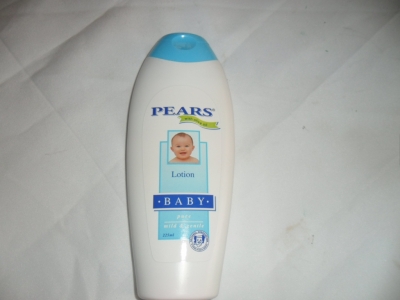
PEARS BABY LOTION
This cream is known for its affordability even with its powerful contents. The numbers of dark skinned women using this cream is amazing, you don’t have to bother about financial constraints as it is convenient for all. It is affordable and has a fantastic effect on your dark skin.