Nigeria, Cameroon Join Forces To Fight Piracy In Gulf Of Guinea
Integrated Logistics Services Limited, INTELS, one of the concessionaires in the nation’s seaports, has made $8.1 billion investment in the nation’s seaports.
The concessionaire, which is the terminal operator in Onne, Rivers Statel; Warri, Delta State and Calabar, Cross River State, took over the day-to-day running of ports following the conclusion of the concession programme during Chief Olusegun Obasanjo’s administration.
However, INTELS, which has Simone Volpi as its managing director, said in a statement obtained by THISDAY that the company has invested $8.1 billion in Nigerian ports in the past 10 years.
Within the period under review, the terminal operator also disclosed that it has remitted $176.1 million (about N35.2 billion) into the federation account.
The company also revealed that it has provided hundreds of direct and indirect employment opportunities to Nigerians since it started operations in the country.
Nigerians spend about $500million annually for kidney transplant in India alone, the Julie Donli Kidney Foundation, has revealed.
The founder of Julie Donli Kidney Foundation, Julie Donli, made the revelation while addressing the press during the kidney disease awareness walk to mark this year’s World Kidney Day.
The World Kidney Day is annually marked on every 2nd Thursday of March, and it is held in about 90 countries with events numbering up to 600.
According to Julie Donli, this year’s event is targeted at creating more awareness about children with kidney problems with the theme: “Act early to prevent it”.
“Today, we took our awareness walk from the Federal Secretariat to the National Assembly where we met with Hon. Lanre Tejuoso, the House Committee Chairman on Health to appeal for more government support to kidney disease patients who are often unable to afford the very expensive weekly dialysis, and on the need to equip Nigerian hospitals to the standard where transplants can be done here, instead of spending millions abroad,” she said.
On its part, the foundation has been able to assist at least 70 patients to bear the cost of their dialysis.
Med-View Airline has entered into a partnership with a travel management company from the United Arab Emirate, UAE, Anta Travel.
This new collaboration is to ensure that Nigerians traveling to Dubai on Medview get the best experience as the partnership is expected to open a wide variety of activities for potential passengers.
As part of plans to begin flight operations into the UAE, Medview Airline hosted its sales agents and clients to a trade partner forum at Sheraton Hotel, Lagos.
Managing director of Medview Airline, Muneer Bankole, who spoke at the forum, restated his airline’s commitment to meet the yearnings of Nigerians by providing affordable flights with plenty of luggage space to boot.
He said that the airline has come of age in delivering on its promises always since the commencement of all operations, making it not just a reliable airline but a consistent one.
Although he said that Medview was not ready to release its entire package for the UAE operations slated for the summer just yet, Bankole noted that at Medview they were well aware that Nigerians are prone to carrying a lot of luggage and as a response to that they would be giving a 3-piece luggage room for the Business Class at 75 kilogramme, and that is just for starters.
The European Central Bank, ECB, has cut its benchmark interest rate to 0% from 0.05% as part measures to boost the struggling eurozone economy.
The ECB will also expand its quantitative easing programme from €60bn to €80bn a month. The scheme will now include the purchase of corporate bonds as well as government debt.
The bank has also decided to further cut the bank deposit rate. It now stands at minus 0.4%, down from minus 0.3%, meaning that banks must pay more to deposit funds with the ECB.
The package of measures, including the decision to cut the benchmark interest rate, was more radical than investors had expected.
According to a report by the Global Agricultural Information Network, GAIN, Nigeria’s spirits market is worth $2 billion and it is increasing at six per cent average yearly .
While imported spirits account for $500 million, local spirits dominate the sector with 75 per cent share as they are cheaper than the imported brands, it added.
The report, however, said imported spirits of various classifications, including the international brands, continue to have preference among Nigeria’s growing young and educated middle class. The report obtained by The Nation, contains assessments of commodity and trade issues made by United States Department of Agriculture (USDA).
According to the report, which was prepared by GAIN’s Marcela Rondon and Uche Nzeka, Nigeria’s 160 million people provide a large market for alcoholic beverages worth more than $6.5billion. It said while spirits consumption constitutes about 30 per cent of the market, beer and wine share 55 per cent and 15 per cent.
Although the GAIN report noted that local spirits lead the market, they, however, do not meet the standards of the increasing high- and middle- class consumers preferred premium brands.
The National Association of Chambers of Commerce, Industries, Mines and Agriculture, NACCIMA, has consolidated trade ties with Turkey, the 18th largest economy in the world.
This development is expected to yield more investment to boost major sectors, including power, manufacturing, mining, construction, agricultur/agro-allied, aviation and security.
NACCIMA President, Bassey Edem, who spoke at the Nigeria-Turkey business forum in Abuja, during the week, said it was imperative for the countries to strengthen extant trade relations considering the huge trade volume built over the years.
He expressed Nigeria’s readiness to negotiate specific incentives for investors in consultation with appropriate government agencies and also assist incoming and existing investors with the provision of support services as well as facilitate procurement of all business approvals.
Edem said: “Nigeria and Turkey have over the years sought a way to fill the vacuum that exists between the two country’s trade relations, through signing bilateral agreements, organizing trade shows and exhibitions in Nigeria and Turkey to encourage both countries open up more trade and investment relations.”
Findings have revealed that Nigeria is losing about 300,000 barrels of crude oil per day due to the bombing of Forcados pipeline that conveys Forcados grade of crude oil to the over 400,000 barrels per day Forcados Export Terminal.
The loss, which translates to an average of $12 million daily at an oil price of $40 per barrel, arose from the damage caused on the 48-inch underwater pipeline, which disrupted crude oil flows to the export terminal.
It was also learnt that the loss may have overshadowed the gains Nigeria would have derived from the recent rise in oil price.
The affected Trans-Forcados Pipeline, which is operated by Shell Petroleum Development Company of Nigeria Limited (SPDC), belongs to the Nigerian Petroleum Development Company (NPDC), a subsidiary of the Nigerian National Petroleum Corporation (NNPC).
Investigation also revealed that some marginal field producers such as Pillar Oil, Midwestern Oil and Gas, Platform Petroleum and Energia also convey their crude oil through the pipeline
However, it was learnt that these marginal field producers have another alternative route through the pipelines operated by the Nigerian Agip Oil Company (NAOC) to carry their crude oil to Brass Export Terminal.
Eniola Akinsete, Senior Manager, Capital Projects & Infrastructure Team, PwC Nigeria. E-mail: eniola.akinsete@ng.pwc.com
As Africa’s most populous country and with an average five year real growth rate of 5% between 2011 and 2015, Nigeria is ranked as one of the fastest growing economies in the world. Despite this position, the nation’s activities in healthcare account for less than 5% of the country’s GDP .
With the general downturn of the economy, it is expected that there will be significant strain on public healthcare expenditure (which currently accounts for about 30% of the country’s total healthcare spend). As a result, public healthcare institutions, especially at the tertiary levels, will be faced with increased difficulties in bridging their current infrastructure deficit. This, even as their ability to increase Internally Generated Revenues (IGRs) remain constrained by limited funding for introducing new or expanding existing services.
However, collaborative arrangements between the public and the private sectors, supported by enabling frameworks and systems, can provide a sustainable solution to addressing this gap across the country.
Health sector overview
In 2015, Nigeria had over 3,500 healthcare institutions with about 27% being public sector owned. The public sector institutions include 54 federal tertiary hospitals as well as state owned general hospitals, teaching hospitals and primary health centres. The private sector participation is also evident across the three tiers of healthcare service delivery with majority of private sector activities domiciled at the secondary level.
Despite the high number of available medical institutions, the country still records below average health statistics due to the inability to provide quality healthcare to match the nation’s changing epidemiology, obsolete medical devices /equipment, inadequate basic infrastructure, among other challenges.
Significantly, the nation is seeing a change in the disease burden mix, with Non Communicable Diseases (NCDs) growth outpacing infectious diseases. This rise in NCD burden has not been matched by an increased capacity to treat locally contributing to the growth in medical tourism. This is not necessarily because there is a lack of technical expertise but the infrastructure to provide treatment or support the patients are largely unavailable. Although estimates vary depending on the source, it has been reported that about 30,000 Nigerians cumulatively spend about US$1 billion annually on healthcare services outside the country, with 60% of patient requests in four major specialist areas: cardiology, orthopaedics, renal dialysis, and oncology . In 2013 alone, medical spend per tourist was recorded as between $7,475 and $15,833 . Recent trends show that purchase of foreign healthcare services have significantly increased especially as medical fees amounted to a significant chunk of foreign currency requests in the last one year.
To take advantage of this market gap, the country has, in recent times, seen an increasing number of large scale green-field hospital projects by private sector participants. These players, who aim to establish fully equipped, high quality secondary to tertiary healthcare institutions, usually require 18 to 24 months from financial close of funding process to get the hospitals operational. This implies that though the private sector contribution will start to bridge the infrastructure gap, lost revenue to medical tourism activities will continue to increase for the next three to five years (at the least) until operational activities in some of these green-field projects commence on a full scale.
The infrastructure challenge
With over 160,000 hospital beds as at 2015, the country suffers from a very low bed per thousand population of 0.9 (less than one) in comparison to countries such as South Africa at 2.29 and Japan at 13.32 in 2013 . This low statistic has been a trend over the years as the number of beds has grown below GDP rates over the last five years. In addition to the lack of physical infrastructure required to adequately address the population base, existing structures suffer from obsolete equipment and lack of requisite infrastructure to expand/deepen medical specialisation. This has significantly limited the ability of healthcare institutions, in particular the public sector hospitals, to align their services to the changing disease trends. The ultimate implication of this is a limitation in increasing IGR levels within the institutions despite rising demand for services.
Constraints experienced by public tertiary hospitals in increasing IGRs can be further reviewed from the patients’ purchasing power standpoint. Whereas, the government’s objective with public health facilities (including tertiary centres) is to ensure patients at low income levels can access quality care; there are obvious benefits to those centres attracting patients across the income spectrum. Higher income patients often can pay more economic fees for their care which may enable the hospitals cross subsidise care for lower income patients. The government can also provide higher quality care for its citizens in the lower income levels at affordable rates by utilising health insurance schemes. It is worthy of note that less than 5% of the entire population are registered in one form of health insurance or the other implying that private healthcare expenditure is usually made via out of pocket payments.
In the hope of reducing the burden on their IGRs, some institutions have already started to explore ways of reducing the operational expenses by outsourcing some of their non-core services. However, this does not provide the required investments to address the infrastructure gaps in their systems.
The provision of and improvement in healthcare infrastructure has also been hindered by gaps in financing as the traditional funding model through fiscal budgets and IGRs have become increasingly inadequate. In addition, slower global growth suggests foreign aid budgets could decline resulting in a shortage in donor funding.
The PPP advantage
Evidence supports Public Private Partnerships (PPP) as a strategy to improving healthcare infrastructure and operations. PPPs involve long term collaboration between the public institutions and private sector participants and are characterised by the sharing of risks, responsibilities and rewards between partners. Public tertiary institutions have been referenced because they have the scale required to significantly bridge the country’s infrastructure deficit.
PPP arrangements provide a win-win situation for both the public and private sector players in healthcare as well as the general population. The institutions are able to develop the technical capabilities of their medical team and attract citizens from all income levels due to the provision of quality healthcare services. They also enjoy a reduction in their financial – and in some cases operational – burden, as these may be shared with the private sector partners depending on the PPP structure implemented. The private sector partners, on the other hand, are able to enter the market quicker due to the brownfield status of the public tertiary institutions. They also enjoy guaranteed revenue streams due to the higher patient traffic associated with public sector facilities as well as an increased ability to attract more patients with higher purchase power. The citizens benefit from the ability to access care without compromising the standards they aspire to have or are used to in foreign hospitals.
There is some suggestion that PPP-run healthcare facilities may raise costs making them inaccessible to lower income patients. However, this belief has been debunked in various parts of the world especially in similar economies through the implementation of innovative PPP structures. From research, structures utilised have had elements of Design, Build, Operate and Transfer. In some countries, various hybrid structures have been implemented and in the United Kingdom, the most popular structure has been the Private Finance Initiative (PFI) where the private sector finances infrastructure development for healthcare institutions. Whatever the structure, the overall objective remains the same – to provide quality healthcare to the citizens.
In the Indian state of Andhra Pradesh, medical treatment is provided to patients living below the poverty line (BPL) through the Arogyasri health insurance scheme at no cost to the patients.
The B. Braun Medical India Pvt Limited (a subsidiary of B. Braun Melsungen AG, one of the world’s leading healthcare suppliers headquartered in Germany), was selected to establish and operate dialysis centers in 11 state-run hospitals on a Build, Operate and Transfer (BOT) basis for a period of seven years starting from 2010. In return, the Government of Andhra Pradesh pays the B. Braun Medical Pvt. Limited, an agreed price (user charges) for every dialysis done. With this PPP model, the hemodialysis centers cumulatively host 111 hemodialysis machines in medical colleges and hospitals across the state thus providing services to more patients in comparison to the past.
In Nigeria, multiple models are being utilised but the most common is the arrangement in which government solely finances the infrastructure and contracts a private entity to operate the facility. This is the case of the Cardiac and Renal Centre, Lagos, which is a five year concession agreement between the Lagos State Government and a private sector entity.
Another project with the same arrangement is the Garki Hospital, Abuja. In 2007, the Federal Capital Development Agency (FCDA) signed a concession agreement with a private hospital operator for the management and operations of the hospital.
The Akwa Ibom Specialist Hospital was built by the state government but is being managed and operated by private sector players.
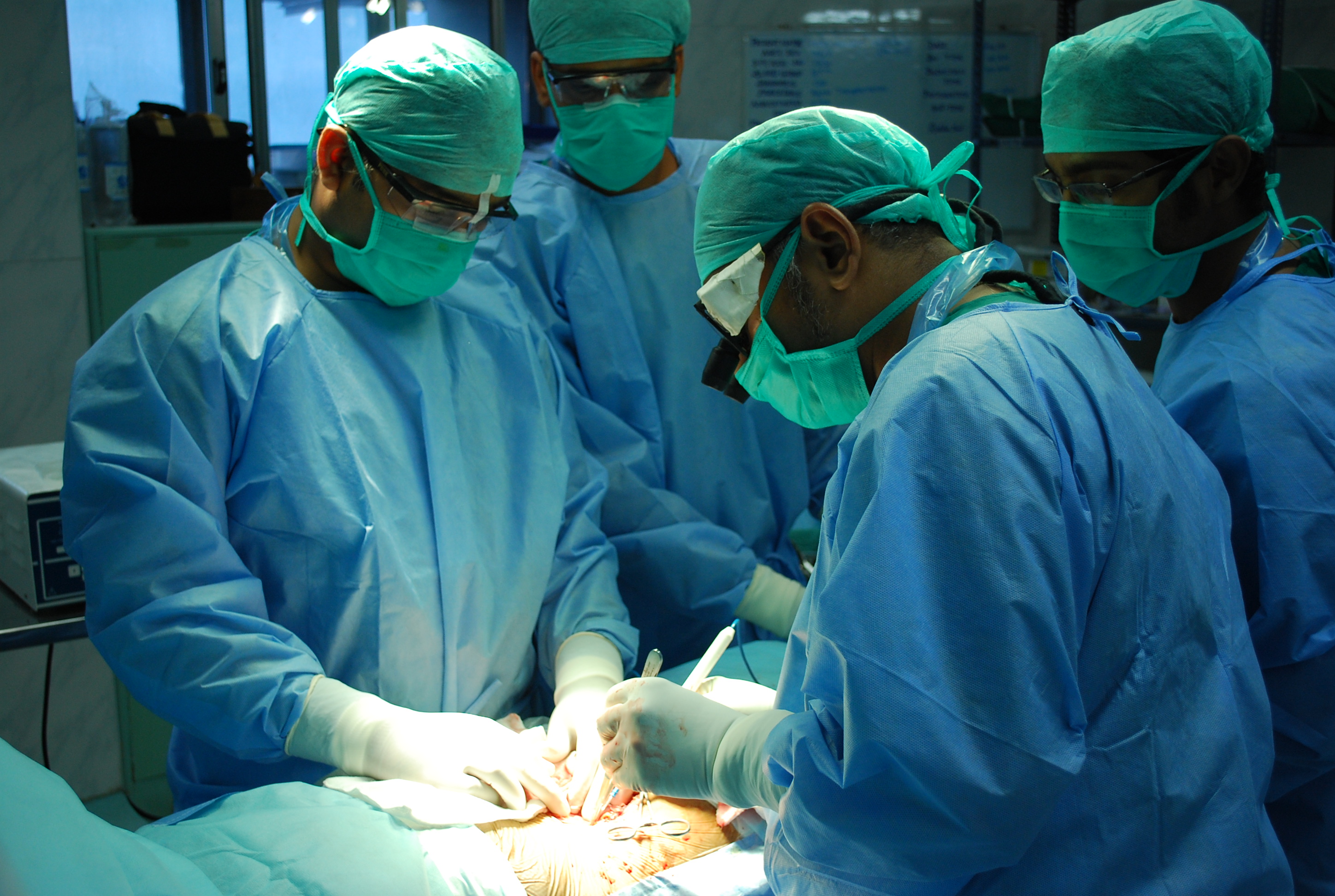
However, the PPP arrangement is different at the University College Hospital (UCH) Ibadan.The Cardiovascular Centre was designed, built and equipped by a medical equipment provider while the operational activities are being conducted by the UCH personnel. This has led to several successful treatments of cardiovascular diseases including open heart surgeries.
Key success factors
Without a doubt, legislation and an enabling regulatory environment are key to the successful implementation of PPP contracts. In addition, the mapping of social needs to the availability of resources as well as incorporating capacity building activities to the projects will further increase the successful execution of PPP contracts. It is also important to ensure an appropriate “partner – project” mix to guarantee that the overall objectives for the project are achieved.
To support the operations of the project, it is important that sustainable models for guaranteeing the payment of usage charges for patients are adopted, typically done by the implementation of appropriate health insurance schemes.
The way forward
The inability of the country to reduce medical tourism is fundamentally due to financing constraints, particularly for our tertiary institutions.
Therefore, it has become imperative that Nigerian public tertiary healthcare institutions explore innovative ways of bridging their infrastructure gaps. To do this, the institutions should consider mutually rewarding partnerships with the private sector to drive expansion projects on their existing platforms. These arrangements should be guided by regulations that ensure that the social good being promoted by the government is not eroded.
The management teams of these institutions should clearly articulate bankable expansion projects that are significant to the growth objectives of the institutions. Projects should align with demand and supply trends in the market and show articulated returns from both the social and financial perspectives. The latter will usually be determined by the PPP structure to be adopted. The PPP structure will also determine the criteria for selecting a suitable private entity partner. From a regulatory standpoint, government needs to explore ways of expanding the healthcare insurance scheme to cover more people.
Private sector players seeking to enter the market should take advantage of existing platforms by exploring areas of collaboration with players in the public sector to provide global standard healthcare institutions e.g. partnering with tertiary hospitals to fund expansion projects and / or sub-specialist centres to provide healthcare services that are currently accessed by Nigerians outside of the country. With these partnerships, the infrastructure deficit can be bridged and Nigerians, especially those who would otherwise seek medical treatment outside the country, can utilise locally available services. This is will also see to significant human capacity development as well as economic growth through job creation and preservation of the country’s foreign reserves.
President of Institute for Fiscal Studies, Mr Godwin Ighedosa, has said that the institute is putting together five billion naira to be disbursed as loans to help young entrepreneurs start businesses.
He made the statement in Abuja on Thursday when members of the Institute visited the National Productivity Centre.
Ighedosa said that the fund, which would be sourced from other partners, would help these entrepreneurs access money to engage in businesses.
The partners are Bank of Industry, Bank of Agriculture and some other foundations and NGOs that were largely focused on entrepreneurship and enterprise development.
He said that the loan was aimed at empowering students and retirees.
“We have put together an initial capital of about five billion naira and we are engaging various firms that will be working as business incubators.
“The young students and retirees after retirement instead of waiting for pension have a lot of ideas that they can put to use in terms of business development and economic planning,’’ he said.
He noted that collateral and interest rates were the major obstacles to establishing businesses in Nigeria.
“So what we intend to do is to provide them access to some kind of seed money that they can use to start these businesses.
“As for the collateral, we are working with some government agencies to find a way to strengthen property rights law in the country where you can get to a position where the idea itself can serve as collateral for the money.’’
He said that the interest rate would be single digit.
He added that this will provide people access to the money to further assist them through the formative years of the business until they could pay the money back.
Ighedosa said that the aim of the visit to the centre was to seek partnership with it to add value to the programme.
Responding, the Director-General of the Centre, Mr Kashim Akor, said that the centre was fully ready to cooperate with the institute by providing an enabling environment for the success of the project.
Represented by the Director, Planning and Policy Analysis, Mr Samuel Oyibo, said that the centre would provide human capital and
other resources.
He, however, noted that the centre would consider the benefits of the project to Nigerians before it could be granted
Lagos state House of Assembly has called for a meeting with the Ministry of Education to as a matter of urgency commence an integrity test on the two-storey dilapidated building of Ogba Primary School,Ogba in Ikeja Local Government Area of the state.
According to the lawmakers the building, was showing signs of collapse just 23 years after its construction and needed urgent attention. The news as presented by the Chairman, House Committee on Education, Hon. Lanre Ogunyemi recommends that where the dilapidated building meets the test, it should be immediately renovated before the pupils are returned to their classrooms at the earliest possible time. The House also directed the State Ministry of Environment to deflood the school as it had remained flooded.
Ogunyemi said his committee visited the school following a petition by the school’s Parents-Teachers Association, PTA and that it observed that “the building is in a state of repair and therefore not conducive for learning. Besides, it is also unsafe to the lives of the pupils and teachers in the school.
“The pupils have to be transferred to share classrooms in Ogba School II”, Ogunyemi later said. Some of the lawmakers observed that some of the classrooms were overcrowded thus endangering the lives of the pupils.
It was also noted that there were no toilet facilities in the school and that the pupils are forced to use the facilities at the school II. “The only toilet in the school is blocked and the school shares convenience with Ogba Primary School II,” the report states.
Adding to the report, Hon. Rasheed Makinde suggested that integrity test should be carried on all schools in the state adding that a school in the Ojokoro area was suffering same fate. Some of the lawmakers noted that a part of the building was falling off. Hon. Abiodun Tobun said part of the recommendations should be that if the building fails integrity test, it should be urgently demolished.
It is important to understand that renting your first apartment goes beyond siting the location and making payments. It also involves several other research and considerations, as well as taking calculated risks to fully enjoy all of its potentials.
As someone with plans of renting an apartment soon, it is imperative that you put into utmost consideration these vital suggestions, so you can save up even in the process of purchase.
Budget
Ensuring that you know what your budget is before renting an apartment is important; it will help cut short unnecessary expenses and set your mind on not exceeding stated financial plans. Renting an apartment has to evolve around your income after other pressing needs have been well sorted out, and as such you have to scout for houses that are affordable. The price of the apartment annually has to be scrutinized in other to be sure if keeping up with it won’t be excruciating.
Location
Before renting an apartment, you have to put into consideration its accessibility. Its proximity to your daily ventures has to be calculated. The location of your apartment has to be centered on reliable security and provision of other amenities such as electricity, water and good roads. All these have to be factored into the selection of an apartment as it will help prevent future inconveniences.
Must Haves; Nice to Have; Not Necessary to Have
When we get into the interior decoration, house appliances and other varieties that spice up an apartment you have to be more definite. There are lots of things you want to have installed in your newly rented apartment, but it is also profitable to analyze and select categorically the most viable. You have to be able to distinguish between what is of pressing importance and what isn’t, so you don’t have to spend beyond your budgeted plans. After you are fully settled in and recovered from your expenditures, you can then pursue other desires.
Ask Questions
Having limited interaction with people in your purposed vicinity wouldn’t help your research on the environment where your apartment is situated. You have to venture into esoteric conversations with others in the environment, familiarize yourself with a considerable number of people. Find out how it’s been coordinated and programmed. Speak to the woman who owns the provisions store down the street, or the security guard who mans the gate into the street. Get acquitted with your soon-to-be neighbors and create a bond even before moving in.
Future Growth
This is one thing everyone aiming to rent an apartment must be conscious about. You have to create provision for future expansion, having a contingency plan will help work the magic. Whichever apartment you are planning on renting must be spacious enough to contain any sudden growth and inclusions. There are a million and one tendency that as the years roll by you are liable to change and the growing need to increase. Hence, to avoid constant movement and transfer of property, you must put this into consideration.
Renting a new apartment can be quite a challenging and rigorous experience, but getting it right make all the difference in just having a house, or a place you can truly call home.
Games are enjoyed by everyone. They can be interactive, social and fun. However, excessive gaming can be addictive. This addiction has been accelerated by the introduction of online games which is not helped by the fact that many phones are now internet compatible.
If you use your system for regular gaming, it is important to protect yourself as well as your personal computer. Jovago.com, Africa’s No 1 hotel booking portal shares tips on how to have a secure and safe gaming experience.
Only play on trusted sites
The rule of thumb for surfing the internet is that you should only visit trusted sites. This is the same thing for gaming. If you have doubts about the site do not bother to play any games as hackers can take over your system. If possible, you can use a site advisor extension like McAfee. The site advisor will immediately alert you if the site is unsafe.
Security software
If you are surfing the internet without any antivirus, you are exposing yourself to internet attack. So, this should be one of the first things you should do if you want to have a safe gaming experience. The better the security software, the safer and more secure the gaming experience will be.
Don’t Share Personal Information
Creating an online identity means you will be releasing your personal information which may include name, addresses, age, pictures, passwords and other private information. If it is possible to use pseudo-information, do so, rather than providing all your information online.
Watch out for cyber-bullying
Today, many children are being bullied online by friends, and classmates without the knowledge of their parents. If your children play online games, it is important to check if they are being harassed. Some game software allows users to block players that are abusive or foul-fingered when playing games.
Be Careful when making in-app purchases
Quite a number of gaming platforms make money by selling things like extra guns, extra firepower, and extra lives. There are no limits to these purchases especially of you are addicted to it and you want to continue the game at all cost. However, you know that when making these purchases, you are required to provide your credit card number. It is advisable to think about this gaming purchase carefully before you buy any of these things online.
In the last decade, e-commerce has changed millions of people’s lifestyles globally as thousands of internet companies have facilitated buying and selling and revolutionized daily transactions through the use of technology and the internet.
The continuous growth in e-commerce can offer unique opportunities for women of all ages and backgrounds to transform their lives and become breadwinners. As Kaymu – Nigeria’s top online shopping community- celebrates a month dedicated to women and mothers everywhere, they have taken the time to identify the rising importance of the role of women in e-commerce and the benefits that the industry can bring specifically for women.
When it comes to e-commerce purchasing trends, women drive both online purchases and overall purchase decisions globally. Women account for 58 percent of all online purchases, and decide 83-87 percent of consumer purchases. Since they are the major stakeholders in purchasing, it follows suit that they also be the major stakeholders in selling.
This is the case at Kaymu, where more than half of merchants on the sites are women. A majority of our top merchants are women and some shared their stories in this video in celebration of International Women’s Day. While sharing their stories, these women shed light on the benefits of setting an online shop for women and called other women to not feel intimidated by their lack of experience or capital and do the same.
Women undoubtedly have innate management and entrepreneurial skills as historical homemakers. E-commerce sites like Kaymu enable them to leverage these skills and apply them to a money-making business.
For the single mother or the stay-at-home mom, an e-commerce shop is a means of making income and pursuing a business passion from the comfort of her home, while continuing to be dedicated to raising her children.
For working women, e-commerce is an avenue to make more money on the side, while exerting little effort, and in an attempt to combat the global gender pay gap whereby on average, women get paid just over 50% of what their male counterparts earn for doing the same job. In Nigeria, the average woman earns only 57% of what the average man earns.
For retired women, starting a home business is a way to remain independent and stimulated and partake in the economy. For all women, especially those that end up in circumstances incompatible with their passions, starting an e-commerce business is a viable way to take ownership of their business interests, experiment with different products, and succeed as money-making business people.
Getting an e-commerce business started is as easy as going to the market and purchasing 10 pieces of a single good, whether that is a natural hair product or a fashion item. “The beauty of e-commerce is how easy it is and how much potential it has, especially with sites like Kaymu providing partners who handle logistics and payments. This enables women to focus on their core businesses and become better traders” – Sefik Bagdadioglu, MD of Kaymu Nigeria.
The Governor of Osun state, Governor Rauf Aregbesola has renamed all tertiary institutions, with the state-owned university Osun State University UNIOSUN named after the slain minister of justice and attorney general of the federation, Chief Bola Ige.
He also renamed all the tertiary institutions in the state at the convocation ceremony of the university where Mrs, Folorunsho Alakija was also announced as the new chancellor of the institution.
The institutions renamed are: Osun State College of Technology, Esa-Oke now Bisi Akande College of Technology; Osun State Polytechnic Iree now, Sunday Afolabi Polytechnic; College of Education, Ila Orangun now Adeyemi Oyeduntan College of Education and the College of Education Ilesa which is now to be known as Lawrence Omole College of Education.
Others also include UNIOSUN College of Law, Ifetedo now Kayode Esho College of Law; College of Social Sciences and Management Okuku, now Olagunsoye Oyinlola College of Social Sciences and Management; College of Agriculture Ejigbo, now Isiaka Adeleke College of Agriculture; College of Education Ipetu Ijesa, now Ezekiah Oluwasanmi College of Education and College of Humanities and Culture, Ikire, now Eniola Atanda College of Humanities and Culture.
The new chancellor, Alakija has described her conferment and the award of honorary doctorate degree in business administration as unique.
Earlier, Aregbesola had congratulated Alakija for her accomplishments.
With her rank she becomes the first female chancellor in public universities in Nigeria. for counting the University worthy and accepting to serve as the Chancellor of the university when she could have easily turned down top universities in Europe and America with the same request.
The Federal Government has appointed Dr Dakuku Peterside as the Director General of Nigerian Maritime administration and Safety Agency (NIMASA).
A statement signed by Yetunde Sonaike, the Director, Public Relations, Ministry of Transportation in Abuja said that the appointment was with immediate effect.
Peterside was the governorship candidate of APC in April.11, 2015 governorship election in River state and also a former member, House of Representative from 2011 to 2015.
According to the statement, Peterside has a Doctorate Degree in Management Science from the University of Port Harcourt and MBA in Business Administration.
He also holds a Bachelor Degree in Medical Laboratory Sciences (B.MLS) in Hematology from Rivers State University of Science and Technology.
The House of Representatives has reiterated that MTN pay the N1.04 trillion fine imposed on it by the Nigeria Communications Commission for defaulting in deactivation of unregistered SIMs.
The Chairman, House Committee on Telecommunications, Hon. Saheed Akinade-Fijabi, noted that the down payment of N50 billion paid by MTN for out of court negotiation was not adequate for undermining government’s efforts at tackling terrorism challenges in the country.
“The law is there for you to abide by and not for you to go against them. MTN has been trying to circumvent the process and find a way of running away from the law instead of them facing the music’’, Akinade-Fijabi stated.
Hon Johnson Agbonayinman, a member of the committee, posited that MTN violated sections 19 of the Telephone Subscribers Regulations under the Communications Act, which states that “Any licensee who fails to capture register, deregister or transmit the details of every individual or corporate subscriber to the central data base as specified in the regulation or as may be stipulated from time to time by the Commission is liable to a penalty of N200 000 for each subscription medium”.
“MTN’s failure to deactivate 5.2 million SIM cards should be liable to a fine of N2.8 trillion.’’
The National Examinations Council (NECO) yesterday released results of the 2015 November/December Senior School Certificate Examination. About 43.52 per cent of candidates passed at credit level.
Prof. Abdulrashid Garba, NECO’s Registrar/Chief Executive, announced the results at its headquarters in Minna, said of 50,060 candidates that registered, 47,507 sat for English language and 47,554 sat for mathematics.
Garba said 29,718 (62.55 per cent) got credit passes in English language. Also, 32,484 candidates obtained credit passes in maths.
Garba added that 43.73 per cent got credit passes in biology, and in chemistry, 11,951(53.63 per cent), obtained credit passes.5
Also, about 22,201 candidates, who sat for physics, 818 (3.68 per cent) passed at credit levels.
In geography, 19,781 sat for the examination and 3,851 or 19.46 per cent passed at credit levels.
In economics, 39,406 sat for the examination and 23,991 or 60.88 per cent passed at credit levels.
The registrar said malpractice was high as against previous years, adding that the council was devising ways to curb the malaise.
He concluded by saying that candidates should access results on NECO’s website using their registration number and scratch cards.
Minister of state for petroleum resources, Dr Ibe Kachikwu, has denied reports of the unbundling of the Nigerian National Petroleum Corporation (NNPC), rather what the ministry has carried out is a reorganisation of the NNPC.
He said: “We have not unbundled NNPC. We had a press conference yesterday (Tuesday) where I explained this. What we have simply done is reorganisation. We have five business entities focused on business – Upstream, Downstream, Refineries, Gas and Power – that are there before.
“There is also Ventures that captures all our little companies that were not having proper stewardship. They are run by individuals who report to the group managing director (GMD).
“The NNPC is still a whole. There is nothing new that has happened. I have tried to explain this and I am sure the NNPC workers are members of the family; they will understand. We are going to have a meeting, and they will be made to understand. Perhaps the engagement has not been good enough.
“NNPC has not been unbundled in the sense of breaking up NNPC into distinct institutions. I am concerned; I don’t want the industry shutdown. I am sure we are going to resolve the issues very soon.”
Vice-President Yemi Osinbajo has announced that the Federal Government would not import food to implement the school feeding aspect of its social investment programmes. He made this statement while receiving a delegation of the World Food Programme at the Presidential Villa, Abuja. The delegation was led by its Executive Director, Ms. Ertharin Cousin.
He said the Home-Grown School Feeding, through which primary school pupils would receive one full meal a day would “energise the agriculture base in the state so that the farmers can benefit.”
Osinbanjo noted that the programme would also create jobs, not only for farmers, but caterers, adding that the entire value-chain would be beneficial to the local communities.
He added that the Federal Government would partner with the World Food Programme, a UN agency, in the implementation of the feeding programmes. He further emphasised the importance of such partnership because “nutrition is important for school children at that tender age”.
Ms. Ertharin Cousin lauded the efforts of the President Muhammadu Buhari administration in addressing the plight of Internally Displaced Persons in the North East, adding that the UN agency is committed to strengthening the school feeding programme in Nigeria.
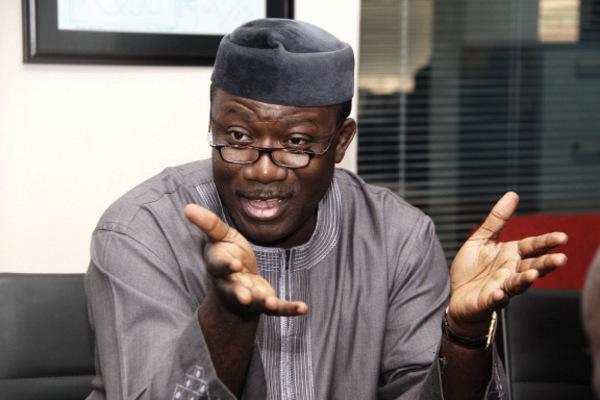
The Ekiti State House of Assembly has handed out a 13-day notice to Dr. Kayode Fayemi to avail himself and explain the alleged misappropriation of N852 million the state accessed from the Universal Basic Education Commission fund during Fayemi’s tenure. The lawamakers asked Fayemi, who is currently the Minister of Solid Mineral, to appear before it on March 22.
The Leader of Government Business, Mr. Tunji Akinyele, stated that the misappropriated UBEC fund had caused the state to be blacklisted by the commission.
Fayemi, in a statement issued by his Special Assistant on Media, Yinka Oyebode, had said Fayose’s administration should be blamed for the blacklisting.
“The Fayose government is to blame for this. Its crude approach to governance, careless utterances and verbal threats to financial institutions shortly after the June 21, 2014 election made many banks to review their relationships with the state.
“The issue of diversion does not occur, the bank simply withdrew its support because of the negative signal it got from the Fayose administration. So, Fayose should be blamed for everything.”