The Economic and Financial Crimes Commission (EFCC) has invited the Managing Director of Skye Bank Plc, Mr. Timothy Oduntayo, and the bank’s chief compliance officer over the bank’s deliberate refusal to transfer N6.3 billion lodged in two separate accounts with it to the Treasury Single Account (TSA) with the Central Bank of Nigeria (CBN).
This, according to the commission, amounted to non-compliance with the directive of the federal government on funds in deposit money banks.
EFCC disclosed that the invitation followed the sudden discovery that the funds belonging to the defunct Presidential Implementation Committee on the Alienation of the Federal Government Landed Property, was overlooked by the bank in the TSA compliance arrangement, despite the accounts being dormant since 2011.
“There is strong suspicion that the funds were covertly hidden from the government as only the bank and members of the committee that had long wound up its operations were aware of its existence,” an EFCC source said.
The committee which had B.B. Awojide, as secretary, operated from Room 4A, (3rd floor), Federal Secretariat Phase1 in Abuja.
Both accounts have already been frozen by the EFCC while investigations continue.
However, Mr. Kola Adeyemi, who said he is the secretary of the committee, stated that the allegations were spurious.
He said the committee is not defunct as erroneously alleged by the EFCC and the accounts with Skye Bank were not dormant.
He revealed that the reason the accounts were not in use stemmed from the change from the old account numbers used by banks to NUBAN, which has since been ratified.
The Ministry of Budget and National Planning has partnered with stakeholders to review the Draft National Policy on Food and Nutrition to eradicate malnutrition in the country.
The Minister of State for the ministry, Mrs Zainab Ahmed, said that Nigeria had the highest burden of malnutrition in Africa. She said this necessitated the review of the policy to address emerging concerns in the science, practice and programme of food and nutrition activities in the country.
“The NPFN is a 10-year blueprint for eradicating malnutrition for sustainable economic growth and development in Nigeria. It is a plan for the future we desire for our country. We are here to add value to the draft NFPN; our idea, perspective and criticisms would be invaluable,’’ the minister said.
The Permanent Secretary in the ministry, Mrs Fatima Mede, said the policy had potential to address malnutrition and extreme hunger among children, pregnant and lactating mothers, noting that the policy would address emerging concerns in the science of food and nutrition programming.
Mede said that N40 million had been approved for 2016 nutrition activities in the ministry.
Mr Chris Kolawole, the Permanent Secretary, Ondo State Ministry of Economic Planning and Budget, said the state had prepared a draft policy on food and nutrition. He said that the state would domesticate the national policy as soon as it was ready, to boost economic growth and development in the state.
The Academic Staff Union of Polytechnics (ASUP) has given the federal government an ultimatum of month end to meet the demands of their members or the union would embark on nationwide indefinite strike.
President of ASUP, Comrade Usman Yusuf Dutse, stated their demands to include inadequate infrastructure in polytechnics across the country, inadequate funding and the need for the review of Polytechnics Acts which are outdated. Also mentioned are the implementation and payment of salary arrears of 2012 consolidated tertiary institutions salary structure (Contiss), 2010 Contiss agreememt with the federal government which was not captured in the 2016 budget as the committee set up to review it in 2014 was yet to submit its report.
He further stated that government needs to tackle the issue of university/polytechnic dichotomy as according to him bachelors degree and Higher National Degree (HND) holders should be treated equally in terms of promotion and considerations for appointments in the civil service.
ASUP President added that the newly introduced Treasury Single Account (TSA) by the government should not include tertiary institutions due to their peculiar nature, hence the need for them to be exempted.
“We cannot efficiently operate with the TSA platform because it is cumbersome, so it is not good for tertiary institutions” he said.
The House of Representatives has advised that due process should be followed in the planned restructuring of the Nigerian National Petroleum Corporation (NNPC).
According to the Rep. Abdulrazak Namdas, the Chairman, House Committee on Media and Public Affairs, the move was unconstitutional and usurped the powers of the legislature. He noted that the NNPC was established by an Act of Parliament, argued that there was need for an Executive Bill for the corporation to be restructured.
“NNPC is an Act and we feel that anything that will be done on NNPC should be brought back to the National Assembly,’’ Namdas said.
“We also urge Mr President to send Executive Bill to the National Assembly as soon as possible.
“The Speaker of the House of Representatives has put calls to the President on three occasions, asking him to at least send an Executive Bill for the Petroleum Industrial Bill (PIB) or petroleum reform as it would suit them,’’ Namdas said.
A prosecution witness in the ongoing trial of former -Director General of the Nigerian Maritime Administration and Safety Agency, NIMASA, Patrick Akpobolokemi and six others, yesterday, told a Federal High Court sitting in Lagos, that he collected the sum of N70 million for a plot of land sold to one of the accused.
The witness, Eboigbe Etiosa, a property consultant and Chief Executive Officer, CEO, of Eboigbe Etiosa and Associate told the court that it was the second accused person, Captain Ezekiel Agaba who bought the property.
According to him, the property, a piece of land in Northern Foreshore, was purchased for N70 million in 2014, with the suspect crediting his Zenith bank account with the sum in two installments.
Kano Electricity Distribution Company (KEDCO) has associated the fall in electricity supply to the wheeling of 15 megawatts of the 50MW allocated to it to Gazoua in Niger Republic as part of Nigeria’s bilateral agreement with the country.
The company’s Chief Technical Officer, David Omoloye, also explained that the industrial action embarked by the Petroleum and Natural Gas Senior Staff Association of Nigeria (PENGASSAN) and Nigeria Union of Petroleum and Natural Gas Workers (NUPENG) has aggravated the situation.
He revealed that the industrial action had caused all the six gas thermal stations, which generate at least 80 per cent of daily electricity in Nigeria to be out of supply, leaving the country with power generation from hydro power plants.
The spokesperson of KEDCO, Mohammed Kandy, stated that the company was given 50 MW from the national grid to supply its electricity consumers in the franchise area of Kano, Katsina and Jigawa states.
However, because of Nigeria’s bilateral trade with Niger Republic 30 per cent of the mega watt allotted to KEDCO was wheeled to Niger Republic and this has caused drop in power supply.
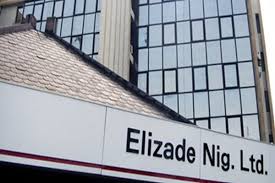
Elizade Nigeria Limited reported that it will soon start to assemble the JAC brand of vehicles in the country.
Managing Director of the company, Mr Demola Ade-Ojo, said this on Tuesday in Lagos at the launch of an auto center exclusively meant to market the JAC brand of vehicles.
Ade-Ojo suggested that Elizade had already secured the support of the JAC management to ensure the smooth beginning and success of the assembly operations.
The MD said as part of the preparation for the project, Elizade had submitted an application to the National Automotive Design and Development Council and was expecting to be granted an auto manufacturer status.
The new venture is been undertaken with the Elizade Autoland name in partnership with a Chinese auto manufacturer, JAC Motors, Ade-Ojo said.
The MD also spoke on the new auto center worth over $2m (about N394 at N197/dollar official rate), saying it was meant to provide an easy sale and a hassle-free maintenance arrangement for the JAC vehicles.
AOS Orwell, an integrated indigenous oilfield services company in Nigeria and Ghana offering well construction and engineering services to the oil and gas sector, is recruiting to fill the following vacant positions below:
Spectranet was awarded a License from the Nigerian Communications Commission in 2009 with the aim of promoting Internet Services in Nigeria. Over the last year Spectranet has assessed and evaluated different technologies and mediums which would facilitate in providing the best data services best suited for Nigeria.
Headquartered in Lagos with Management Consultancy and Technical Collaboration with the Infrastructure Development Company Group based at Singapore, Spectranet aims to be a leader in the Internet Services space in Nigeria.
We are currently recruiting to fill the following vacant positions:
KPMG is a global network of professional firms providing Audit, Tax and Advisory Services. Our vision is to build and sustain our reputation as the best firm to work with by ensuring our people, clients and communities achieve their full potential.
We are a team of outstanding professionals with diverse backgrounds, varied experience and probing minds. We always strive to win. Not as individuals but by working as a team. Our winning culture is based on collaborative teamwork, and we create results by being open-minded, helping each other and showing trust in each other’s method and capabilities. And for that we need you on the team!
Interesting Career Opportunities within the Department of Professional Practice (DPP) at KPMG Professional Services, Lagos; Are you looking for a career in a challenging, dynamic environment? Are you looking for an opportunity to work with a passionate, forward-thinking team? Can you proffer plausible and well-researched options/solutions to challenging issues on IFRS and other accounting related business issues?
We are looking for young, vibrant and forward thinking candidates to fill the position below:
Job Title: Audit DPP Trainee
Auto req ID: 101902BR Location: Lagos
Function: Audit
Job Description
The KPMG DPP is a unit within KPMG set up to enhance the quality of KPMG West Africa’s audit and assurance practice and provide guidance to our professionals to achieve efficiency in the delivery of our service offering through a dynamic process of pursuance and monitoring of best quality practices, excellence in training and strategic liaison with key regulators.
We are seeking bright minds that are ready to learn, perform and are interested in a challenging and rewarding career. You will have the opportunity to work with a team of outstanding professionals of diverse backgrounds, probing minds and varied experience. We always strive to win. Not as individuals but by working as a team. Our winning culture is based on collaborative teamwork, and we create results by being open-minded, helping each other and showing trust in each other’s method and capabilities.
Requirements
Interested candidates must:
Show adaptability, willingness to learn new skills and commitment to exceptional delivery
Have exceptional oral and written communication skills
Be innovative and creative
Have a minimum of 5 O’ level credits (including English & Math) at ONE sitting
Have a minimum of second class (upper division) degree at undergraduate level
Have completed professional accountancy certification – ICAN/ACCA conversion to ICAN
Be below 26 years old
Application Closing Date
Not Specified.
How to Apply
Interested and qualified candidates should APPLY
Arik Air is a customer-focused airline that offers consistently outstanding services to both business and leisure travellers. We have earned a reputation for providing “the best care in the air”. Industry experts have awarded us for delivering outstanding services. No airline does it in the unique Arik way.
Arik Air offers opportunities for employment in administrative, professional, technical and airline-specific disciplines, irrespective of the level or area of responsibility, each employee contributes to the growth and success of our airline. We believe that individuals score goals, but ultimately “the team wins the game”.
We are recruiting to fill the following positions below:
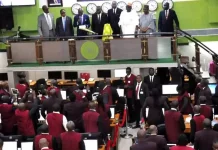
Quoted equities maintained upward trajectory on Thursday, March 10, as investors turned to worse-hit stocks for bargain-hunting.
Two stocks- Oando Plc and Tiger Branded Consumer Goods (TBCG) Plc, which had suffered some of the sharpest plunge, have been at the centre of recent rally as investors sought to take advantage of the undervaluation of the stocks.
Key indices at the Nigerian Stock Exchange (NSE) showed continuing bargain-hunting across the large, mid and small cap stocks, but there appeared to be a focus on small-cap stocks with dividend-paying history and potential for capital appreciation.
With 19 gainers to 15 losers, there was also a slowdown in the momentum of the rally, raising the possibility of profit-taking activities in the next few trading sessions ahead. Aggregate market value of all quoted equities rose by N13 billion to close at N8.917 trillion as against its opening value of N8.904 trillion.
The modest rally further reduced the negative overhang at the stock market as the average year-to-date return improved to -9.49 per cent.
Cross sectoral analysis showed continuing positive sentiments across stock groups and sectors. The NSE Oil and Gas Index indicated a gain of 0.72 per cent. The NSE Industrial Goods Index and the NSE Insurance Index inched up by 0.2 per cent each. The NSE Banking Index appreciated by 0.04 per cent. However, the NSE Consumer Goods Index dropped by 0.5 per cent.
Imagine you owned a food shop in Ikeja. Every morning, you put a sign outside your store with a list of the specials for the day. Everyone that passes your store sees the same sign – regardless of whether they’re a potential customer that has never visited your shop, or a regular that can’t go through the day without dropping in.
Now imagine you could change your street sign for every person that walked past your shop to match their interests and preferences. The person who prefers ‘Amala’ because he is from Oyo. The goat meat lover who visits your stop every evening would see a sign for a special discounts, to further cement his/her loyalty. It’s hard to imagine how this scenario would work in the offline world – but it’s happening for small business owners everyday online.
On the Web, businesses can customize their store sign in infinite ways – and then get instant feedback from their customers about the most effective promotions. They can also reach the millions of people searching for their products and services. By putting their sign online, business owners can tap into a whole new customer base – whether it’s tourists planning their first visit to the neighborhood or locals hunting for nearby offers on their mobile devices.
This may sound complicated, but it’s actually easier (and cheaper) than you think.
Step 1: Make sure your customers can find you
More than one billion people are online – including 48 million Nigerians – which means that these days it’s more important than ever for your business to be online as well. Most small businesses assume that having a Web presence means spending a lot of money to hire a design firm and build a website from scratch – but it doesn’t have to be so. Online directories make it easy to get your business information online with just a few clicks. For example, claiming your Google business listing means your store information will start to appear in Google search results and on Google Maps. You can update your Google listing with information like trading hours, store photos, and even special offers and coupons – all for free. Online directories make it easy (and cheap) to have a Web presence, which can translate into more foot traffic for your store.
Step 2: Learn what your customers want
Once you claim your local business listing, you can tap into a wealth of information about your customers, such as what search terms people use to find your shop. Remember the food shop in Ikeja? In the offline world, the manager would have to ask each customer coming through the door how they found their shop. Online, they can see data about what brings people to their store – did they search for “amala” or “rice” to get the listing for the food shop? Do they live across town, but drive miles for your great selection of single-origin coffee? With insights like that, you can understand your customers and make informed decisions about how to attract more.
If you’ve claimed your Google business listing, you can start tapping into these insights right within your listing. Or, you can use free tools like Insights for Search to compare search trends across time, region, and category to understand things like seasonality and how people search for your business.
Step 3: Find your customers wherever they are
Your offline sign reaches people as they walk down the street and pass by your business. But how do you reach people who don’t pass your store, but live nearby and would visit your shop if only they knew about it? To take another example, if you own a children toy store, how do you catch the eye of parents in your area who don’t walk down your street? How about when they’re reading their favorite children blog or watching videos on YouTube?
Tools like Display Ad Builder let you create professional-looking display ads that mirror your street sign without needing to hire a designer or start from scratch. You can customise dozens of templates with your own text, images, and logo as well as change the colors and background. Once you have a display ad you like, you can place this ad on relevant sites across the Web, such as the cat blog or YouTube videos. Online display ads help you find your customers – without waiting for them to walk past your store.
Step 4: Make your store sign smarter
Let’s say you have a website and you’ve started running your first display ads. Now you’re ready to turbocharge your online store sign and make your ads as relevant as possible for each customer. What’s your next step?
You probably want to start by tailoring your ads to people that have visited your website in the past with a reminder about your special deals and offers. This is called remarketing, and it helps you reach customers that are probably already interested in your products. Instead of a food shop, say you’re a travel agency that specializes in providing specialized holiday packages to Dubai. With remarketing, you can show a coupon for 10% off to people who visited your page about Dubai travel but didn’t book a holiday. Or you can tailor your ads to reach people reading about Asian travel with your trips to Shanghai and people reading about European travel with trips to Milan. Putting your store sign online means that you can customise your sign in infinite ways – and make it as relevant as possible for each of your customers.
Your sign on the street probably does a good job. By taking it online, it could do a great job. On the Web, your store sign can be a lot smarter and it can help you grow your business beyond the street.
Power generation in Nigeria has received a boost as Bresson Nigeria Limited is set to add 500 megawats (Mw) to the national grid in 2017.
Speaking on Thursday, March 10, during a courtesy call on Vice President Yemi Osibajo told the investors that the administration is committed to removing all bottlenecks hindering investors in the power sector.
He lauded Bresson for the integrated nature of its power projects, a model of fuel sufficiency by also investing in gas production.
While assuring that the administration is working to ensure regular supply of gas to the power plants and efforts are on to attract investment into the sector, he said Bresson integrated model in power generation is a good model. ’’We shall support you and other genuine investors with recognisable foot print but we shall monitor you closely to ensure you adhere to your schedule,’’ he said
Chairman of the firm, Gbenga Olawepo-Hasim, while briefing the Vice President said the megawatts to be generated will come from Bresson Initiative and its Magboro power plant in Ogun State.
Trading activities on the floor of the Nigerian Stock Exchange, NSE continued its movement North on Thursday, March 10.
The NSE 30 Index leaped 61 points or 0.24% to 25943 on from 25882 in the previous trading session.
The All Share Index (ASI)-the value-based index that tracks prices of all quoted equities; indicated a modest gain of 0.15 per cent to close at 25,923.77 points as against its opening index of 25,885.31 points.
Nigeria NSE 30 Index lost 5031 points or 16.24 percent during the last 12 months from 30,973.80 points in March of 2015.
The Nigeria Stock Market NSE reached an all time high of 43031.83 in July of 2014 and a record low of 19785.03 in December of 2011.
Dangote Cement, Nigeria’s most capitalised stock, led the gainers with a gain of N1.01 to close at N165.01. Flour Mills of Nigeria followed with a gain of 87 kobo to close at N18.38. Oando rose by 42 kobo to close at N4.86. PZ Cussons Nigeria added 30 kobo to close at N25. Dangote Sugar Refinery appreciated by 23 kobo to close at N5.98. TBCG gathered 22 kobo to close at N2.49. Access Bank rose by 20 kobo to close at N4.64. Red Star Express chalked up 19 kobo to close at N4 while Honeywell Flour Mills garnered 14 kobo to close at N1.72 per share.
Total turnover stood at above average at 310.65 million shares valued at N2.06 billion in 3,015 deals. Fidelity Bank was the most active stock with a turnover of 112.42 million shares worth N129.46 million in 97 deals.
The Debt Management Office, DMO, on Thursday, March 10, said the federal government plans to raise 100 billion naira ($503.02 million) in local currency denominated bonds with maturities ranging between 5 and 20 years on March 16.
The debt office said it will raise 40 billion naira at par in the local bond maturing in 2036, 40 billion naira of the paper maturing in 2026 and 20 billion naira of the debt maturing in 2020.
The 2026 and 2020 maturing notes are reopenings of previously issued paper, while the 2036 maturing note is a fresh issue.
This came against the plan to raise about N390 billion in total local borrowing by end of this quarter, less than three weeks from now.
This is also expected to be tied to the total borrowing plan for N984 billion local bond issue in 2016 fiscal plan.
A breakdown of the instrument shows that a N40 billion worth of the bond will be issued with a maturity date in 2036, another N40 billion of the paper maturing in 2026 and the balance N20 billion of the debt maturing in 2020.
About N60 billion worth of the instrument with 2026 and 2020 maturity dates are re-openings of the previously issued papers, while the 2036 dated instrument is a fresh issue.
In the first debt auction of this year, which took place January 20, 2016, the DMO issued N40 billion and N60 billion of bonds maturing in 2020 and 2026.
The 2020 debt is a re-opening of a previously issued instrument, while the 2026 debt is a new issue. DMO said it will issue between N40 billion and N60 billion in fresh instruments in each of the first three months of the year.
The Federal Government plans to raise N984 billion in domestic borrowing and N900 billion from foreign debt market to fund the N2.22 trillion deficit in the N6.08 trillion 2016 budget.
The deficit will take the country’s overall debt profile to 14 per cent of the gross domestic product, GDP.
The Minister of State for Petroleum and Group Managing Director of Nigeria National Petroleum Corporation, NNPC, Emmanuel Ibe Kachikwu, on Thursday, March 10, said that the four refineries in the country will require between $300 million to $500 million to function effectively.
Kachikwu made this known this during an interactive meeting with the joint House of Representatives Committee on Gas Resources, Petroleum (Downstream and Upstream) and Local Content chaired by Rep Victor Nwokolo over the controversy on the recent unbundling of NNPC to 30 companies.
The Minister acknowledged the communication gap between his office and the National Assembly on the issue of unbundling of the NNPC, adding that the concerns expressed by members were legitimate.
Kachukwu said that the “unbundling was used to qualify the sub-sects” otherwise called ‘Divisions’, and not companies as would have been applicable to the actual unbundling of the Corporation as stipulated in the PIB.
He assured that the restructuring of NNPC will help in achieving 16 to 18 month self-sufficiency of supply of Petroleum products as well as the establishment of the modular type refineries by investors as contained in the recent advert placed by the Corporation.
South Africa owned Telecommunications firm, MTN, has proposed to pay the federal government N300 billion for the fine imposed on it by the Nigeria Communication Commission, NCC.
A document from the office of the Solicitor General of the Federation read at the hearing of the Senate Committee on Communications attended by the Minister of Communication, Barrister Adebayo Shittu, the Accountant General of the Federation, Ahmed Idris, Executive Vice Chairman of the NCC, Professor Umar Garba Danbatta and representatives of the MTN, said the telecom has proposed to pay the amount.
The fine was initially N1.4 trillion before it was reduced to N780bn. But the telecom has proposed to pay N300bn.
MTN was fined in October last year by NCC for failure to disconnect unregistered SIM cards as directed by the authorities, thereby contravening the provisions of the regulation on SIM card registration.
Reading the document, vice chairman of the Senate Committee on Communications, Senator Solomon Adeola Olamilekan, said the telecom proposed to pay N250bn in addition to the N50bn it paid last month.
At the hearing of the committee, there was controversy over the N50bn already paid being part of the fine. Chairman of the committee, Senator Gilbert Nnaji, queried the payment, saying it violated the law establishing the NCC.
But the Accountant General of the Federation, Ahmed Idris, said the money was paid following a directive by the minister of justice.
“The FG asset recovery account has been credited with N50bn, the narration clearly shows that it was deposited by the MTN and the money is intact. The money was paid into the recovery account because of the pending litigation on the issue,” he said.
IHS Holding Limited, IHS, one of the largest mobile telecommunications infrastructure providers in Africa, Europe and the Middle East on Thursday, March 10, announced plans to buy Helios Towers Nigeria Limited.
This business deal will see IHS acquiring HTN’s portfolio of 1,211 diversified tower sites throughout Nigeria.
HTN and IHS established the mobile telecommunications infrastructure industry in Nigeria in the early 2000s and the transaction will be the first in-market consolidation in Africa.
HTN is a leading tower operator in Nigeria and the first independent tower operator in Africa. Currently operating in 34 of 36 states in Nigeria and the Federal Capital Territory, with over 1,200 towers and over 2,500 technology tenants.
HTN is also an ISO 9001:2008 certified company and is recognised and trusted by its customers for its delivery of best-in-class services and efficiency.
According to a statement from IHS, the transaction will allow the continued delivery of best-in-class solutions to customers and additional investments in infrastructure upgrades.
Under the terms of the transaction and subject to requisite regulatory approvals, IHS will acquire the entire issued share capital of HTN from HTN Towers Plc, which is ultimately owned by Helios Investment Partners, Pembani Group, First City Monument Bank and other minority shareholders.
Upon completion of the transaction, IHS will have full operational control of the underlying businesses and will market independent infrastructure sharing services to mobile network operators and internet service providers in Nigeria.
Wapic Insurance Plc on Thursday, March 10, posted a profit after tax of N1.297 billion for the year ended December 31, 2015.
The performance indicated a leap of 448 per cent as against N236 million posted in the 2014.
An analysis of the results showed that Wapic Insurance Plc recorded a gross premium written of N7.1 billion, up 36 per cent from N5.2 billion in 2014.
Net premium income stood at N3.9 billion, showing an increase of 39 per cent from N2.8 billion in 2014.Net interest come rose by 64 per cent from N997 million to N1.6 billion, bringing underwriting profit to N1.477 billion as against N1.315 billion in 2014.Investment and other income rose by 59 per cent from N1.8 billion N2.8 billion, while operating expenses rose by 13 per cent from N3.074 billion to N3.468 billion.
Consequently, profit before tax soared by 2,747 per cent from N58 million in 2014 to N1.667 billion, while profit after tax grew by 448 per cent to N1.297 billion, from N236 million in 2014.
The company explained that business experience some gains resulting from the on-going business model restructuring and transformation of the service channels embarked upon to reposition the group. These contributed to 36 per cent increase in the group’s gross profit.
Adekoya, the company said, is a fellow of the Chartered Insurance Institute of Nigeria (FCII) and an Associate of the Chartered Insurance Institute, London (ACII). Adekoya holds a B.Sc in Insurance and an MBA, both from the University of Lagos.
She has over 25years experience in the insurance industry, of which over 20years has been at senior management levels. Prior to her appointment, Adekoya was General Manager and Head, Institutional Business Development at Cornerstone Insurance Plc. She was also the Deputy General Manager, Technical at Law Union & Rock Insurance of Nigeria Plc.