The federal government is making plans to save over N4 billion on annual costs on travel following talks with local and international airlines to secure discounts for travel by government officials.
The federal ministry of Finance which made this known on Wednesday, March 16, said on-going discussions with local and international airlines are already yielding positive results.
A review of government overhead expenditure for the period of 2012 to 2014 showed that travel was the largest single expenditure item.
A cumulative total of N248 billion, equivalent to about 18 per cent of total overhead expenditure, was spent on travel during the period. This translates to N83 billion per annum. At a conservative discount of 5% on ticket prices, the estimated savings per annum is approximately N4 billion.
In a statement the special adviser on media to the minister of Finance, Festus Akanbi, the ministry explained that given the large amount spent on travel, and consequently the significant potential for savings, it is imperative that the Efficiency Unit prioritizes travel as a key focus area for cost cutting and generation of savings.
As a result, the Efficiency Unit has engaged in negotiation discussions with local and international airlines for discounts commensurate with the large number of ticket purchases made by Government annually. The savings generated will increase funding available to the government for capital investment.
Lawmakers have uncovered 25 errors in the 2016 Appropriation bill, it was gathered on Wednesday, March 16.
The items involved are allocated about N37, 025, 238, 407. Of the amount, about N21,623,323,649 voted for office repairs was rated “avoidable” by the Senate and House of Representatives committees on Appropriation.
The Chairman of the Senate Committee on Appropriation, Danjuma Goje and the Chairman of the House Committee on Appropriation, Jibrin Abdulmumin, were making frantic efforts last night to meet Tuesday’s deadline for the passage of the budget.
The two committees and the Ministry of Budget and National Planning were making last-minute consultations as at press time.
The errors were discovered at the last stage of the budget’s consideration.
It was learnt that the errors spotted by the National Assembly tallied with the input from many Civil Society Organisations, including CLP/ Reclaim Naija.
The mistakes are in the following eight areas: Duplication of budget line items; Budget items with quantities not specified;
Budget items with no location; Large amount of money being appropriated for rehabilitation/repairs of office /residential buildings and purchase of office furniture and fittings; Budget items repeated over the past four years; Curious budget line items; Non-priority budget items; and Wrongly classified budget items
A document obtained from the National Assembly lists the breakdown of the errors, including curious budget line items(N6, 411,661, 956); duplication of projects(N3,567,605, 395); non-priority project items(N5, 422, 647,407); office repairs/ rehabilitation(N21, 623, 323, 649).
A source in one of the committees said: “We have identified 25 new errors in the budget involving about N37, 025, 238, 407billion.
The managing director of Asset Management Corporation of Nigeria, AMCON, Ahmed Lawan Kuru has revealed that the company’s liabilities currently stands at N6.6 trillion
The AMCON Boss, who disclosed this during an investigative hearing by the House of Representatives ad-hoc committee on alleged fraudulent sale of banks by AMCON, maintained he was unaware of most of the transactions in the sale of Enterprise Bank to Skye Bank, but however confirmed that due diligence was adhered to in the deal.
Kuru who took over the office late 2015, also explained that the liabilities were incurred after the purchase of bad loans worth N3.3 trillion at the sum of N1.7 trillion.
He told the committee that it took over Aero because it owns 60 per cent stake in Aero and needed to recover its money, noting that Aero showed weak corporate governance as opposed to Arik Airline, which has a strong corporate governance and is making efforts towards paying its debts.
He said: “We own 60 per cent equity in Aero. This is in addition to a N12 billion debt and it showed weak corporate governance. It plunged from a fleet of 15 in 2015, to three. We envisaged that if we did not intervene, there would not be any Aero in future.”
”Arik is a very solid airline as it were and has not shown signs of weak corporate governance and I believe in the next two weeks, we will resolve our issues’, Kuru stated.
The Committee expressed concern over the rise in AMCON’s liabilities particularly as it owes the Central Bank of Nigeria N4.5 trillion.
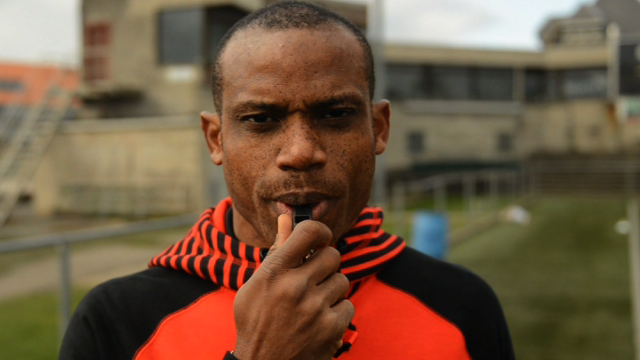
The Nigeria Football Federation, NFF, will write to former Head Coach of the Super Eagles, Sunday Oliseh, who resigned abruptly in February, to refund the sum of N10 million.
Chairman of the NFF Technical and Development Committee, Chris Green, who disclosed this, noted that the Green House will demand a refund of the five million naira paid him in lieu of his accommodation in Nigeria, and the February 2016 salary (another five million naira) that should serve in lieu of his one month notice of resignation.
Oliseh announced his resignation in February , about a month to a crucial Africa Cup of Nations qualifier against Egypt in Kaduna, claiming that he was not getting the supports of the NFF.
“Oliseh showed a lack of heart in the way he left. And he was purely grandstanding when claiming some persons spoke to him to drop a law suit, when he knew from the beginning that he had no case.” Green said.
Nestle Nigeria Plc has reported 2015 full year financial results which indicated sustained recovery on all key line items on the firm’s revenue.
The revenue of the company jumped
by N7.943 billion from N143.329 billion in 2014 to N151.272 billion during the 2015 financial year.
Profit before tax and profit after tax grew by much wider margins of 19.95 per cent and 216.75 per cent respectively.
Nestle’s profit before tax in 2015 stood at N29.322 billion from N24.446 billion it made during the same period of 2014.
Its profit after tax rose by N1.501 billion, representing 6.75 per cent, from N22.236 billion to N23.737 billion in 2015.
According to the management’s statements, sales were driven by an 8 per cent year on year growth in the foods business.
Nestle proposed a final dividend of N19.00 kobo, slightly ahead of N17.50 kobo it declared in 2014.
The Nigerian Export Promotion Council, NEPC, on Wednesday, March 16, said it is targeting $100 billion foreign exchange, forex earnings from the non-oil sector of the economy in 12 years.
NEPC Executive Director/CEO, Olusegun Awolowo who spoke at international trade seminar organized by Zenith Bank in Lagos, with Exporting for Growth: Opportunities in Non-oil Export as its theme stressed the need to diversify the economy from oil by growing the non-oil export segment from $8 billion in 2019; $25 billion in 2025, and eventually between $70 to $100 billion between the next 12 and 15 years.
He, however, said as part of strategy to boost the sector, NEPC has implemented rigorous screening criteria to map out the most promising non-oil export sectors for Nigeria which would be reviewed periodically.
Stakeholders in education sector have reacted over the increase duration of medical student which is planned by the National Universities Commission, NUC. The NUC are planing to increase it from six to eleven years. But the stakeholders are not in support because the development is expensive, discouraging and will lead to lack of medical doctors in Nigeria.
Professor Oyesoji Aremu, Deputy Director, Distance Learning Institute, DLI, University of Ibadan, reacted to this saying, “The announcement of NUC that medical students would have to spend 11 years for medical education appears too much a year to be spent in medical schools.” He explained the negative impact on the students, parents, profession and the nation and also it will reduce the number of candidates that want to study the course. He also added that this will also affect Nigerian health sector.
He also added that, it will take an average of 29 years for an individual to be a medical student, provided he/she enters university at the age of 17.
The Deputy Vice Chancellor, University of Calabar, UNICAL, Professor Florence Banku-Obi, also reacted to this saying: “NUC just made a statement that has not been backed up by any policy. No policy or curriculum to guide them on that.”she also added that this could be broken down, adding that students be given the opportunity to graduate in the first phase and continue after their first degree to read medicine.
The African Basketball League is giving lucky fun lovers return tickets to Dubai at the triple header weekend games.
The first 500 guests at the game arena in Landmark Centre will be qualified for this mind blowing trip, all you have to do is to come with your business card.
Additionally, ten lucky fans will also win autographed merchandise and tickets to the next games.
This weekend is packed full with more actions.
Don’t be left out as the Stallions of Lagos will take on Libreville Izobe of Gabon on Friday March 18th at Landmark Centre by 6.30pm.
On Saturday , Lagos Warriors will take on Abidjan Ramblers and the much anticipated game between the Lagos Islanders VS the Dakar- Rapids of Senegal will take place on Sunday, March 20th at Landmark Centre by 6.30pm.
Tickets currently on sale at www.ablafrica.com and can also be purchased at the venue.
The ABL is proudly supported by TRACE, Union Bank, Wakanow, Cornerstone Insurance, Landmark, THE BEAT 99.9FM , Cruz Vodka and Lagos State Government.
The African Basketball League is giving lucky fun lovers return tickets to Dubai at the triple header weekend games.
The first 500 guests at the game arena in Landmark Centre will be qualified for this mind blowing trip, all you have to do is to come with your business card.
Additionally, ten lucky fans will also win autographed merchandise and tickets to the next games.
This weekend is packed full with more actions.
Don’t be left out as the Stallions of Lagos will take on Libreville Izobe of Gabon on Friday March 18th at Landmark Centre by 6.30pm.
On Saturday , Lagos Warriors will take on Abidjan Ramblers and the much anticipated game between the Lagos Islanders VS the Dakar- Rapids of Senegal will take place on Sunday, March 20th at Landmark Centre by 6.30pm.
Tickets currently on sale at www.ablafrica.com and can also be purchased at the venue.
The ABL is proudly supported by TRACE, Union Bank, Wakanow, Cornerstone Insurance, Landmark, THE BEAT 99.9FM , Cruz Vodka and Lagos State Government.
SAFC's Graham Robinson, centre, with Premier Skills coach educators in Cape Town
Sunderland AFC has continued its commitment to community football in Africa this week as club representative visits South Africa.
Sunderland’s Head of International Football Development, Graham Robinson, has seen the continuation of the Premier Skills journey in South Africa come full circle as four qualified coach educators, who graduated from the global initiative, got their first opportunity to pass on their knowledge to a new generation of participants in Cape Town.
The coach educators have been tasked with taking charge of on an introductory three-day course for 37 participants from across the country who are beginning their journey to becoming Premier Skills coach educators themselves.
Graham said: “This course will give me an opportunity to observe the facilitating of the three day course in order to quality assure the planning and delivery of practical and theory sessions.
“Following the conclusion of this course it is hoped that with support from the British Council, our new coach educators will be tasked with delivering at least one -three, four or five day- course a month for grassroots coaches across the country during the next eight months
“These are exciting times for everyone involved and the future looks bright for the continued growth of our Premier Skills programme.”
Premier Skills, the Premier League’s flagship international good causes project, was launched in 2007 and is delivered in partnership with the British Council. It now operates in countries across Asia, Africa and the Americas and creates training opportunities for grassroots coaches and referees.
As part of SAFC’s activities in South Africa, Sunderland AFC will also feature at the Barclays Premier League Live event at Camps Bay High School, Cape Town on Saturday 19 and Sunday 20 March.
Black Cats fans in South Africa will have the opportunity to meet SAFC legend, Kevin Ball, participate in interactive challenges as well as footballing sessions delivered by Graham Robinson at the fan park initiative.
For more information about Sunderland AFC please visit www.safc.com, follow @SunderlandAFC on twitter or like Sunderland AFC on Facebook.
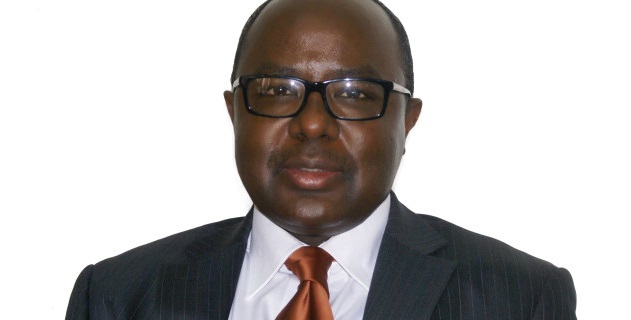
Director General of Nigeria’s Securities and Exchange Commission (SEC), Mr. Mounir Gwarzo, has been re-elected chairman of Middle East Regional Committee (AMERC) of the International Organization of Securities Commissions (IOSCO).
The AMERC comprises securities regulators who are IOSCO members within the Middle East and North Africa as well as sub-Saharan African regions. He will serve for another term of two years.
In a statement, the SEC said, Mr. Gwarzo’s re-election is not only a clear testament to Nigeria’s growing influence and improved image in the international community, but also a strong indication of the overwhelming support he enjoys among peer regulators following a very successful first tenure.
It will be recalled that in February 2015 members of the regional body elected Mr. Gwarzo as Chairman of AMERC during their 34thannual meeting in Muscat, Oman to complete the outstanding term of his predecessor Ms. Arumah Oteh. Upon his election, Mr. Gwarzo had outlined his agenda for the regional committee pledging to focus on advancing issues that would improve voice, visibility and inclusiveness for African/Middle Eastern markets while working towards more cooperation, especially to boost capacity building and cooperation.
This agenda aims to tackle three major challenges facing the frontier and emerging markets within the AMERC region which are dearth of capacity, inadequate visibility and poor level of integration. By this re-election, members have expressed desire to see Mr. Gwarzo continue to lead the Committee to keep addressing these challenges. For example, AMERC members had for years been yearning for the inclusion of Arabic as one of the official languages of IOSCO since about 50% of the member countries within the AMERC region are Arabic-speaking nations.
Knowing that adopting Arabic will engender greater visibility and participation in IOSCO’s decision-making, Mr. Gwarzo promised to vigorously advocate its adoption by the IOSCO Board. He persuasively argued on the importance of the systemically important Arabic-speaking member jurisdictions who regulate capital markets worth trillions of dollars in combined capitalization. His argument has been effective as the IOSCO Board recently considered and approved the adoption of Arabic as one of its official languages, a decision that pleases countries like Saudi Arabia and the UAE but also elevates the inroads non-interest finance could begin to have on the global financial system.
In the area of capacity building, Mr. Gwarzo’s tenure has been even more remarkable. He has championed ideas within the IOSCO Board that will enhance the capacity of AMERC markets, especially tapping from their more developed counterparts in Asia, Europe and North America. Three notable ideas are already being implemented by IOSCO and will certainly be critical to addressing capacity gaps, particularly in frontier markets within the AMERC region. They are the establishment of regional hubs, the roll out of an online toolkit and commencement of a global certificate programme.
In fact, Mr. Gwarzo was chosen by the IOSCO Board to lead the first effort by facilitating the setting up of a pilot regional hub for capacity building for the AMERC region. The hub will be domiciled in Dubai, an internationally accessible travel destination. It will integrate a tailored program of regionally focused workshops, seminars and conferences to be delivered by experienced regulators and members of the academia. The hub will deliver an exceptional platform for members to exchange expertise, experience and knowledge. Considering the resource limitations facing African countries, he has advocated for scholarships within the design, sponsored by IOSCO, to subsidize the programmes so that countries are able to enhance their capacity within a modest budget.
The second idea, creating an online toolkit, aims to leverage technology to make information and knowledge sharing among regulators as seamless as possible. It will be a rich bank of data, information and resources from which regulators can frequently tap in their day-to-day operations. This is particularly useful for emerging market jurisdictions that require more resources to achieve capacity building tools as the toolkit comes in handy and at no cost. In addition to these efforts, Mr. Gwarzo has focused on partnering with fellow IOSCO members within sub-Saharan Africa to benefit from capacity building programmes of bigger markets such as Nigeria.
The proposed global certificate programme aims to standardize knowledge of financial markets across regions. It is designed to be really global with equal amounts of time spent by participants in Madrid and at the prestigious Harvard University in the United States. Again, He is also stressing the importance of awarding scholarships to less developed markets to enable them benefit from this programme, as they certainly need it most in spite of their resource constraints.
The Senate passed a resolution mandating its Committee on Appropriation to allocate N10bn under the service wide votes for the relocation and resettlement of Internally Displaced Persons, IDPs, returning home in Borno, Adamawa and Yobe states yesterday.
The lawmakers also appealed to the Federal Government to release grains from the strategic grain reserves to the affected states.
The legislators in addition, ased the National Emergency Management Agency, NEMA, and Nigerian Refugees’ Commission, NRC, to make special arrangement for the repatriation and resettlement of Nigerians in Cameroon, Niger and Chad.
The lawmakers directed its appropriate committees to write letters of appreciation to the embassies of host countries where the refugees are accommodated, as well as urged the Victim Support Fund to allocate a very good amount of money for the immediate relocation and resettlement of the IDPs in the short and medium terms.
According to the Senate Leader, Ali Ndume, who sponsored the motion on the IDPs, said the decisions became necessary because the displaced had lost all they had, including properties and vehicles before seeking refuge in the camps, adding that only concrete plans to resettle them could provide concrete relief.
The World Consumer Rights Day is celebrated every year on March 15th since 1983. It marks the day the US President John F. Kennedy, outlined the definition of consumers rights during a declaration made in 1962: the right to be informed, the right to security and the right to be heard.
From 1962 to today, things have evolved, especially in Africa where in recent years online platforms have transformed consumers habits (in Africa and the Middle East, the number of online shoppers was 93.6 million in 2013, around 7.1% of the population, half the world average of 15.2%. However, this number will grow to 170.6 million in 2018, with a growth rate of 82% well above the global average of 50%, according to a report byIPEMED). With the rapid penetration of mobile which fosters an easier and quicker access to the internet (9 out of 10 Internet users use mobile in Africa and the Middle East – Emarketer), e-commerce has become a boon for millions of African consumers who have adopted it and benefit daily from the undeniable advantages that it brings: transparency and online price comparison, variety of choice, lower prices through greater competition, accessible after-sale service, original products.
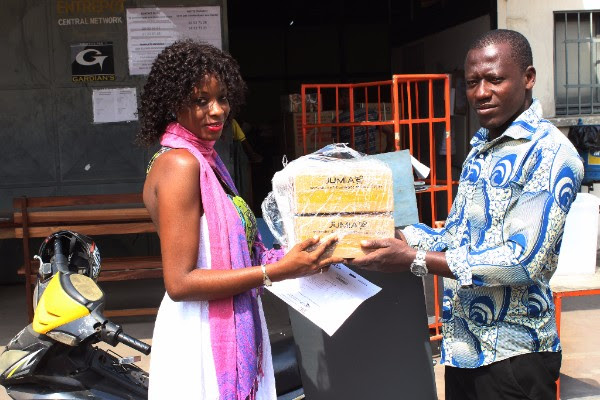
Two evocative examples of the ongoing transformations are Jumia, the online supermarket present in 11 countries of the continent selling fashion items, household appliances, high-tech etc. and hellofood, the marketplace for online food ordering and delivery, leader in 10 African countries. Jumia and hellofood take their success (around 2000 orders per day on average for the first and over 300 for the second in Côte d’Ivoire) from continuously implementing effective local strategies with consumers’ expectations, innovation and simplicity at the center.
For example, in Côte d’Ivoire Jumia.ci guarantees 24/7 access on its website and mobile app to more than 50 000 items that consumers can compare, evaluate (thanks to the pictures and descriptions), and order to be delivered to them conveniently; all at ultra-competitive prices. Same with hellofood.ci, the platform lists more than 150 restaurants whose menus are accessible via a mobile application and a website with delivery anywhere in Abidjan.
Amid a national context where the “fight against the high cost of living”, is a workhorse for the government, e-commerce has been providing a lifeline to consumers by increasing their purchasing power. The introduction new concepts on the Web (Mobile week, foodie Friday, Black Friday, general sales, etc.) by Jumia, hellofood and others AIG’s ventures is promoting a more competitive market and giving the power back to the consumer.
The new Director-General, Nigerian Maritime Administration and Safety Agency (NIMASA), Dakuku Peterside, has been commended for his new appointment by the Ijaw Youth Council, Lagos Chapter.
In a statement by the group’s Chairman, Mr. Boma Johnbull, said: “We are grateful to President Muhammadu Buhari and the Federal Government for the appointment. We are positive that as a technocrat and great visionary leader he will bring his expertise and leadership qualities to bear in the agency.
Mr Johnbull also assured that he will make life meaningful for the people and also take this nation to greater heights.” that the IYC Lagos, would continue to pray and give him all the necessary support needed for him to achieve his set goals and objectives.
The Nigerian Labour Unions have pledged their support for the United Nation’s Ecosystem Based Adaptation for Food Security Assembly aimed at checking the effect of global food crisis in the country.
On Tuesday, during the Assembly’s committee meeting, representatives of the secretariat of the body in Nigeria and the Federal Ministry of Budget and National Planning, congratulated the unions for facilitating all logistics necessary to make the unveiling possible.
The unions, which took up sponsorship of most of the items for the inauguration, included the National Union of Food, Beverage and Tobacco Employees, National Union of Hotels and Personal Service Workers, Food Beverage and Tobacco Senior Staff Association and Association of Senior Staff of Banks, Insurance and Financial Institutions.
According to an official in the ministry, the staff said it had a different opinion of what unions stood for, which was activism, saying that it now understood that unions equally played a vital role in the development of the country.
EBAFOSA was formed following the second Africa Ecosystem-Based Adaptation for Food Security conference convened by the UN Environment Programme in collaboration with the African Union Commission and partners in 2015.
Mr. James Oyesola,The National President, EBAFOSA, said the body was the first inclusive pan-African policy framework that provided a platform for all stakeholders in the country to collaborate in developing and implementing policy solutions to upscale EBA-driven agriculture and its value chains as well as industrialisation and job creation in a sustainable way.
He later explained that the EBAFOSA implementation was strategically categorized into three phases; introductory, growth and maturity, with each subsequent phase building on a preceding one.
He also said that,“The introductory phase is considered as the most crucial as it aims to secure commitment of the vital stakeholders, who will be the foundation of EBAFOSA”.
Many students seeking into the nation’s tertiary institution and their parents on Tuesday stormed the Lagos State Governor’s Office in Alausa, Ikeja, and the State Assembly Complex to protest against alleged manipulation of the 2016 Unified Tertiary Matriculation Examination. The protesters demanded the removal of the Registrar of the Joint Admissions Matriculation Board, Prof. Dibu Ojerinde and also demanded the cancellation of the exams.
There were so many different protesters with different problems like those who faulted the conduct of the examination, described the exercise as a “big sham”. While some candidates complained that they deliberately lowered their scores and they claimed that marks were arbitrarily awarded to so many candidates.
The protesters, made some unpleasant comments about the register Dibu, saying’ Dibu must go’
The protesters, who occupied the gate of the Lagos State House of Assembly complex for many hours, said JAMB and its registrar had “lost focus on how to conduct a successful Computer-Based Test in the 21st century.
Some candiates shared their complains like a candidate, Maryam Animashaun, who expressed disappointment with the conduct of the examination, claimed that she received three different results from JAMB.
Another candidate, Kalasuwe Adeola, complained about her score that it was been tampered.
The National President of the Association of Tutorial Schools in Nigeria, Mr. Shodunke Olutodotun, lamented that over 10,000 candidates missed the UTME, while others had their marks deducted due to irregularities by JAMB.
“This year’s UTME will soon be concluded. We have a man called Prof. Dibu Ojerinde. This man has outlived his usefulness in JAMB. He seems to be more powerful than the country’s president.
“The protesters are the victims; their destinies are being finished by Dibu. Most of the protesters that had their exam in Delta State had the exam in a shrine. A lot of them got results before they sat for the exam.
“We are appealing to Governor Akinwunmi Ambode and the Speaker, Mudashiru Obasa, to send signal to Abuja to stop UTME. If they don’t do that, we will go to Abuja.
Following the suspected outbreak of measles in the Malammadori Local Government Council of Jigawa, Malam Garba Isa, the Disease Surveillance Officer of the council, disclosed that it had set out to immunise about 100 children against the disease.
He said the children were immunised against the disease at Kargo and Mukkadir communities, where sporadic cases of the disease were recorded, noting that the measure was to ensure effective response and treatment of the infected children.
The Chairman of the council, Alhaji Ali Alkali, said the Local Government had provided drugs and consumables to health outfits in the affected communities to enhance treatment of the disease.
He stated that the council had also adopted measures to effectively control the spread of the disease and called on parents to present their children for the exercise in order to tackle measles and other child killer diseases.
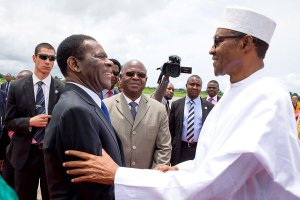
Nigeria and Equatorial Guinea has signed an agreement on the establishment of a combined Maritime Policing and Security Patrol Committee.
According to a statement released by the senior special assistant on Media and Publicity to the President, Mr Garba Shehu, the agreement is expected to enhance security in the Gulf of Guinea and help in curbing maritime crimes such as piracy, crude oil theft, sabotage of oil rigs and arms smuggling.
However, both countries also agreed to discuss greater cooperation on oil and gas production and a bilateral trade agreement.
It was further agreed that the Nigeria-Equatorial Guinea Joint Commission will be revived from its present state of dormancy and empowered to play its proper role in the strengthening of bilateral relations between Nigeria and Equatorial Guinea.
Buhari and President Obiang Nguema Mbasogo expressed satisfaction with the atmosphere of trust and solidarity that now exists between their countries.
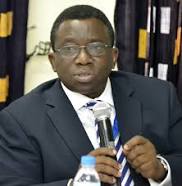
According to the Minister of Health, Prof. Isaac Adewole, Federal Government has sought partnership with stakeholders to boost the country’s healthcare delivery system. He stressed the need for an effective synergy among all stakeholders in the health sector to provide efficient and quality health service to citizens.
The minister said the “inverted health pyramid system’’ would be reversed and restore the pyramid system for the benefit of larger population. He lamented that only about 15 per cent of Nigerians currently access healthcare under the inverted pyramid system, hence the need to take healthcare services to the door steps of rural communities.
Adewole stated that government will make sure that primary healthcare is made accessible to majority of Nigerians under the planned reversal policy. He hinted that this present administration would establish 10,000 additional primary healthcare centres to cover all the electoral wards in the country.
The Chairman of HMCAN, Dr Kolawole Owoka, had earlier pledged to support federal government quest to deliver improved healthcare services to citizens. He expressed optimism that the government plan of providing affordable and accessible healthcare service was achievable within two years.
Senior Special Assistant to the President on Diaspora and Foreign Relations, Mrs Abike Dabiri-Erewa, has hinted that the Presidency is set to partner with the National Assembly on a new policy to carter for the needs and inclusiveness of Nigerians in diaspora.
She noted that the potentials of Nigerians in the diaspora could not be effectively harnessed without a diaspora policy and a commission to carter for Nigerians in the diaspora.
“We must have a diapora policy as soon as possible, Nigeria does not have diaspora policy, so the first thing we would be doing is crafting a diaspora policy.
“We will be working with the Ministry of Foreign Affairs, the House and Senate Committees on Diaspora to craft this policy on diaspora matters.
“This policy would be like a thrust for every other thing that we are going to do and work on that will start very soon. We are going to get every Nigerian in the diaspora to contribute to the policy. “Without the policy we cannot do anything so that is very critical, and of course the Diaspora Commission Bill.