


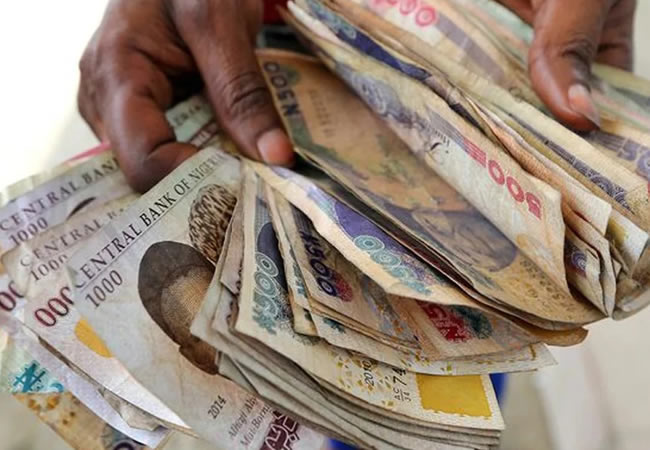
Liquidity pressures in Nigeria’s financial markets have intensified following the Central Bank of Nigeria’s (CBN) recent Open Market Operations (OMO), leaving funding rates in a state of flux.
According to an investor note from AIICO Capital Limited, total system liquidity declined significantly by ₦874.3 billion to ₦1.1 trillion. This downturn was primarily attributed to substantial outflows linked to the settlement of the apex bank’s earlier OMO auction.
While a modest ₦41.3 billion inflow from local bond coupon payments provided temporary relief, it failed to sufficiently alter the overall liquidity environment or influence market rates. Consequently, funding rates reflected this mixed state: the Open Buy Back (OBB) rate remained unchanged at 26.50%, while the Overnight (O/N) rate edged down marginally by 4 basis points to 26.96%.
Looking ahead, analysts expect a total injection of ₦185.9 billion into the system on Wednesday. However, these inflows may be offset by scheduled debits for the Debt Management Office’s (DMO) bond auction settlements, which could once again tighten financial system liquidity.
In the interbank market, the Nigerian Interbank Offered Rate (NIBOR) trended upward across most tenors, except for the overnight tenor, which recorded a slight drop of 2 basis points to 26.88%, according to a research note by Cowry Asset Management.
Meanwhile, activity across the Nigerian Treasury Bills (NITTY) curve showed upward movement in yields across several maturities, highlighting a cautious investor sentiment. Despite this trend, secondary market transactions gained momentum, with persistent sell-side activity pushing average yields higher by 2 basis points to 17.66%.