Key Points:
- NSSEC is seeking UNICEF’s support to improve data collection in secondary schools
- Focus areas include digital literacy, TVET, and modern learning technologies
- Funding challenges and low awareness are affecting NSSEC’s operations
- Both parties agree on the need for safe and inclusive school environments
Main Story:
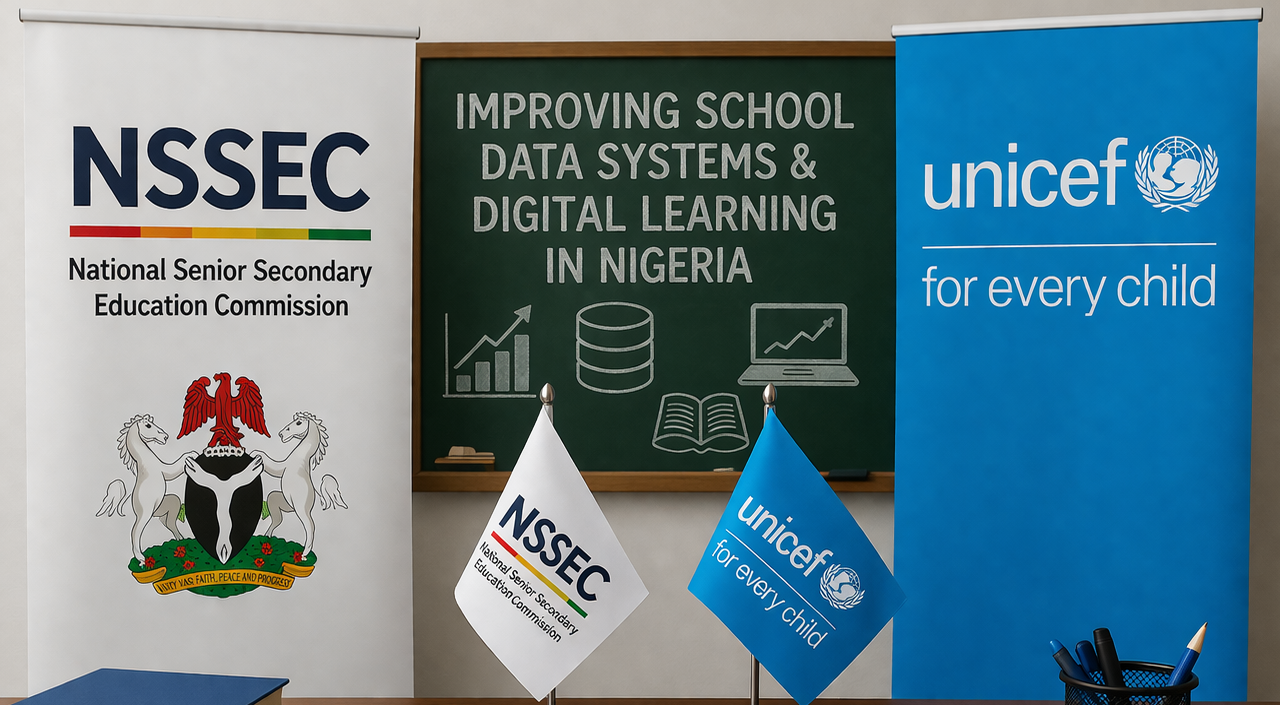
The National Senior Secondary Education Commission (NSSEC) has called on the United Nations Children’s Fund (UNICEF) to partner with it in strengthening data collection and management systems across Nigeria’s secondary schools.
This request was made by NSSEC Executive Secretary, Dr Iyela Ajayi, during a courtesy visit by UNICEF officials in Abuja on Wednesday. He explained that better data systems are key to improving how education policies are planned and implemented.
According to Ajayi, having accurate and up-to-date data will help the government make smarter decisions that can improve learning outcomes for students. However, he admitted that the commission has been struggling with limited funding and low public awareness about its role.
Beyond data systems, Ajayi emphasized the need to improve digital literacy among teachers. He said teachers must be equipped with modern digital skills so they can better prepare students for a fast-changing, technology-driven world.
He also highlighted the importance of expanding Technical and Vocational Education and Training (TVET). This, he said, will help students gain practical skills in areas like renewable energy and digital entrepreneurship—skills that are increasingly important in today’s economy.
Ajayi added that adopting new technologies such as adaptive learning platforms and virtual laboratories could greatly improve the teaching and learning experience in schools.
The Issues:
Nigeria’s education system faces several long-standing challenges. One major issue is poor data management, which makes it difficult for policymakers to track progress or identify areas that need improvement.
Funding is another critical problem. Without enough financial support, agencies like NSSEC struggle to carry out important programs that can improve education quality.
There is also a gap in digital skills among teachers, which limits their ability to teach students effectively in a modern learning environment. At the same time, many schools lack access to updated tools and technologies.
In addition, safety and inclusion remain serious concerns. Many students, especially girls and those with disabilities, face barriers that affect their ability to learn in a secure and supportive environment.
What’s Being Said:
Dr Iyela Ajayi stressed the importance of partnerships in solving these problems. He noted that education challenges today require innovative solutions and strong collaboration between organizations.
“We recognise that the challenges in education today demand strong partnerships and innovative solutions,” he said, adding that working with UNICEF could help drive meaningful change.
Ajayi also pointed out that safe schools are essential for good learning outcomes. He stressed the need for protection and psychosocial support for students, particularly vulnerable groups.
In response, UNICEF’s Chief Education Officer, Vanessa Lee, expressed readiness to support NSSEC’s efforts. She said UNICEF is already working on digital tools that can help monitor learning progress and improve teachers’ skills.
Lee also emphasized the need for both organisations to stay committed to improving the quality of education in Nigeria.
What’s Next:
The proposed collaboration between NSSEC and UNICEF is expected to focus on improving data systems, boosting digital literacy, and expanding skills-based education.
If the partnership moves forward, schools may begin to see the introduction of smarter digital tools, better teacher training programs, and more opportunities for students to learn practical skills.
There could also be increased efforts to make schools safer and more inclusive, especially for vulnerable groups.
Bottom Line:
This potential partnership highlights a critical shift in Nigeria’s education strategy—moving toward data-driven decisions, digital learning, and practical skill development. If properly implemented, it could significantly improve the quality of secondary education and better prepare students for the future.