




Key Points
- Dubai records highest-ever ranking on the Global Financial Centres Index (GFCI), placing 7th globally
- First Middle East, Africa and South Asia city to crack the top 20 in the index’s history
- DIFC now hosts over 9,000 active companies and a workforce exceeding 50,000
- Dubai’s target: top-four global financial hub by 2033 under the Dubai Economic Agenda (D33)
Main Story
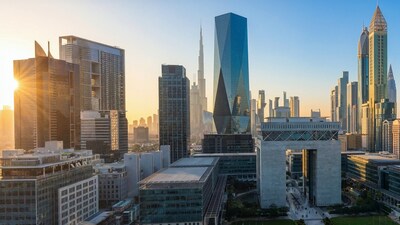
Dubai has climbed to its highest-ever position on the Global Financial Centres Index, securing 7th place globally in the latest rankings, a milestone that puts the emirate in the company of London, New York and Singapore, and sharpens the city’s ambition to crack the world’s top four financial hubs within a decade.
The ranking, released March 26, 2026, marks the first time any financial centre in the Middle East, Africa and South Asia (MEASA) region has placed this high on the index. Dubai remains the only city from the region to feature in the top 20, a distinction that underlines both its regional dominance and its growing weight in global capital markets.
The result is a significant waypoint in Dubai’s D33 Economic Agenda, a long-range programme targeting a top-four finish among the world’s financial centres by 2033.
The DIFC engine
Much of the ranking momentum is attributed to the Dubai International Financial Centre (DIFC), which has delivered record growth in recent years and now houses more than 9,000 active companies. The roster spans the world’s largest banks, asset managers, hedge funds, insurers and professional services firms, supported by a workforce of more than 50,000 professionals.
For the first time in the index’s history, industry respondents placed Dubai in the top 15 across every evaluated sector. Finance, Investment Management and Insurance are ranked in the top 10, while FinTech, Government and Regulatory, Professional Services and Trading all advanced into the top five. Dubai is also among the top ten globally competitive cities for Business Environment, Financial Sector Development, Human Capital and Infrastructure.
Why this matters for Africa
Dubai’s ascent is directly relevant to African capital flows. DIFC has increasingly positioned itself as a gateway for African sovereign wealth funds, private equity activity and trade finance, and its top-20 permanence signals that cross-border financial business between Africa and the Gulf corridor is being routed through an increasingly credible hub. For Nigerian firms and institutions seeking international capital or correspondent banking relationships outside of traditional Western corridors, Dubai’s rising index profile adds institutional weight to what has long been a practical financial relationship.
What’s being said
“Dubai’s remarkable progress in the Global Financial Centres Index is an outstanding milestone that highlights the Emirate’s ambitious vision and expanding influence on the international financial stage,” said HE Essa Kazim, Governor of DIFC. “Anchored by DIFC’s world-class infrastructure and forward-looking regulatory environment, we continue to strengthen Dubai’s position as the region’s leading global financial hub, attracting top-tier financial institutions, innovators and talent.”
What’s next
DIFC is expected to accelerate its expansion drive off the back of the ranking, with further recruitment of global financial institutions and deepening of its fintech regulatory sandbox. Dubai’s D33 agenda has 2033 as its horizon — seven years in which it must close the gap on Zurich, Hong Kong and Tokyo to realise its top-four ambition.
Bottom line
Dubai’s 7th-place GFCI ranking is a strategic signal. For African financial markets, it means the Gulf’s most ambitious financial hub is consolidating its role as a capital bridge, and any institution or government on the continent that has not mapped its relationship with DIFC into its international finance strategy may find itself doing so soon.