







The Nigerian National Petroleum Company Limited (NNPC) may be looking to sell off its ailing refineries in Port Harcourt, Warri, and Kaduna as doubts mount over their capacity to function, despite years of rehabilitation efforts and billions of dollars in investments.
Speaking with Bloomberg on Thursday during the 9th OPEC International Seminar in Vienna, Austria, the Group Chief Executive Officer of NNPC, Bayo Ojulari, confirmed that a full strategic review of the company’s refinery operations is underway, and all options including sale are being considered.
“We’re reviewing all our refinery strategies now. We hope before the end of the year, we’ll be able to conclude that review,” Ojulari said. “That review may lead to us doing things slightly differently.” When asked directly if that could include selling off the refineries, Ojulari responded, “Sale is not out of the question. All the options are on the table, to be frank, but that decision will be based on the outcome of the reviews we’re doing now.”
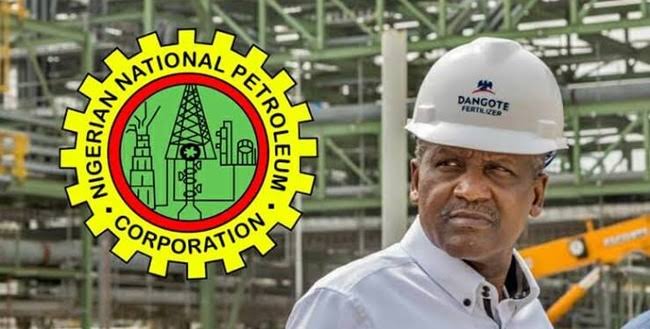
Ojulari’s remarks followed a blunt assessment from Africa’s richest man, Alhaji Aliko Dangote, who declared earlier on Thursday that the refineries “may never work again” despite swallowing over $18 billion in public funds. Speaking during a meeting with members of Global CEO Africa from the Lagos Business School at the Dangote Refinery complex in Lekki, Lagos, the industrialist said, “As of today, they have spent about $18 billion on those refineries, and they are still not working. And I don’t think, and I doubt very much, if they will work.”
Dangote, who runs the 650,000 barrels-per-day privately owned Dangote Refinery, recalled how he and his team returned the state-owned refineries they had acquired in 2007 after the late President Umaru Musa Yar’Adua reversed their privatisation, allegedly under pressure from NNPC officials who claimed the facilities could be fixed. “They said they just gave them to us as a parting gift or so,” Dangote stated. “The refineries that we bought before were doing about 22 per cent of PMS. Now, our refinery is doing over 50 per cent of its output as PMS.”
He compared the ongoing turnaround maintenance to “modernising a car that was built 40 years ago,” stressing that new technology would not fit outdated structures. “Even if you change the engine, the body will not be able to take the shock of that new technology engine,” Ojulari also echoed similar sentiments, acknowledging that previous rehabilitation efforts had failed to produce results. “We made quite a lot of investment over the last several years and brought in a lot of technologies, but we’ve been challenged. Some of those technologies have not worked as we expected,” he said.
According to him, the age and deterioration of the refineries made rehabilitation more complicated than initially projected. “When you’re refining a very old refinery that has been abandoned for some time, what we’re finding is that it’s becoming a little bit more complicated; They had once been declared operational by former NNPC boss Mele Kyari in late 2024, but since the shut down again, questions over the viability of the facilities and the integrity of past claims have been raised.
Former President Olusegun Obasanjo, who had overseen the initial sale of the refineries to Dangote and his associates, also criticized the decision to revoke the sale, stating that the NNPC had always known it could not run the refineries. “I told my successor that the refineries, from what I heard and know, will not work. And when you want to sell them, you will not get anybody to buy them at $200 million as scrap,” Furthermore,“NNPC knew that they could not do it, but they knew they could eat and carry on with the corruption.”
Obasanjo added that Shell once declined an offer to run the refineries, stating that even international oil companies were unwilling to touch the assets. His remarks were backed up with a Yoruba proverb: “They say that after he has harvested 100 heaps of yams, he will also have 100 heaps of lies. You know what that means.”
Critics, including the Manufacturers Association of Nigeria, have since called on the Federal Government to privatise or scrap the refineries entirely, describing them as a financial drain. Some stakeholders have urged the government to redirect the proceeds toward building modular refineries.
Data shows that despite allocating $1.4 billion to Port Harcourt refinery in 2021, $897 million to Warri, and $586 million to Kaduna, the facilities remain moribund. Over N100 billion was spent on rehabilitation in 2021 alone, including N8.33 billion in monthly expenditures, while $396.33 million went into turnaround maintenance between 2013 and 2017.
As the review continues, many industry watchers believe that the time for difficult decisions has come and selling off the state-owned refineries may be the only viable path forward.

 may be looking to sell off its ailing refineries in Port Harcourt, Warri, and ...)