



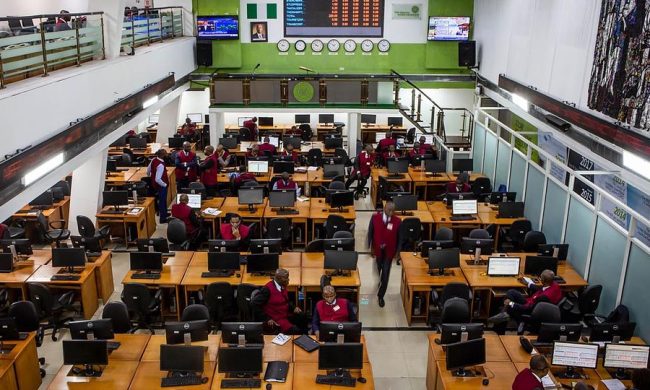






Foreign investments in Nigeria took a sharp downturn in the first quarter of 2025, with new figures from the Central Bank of Nigeria (CBN) showing a 19.35% drop in Foreign Direct Investment (FDI) compared to the last quarter of 2024.
According to the Q1 2025 Balance of Payments (BoP) report released by the apex bank, FDI inflows into the Nigerian economy declined from $310 million in Q4 2024 to $250 million in the first quarter of 2025. This dip represents growing investor caution amid macroeconomic uncertainty.
The CBN noted that the financial account posted a balance of $7.58 billion in Q1 2025, slightly down from $7.82 billion in the final quarter of 2024. The decline is largely attributed to a dramatic fall in both portfolio investments and other capital inflows into the economy.
Specifically, portfolio investment liabilities, which usually represent foreign capital inflows into equity and debt markets, experienced a reversal, recording a net divestment of $5.03 billion in Q1 2025 — a significant setback compared to previous quarters.
Direct investment inflows also witnessed a minor dip, sliding from $0.31 billion in Q4 2024 to $0.25 billion in Q1 2025. In addition, Other Investments (OI) liabilities — which include loans, trade credits, and currency deposits — registered a major reversal of $4.32 billion during the period.
Meanwhile, Other Investment assets also recorded an outflow of $1.31 billion, in contrast to the $1.54 billion reversal recorded in Q4 2024, indicating increasing capital movement out of the country.
In terms of Nigerian investments abroad, the report disclosed that FDI assets recorded a reversal of $0.55 billion, while portfolio investment assets saw an outflow of $0.48 billion, reflecting a continued push by Nigerian entities and individuals to diversify assets outside the domestic economy.
The CBN also highlighted a worrying drop in Nigeria’s external reserves, which fell from $40.19 billion at the end of December 2024 to $37.82 billion in March 2025 — a decline of $2.37 billion within three months. The depletion in reserves underscores growing pressures on Nigeria’s external sector amid limited forex inflows.
Analysts say these figures are indicative of mounting investor concerns, driven by foreign exchange instability, policy uncertainty, and Nigeria’s broader macroeconomic headwinds. With both direct and portfolio investors pulling back, calls for reforms aimed at improving the business climate and stabilizing the currency have intensified.









...)