





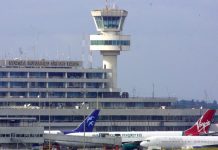



Nigerian domestic airlines are grappling with a severe revenue crisis as passenger traffic has sharply declined following the conclusion of the December peak season. As of late January 2026, the Airline Operators of Nigeria (AON) reported that many routes are currently averaging a load factor of below 50 percent, a drastic fall from the near-capacity flights recorded during the festive boom.
Prof. Obiora Okonkwo, Chairman of United Nigeria Airlines and AON spokesperson, disclosed on Monday, January 26, that most carriers are now “practically flying empty” and operating at a loss. He emphasized that even with a 75 to 80 percent passenger load, high operational costs, driven by interest rates exceeding 30 percent and expensive equipment maintenance make it difficult for airlines to break even.
The financial strain is exacerbated by the reintroduction of Value Added Tax (VAT) on domestic tickets and new customs duties on aircraft parts, which took effect on January 1, 2026. Industry analyst Alex Nwuba noted that the average cost of operating a Boeing 737 on a Lagos–Abuja flight is approximately $9,000, with jet fuel alone accounting for 38 percent of total expenses. Using a cost-versus-revenue model, experts show that airlines currently earn a “dangerously thin” margin of only 8 Naira per kilometer.
This narrow profit window means that any drop in passenger numbers immediately turns a flight into a financial loss, leaving smaller carriers with shorter “runways” for survival as they head into the historically quiet months of February and March.
Despite the start of local jet fuel production from the Dangote Refinery, which has stabilized prices at approximately 1,400 Naira per liter, the overall cost of air travel remains high due to structural inefficiencies and the lack of low-interest financing.
Stakeholders at a recent Aviation Town Hall meeting in Lagos highlighted that of the 123 commercial aircraft in Nigeria, only 44 are currently operational, while 79 remain grounded due to maintenance delays and financing constraints. These “aircraft on ground” (AOG) situations continue to push unit costs higher, making it impossible for airlines to offer the cheaper fares that the middle-income segment now requires to return to the skies.
Looking ahead, the aviation sector is bracing for a “year of sifting,” where only the strongest players with diversified revenue streams may survive. The Nigerian Civil Aviation Authority (NCAA) has begun implementing a “Zero Debt Strategy,” requiring airlines to provide advance payment guarantees for their operations, adding yet another layer of liquidity pressure.
While some operators are looking to regional expansion within West Africa to find new revenue, the immediate priority for most remains surviving the current “low-peak” season without further shrinking their already depleted fleets.










 reported that many routes are currently averaging a load factor of below 50 percent, a drastic fall from the near-capacity flights recorded during the festive boom.)