




Key Points
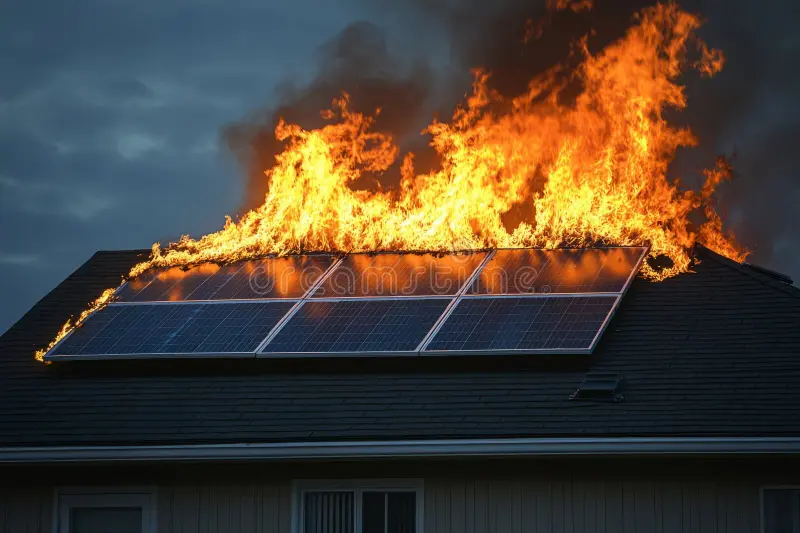
- A viral video showing smoke rising from a solar-equipped building has reignited public fears about rooftop solar safety in Nigeria
- Installers and industry practitioners say panels are rarely, if ever, the source of fire – the more common culprits are poor wiring and defective equipment
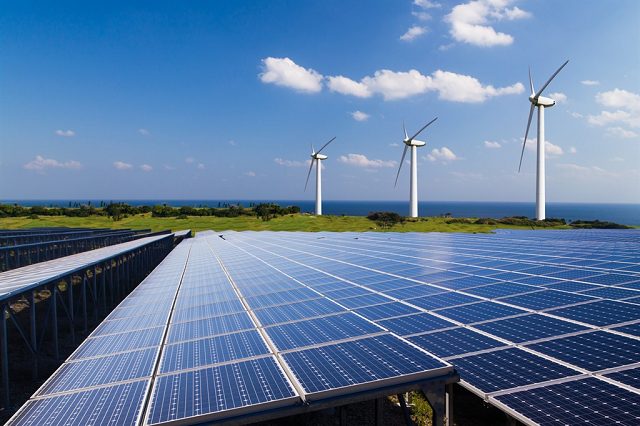
- Nigeria is Africa’s fastest-growing solar market; even the Presidential Villa in Aso Rock runs partly on solar power
- Experts advise buyers to inspect panels for physical damage before installation and periodically afterward, and to ensure systems are properly sized and wired
- Based on available evidence, practitioners say the panels in the viral video almost certainly did not cause the fire
Main Story
When a short video began circulating on X showing smoke rising from a building fitted with rooftop solar panels, it took only hours for a familiar argument to ignite alongside it. Viewers split almost immediately – some declaring the footage proof that solar installations are dangerous, others insisting the fire clearly started from inside the building and had nothing to do with the panels at all.
The reaction is familiar, but it sits oddly against a broader reality. Nigeria is currently the fastest-growing solar market in Africa, with millions of households and businesses having made the switch to escape fuel costs and an unreliable grid. The technology has traveled far enough up the trust ladder that the Presidential Villa in Aso Rock runs partly on solar power. Yet when a building with visible panels catches fire anywhere in the country, the panels tend to get the blame – often before any investigation takes place, and often wrongly.
The video, first posted by Ómóélérinjáré, is still making the rounds. But according to installers and industry practitioners who spoke with BizWatch Nigeria, the reaction to it tells a more important story than the footage itself: public understanding of how these systems work, and what can realistically go wrong with them, has not kept pace with how widely they have been adopted.
The Issues
The practitioners BizWatch Nigeria spoke to pointed to two consistent factors behind genuine solar-related fire risks: installation quality and the condition of equipment being installed.
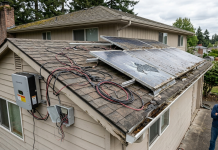
Adedayo Philip of Firstiephil Enterprises said poor workmanship remains the most common source of danger. Wiring that is undersized or poorly fitted can overheat over time, melt, and ignite nearby materials. On the equipment side, he was emphatic: physically damaged or defective panels should never be installed, regardless of how minor the damage appears. A cracked casing or compromised seal changes how a panel behaves under heat and load, and buyers should inspect equipment carefully before installation and periodically afterward where possible – rather than assuming that new-looking hardware is necessarily sound.
Obafemi Osunniyi, another installer, pointed further upstream to the design process itself. Many technicians, he said, know how to mount panels competently but pay insufficient attention to load calculations and system sizing. When generation, storage and demand are not properly matched, components get pushed beyond their design limits. Connection errors in how panels are wired – whether in series or parallel configurations can also increase the likelihood of overheating. In hotter regions, systems need to be sized with ambient temperatures in mind, and without that precision, the margin for failure narrows.
What’s Being Said
Online, several voices pushed back against the rush to judgment after the video went viral.
“From the video evidence, the ignition point is clearly not the solar panels. Blaming the panels or inverter without technical proof is misleading and unfair to the technology itself,” wrote CEDAR SUN SOLAR (@EmperorToronto) on X.
Architect OLUSOLA AR noted that the smoke appeared to be rising from inside the structure rather than from the panels themselves.
“The fire was not from the panels, but people now blame every fire outbreak on solar panels,” wrote Ayo (@Tomadman1).
Fred (@ChiefChinua), who said he has used solar for over three years, drew a pointed comparison: “Normal NEPA light can also cause this. I’ve been off grid and on solar and it’s perfectly safe.”
On the ground, Molobe Obinna of 74 Teletronics said the pattern is consistent with cases he has personally encountered. He recalled an incident near his area where flames seen around rooftop panels were later traced to the inside of a shop.
“When the fire starts from inside, people outside see the panels and assume they are the cause,” he said, adding that he has yet to encounter a confirmed case where panels themselves ignited a fire.
An engineer posting as @dev_inately echoed the installers’ assessment, arguing that wiring faults account for the overwhelming majority of incidents associated with solar setups.
What’s Next
No formal investigation into the incident shown in the viral video has been publicly announced. Without one, a definitive finding on the cause of the fire remains unavailable. The broader conversation around solar safety standards and installation oversight in Nigeria is ongoing, with the sector’s rapid growth continuing to outpace public education and regulatory consistency.
Bottom Line
Based on the available footage and the accounts of practitioners, there is no credible evidence that the panels shown in the viral video caused or contributed to the fire. The visible evidence of smoke rising from beneath the roof rather than from the panels is more consistent with a fire that originated inside the building. The expert consensus points firmly in one direction: the panels, in all likelihood, had nothing to do with it.
What the incident exposes is a knowledge gap the industry has not yet closed. The safeguards are not complicated if you buy from reputable suppliers, inspect equipment for physical defects before and after installation, ensure your installer sizes the system correctly and uses properly rated wiring. The technology is not the threat. Cutting corners is.